
POLITICS
2023: Many Nigerians may be Disenfranchised – IPAC


The Inter Party Advisory Council (IPAC) in Lagos State, says many Nigerians may not have been captured in the INEC Continuous Voter Registration (CVR) that ends nationwide on Sunday.
IPAC also said that many Nigerians that would be of voting age some months to the election would also be disenfranchised.
Newsmen report that the Independent National Electoral Commission (INEC) Continuous Voter Registration (CVR) exercise which started on June 28, 2021, was initially billed to end on June 30, before it was extended to July 31.
Reporters also recall that in Lagos state as at July 18 those who registered online were 640, 560 but many of them had not completed their registration, while those who completed the registration exercise were 451, 156.
INEC Resident Electoral Commission (REC) in Lagos state, Mr Olusegun Agbaje said on July 24, that current statistics of July 18, showed that Lagos state had about seven million registered voters.
The REC disclosed that the number was derived from the new registrants so far in the ongoing CVR, added to those in the old register of voters in the state.
IPAC Chairman in Lagos state, Mr Olusegun Mobolaji, however, said that INEC should reconsider ending the registration.
Mobolaji who made the appeal when he spoke with NAN on Sunday, was reacting to the scheduled July 31 deadline of the CVR.
He said that for elections to be free, fair and credible, every eligible citizen must be allowed to participate in choosing the leadership they wanted.
“Everything about credible elections is voter register and voter cards, and if that is actually what INEC really stands for as unbiased umpire, for the purpose of democracy, INEC should be fair in all areas, especially in allowing those who have not registered to do so.
“I think INEC should have a way of allowing every eligible voter get their voter cards to choose the leadership they want,” he said.
He stressed that irrespective of the time the registration started, the commission should.not discontinue the exercise.
“Irrespective of the fact that INEC had started the voter enrollment exercise in 2021, if the time is not enough for everyone that want to participate in the election to get registered and obtain a voter card, INEC should not stop registration,” he said.
He said that continuation of voter enrollment would not affect every other electoral activity and processes put in place by the commission to conduct good elections.
According to him, INEC should continue until it becomes glaring that it will be impossible to print voter cards again, we will all know that they have done their best.
“I think voter registration can go simultaneously with every other plan INEC has.
“There should be a way round this, such that everyone that is of voting age is given the opportunity to be able to vote. We still have months to the election.”
Mobolaji said that INEC could get more gadgets and personnel to register every eligible citizen who presented themselves for the registration.
“INEC may have done its best but I can say that its best is not enough for the present dispensation as well as the requirements and demand of present democracy.
“Nigerians want to be part of the decision making process. They want to elect good leaders. All eligible citizens want to be part of it,” he stated.
According to him, the only way to reposition the country is through ballot and every qualified citizen should be allowed to vote in 2023.
He said that the crowd at enrollment centres across the country showed that the time for registration was not enough. (NAN)


By Tony Obiechina, Abuja
The Federal Government has reopened all 47 Federal Unity Colleges that were shut down over escalating insecurity across the country.
Recall that the schools were closed in November 2025 following mass abductions of schoolchildren and attacks in states across the North-West, North-East, North-Central, and parts of the South of the country.
The Federal Ministry of Education in a statement yesterday by Boriowo Folasade, the Director Press and Public Relations, reassured parents, guardians, and the general public that the safety, welfare, and well-being of students remained the government’s highest priority.
Many students are currently rounding off their December academic programmes, while others have successfully completed their examinations.
The reopening comes amid sustained collaboration with relevant security agencies to guarantee a safe and conducive learning environment nationwide.
“The Federal Government has reaffirmed its responsibility to protect every Nigerian child and to uphold their constitutional right to education in a secure setting. The decision to reopen the Unity Colleges reflects the administration’s determination to ensure that no child is denied access to education due to security concerns.
“Education remains a central pillar of this administration’s human capital development agenda and a key driver of national growth. Accordingly, the government remains committed to safeguarding the academic calendar.
“The successful return of students and the smooth conduct of examinations in several Unity Colleges underscore this commitment,” the statement aptly read.
The ministry expressed appreciation to parents, school administrators, and students for their cooperation and patience, and reiterated its resolve to sustain a secure, stable, and uninterrupted education system across the nation.
By Eze Okechukwu, Abuja
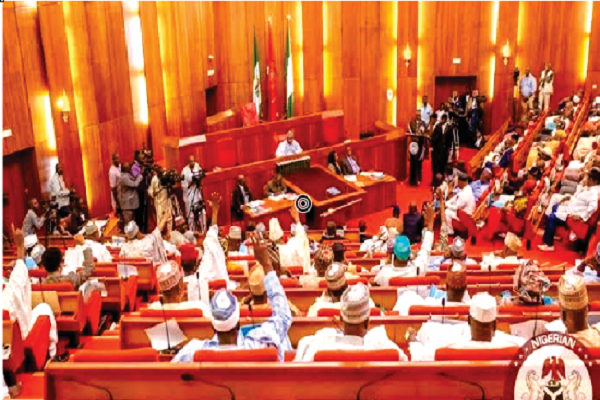
The Senate yesterday confirmed 64 ambassadorial nominees submitted by President Bola Tinubu while also subjecting newly nominated heads of key oil and gas regulatory agencies to rigorous screening, underscoring the upper chamber’s busy oversight of Nigeria’s diplomatic and economic architecture.
The ambassadorial confirmations followed the adoption of a report by the Senate Committee on Foreign Affairs, chaired by Senator Sani Bello, after a Committee of the Whole session.
The nominees comprised 34 career ambassadors and 30 non-career ambassadors whose nominations were transmitted to the Senate on December 4.Presenting the report, Bello said the nominees demonstrated wide-ranging competence and deep knowledge of international diplomacy during the screening exercise, warranting their confirmation.
Among those confirmed as career ambassadors were Nwaobiala Chukwuemeka (Abia), Betso Maimunah Ibrahim (Adamawa), Monica Enebechi (Anambra), Mohammed Lele (Bauchi), Syndoph Endoni (Bayelsa), Ahmed Monguno (Borno), Adams Jane Bassey (Cross River), Clark-Omeru Alexandra Efe (Delta), Geoffrey Ijiomah Chima David (Ebonyi), Odumah Yvonne Ehinosen (Edo), Wasa Segun Ige (Edo), Adeyemi Adebayo Emmanuel (Ekiti), Okechukwu Kingsley Onaga (Enugu), Magaji Umar (Jigawa), Muhammad Saidu Dahiru (Kaduna), Abdussalam Habu Zayyad (Kano), Shehu Ilu Barde and Amínu Nasir (Katsina), Abubakar Musa Musa and Haidara Mohammed Idris (Kebbi), Bako Adamu Umar (Kogi), Sulu-Gambari Olatunji Ahmed (Kwara), Ramat Mohammed Omobolanle (Lagos), Shaga John Shamah (Nasarawa), Sallau Hamza Mohammed and Ibrahim Danlami (Niger), Adeola Ibrahim Mopelola (Ogun), Reuben Abimbola Samuel (Ondo), Akande Wahab Adekola (Osun), Arewa Esther (Oyo), Gargadi Joseph John (Plateau), Luther Ogbomode Ayo-Kalata (Rivers), Danladi Yakubu Nyaku (Taraba) and Bello Dogon-Daji Haliru (Sokoto).
The non-career ambassadors confirmed included former senators, ex-governors, technocrats and retired military officers such as Senator Grace Bent (Adamawa), Senator Ita Enang (Akwa Ibom), former Abia State Governor Okezie Ikpeazu, Reno Omokri, Vice Admiral Ibok-Ette Ibas (rtd), former Defence Minister Abdulrahman Dambazau, Senator Jimoh Ibrahim, Olufemi Fani-Kayode, former Health Minister Isaac Adewole, Fatima Ajimobi, Senator Nora Daduut and others from across the federation.
However, the exercise sparked a constitutional debate when Senator Sahabi Ya’u (Zamfara North) raised a point of order, citing Sections 14(3) and 15(4) of the 1999 Constitution on federal character and national unity. He expressed concern that Zamfara State was omitted from both the career and non-career lists, describing it as an oversight that should be corrected.
Senate President Godswill Akpabio upheld the point of order but assured that the list was not exhaustive, noting that Nigeria operates numerous resident and non-resident diplomatic missions. He pledged that additional nominations would be forwarded to ensure no state was excluded, reaffirming the administration’s commitment to federal character.
Akpabio congratulated the confirmed ambassadors and urged them to project Nigeria positively while leaving enduring legacies in their postings.
Earlier in the day, the Senate, through a Joint Committee on Petroleum Resources (Upstream, Downstream and Gas), screened President Tinubu’s nominees for top oil and gas regulatory positions. Mrs Oritsemeyiwa Amanorisewo Eyesan, nominated as Chief Executive Officer of the Nigerian Upstream Petroleum Regulatory Commission (NUPRC), and Mr Saidu Mohammed, nominated as CEO of the Nigerian Midstream and Downstream Petroleum Regulatory Authority (NMDPRA), outlined reform agendas centred on digitisation, contract enforcement and investment attraction.
Eyesan stressed that data-driven regulation, technology and stakeholder collaboration would be central to her stewardship, warning that Nigeria was “leaving value on the table” by relying on manual systems. Drawing from nearly 33 years of experience in NNPC Limited, she said effective digitisation and asset integrity frameworks were critical to boosting production and investor confidence.
Mohammed, on his part, pledged to restore discipline across the midstream and downstream value chains through strict enforcement of contracts, quality assurance and full implementation of the Gas Network Code. He emphasised meeting domestic demand before exports and attracting billions of dollars into gas infrastructure.
Chairman of the Senate Committee on Petroleum Resources (Downstream), Senator Sumaila Kawu, described the screening as timely, noting the urgency of strengthening energy production to meet Nigeria’s development goals, while assuring continued legislative engagement with the nominees in the New Year.
Together, the confirmations and screenings reflected the Senate’s dual focus on strengthening Nigeria’s global diplomatic presence and repositioning its critical energy sector for growth and accountability.
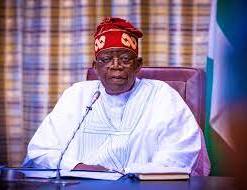
President Bola Tinubu yesterday, transmitted the appropriation (Repeal and Re-enactment Bill 2024/2025 bill to the House of Representatives for consideration and expected approval in accordance with constitutional and appropriation process.
Reading the letter during plenary, the Deputy Speaker, Rep.
Benjamin Kalu said that the appropriation bill is aimed at ending the practice of running multiple budgets concurrently.“Rt Honourable Speaker, the Bill seeks to authorize the issue from the consolidated Revenue fund of the federation of the total sum of N43,561,041,744,507.
“Comprising N1,742,786,788,150 for statutory transfers, N8,270,960,606,831 for debt service, N11,268,513,380,853 for recurrent (non-debt) expenditure and N22,278,780,968,673 for capital expenditure for the year ending 31 December 2025,” the President said.
According to the President, the bill provides a transparent and constitutionally grounded appropriation mechanism.
President Tinubu in the letter said that the appropriation is not only critical but time-sensitive expenditures necessary in advancing the well-being of Nigerians.
He further explained that the bill seeks to strengthen implementation discipline and accountability by requiring that appropriated funds are applied strictly for purposes specified in the schedules.
The House however adjourned to Thursday being 18, Dec for further consideration of the Bill.



FRSC Cautions Personnel on Harassing Female Motorists
ShareThe Federal Road Safety Corps (FRSC), has warned its officials against harassment of female motorists during road traffic operations. The Zonal Commanding Officer, RS 6...

FG Reopens 47 Unity Colleges Nationwide After Abduction Fears
ShareBy Tony Obiechina, Abuja The Federal Government has reopened all 47 Federal Unity Colleges that were shut down over escalating insecurity across the country....


Zamfara Kicks as Senate Clears 64 Ambassadorial Nominees
ShareBy Eze Okechukwu, Abuja The Senate yesterday confirmed 64 ambassadorial nominees submitted by President Bola Tinubu while also subjecting newly nominated heads of key oil...


FCT Traditional Ruler Donates N1m to Support Tinubu’s Reelection
ShareBy Laide Akinboade, Abuja The Agaba of Jiwa Chiefdom in Abuja Municipal Area Council (AMAC), Alhaji Idris Musa, has supported...


Nigeria Clinches Bronze in Judo at 4th African Youth Games
ShareTeam Nigeria clinched a bronze medal in judo at the ongoing 4th African Youth Games after winning the 63kg category bout against Zimbabwe. The...

NCDMB Set to Attain 100 Per Cent Local Content in Africa
ShareBy Eddy Ochigbo, Abuja The Nigerian Content Development Management Board (NCDMB) has reaffirmed its determination to increase the current from...


Trump Expands US Travel Ban to Five More Countries
SharePresident Donald Trump has expanded a US travel ban, barring nationals of five additional countries and people travelling on Palestinian Authority-issued documents from entering the US. The White...


Farouk Ahmed, Gbenga Komolafe Resign after Dangote Petition
ShareBy Eze Okechukwu, Abuja President Bola Tinubu has nominated new chief executives for Nigeria’s two foremost petroleum regulatory agencies following the resignation...

NLC Stages Nationwide Strike over Insecurity
ShareLabour Takes Nationwide Protest to Streets over Insecurity The Nigeria Labour Congress (NLC) yesterday led a nationwide protest across major...

Presidency Transmits N43.5trn 2026 Appropriation Bill to Reps
SharePresident Bola Tinubu yesterday, transmitted the appropriation (Repeal and Re-enactment Bill 2024/2025 bill to the House of Representatives for consideration and expected approval...