
COVER
Outcry Over Disenfranchisement as CVR Exercise Ends Nationwide

By Idris Umar, Abuja with Agency reports
Anger and frustration have greeted the termination of the nationwide Continuous Voters Registration (CVR) on Sunday, July 31 by the national electoral body, the Independent National Electoral Commission (INEC).
The commission has insisted that there would be no time extension to accommodate eligible voters who were not able to be captured, for often times no fault of theirs as the exercise in many centres were hobbled by malfunctioning and inadequate capture machines.
It could be recalled that the deadline for termination of the exercise was earlier fixed for June 30.
Apart from extending it by one month, it was also extended to eight hours daily from 9 a.m – 5 p.m instead of the previous duration of six hours (9 a.m – 3 p.m) daily, including on weekends.According to INEC, Commissioner on Voter Education and Publicity, Mr. Festus Okoye, who spoke on Saturday the nationwide Continuous Voters’ Registration exercise will end on Sunday, July 31, and there would be no extension of date, saying INEC was working within the confines of timetable and the electoral law.
Okoye, made the declaration during a press conference at the Commission’s headquarters in Awka, the Anambra’ State, capital.
Okoye explained that the continuous registration, started on June 28, 2021, with the launch of the online pre-registration of fresh registrants adding that it was the Commission’s desire and hope “to finish well” in the present circumstance.
“The CVR process will terminate tomorrow (Sunday) being the 31st day of July 2022. The Commission has to bring this process to a close because we have to carry out dedublication of all the registered voters to remove double and multiple registrants.
“The commission has to bring the CVR to a close because the law mandates the commission to display the voters register in the 774 Local Government Areas of Nigeria and the 8, 809 registration areas for claims and objections. Thereafter the Commission has to trim the registered cards of the fresh registrants, those who applied for transfer, those had damaged PVCs or defective PVCs and we have to sort all the permanent voters cards back to the various local governments for purposes of collection.
“It will be completely useless for people to register and not be in a position to collect their permanent voters cards,” he stated.
Okoye noted that the Chairman of the Independent National Electoral Commission Professor Mahmood Yakubu has promised the nation that the permanent voters cards for those who registered between January and June will be ready by October this year.
“But those who are registering between the first day of July and 31st of July will be ready in November. In July 2021, we launched the physical process of registration and this was carried out in our states and local government offices before we escalated into our registration processes at various registration areas on a rotational basis.
He noted that the registration process slowed down in parts of the South-East due to the problem of insecurity, and that the INEC office in Anambra devised means to control the surge that started rising almost a month ago.
He disçlosed that they isolated non biometric measures by training their staff to meet with the necessary demands of individuals.
He disçlosed that the IVED machines were taken to the markets, churches, NYSC camps and NUJ Secretariats as well as places where there were large concentration of people, so as to decongest highly populated areas and created Complaints Desks and Log Platforms, which helped in responding to all the complaints for necessary resolution of all issues, adding that such interventions were carried out in 82 locations.
He comnended the involvement of traditional rulers, community leaders, town union executives and President Generals of town unions, the media and security agencies for the tremenous role they played through their interventions, strategies and others ideas towards the success of the exercise in the state and beyond.
While similar measures have been applied in all the states due to the surge of registrants, it appears that indeed, they weren’t effective enough in ensuring that all eligible voters were registered to vote in next year’s election.
2023: North-west APC Calls for Extension of Voters’ Registration
Following the likely disenranchisement of voters in the the six Northwest states of Sokoto, Kebbi, Katsina, Kano, Jigawa and Kaduna, the leadership of the All Progressives Congress (APC), in the zone has urged the Independent National Electoral Commission (INEC) to extend voters’ registration to allow additional eligible voters acquire their Permanent Voter Cards (PVCs).
Mr Musa Mada, the Zonal Publicity Secretary of the party, made the call during an interview with the News Agency of Nigeria (NAN) on Saturday in Kaduna.
Mada said the call for the extension had become necessary following mass rush by eligible voters to get registered ahead of the 2023 general elections.
“We are concerned about the number of people trooping to INEC office on daily basis, most of whom are yet to be captured.
“It will only be fair if an extension of the closing date be considered so that additional eligible voters will be registered,” Mada added.
He also urged INEC to consider the possibility of creating additional registration centres, saying this would ease dificulty faced by the eligible voters.
“Thousands of eligible voters might be disenfranchised due to difficulties being faced to access registration centers.
“INEC should know that the whole exercise bothers on the people, as such, it will not be fair to disenfranchise them,” he said.
On its part, a coalition of Civil Society Organisations (CSOs) for Good Governance has appealed to the Independent National Electoral Commission (INEC) to further extend the July 31 deadline for the termination of Continuous Voter Registration (CVR).
The coalition made the appeal in a letter signed by its Convener, Prof. Theophilus Ndubuaku, addressed to INEC Chairman and submitted at the commission’s headquarters on Friday in Abuja.
According to the letter, the CSOs urged INEC to magnanimously consider extending the deadline for the exercise in favour of the 2023 general elections.
The CSOs said that its appeal was anchored on information reaching it from several parts of the country, across the six geo-political zones.
It stated that large segments of the population have not been able to register after queuing up at various registration centres without any hope of being registered.
“If this deadline is not extended, millions of Nigerians will be disenfranchised and since this problem may enhance the narrative of marginalisation, which cannot augur well for democracy in Nigeria.
“During the anticipated extension of the deadline for voter registration, INEC will have the opportunity of addressing the lapses which have been experienced.
“By law, INEC enjoys the liberty of official closure of 90 days to the elections, so extending it by at least one month will enable good citizens of Nigeria to register,” the letter stated.
Ndubuaku, who led members of the society in a protest to submit the letter, urged INEC to consider the plead of Nigerians.
“Somebody might say even if you extend it forever some people might not still register. But so long that we still have crowd at the centres it means that we still have people who are waiting.
“Some people are afraid that they may not be able to register in the remaining two days.
“We know the tenacity of INEC that you can extend it a little bit, which will still be within the law.
“We know you have extended it several times. You have tried, but all over the country there are still long queues,” Ndubuaku said.
He said while the coalition could not force INEC to extend it as well as know its constraints, they believe that INEC could still consider the request, “even if it is to ask for more fund which is justifiable”.
Ndubuaku said that if the request could be granted, the coalition made up of about 25 CSOs, would mobilise support of NIgerians for INEC on the exercise.
Receiving the letter, the Assistant Director, Security Unit, INEC, Mrs Endurance Babaginda, said that the letter would be forwarded to the INEC chairman.
The commission fixed July 31 as the deadline to allow it perform the legal requirements it has to undertake before the general elections.
These includes clean-up of voter register, display details of the newly registrants at each of the 8,809 Registration Areas (Wards) across the 774 Local Government Areas and printing of millions of Permanent Voter Cards (PVCs).
Defranchised Abuja Residents Cry out to INEC to Extend Exercise
Also, some Abuja residents in Kuje Area Council of FCT have appealed to INEC to extend the Continuous Voters Registration (CVR) to enable eligible voters get registered before the 2023 general elections.
The residents made the call in separate interviews with the News Agency of Nigeria (NAN) on Sunday in Kuje.
They said that those willing to register had been coming out in large numbers in vain.
The exercise, which had been generally peaceful, orderly and hitch-free at the Kuje INEC office and some registration centres, experienced a massive crowd of registrants on Sunday.
The registrants included people who want to register for new Permanent Voter Cards (PVCs), people whose cards had been defaced and those that wanted to effect transfer to another polling unit.
Mr Abraham Gado, a registrant, noted the success of the 2023 general election depended a lot on public perception of INEC as neutral and fair to all.
Gado insisted that large number of people in the six area councils were yet to register and collect their PVCs.
However, he acknowledged that the deadline for registration had been previously extended but appealed that INEC should consider extension so as not to disenfranchise anyone.
“If this deadline is not extended, millions of Nigerians will be disenfranchised and this may enhance the narrative of not choosing good leaders, which is not good for democracy in Nigeria.
“The extension is very important as it will build public trust towards peaceful electoral outcomes in the 2023 general election,” he said.
Mr Luka Ayuba, another registrant, reminded the electoral umpire of the provisions in the amended Electoral Act, which allowed for the extension of the voter registration.
Ayuba described the exercise as tedious and cumbersome, marred by delay in capturing, slow process and other technical hitches.
He, therefore, appealed for extension and deployment of more machines to different electoral wards in the area to fast track their registration and enable large number of people to be captured.
“This would result in the disenfranchisement of millions of Nigerians willing and eager to perform their civic responsibilities in the 2023 polls.
“Given the foregoing, we call on INEC to extend the Continuous Voters Registration till at least the end of August 2022.
“If the registration is extended it will help compensate for the identified technical difficulties faced and assure Nigerians that INEC is seen to be fair to all,” he said.
Meanwhile, Mr Yakubu Allawa, the Kuje INEC Electoral Officer (EO), said the office had only four functional machines for the entire area council, thereby making the exercise cumbersome.
Allawa said another major challenge the commission was facing was issue of poor network, which had been slowing down the process during capturing.
He added that adequate priority was being given to Persons with Disability (PWDs), the elderly and pregnant women in the area.
“We have been asking people to come out and register for a long time, this mentality of coming out at the last minute have to be discouraged.
“For long people refused to come out to register and now that the closure for the exercise is drawing nearer, people are trooping out in large numbers,” he said.
Many Nigerians ‘ll be Disenfranchised – IPAC
The Inter Party Advisory Council (IPAC) in Lagos State, on its part has noted that many Nigerians may not have been captured in the INEC Continuous Voter Registration (CVR) that ended nationwide on Sunday.
IPAC also said that many Nigerians that would be of voting age some months to the election would also be disenfranchised.
In Lagos state l those who registered online as at July 18, were 640, 560 but many of them had not completed their registration, while those who completed the registration exercise were 451, 156.
INEC Resident Electoral Commission (REC) in Lagos state, Mr Olusegun Agbaje said on July 24, that current statistics of July 18, showed that Lagos state had about seven million registered voters.
The REC disclosed that the number was derived from the new registrants so far in the ongoing CVR, added to those in the old register of voters in the state.
IPAC Chairman in Lagos state, Mr Olusegun Mobolaji, however, said that INEC should reconsider ending the registration.
Mobolaji made the appeal as he spoke on Sunday, regarding the July 31 deadline of the CVR.
He said that for elections to be free, fair and credible, every eligible citizen must be allowed to participate in choosing the leadership they wanted.
“Everything about credible elections is voter register and voter cards, and if that is actually what INEC really stands for as unbiased umpire, for the purpose of democracy, INEC should be fair in all areas, especially in allowing those who have not registered to do so.
“I think INEC should have a way of allowing every eligible voter get their voter cards to choose the leadership they want,” he said.
He stressed that irrespective of the time the registration started, the commission should.not discontinue the exercise.
“Irrespective of the fact that INEC had started the voter enrollment exercise in 2021, if the time is not enough for everyone that want to participate in the election to get registered and obtain a voter card, INEC should not stop registration,” he said.
He said that continuation of voter enrollment would not affect every other electoral activity and processes put in place by the commission to conduct good elections.
According to him, INEC should continue until it becomes glaring that it will be impossible to print voter cards again, we will all know that they have done their best.
“I think voter registration can go simultaneously with every other plan INEC has.
“There should be a way round this, such that everyone that is of voting age is given the opportunity to be able to vote. We still have months to the election.”
Mobolaji said that INEC could get more gadgets and personnel to register every eligible citizen who presented themselves for the registration.
“INEC may have done its best but I can say that its best is not enough for the present dispensation as well as the requirements and demand of present democracy.
“Nigerians want to be part of the decision making process. They want to elect good leaders. All eligible citizens want to be part of it,” he stated.
According to him, the only way to reposition the country is through ballot and every qualified citizen should be allowed to vote in 2023.
He said that the crowd at enrollment centres across the country showed that the time for registration was not enough.






By Laide Akinboade, Abuja
As part of efforts to reposition the newspaper for optimum corporate performance, the management of Asset Newspapers Limited, Publishers of DAILY ASSET, has announced the appointment of David Torough as the Editor of the Abuja-based national daily.
A statement by the management said the appointments were part of the company’s new strategy to further penetrate the various states in the country and raise its readership and patronage.
“DAILY ASSET is widely acceptable across the country and to maintain our leadership position, we need to increase management presence, hence the need to create new Bureau offices in some locations outside Abuja and Lagos,” the statement quoted the Publisher/ Editor-in-Chief, Dr Cletus Akwaya to have said.
In a statement yesterday, Publisher and Editor-in-Chief of the fast-growing daily, Dr. Cletus Akwaya said the appointment was part of the new strategy to properly situate the paper for better productivity.
“DAILY ASSET has a commitment with the Nigerian people. We are determined to weather the storm and give Nigerian readers a Newspaper that satisfies their yearnings and reading pleasure and we can only do that with the right set of professionals,” the statement said.
Akwaya, a former Commissioner of Information from Benue State said the difficult times being faced by Nigerians posed a great challenge to the media as the people deserved credible information with which to make choices.
“We have a bond with the people, to offer credible information at all times in the best tradition of the Nigerian Press and on this scale of objectivity, truth and fairness, we pledge to remain steadfast no matter the challenges,” Akwaya was quoted to have said.
He said the newspaper will maiantin its daily print run and circulation to all states of the federation and urged advertisers to take advantage of the deep penetration of the Daily Asset brand to send their messages.
Torough, the new Editor has had a steady rise in the Newspaper in the last five years.
A graduate of Mass communication of the Benue State University, Makurdi, Torough joined the company in 2022 as Benue State Correspondent. He was spotted for his brilliance and redeployed to Abuja the following year and promoted to Deputy News Editor. He was subswuently named Deputy Editor of the paper, a position he held until the recent appointment.
Torough has attended several journalistic workshops and trainings to properly equip himself for the task ahead.
The statement also said the Management named Eze Okechukwu as Deputy Editor.
Before his elevation as Deputy Editor, Eze has been Deputy Politics Editor and DAILY ASSET Newspaper correspondent covering the Senate, having joined the organization in 2021.
Born on March 10, 1975, Eze holds a Masters Degree in Mass Communication from the Enugu State University of Science and Technology.
Eze began his journalism career with Daily Star, Enugu and later worked with Daily Trust Newspaper, Abuja as sports reporter.
Aside from his journalistic excellence, he has a great deal of passion for sports.

From Ngutor Dekera, Kaduna and Aliyu Askira, Kano
Northern governors and traditional rulers yesterday called for the suspension of mining activities across the region for six months, blaming illegal mining for worsening insecurity in many states.
The resolution was contained in a communiqué issued after a joint meeting of the Northern States Governors’ Forum and the Northern Traditional Rulers’ Council held at the Sir Kashim Ibrahim House, Kaduna. The meeting, chaired by the Gombe State Governor and NSGF Chairman, Muhammadu Yahaya, had in attendance the 19 northern governors and chairmen of the 19 states’ traditional councils.The Forum expressed concern over the escalating violence in parts of the North, including the killings and abductions recently recorded in Kebbi, Kwara, Kogi, Niger, Sokoto, Jigawa and Kano states, as well as renewed Boko Haram attacks in Borno and Yobe.“The Forum extends its deepest condolences and solidarity to the governments and good people of the affected states,” the communiqué said, noting that the attacks on schoolchildren and other citizens had become “unacceptable tragedies” that required urgent collective action.It commended President Bola Tinubu for what it described as the Federal Government’s “firm response” to recent abductions and insurgency threats, especially the rescue of some abducted pupils.The governors also saluted security agencies for their sacrifices on the frontlines.“We resolved to renew our support for every step taken by the President and Commander-in-Chief to take the fight to insurgents’ enclaves in order to end the criminality,” the Forum stated.A major highlight of the meeting was the North’s renewed push for the establishment of state police, with governors and traditional rulers insisting that decentralised policing had become inevitable.“The Forum reaffirms its wholehearted support and commitment to the establishment of state police,” the communiqué added, urging federal and state lawmakers from the region to “expedite action for its actualisation.”On illegal mining, the governors said criminal mining networks were fuelling violence and providing resources for armed groups.As a corrective measure, they asked Tinubu to direct the Minister of Solid Minerals to impose a six-month suspension of mining activities in order to allow for a full audit and revalidation of licences.“The Forum observed that illegal mining has become a major contributory factor to the security crises in Northern Nigeria. “We strongly recommend a suspension of mining exploration for six months to allow proper audit and to arrest the menace of artisanal illegal mining,” it said.To strengthen the fight against insecurity, the governors also announced the creation of a regional Security Trust Fund.Under the proposed arrangement, each state and its local governments will contribute ₦1bn monthly, to be deducted at source under an agreed framework.They said the fund would help provide sustainable financing for joint operations, intelligence-driven interventions and coordinated security responses across the region.At the end of the meeting, the Forum reaffirmed its commitment to unity and collective responsibility.“Only through unity, peer review and cooperation can we overcome the pressing challenges before us,” it declared.The Forum agreed to reconvene on a date to be announced.Meanwhile, Nigeria’s worsening security crisis took a grim turn on Monday as bandits launched fresh attacks in Kano State, abducting 25 villagers, even as the Federal Government raced to secure the release of more than 300 Catholic school children kidnapped in Niger State.In the early hours of Monday, armed bandits invaded Unguwar Tsamiya—popularly called Dabawa—in Shanono Local Government Area of Kano State, whisking away nine men and two women after shooting into the air and assaulting residents. The attackers also rustled two cows.A resident lamented the community’s helplessness: “We cannot do otherwise; most of us cannot leave because we have nowhere to go. This is our place, our land and everything is here.”The assault came less than 24 hours after a similar attack on Yan Kamaye in Tsanyawa LGA, a community along the volatile Katsina border.In Niger State, National Security Adviser Nuhu Ribadu has assured distraught families of St. Mary’s Co-Education School, Kontagora that the more than 300 students and staff abducted on November 21 will return home “soon.” Ribadu, who led a high-level federal delegation to the school on Monday, said the abductees are safe, though he offered no specifics on their location or the status of rescue operations.According to Daniel Atori, spokesman for the Catholic bishop overseeing the school, the NSA reassured officials: “The children are where they are and will come back safely.”The St. Mary’s attack is part of a worrying resurgence of mass kidnappings reminiscent of the 2014 Chibok schoolgirls’ abduction. Security analysts warn that banditry has evolved into a “structured, profit-seeking industry,” with hundreds of Nigerians abducted in November alone.The Kontagora school abduction occurred the same week 25 girls were kidnapped in Kebbi State—victims who authorities say have since been rescued through “non-kinetic” means. About 50 of the St. Mary’s hostages have also managed to escape.Ribadu’s delegation, which included the Minister of Humanitarian Affairs and the Director-General of the Department of State Services (DSS), reaffirmed the government’s commitment to securing the freedom of all abducted citizens.As communities from Kano to Niger continue to bear the brunt of these violent incursions, the escalating spate of kidnappings underscores the urgent national demand for a more decisive and coordinated security response.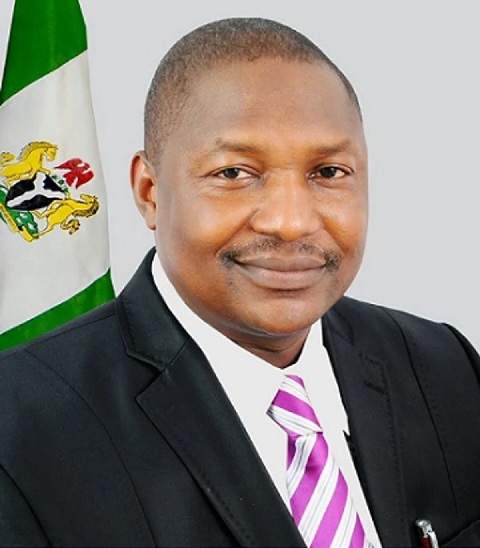
By David Torough, Abuja
The Economic and Financial Crimes Commission (EFCC) said former Attorney‑General of the Federation and Minister of Justice, Abubakar Malami, will face a team of interrogators at its office daily throughout December.
A credible source in the EFCC said on Monday that the daily appearance was part of an ongoing investigation into the whereabouts of an alleged 490 million dollars Abacha loot secured through a Mutual Legal Assistance (MLAT) request. The source said that Malami, who was summoned for interrogation by the EFCC on Saturday, was barred from leaving Nigeria for the next one month.According to the source, one of the conditions for his release on Saturday was that he should report daily to the EFCC Headquarters in Abuja for further interrogation.The source said Malami would have to appear daily at the anti-graft office due to the volume of the investigation and the seriousness of the charges against him.”We seized his passport, it is the normal routine during investigation, but he has to report at the EFCC headquarters in Abuja every day for the next month.”He will be reporting for further investigation throughout December.”He will be reporting every day, starting from Dec. 1st to Dec. 31st.He will appear before the team of investigators for the entire month of December.”He will be reporting to EFCC for investigation for the period because of the volume of the investigation and the seriousness of the charges against him,” the source added.According to the source, a fact sheet on the former minister revealed that Malami had several issues to clarify with the EFCC within the coming weeks.“We have asked him to explain the whereabouts of the $490 million Abacha loot secured through MLAT.“We didn’t say he stole money, but he should account for the loot. This is one of the issues he will clarify to our investigators.”The commission cited the large volume of documents he must review and the need for extensive interviews as reasons for seizing his passport.The source said EFCC would not engage in a war of words but would release its findings after a thorough investigation.Malami, in a statement by his media aide, Mohammed Doka, on Monday in Abuja, however, described the EFCC investigation as a political witch‑hunt.He confirmed he honored an EFCC invitation on Nov. 28, describing the engagement as fruitful and expressing confidence that the probe would vindicate him.Malami described the EFCC’s allegations as baseless, illogical and devoid of substance, insisting they collapse under factual scrutiny.


Insecurity: FCTA Completes Ushafa, Saburi Divisional Police Headquarters, 10 Underway
ShareBy Laide Akinboade, Abuja In order to boost security, the Federal Capital Territory Administration (FCTA) on Wednesday said it has...

2027: I ‘ll Resign As Minister If Tinubu Loses FCT, Rivers – Wike
ShareBy Laide Akinboade, Abuja The Minister of the Federal Capital Territory (FCT), Nyesom Wike, has declared that he will step...


JAMB Extends Deadline for 2021–2025 Outstanding Admissions to Nov 30
ShareThe Joint Admissions and Matriculation Board (JAMB) has extended the deadline for candidates with outstanding admission offers from the 2021...


BIPC Board Inspects Taraku Mills Preparatory to Test Running
ShareFrom Attah Ede, Makurdi The Board of Directors of the Benue Investment and Property Company Limited (BIPC) has inspected the...


UBEC Renovates 287 Schools, over 4,000 Classrooms Nationwide
ShareThe Universal Basic Education Commission (UBEC) said it has renovated 287 schools and more than 4,000 classrooms across the country...

Nigeria at 66: FG Declares Thursday, Public Holiday
ShareThe Federal Government has declared Thursday as a public holiday to mark Nigeria’s 66th Independence Anniversary. The Minister of Interior,...

Tinubu Signs 2025 Budget Amendment Bill
ShareBy David Torough, Abuja President Bola Tinubu has signed the Appropriation (Amendment) (No. 4) Bill, 2025, extending the implementation period...

NAN Backs Insurance Sector’s Transformation Agenda, hails NAICOM
ShareBy Tony Obiechina, Abuja The National Association of Nigerian Students (NANS) National Secretariat, the umbrella body representing over 40.1 Million...


Don Calls for More Investment in Entrepreneurship/Innovation in Nigeria
ShareFrom Joseph Amedu, Lokoja A Professor of Entrepreneurship and Corporate Strategy at the Federal University, Lokoja, John Alabi has called...

Tinubu Submits NDDC 2026 Appropriation Bill
SharePresident Bola Tinubu has submitted the 2026 Statutory Budget Proposal of the Niger Delta Development Commission (NDDC) to the House...