
Foreign News
Iran Hands Out More Death Sentences to Anti-Government Protesters

Four people have been sentenced to death on the charge of “enmity against God” in connection with the recent anti-government protests in Iran.
Revolutionary Courts in Tehran said one of the unnamed “rioters” hit and killed a policeman with his car, the judiciary’s Mizan news agency said.
The second possessed a knife and a gun, and the third blocked traffic and caused “terror”, it alleged.
The fourth was convicted of a knife attack, Mizan reported late on Tuesday.
Human rights activists condemned the death sentences – which brought the total to five since Sunday – saying they were the results of unfair trials.
“Protesters don’t have access to lawyers in the interrogation phase, they are subjected to physical and mental torture to give false confessions, and sentenced based on the confessions,” the director of Norway-based Iran Human Rights, Mahmood Amiry-Moghaddam, told AFP news agency.
Although the judiciary did not disclose the identities of the five individuals sentenced to death, Amnesty International said information about their charges had led human rights activists to believe they were Mohammad Ghobadlou, Manouchehr Mehman Navaz, Mahan Sedarat Madani, Mohammad Boroughani and Sahand Nourmohammad-Zadeh.
It added that they were among at least 21 detainees charged with security-related offences that are punishable by death under Iran’s Sharia-based legal system, including “enmity against God” and “corruption on Earth”.
At least 348 protesters have been killed and 15,900 others arrested in a crackdown by security forces on what Iran’s leaders have portrayed as foreign-backed “riots”, according to the Human Rights Activists News Agency (HRANA), which is also based outside the country.
The women-led protests against clerical rule erupted after the death in custody three months ago of Mahsa Amini, a 22-year-old woman who was detained by morality police for allegedly breaking the strict rules on hijabs.
The judiciary’s announcements came after 12 people were reportedly killed amid a fresh wave of unrest that began on Tuesday.
Activists called for three days of demonstrations and strikes to commemorate “Bloody November” – a reference to the deadly crackdown on the last major nationwide protests that began on 15 November 2019, when many Iranians reacted angrily to a sudden increase in fuel prices.
Videos posted on social media on Tuesday showed crowds in Tehran and other major cities chanting slogans against the Supreme Leader, Ayatollah Ali Khamenei, including “death to the dictator”.
At a metro station in the capital, protesters set fire to a headscarf on a platform as a crowd shouted that Ayatollah Khamenei “will be toppled”.
Another video from a metro station appeared to show officers beating people inside a train carriage, while in a third, people were seen running and falling over as security forces allegedly opened fire.
On Wednesday night, state media reported that at least five people were killed when armed “terrorist elements” opened fire at protesters and police officers at a market in the south-western city of Izeh. The deputy governor Khuzestan province said the dead included three men, a woman and a girl.
Opposition activist collective 1500tasvir also said it had received reports of a high number of casualties in Izeh and accused security forces of killing a 10-year-old boy. It also posted a video that it said showed some protesters setting fire to a seminary in the city.
Earlier, Kurdish human rights group Hengaw reported that a male protester was shot and killed by security forces in the north-western city of Kamyaran, in Mahsa Amini’s home province of Kurdistan.
He had been standing near the house of another man who was killed by direct fire from security forces on Tuesday, it said. Another two men were also killed in the nearby city of Sanandaj, it added.
Hengaw, which is based in Norway, also said that protesters seized control of the city of Bukan, in neighbouring West Azerbaijan province, on Tuesday night.
State media reported that “rioters” shot dead two members of the Islamic Revolutionary Guard Corps (IRGC), including a colonel, in Bukan and Kamyaran on Tuesday.
They also said that a cleric who was a member of the paramilitary Basij Resistance Force, which is controlled by the IRGC, died after being hit by a Molotov cocktail in the southern city of Shiraz.
State media have so far reported the deaths of 38 security personnel since the protests began. HRANA has put the toll at 43.
By Eze Okechukwu, Abuja
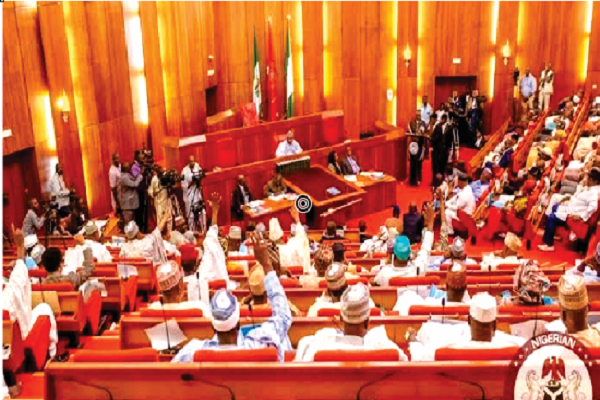
The Senate yesterday ordered mandatory health screening for every international passenger arriving Nigeria airports, seaports, land borders as Ebola resurfaces in the Democratic Republic of Congo with a scare case reported in the FCT.
The resolution followed an urgent motion by Senator Francis Fadahunsi, who warned that with Lassa fever already ravaging states, Nigeria cannot afford another outbreak.
“Protecting our entry points is far cheaper than managing Ebola,” Fadahunsi told the chamber.
Lawmakers insisted screening must be total and indiscriminate — no exemptions based on nationality or departure country because infected travellers can transit through safe-listed nations.
Senator Diket Plang raised the stakes further, demanding immediate funding for NCDC and Port Health Services, including release of withheld funds and emergency budget.
Senate President Godswill Akpabio said the Federal Government has started releasing Ebola response funds but ordered relevant committees to track every kobo.
“Ascertain whether the funds were released and judiciously utilised. Any outstanding debt must be released by the Finance Ministry without delay,” Akpabio directed.
At least 72 civilians who had been prospecting for gold in a border region of Sudan have been killed in air strikes, a regional rights group said.
Emergency Lawyers, based in the Sudanese capital, Khartoum, said jets targeted the so-called artisanal miners at a popular gold mining site on Saturday.
Neither the Egyptian government nor the de facto Sudanese authorities have so far commented.
Cairo has previously faced accusations of deadly strikes on gold prospectors as part of a crackdown on illicit activity along its southern border.
Emergency Lawyers noted the previous alleged attacks and said they represented not only a violation of Sudan’s sovereign territory but demonstrated the government’s lack of control over the region.
“The deliberate targeting of unarmed civilians violates international humanitarian law and the right to life,” it said in a statement on Sunday. “These acts may constitute war crimes.”
It noted that its death toll was provisional and could rise.
The Paris-based Sudan Tribune reported that the death toll could far exceed the number reported by Emergency Lawyers, citing a survivor of Saturday’s attack who said many more people had been injured.
Eyewitnesses said the attack began around 06:00 local time (04:00 GMT), with the aircraft firing more than five missiles directly at the miners’ camps, destroying them and excavation pits with people still inside, the newspaper wrote.
The Sudan Tribune reported claims in June that Egyptian forces had used drones and artillery to target artisanal mining sites in the same region, killing several, after sporadic incidents of Egyptian border guards of burning equipment, torching temporary shelters, and firing live ammunition to disperse mine workers.
Days later, Egypt’s border agency announced that it and the military had begun a sweeping security campaign along the border to foil illegal migration, drug smuggling and illegal mining.
At the same time, Sudan’s de facto leader announced an investigation into the alleged strikes, which were said to have killed dozens.
Gold lies at the core of the border tensions.
Sudan’s ongoing civil war has led to a surge in artisanal mining – and often risky practice conducted by civilians with rudimentary tools and without official permission – particularly in remote areas near its borders.
Gold-rich areas lie along porous borders in terrain historically associated with cross-border smuggling routes, with artisanally mined gold potentially feeding into those channels.
Egypt’s border force said in June that it had seized 86 tonnes of gold ore along with amateur prospecting equipment.
Artisanal mining has also reportedly continued in Sudan’s conflict zones and smuggled gold may be a source of income for armed insurgent groups.
This has raised concerns of illicit Sudanese gold undermining the legitimate Egyptian gold market.
Several German fighter jets will take part in the Northern Atlantic Treaty Organisation (NATO) annual nuclear defence exercise this week as troops from 17 countries take part in the Steadfast Noon drill.
The German Air Force said three Tornado jets will take part in the exercise hosted by Italy, which starts Tuesday and runs for about a week and a half.
The jets are normally stationed in Büchel in the German state of Rhineland-Palatinate.
NATO has not revealed the exercise scenario but said its scale would be comparable to last year’s drill, which involved around 2,000 personnel and more than 70 aircraft.
Last week, NATO’s head of nuclear policy, Nassima Barrows, said the exercise was designed to demonstrate the alliance’s readiness and ability to defend its territory.
No real nuclear weapons will be used, she added.
NATO said the exercise was not linked to current events or directed at any specific country.
Military experts say the drills, held regularly in October, include practising the safe transport of weapons from underground storage facilities to aircraft and mounting them on fighter jets.
Only practice bombs without real nuclear warheads are used during the drills.




INEC Urges South-South Youths to Shun Electoral Violence Ahead 2027 Polls
ShareBy Orjime Moses, Abuja The Independent National Electoral Commission (INEC) has urged youths in the South-South to shun electoral violence,...
Nigeria’s Politics of Fear: Who Profits When Democracy Bleeds?
ShareBy Jude Dike Nigeria is approaching another general election, but something more troubling than the contest for political power is...

NAICOM Wants Improved Claims Settlement, Risk Management
ShareBy Tony Obiechina, Abuja The National Insurance Commission has called for improved claims settlement, stronger risk management, and greater accountability...


2027: Alia Mobilises Benue for Tinubu, APC Candidates
ShareBy Attah Ede, Makurdi Benue State Governor, Rev. Fr. Hyacinth Alia, has called on residents of the state to throw...


FG Targets 40 Per Cent Drop in Transport Fares
ShareBy David Torough, Abuja President Bola Tinubu has unveiled fresh measures to reduce the cost of transportation across Nigeria, targeting...
A Right to Life, But at What Cost?
ShareBy Oluwaleye Adedoyin Grace What is the value of a constitutional right that citizens struggle to enjoy? In Nigeria, the...
Bayelsa Oil Communities Accuse Renaissance of Withholding Contract Plan
ShareFrom Mike Tayese, Yenagoa More than 100 Oil-Producing Communities in Bayelsa, and their Representatives, has accused Renaissance Africa Energy Company...


Police Declare 25-Year-Old Okada Rider Missing in Lokoja
ShareFrom Joseph Amedu, Lokoja The Kogi State Police Command has declared a 25-year-old commercial motorcyclist, Siraka Auwal, missing. Auwal, a...
African Ministers Establish Common Communication Front, Revive Annual Continental Meetings
ShareBy David Torough, Abuja African Ministers of Information have called for a coordinated continental communication framework to combat misinformation, strengthen...
Delta Targets Higher Oil Production, Improved Host Community Benefits
ShareThe Delta Government has pledged to boost oil production, improve host community benefits and sustain peaceful operations in the state’s...