
Business News
Abuja: 472 UTC Shop Owners to Relocate to Temporary Site over Facelift

No fewer than 472 shop owners and traders in Union Trading Company, popularly known as UTC Area 10 market have concluded arrangements to relocate to the completed temporary site beside the existing market.
This followed the agreement signed by Abuja Investment Company Ltd.
, on behalf of the Federal Capital Territory Administration with Urban Shelter Limited in 2021.The Technical Coordinator, Urban Shelter Ltd.
, Mr Ayodele Kolawole, made this known while answering questions from newsmen during the inspection of the temporary market site on Saturday.He said that necessary measures have been put in place to ensure that nobody was disrupted of his or her livelihood or shortchanged.
According to him, the UTC market building is becoming a slum and threat to the lives of the traders and customers, considering its years of existence.
Kolawole said that the remodeling, which would last for two years would be done in sections, as part of the resolutions reached with the traders, shop owners, Abuja market management , Urban Shelter Ltd., and Abuja Investment Company.
He said prior to the commencement of the remodeling plan, all parties involved had agreed with the Minister of FCT’s endorsement.
Kolawole said: “The temporary market site for relocation of UTC traders and shop owners from the existing market is ready, there is nothing to fear, they had over 472 shops there but in the temporary site, the shops are 480.
“The market is going to be redeveloped, Minister of FCT wants the environment to be facelifted because the area is becoming a slum.
“The minister had directed that the market should be given a facelift, and the facelifting is the redevelopment, total redevelopment.”
He said that the developer, Urban Shelter, with Abuja Investment Company Limited, have put human face in the matter right from the beginning.
Kolawole said: “They don’t want to push people away from the place they are earning their daily living and throw them into confusion.
“That is why we have put the necessary measures in place to move the traders to the temporary site.
“Prior to the decision, there was a town hall meeting between the traders, the executives and members, including other key stakeholders.
“And they both agreed that they will move to the temporary site, aside the temporary side, there were options given to them.
“But they said they don’t want to go far away from their business environment because of the fear of losing customers.”
Also, one of the traders at the temporary site, Uche Paul, said: “We have paid money and we have since been waiting for the relocation.
He said: “They said after building the place, we will go back, we are ready, most of us have finished paying, the developer is the one that is slow.”
On his part, former Chairman of the traders in the market, Lanre Ajayi said: “I have paid for my shop, so how can someone say that we don’t want to move?”
According to him, those refusing to relocate are the few individuals that have engaged in exploiting other innocent traders.
Ajayi said: “Some of them are shop agents, others are agents of 20 to 30 shops, that is their means of livelihood, they don’t want to leave.
“We have over 472 shops in the old place but those that stay in those shops are close to 700.” (NAN)

By Tony Obiechina, Abuja
The Budget Office of the Federation has reaffirmed the integrity of Nigeria’s newly enacted Tax Reform Acts, cautioning against what it described as governance by speculation and unverified claims following allegations of post-passage alterations.
In a statement on Wednesday, the Budget Office said it had taken note of concerns raised by the Minority Caucus of the House of Representatives, stressing that the sanctity of the law is central to constitutional democracy and not a mere procedural formality.
According to the Office, any suggestion that a law could be altered after debate, passage, authentication, and presidential assent without due process would strike at the core of the Republic and undermine citizens’ right to be governed by transparent and stable laws.
However, it warned that democratic integrity is also endangered by the careless amplification of unverified claims. “A nation cannot be governed by insinuation or sustained on circulating documents of uncertain origin,” the statement noted, adding that public confidence, once shaken by speculation, is often difficult to restore.
The Budget Office emphasized that both government and citizens share a common interest in truth, clarity, and due process, noting that public finance depends heavily on trust in the legality and clarity of fiscal laws. It welcomed the decision of the National Assembly to investigate the allegations, describing institutional inquiry, not conjecture as the appropriate response to claims of illegality.
On public access to the law, the Office agreed that Nigerians and the business community are entitled to clear and authoritative texts of all laws they are required to obey. It clarified, however, that the authenticity of legislation is determined by certified legislative records and official publication processes, not by informal or viral reproductions.
The statement also underscored the importance of separation of powers, warning that claims suggesting Nigeria is being governed by “fake laws,” if not backed by established facts, risk eroding confidence in democratic institutions.
At the same time, it stressed that legislative scrutiny should not be dismissed by the executive, noting that oversight is a constitutional duty, not an act of hostility.
From a fiscal perspective, the Budget Office said legal certainty is essential for revenue projections, macroeconomic stability, budget credibility, and investor confidence. While it is not the custodian of legislative records, it maintained that uncertainty around operative tax provisions directly affects economic planning.
To restore confidence, the Office proposed a set of measures, including the publication of verified reference texts in a single public repository, orderly access to Certified True Copies for stakeholders, clear public explanations where discrepancies are alleged, and strict alignment of all implementing regulations with authenticated legal texts.
Addressing calls for suspension of the tax reforms, the Budget Office cautioned against allowing prudence to slide into paralysis. It argued that properly implemented tax reform is necessary to reduce dependence on borrowing and inflationary financing, while easing indirect burdens on vulnerable citizens.
“Where clarification is required, it must be provided; where correction is required, it must be effected; where investigation is required, it must proceed,” the statement said, adding that governance and reform should not be stalled by unresolved conjecture.
The Office concluded by describing taxation as a democratic covenant that binds citizens and the state, insisting that compliance depends on transparency and trust. It called on political actors to protect institutions as much as positions, urging citizens and businesses to rely on verified sources and resist the spread of unauthenticated information.
The statement was signed by Tanimu Yakubu, Director-General of the Budget Office of the Federation, who reaffirmed the agency’s commitment to fiscal transparency, institutional integrity, and reforms that advance national prosperity while safeguarding citizens’ rights.
By Jennifer Enuma, Abuja
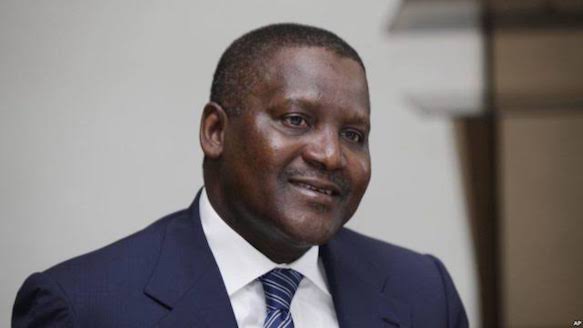
President Bola Tinubu has congratulated Alhaji Aliko Dangote, the President of Dangote Group, on his appointment to the World Bank’s Private Sector Investment Lab, a body tasked with promoting investment and job creation in emerging economies.
In a statement by Special Adviser on Media and Publicity, Bayo Onanauga, the President described the appointment as apt, given Dangote’s rich private sector experience, strategic investments, and many employment opportunities created through his Dangote Group.
The Dangote Group became one of Africa’s leading conglomerates through innovation and continuous investment.
Dangote Group’s business interests span cement, fertiliser, salt, sugar, oil, and gas. However, the $20 billion Dangote Petroleum Refinery and Petrochemicals remains Africa’s most daring project and most significant single private investment.
“President Tinubu urges Dangote to bring to bear on the World Bank appointment his transformative ideas and initiatives to impact the emerging markets across the world fully” the statement said.

The World Bank announced Dangote’s appointment on Wednesday, as part of a broader expansion of its Private Sector Investment Lab. The lab now enters a new phase aimed at scaling up solutions to attract private capital and create jobs in the developing world.
The CEO of Bayer AG, Bill Anderson, the Chair of Bharti Enterprises, Sunil Bharti Mittal, and the President and CEO of Hyatt Hotels Corporation, Mark Hoplamazian, are on the Private Sector Investment Lab with Dangote.
The World Bank said the expanded membership brings together business leaders with proven track records in generating employment in developing economies, supporting the Bank’s focus on job creation as a central pillar of global development.
By Joel Oladele, Abuja
The Nigeria Customs Service (NSC) has generated an impressive N1,751,502,252,298.05 in revenue during the first quarter of 2025.
The Comptroller-General (CG) of the Service, Bashir Adeniyi, disclosed this yesterday, during a press briefing in Abuja.
According to Adeniyi, the achievement not only surpasses the quarterly target but also marks a substantial increase compared to the same period last year, reflecting the effectiveness of recent reforms and the dedication of customs officers across the nation.
“This first quarter of 2025 has seen our officers working tirelessly at borders and ports across the nation.
I’m proud to report we’ve made real progress on multiple fronts—from increasing revenue collections to intercepting dangerous shipments,” Adeniyi stated.He attributed this success to the reforms initiated under President Bola Tinubu’s administration and the guidance of the Honourable Minister of Finance and Coordinating Minister of the Economy, Olawale Edun.
The CG noted that the revenue collection for Q1 2025 exceeded the quarterly benchmark of N1,645,000,000,000.00 by N106.5 billion, achieving 106.47% of the target. This performance represents a remarkable 29.96% increase compared to the N1,347,705,251,658.31 collected in Q1 2024.
Adeniyi highlighted the month-by-month growth, noting that January’s collection of N647,880,245,243.67 surpassed its target by 18.12%, while February and March also showed positive trends.
“I’m pleased to report the Service’s revenue collection for Q1 2025 totaled N1,751,502,252,298.05.
“Against our annual target of N6,580,000,000,000.00, the first quarter’s proportional benchmark stood at N1,645,000,000,000.00. I’m proud to announce we’ve exceeded this target by N106.5 billion, achieving 106.47% of our quarterly projection. This outstanding performance represents a substantial 29.96% increase compared to the same period in 2024, where we collected N1,347,705,251,658.31.
“Our month-by-month analysis reveals even more encouraging details of this growth trajectory,” Adeniyi said.
In addition to revenue collection, Adeniyi said the NCS maintained robust anti-smuggling operations, recording 298 seizures with a total Duty Paid Value (DPV) of ₦7,698,557,347.67.
He stated that rice was the most seized commodity, with 135,474 bags intercepted, followed by petroleum products and narcotics.
“From rice to wildlife, these seizures show our targeted approach,” Adeniyi remarked, noting the NCS’s commitment to combating smuggling and protecting national revenue.
Adeniyi also highlighted key initiatives, including the expansion of the B’Odogwu customs clearance platform and the launch of the Authorized Economic Operators Programme, which aims to streamline processes for compliant businesses. The NCS’s Corporate Social Responsibility Programme, “Customs Cares,” was also launched, focusing on education, health, and environmental sustainability.
Despite these achievements, the CG noted that the NCS faced challenges, including exchange rate volatility and non-compliance issues. Adeniyi acknowledged the need for ongoing adaptation and collaboration with stakeholders to address these challenges effectively.
Looking ahead, the NCS aims to continue its modernization efforts and enhance service delivery, ensuring that it remains a critical institution in Nigeria’s economic and security landscape.
“Results speak louder than plans; faster clearances through B’Odogwu, trusted traders in the AEO program, and measurable food price relief from our exemptions. We’ll keep scaling what works,” he concluded.
 |


Plateau PDP Cautions Members Against Obtaining Nomination Forms From Pro-Wike Faction
ShareBy Mike Odiakose, Abuja As Nigerians await the verdict of the Supreme Court on the leadership crisis rocking the Peoples...


Soludo’s 16.4km Road Project Ends Years of Suffering, Opens Up Anambra Communities
ShareBy Laide Akinboade Abuja Vice President of Boardwalk Group and Abuja-based real estate developer Chief Obiageli Okwubanego, on Wednesday, commended...


Ekiti Church Attack: CAN Demands Action Over Killing, Abduction of Worshippers
ShareBy Laide Akinboade, Abuja The Christian Association of Nigeria (CAN) on Wednesday, condemnedthe attack on a church gathering in Eda...


Journalist Petitions DSS Over Alleged Criminal Activities Of Company, River-Bend Agent
ShareBy Julius Tambaya, Abuja Following alleged criminal conducts of River-Bend Nigerian Limited and one Mr. Thomas Terzulum Nongo, a renowned...


Stakeholders Urge FG, Benue Govt to Partner NGOs to End Violence, Discrimination Against Girls
ShareBy Julius, Tambaya Abuja Stakeholders have called on the Federal and the Benue State Governments to strengthen collaboration with non-governmental...

Bago Orders Immediate Repairs of Wind-Damaged Buildings at NYSC Camp
Share From Dan Amasingha, Minna Niger State Governor, Mohammed Umaru Bago, has directed the immediate rehabilitation of buildings damaged by a windstorm at the National Youth Service Corps...
2028 Olympic Games Qualifier: Super Falcons to Discover Opponents Today
ShareNigeria’s Super Falcons will find out their opponents for the 2028 Los Angeles Olympic Games women’s football qualifiers this week. The Confederation of African Football (CAF) announced on Tuesday that the draw for the African qualifying...

Ghana Military Convoy Attack Kills Three Civilians, Seven Assailants
ShareFor Somalia’s malnourished children, already suffering the twin catastrophes of looming famine and radical cuts in foreign aid, the U.S.-Israeli...


Imo Deputy Governor Resigns
ShareFrom Marcel Duru Owerri The Commissioner for Information and Strategy Chief Declan Emelumba has said that Imo State Deputy Governor, Ekemaru has resigned. Speaking...


NAF Airstrikes Destroy Terrorists’ Structures in Mandara Mountains
ShareThe Nigerian Air Force (NAF) has sustained its counter-terrorism offensive with precision airstrikes that destroyed terrorists’ structures and logistic hubs in the Mandara Mountains area of Borno....