
security
NAF to intensify surveillance, precision attacks – CAS


The Chief of Air Staff (CAS), Air Marshal Hassan Abubakar, says future air warfare in the country will revolve around intelligence gathering, surveillance, rapid mobility, precision attack and use of unarmed aircrafts.
Abubakar stated this to newsmen shortly after presenting a lecture to participants of Senior Course 46 of the Armed Forces Command and Staff College (AFCSC) Jaji, on Thursday.
The News Agency of Nigeria (NAN) reports that the lecture was on “The Future of Air Warfare in the Nigerian Air Force – My Command Philosophy”.
The CAS said that the Nigeria Air Force (NAF) would deploy all assets and personnel to counter internal and external threats to national security.
He added that the NAF would intensify collaboration with other security services and engage in strategic alliance with other countries.
Abubakar said that strategic alliance was critical in achieving the set objectives of ensuring the security of the country.
“There is no service or nation that can do everything all by itself. There are a lot of strategies that can be derived from collaboration, joint operations and cooperation,” he added.
Abubakar noted that the armed forces had in the past not taken the advantages of the opportunities in jointness.
“The armed forces have woken up to realise the critical need for jointness in achieving set objectives of securing the country against adversaries,” he added.
The CAS said as part of strategic alliance, Nigeria would work with the Czheck Republic in the training of NAF personnel.
“Last week, we were in Czheck Republic in the effort to establish strategic alliances.
“Part of the results of the visit is that we will have the Czheck Air Force to train some of our pilots and also to establish high level maintenance facilities for us in Kano.
“We have also started such alliances with other countries such as Pakistan, China, Egypt and many other countries.
“I think that is the way, going forward, because there are several advantages to be derived from such collaborations and cooperations,” he said.
Abubakar believes that going forward, Nigeria would benefit immensely from such alliances.
The CAS said he had conducted assessment of the NAF operating environment, procedures, theatres of operations and establishments across the country.
He said that this enabled him to develop his command philosophy anchored on repositioning NAF to effectively meet the air power demand of national security in all operational environments.
“We also identified five key enablers that will drive the command philosophy which included optimisation of our force structure and establishments for enhanced operational effectiveness.
Cross section of participants of Senior Course 46 at the AFCSC Jaji , on Thursday
The Air Chief added that other important key enablers of his command philosophy was the focus on research and development and use of technology.
He stressed that the NAF as a very technical force, needed to intensify research and development activities to not only maintain its facilities, but also fabricate appropriate ones to enhance national security.
“We realised that continous depending on foreign vendors for our defense needs, is bad for us, we therefore established a robust research and development organisation for us to go off the dependence.
“We have gone very far and achieved alot in terms of research and development and some of the products we have been able to come up with have been in use.
“We now have ownership of our technologies and we even produce and sell them commercially.
“We are in advanced stage of completely having a UAV that is fully produced and operated by NAF, among others. It is a work in progress.”
The CAS appreciated the AFCSC for providing world class training for officers of the Nigerian Armed Forces.
Abubakar said he would continue to give priority to the training of NAF personnel so as to have a very efficient mission oriented force focused on protecting the country.

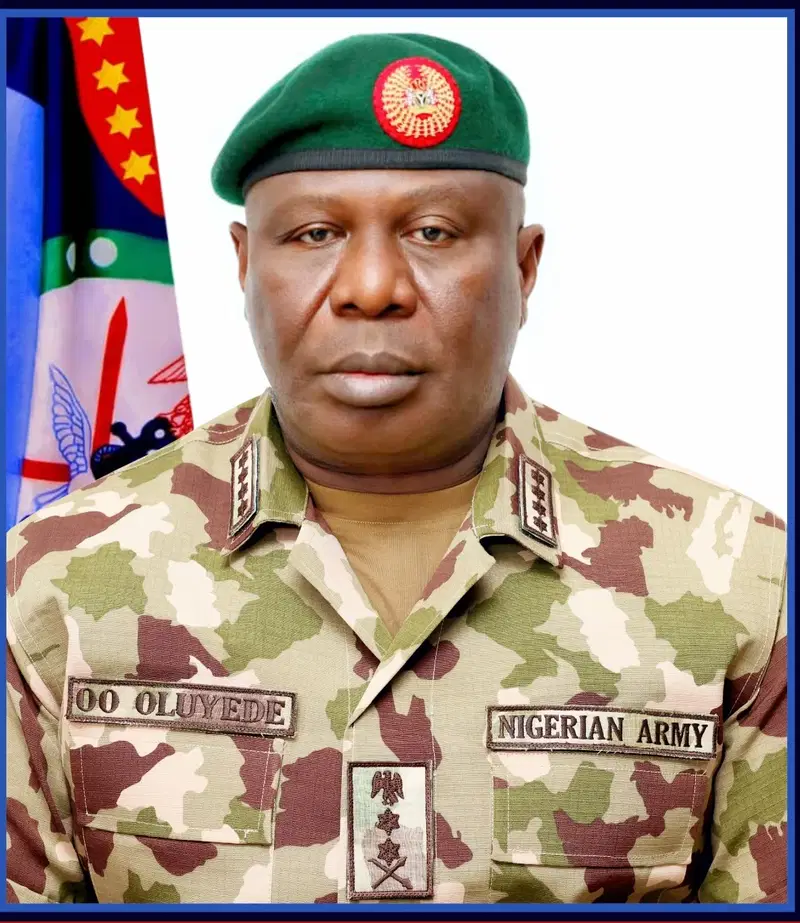
The United Kingdom has reaffirmed its commitment to deepening defence and security cooperation with Nigeria, with emphasis on military training, technology transfer and institutional capacity building.
The British High Commissioner to Nigeria, Pete Vowles, reiterated the commitment during a courtesy visit to the Chief of Defence Staff (CDS), Gen.
Olufemi Oluyede, at the Defence Headquarters, Abuja.This was contained in a statement by the Director of Defence Information, Maj.-Gen. Samaila Uba, on Tuesday in Abuja.
Vowles reaffirmed the UK’s commitment to sustaining existing security initiatives and exploring new areas of collaboration to address evolving regional and global security challenges.
He described defence and security cooperation as critical pillars of the longstanding bilateral relationship between both countries.
The high commissioner also stressed the need for a mutually beneficial partnership that would promote regional stability and strengthen Nigeria’s capacity to tackle contemporary security threats.
In his response, Oluyede highlighted the longstanding historical ties between Nigeria and the UK, noting that both countries had sustained productive defence relations over several decades.
He said the two countries had continued to collaborate in addressing shared security concerns.
The CDS emphasised the need to sustain and expand existing areas of cooperation, particularly in professional military education, technology transfer and institutional capacity building.
According to him, ongoing defence agreements and training programmes have contributed to improving the professional competence and operational capabilities of the Armed Forces of Nigeria.
Oluyede emphasised that continued collaboration with strategic international partners remained vital to strengthening the military’s capacity to respond effectively to emerging threats.
He added that such partnerships would also promote greater self-reliance, institutional resilience and operational efficiency within the Armed Forces.
Both parties expressed optimism about the future of the UK-Nigeria defence and security partnership, reaffirming their commitment to consolidating existing achievements and exploring further areas of cooperation for mutual benefit.
By Tambaya Julius, Abuja
Nigeria and Rwanda are exploring new areas of military cooperation, including personnel exchanges, specialised training and local defence equipment production, as both countries seek to strengthen regional security.
The proposals were presented by the Chief of Army Staff (COAS), Lieutenant General Waidi Shaibu, during an official working visit to Rwanda, where he held talks with the Army Chief of Staff of the Rwanda Defence Force, Major General Vincent Nyakarundi.
In a statement, the Acting Director of Army Public Relations, Colonel Appolonia Anele, said the discussions focused on expanding professional military cooperation and improving the operational capacity of both armies.
Shaibu proposed that two cadets of the Nigerian Defence Academy (NDA) undertake a four-year training programme at the Rwanda Military Academy, with similar opportunities to be made available to Rwandan cadets in Nigeria.
He also called for collaboration between the Defence Industries Corporation of Nigeria (DICON) and relevant Rwandan institutions to boost local defence production and encourage technology development.
Other areas identified for cooperation include logistics, Military Police training, pre-deployment preparation for peace support operations and the exchange of operational experience in counterterrorism and counterinsurgency.
The Army Chief said both countries could draw on their respective military experiences to tackle emerging security threats, improve operational readiness and promote stability across the region.
He further stressed the need for closer ties between DICON and Rwanda’s defence engineering and procurement institutions to support indigenous equipment manufacturing, technological advancement and greater self-reliance.
During the visit, Shaibu paid tribute to the courage and sacrifices of the Rwandan Patriotic Army, particularly the 600 personnel who defended Kigali during the 1994 Genocide against the Tutsi.
He described their resilience and patriotism as enduring lessons in national determination and military leadership.
In his response, Nyakarundi commended the Nigerian Army for providing specialised Military Police and Intelligence training to Rwandan personnel.
He called for expanded professional military education through institutions such as the Armed Forces Command and Staff College, Army War College Nigeria and the National Defence College.
The Rwandan Army chief also welcomed the proposed cadet exchange programme and defence industrial partnership, describing the visit as a reflection of growing mutual trust and professional solidarity between the two armies.
The proposed initiatives are expected to provide a framework for deeper military engagement between Nigeria and Rwanda, particularly in training, defence technology and regional security cooperation
From Dan Amasingha, Minna
An Assistant Superintendent of Corps (ASC), Usman Isah Ndamaka, was moved to tears yesterday as he appeared before the Justice Mohammed Mohammed-led Judicial Commission of Inquiry in Minna.
He offered an unreserved apology over the death of 37 miners while in the custody of the Niger State Command of the Nigeria Security and Civil Defence Corps (NSCDC).
Ndamaka, who was the officer in charge of the command’s detention facility when the incident occurred on September 17, admitted full responsibility for the tragedy, describing it as a grave mistake.
The judicial panel was set up by the Niger State Government to probe the circumstances surrounding the fatalities, which reportedly occurred following the arrest of 58 suspected illegal miners comprising 33 males and 25 females.
Recounting the events that led to the deaths, Ndamaka explained that the facility was originally designed to accommodate between 28 and 30 detainees.
He stated that while female suspects were separated and relocated to another facility, accommodating the remaining male detainees presented a severe logistical challenge.
According to him, the suspects arrived late in the evening during a heavy downpour, making an immediate transfer difficult. An attempt to relocate some of the detainees to the old command facility failed after the Mining Marshal rejected the arrangement.
Ndamaka told the commission that heat, severe overcrowding, and distress caused the male suspects to scream and shout inside the cell.
However, he admitted that fear of being overpowered prevented him and his subordinates from unlocking the door
”An error has already been committed. I am very sorry for the death of the miners under my custody,” Ndamaka said in an emotional testimony. “It is unfortunate that this happened under my watch. I am pained, and I admit my mistake.”
Also testifying, the head of the NSCDC investigation unit, Chief Superintendent of Corps Sunday Oluwadere, confirmed that he profiled and investigated the suspects following their arrest and recovered several exhibits.
Under cross-examination by the Niger State Head of the Legal Aid Council, Mrs. Bolanle Jibogun, Oluwadere expressed regret over operational shortcomings during the handling of the suspects.
Earlier, the Chief Consultant Pathologist at the General Hospital, Minna, Dr. Alfa Sule, informed the panel that post-mortem examinations were required to determine the precise cause of death.
Dr. Sule stated that conducting the autopsies requires coroner approval, while obtaining toxicology and histology samples for forensic laboratory analysis in Lagos requires the consent of the deceased persons’ families.
He projected that full forensic results would be ready within two weeks once samples are dispatched.
Following the incident, the Commandant-General of the NSCDC, Dr. Ahmed Abubakar Audi, ordered the arrest of 22 officers, including the suspended Niger State Commandant, Siaka Zubeiru Anirive.
The officers were escorted to the corps’ national headquarters in Abuja for administrative procedures.
Eight personnel have so far testified before the judicial panel as proceedings continue.




Aba Commercial Smart City Celebrates COO, Mazen Kalassina at 39
ShareBy David Torough, Abuja Aba Commercial Smart City has celebrated its Chief Operating Officer (COO), Engr. Mazen Kalassina, on his...

Rebuilding Public Trust in Government Borrowing: The Case for Scaling Up Sukuk Financing in Nigeria
ShareBy Uche Joe Uwaleke The recent request by President Bola Tinubu to the National Assembly for approval to raise $20.52...

2027: Buba Yakub Mobilises Adamawa Support for Tinubu, APC
ShareFrom Yagana Ali, Yola The Director-General of the Nigerian Technical Aid Corps (NTAC), Rt. Hon. Yusuf Buba Yakub, has called...


2027: FOOG Women Coordinator Urges Nigerians to Support Tinubu’s Re-election Bid
ShareBy Francis Sadhere, Warri Chief (Mrs) Esther Orighomisan Okotie-Eboh, Coordinator of Felix Omagbemi Ogbe Group (FOOG) Women Support Group for...

Troops Neutralise 217 Terrorists, Rescue 349 Kidnap Victims, Arrest 333 Suspects in Oct
ShareBy David Torough, Abuja The Armed Forces of Nigeria (AFN) say troops neutralised 217 terrorists and other criminals, rescued 349...


2027: Tompolo Mobilises Support for Tinubu in Ogun, says Economy Stabilising
ShareThe Grand Patron of the PBAT Door-to-Door Movement, Government Ekpemupolo, has called on the people of Ogun State to massively...

Henry Okeke Commends Mbah for Clearing Pension Arrears in Enugu
ShareBy Raphael Atuu, Abuja Barrister Henry Nnanna Okeke, a member of the Governing Council of Enugu State Polytechnic, Iwollo, has...


2027: ADC Urges ECOWAS to Insist on Credible Elections in Nigeria
ShareThe National Chairman of the African Democratic Congress (ADC), Sen. David Mark, has urged the Economic Community of West African...


Obi Promises Emergency Measures on Security, Corruption, Poverty
SharePresidential candidate of the Nigeria Democratic Congress (NDC), Peter Obi, has promised emergency measures to tackle insecurity, corruption, hunger and...


Why I Chose Music over Football – Mr Eazi
ShareAfrobeats star Mr Eazi has claimed that English club Chelsea FC wanted to sign him before they signed former Super...