
POLITICS
Stakeholders want Powers to Appoint INEC RECs, Commissioners Removed from Presidency

Stakeholders in the electoral process have tasked the National Assembly to further amend the Electoral Act to strip the Presidency of the powers to appoint Resident Electoral Commissioners (REC) and commissioners for the Independent National Electoral Commission(INEC).
The stakeholders stated this at a roundtable organised by Yiaga Africa and the Kofi Annan Foundation themed ”Unpacking Nigeria’s 2023 General Elections and Prospects for Electoral Reform” in Abuja on Monday.
Speaking at the event, Mr Samson Itodo, the Executive Director, Yiaga Africa, said that the roundtable was convened to conduct a post mortem of the 2023 General Elections and to seek priority areas for reforms.
Itodo said that INEC needed to be unbundled adding that the current arrangements where the appointment of the chairman and national commissioners were vested in the executive, needed to be reviewed.
He said that the Justice Uwais committee recommended that the president should not appoint the Chairman and commissioners into INEC rather the power should be vested in another institution.
“You cannot have an electoral commission that is composed of persons who are appointed by the President and in some cases you have the incumbents as part of a political party or leading a political party.
“So in line with the Justice Uwais,one of the recommendations is to review the appointment process of commissioners and RECs into INEC.
“In fact, one of the proposals is that the President should not appoint RECs.
” INEC when properly constituted with individuals that have impeccable character, competence and capacity should appiont its own resident electoral commissioners or directors of elections to manage elections,” he said.
“This is is just a way of protecting the independence of the commission to prevent it from any form of political interference or manipulation,” he said.
He added that there was need to professionalise appointments into INEC to create an electoral commission with individuals with diverse skills and competencies, legal communications,logistics among others.
He said that the confidence of citizens in the electoral process had plummeted due to the conduct of the 2023 general election and so stakeholders and the Nigerian state needed to pay close attention on how to rebuild the public confidence.
He said that rebuilding public confidence should begin with providing critical answers to some of the questions that citizens had asked.
” If we don’t respond to those questions, and in this case, both INEC security agencies, including the judiciary does owe it to the Nigerian people to answer some difficult questions, because only then can citizens begin to trust the process again,” he said.
Itodo said that the legal framework for Nigeria’s elections needed to be reformed because they revealed that there were inconsistencies and ambiguities in the law.
He however, said that elections were not just about laws because Nigeria could have the best of laws but if politicians do not change their attitude towards politics, toward elections and towards democracy citizens,it would not inspire confidence in citizens.
He said that there were also issues around the ambiguities in the results coalition process adding that both the law and the guidelines issued by INEC had some inconsistencies and there was need to strengthen the law to make it compulsory for electronic transmission of results.
Sen. Abdulaziz Yaradu’a, the Deputy Chairman,Senate Committee on INEC, said that the National Assembly (NASS) was working on plans to build the election process to global standards for the benefit of Nigeria’s democracy.
Yaradu’a however, said that one of the issues being faced by NASS was that while elections had been conducted and completed ,most of the members of the assembly were still in court trying to protect their mandate .
Mr Sebastian Brack a member the Kofi Annan Foundation, said that Nigeria was not just a key country for West Africa, but Africa as a whole and given all the pressures on democracy facing the world, Nigeria’s successful democratic experiment was a priority.
“This particular roundtable is looking at how we can improve the situation for the next elections in a constructive and forward looking way.”
Brack said that different stakeholders from the parliament , civil society, security forces media and others were brought together to discuss to agree on a consensus or list of key recommendations that would come out at the end of the day.
Prof. Mohammed Kuna , the Special Adviser to INEC Chairman, said that although elections were important, they were not enough in terms of deepening and consolidating democracy.
Kuna said that there was need to focus also on governance, political accountability, conducting elections among others saying that the the commission had noted them.(NAN)
By David Torough, Abuja
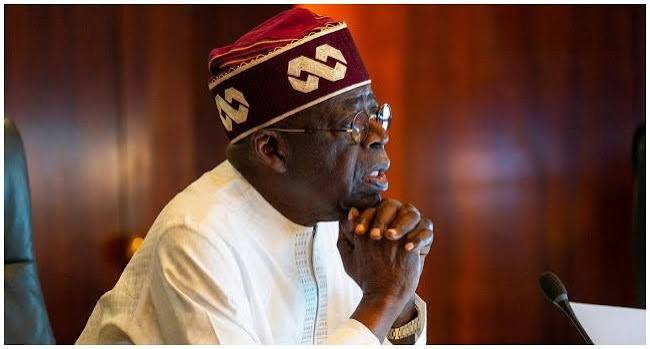
President Bola Tinubu has signed the Appropriation (Amendment) (No. 4) Bill, 2025, extending the implementation period of the 2025 budget from September 30, 2026, to December 31, 2026.
The amendment was passed by the Senate and the House of Representatives on Tuesday, September 29, 2026, before being transmitted to the President for assent.
According to a statement issued on Wednesday by Bayo Onanuga, Special Adviser to the President on Information and Strategy, the extension will give Ministries, Departments and Agencies (MDAs) additional time to complete ongoing capital projects.
The statement said the move would ensure that funds already appropriated are fully utilised without disrupting critical government programmes.
“The extension gives Ministries, Departments and Agencies more time to complete ongoing capital projects,” the statement said.
“It ensures that funds already appropriated are fully put to work for Nigerians, without disrupting critical programmes.”
Tinubu also commended the leadership and members of the National Assembly for what the statement described as the prompt consideration of the amendment.
The president said the development demonstrated continued cooperation between the Executive and Legislative arms of government in the interest of the country.
The amendment therefore allows the Federal Government to continue implementing the 2025 budget until December 31, 2026, instead of the earlier September 30 deadline.
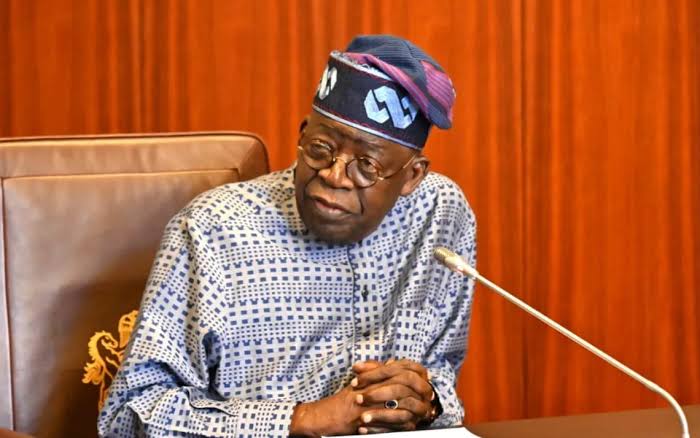
President Bola Tinubu has submitted the 2026 Statutory Budget Proposal of the Niger Delta Development Commission (NDDC) to the House of Representatives for consideration and passage.
This is contained in a letter dated Aug.
20, 2026, addressed to the Speaker of the House of Representatives, Rep. Abbas Tajudeen and read by the Deputy Speaker, Rep. Benjamin Kalu at plenary on Tuesday in Abuja.In the letter, Tinubu said that the budget was prepared by the Minister of Niger Delta Development in line with the provisions of Section 121 of the 1999 Constitution.
According to him, the proposal was based on the NDDC’s revenue and expenditure forecasts and it aligned with the fiscal and developmental policies of the Federal Government and the Renewed Hope Agenda.
He said that the proposal also took into consideration the 2024–2026 Economic Recovery Growth Plan as well as key assumptions of the 2026 Appropriation Act of the Federal Government.
The President said the NDDC had prioritised programmes aimed at improving youth empowerment, energy and power supply, education, industrial and enterprise development, health and security.
He also listed increased agricultural productivity among the commission’s priorities, saying the interventions were intended to lift a significant number of citizens out of poverty.
Tinubu urged the House to give the proposal consideration and ensure its timely passage.
“I look forward to the timely passage of the 2026 Statutory Budget Proposal of the NDDC by the House of Representatives,” he said. (NAN)
By David Torough, Abuja
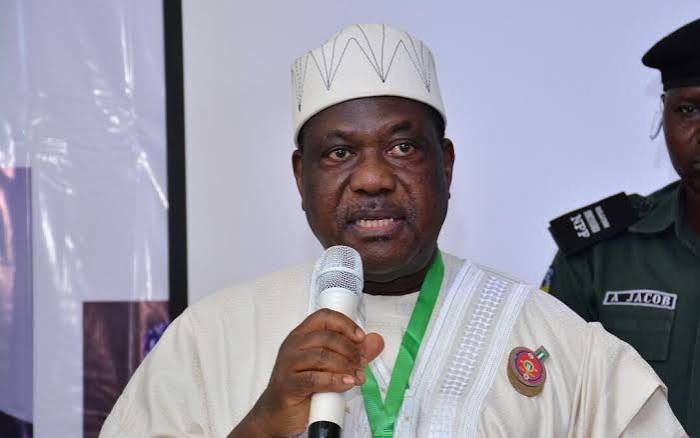
The Secretary to the Government of the Federation, Sen. George Akume, has charged Ministries, Departments and Agencies (MDAs) to translate the findings of the 2026 Transparency and Integrity Index (TII) into concrete improvements in their operations in order to strengthen accountability and public trust.
He gave the charge while delivering the keynote address at the presentation of the 2026 Transparency and Integrity Index held at the Auditorium of the Federal Ministry of Finance, Abuja.
The SGF said the administration of President Bola Tinubu, remains committed to open, accountable and responsible governance, stressing that public institutions must ensure that their policies, programmes and actions are transparent, visible and understandable to Nigerians.
According to him, the Index has become a vital instrument for assessing accountability, openness and ethical standards across government institutions, while providing MDAs with clear benchmarks to identify areas of strength and gaps requiring improvement.
He urged heads of MDAs to integrate the findings and indicators of the Index into strategic planning, performance management, budget priorities, procurement processes, staff training and digital disclosure rather than allow the report to become another document left unused.
“The report should not sit on the shelf and should inform management decisions, budget priorities, procurement processes, staff training, digital disclosure, and how you communicate with the public,” he said.
Akume emphasised that transparency should be viewed as an institutional asset rather than an administrative burden, noting that integrity must be embedded in the procedures and culture of public institutions through clear policies, proper record-keeping, effective oversight, ethical leadership and consequences for wrongdoing.
He further tasked MDAs to take advantage of technology by ensuring that their websites and data portals provide accurate, timely and user-friendly information, including current budget, contract and service information, to enable citizens to effectively engage government and track the utilisation of public resources.
The SGF explained that the 2026 TII assesses public institutions in five critical areas comprising fiscal transparency, open procurement and contracting, human resources and inclusion, control of corruption and citizens’ engagement, adding that the initiative complements existing public service reforms, anti-corruption measures and Nigeria’s Open Government Partnership commitments.
He noted that the ultimate objective of transparency and integrity should go beyond institutional rankings to building public institutions that Nigerians can understand, engage with and hold accountable, while safeguarding public resources and improving service delivery.
“The Federal Government remains fully committed to this goal. We will continue building institutions that are transparent, accountable, professional and responsive to the needs of the people,” the SGF said.
Akume commended the Bureau of Public Service Reforms (BPSR) and the Centre for Fiscal Transparency and Public Integrity (CeFTPI) for sustaining the initiative, while calling for stronger collaboration among government, civil society, professional bodies, development partners and the media in strengthening transparency and bringing corruption to its knees.



Insecurity: FCTA Completes Ushafa, Saburi Divisional Police Headquarters, 10 Underway
ShareBy Laide Akinboade, Abuja In order to boost security, the Federal Capital Territory Administration (FCTA) on Wednesday said it has...
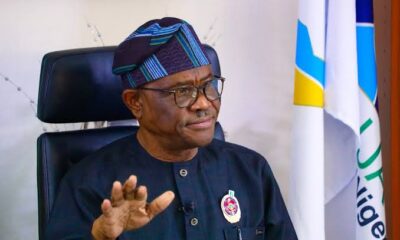

2027: I ‘ll Resign As Minister If Tinubu Loses FCT, Rivers – Wike
ShareBy Laide Akinboade, Abuja The Minister of the Federal Capital Territory (FCT), Nyesom Wike, has declared that he will step...

JAMB Extends Deadline for 2021–2025 Outstanding Admissions to Nov 30
ShareThe Joint Admissions and Matriculation Board (JAMB) has extended the deadline for candidates with outstanding admission offers from the 2021...

BIPC Board Inspects Taraku Mills Preparatory to Test Running
ShareFrom Attah Ede, Makurdi The Board of Directors of the Benue Investment and Property Company Limited (BIPC) has inspected the...


UBEC Renovates 287 Schools, over 4,000 Classrooms Nationwide
ShareThe Universal Basic Education Commission (UBEC) said it has renovated 287 schools and more than 4,000 classrooms across the country...

Nigeria at 66: FG Declares Thursday, Public Holiday
ShareThe Federal Government has declared Thursday as a public holiday to mark Nigeria’s 66th Independence Anniversary. The Minister of Interior,...

Tinubu Signs 2025 Budget Amendment Bill
ShareBy David Torough, Abuja President Bola Tinubu has signed the Appropriation (Amendment) (No. 4) Bill, 2025, extending the implementation period...

NAN Backs Insurance Sector’s Transformation Agenda, hails NAICOM
ShareBy Tony Obiechina, Abuja The National Association of Nigerian Students (NANS) National Secretariat, the umbrella body representing over 40.1 Million...


Don Calls for More Investment in Entrepreneurship/Innovation in Nigeria
ShareFrom Joseph Amedu, Lokoja A Professor of Entrepreneurship and Corporate Strategy at the Federal University, Lokoja, John Alabi has called...

Tinubu Submits NDDC 2026 Appropriation Bill
SharePresident Bola Tinubu has submitted the 2026 Statutory Budget Proposal of the Niger Delta Development Commission (NDDC) to the House...