
NEWS
‘We’ve Convince Ourselves a Soldier’s Job is to Die’


By Prosper Okoye
How can Nigeria achieve peace, security, and stability? This pivotal question formed the core of discussions during the two-day national stability dialogue.
Among the panelists, Rev.
Fr. Atta Barkindo, the Executive Director of the Kukah Centre, highlighted both kinetic and non-kinetic approaches to address these issues.The discourse was organized by International Alert Nigeria, in collaboration with the Office for Strategic Preparedness and Resilience (OSPRE), which is the National Early Warning Centre of the Vice President, and the National Orientation Agency (NOA).
Fr. Barkindo said, “My primary focus in the kinetic approach is the welfare of soldiers,” he emphasized. “This is because, in 2013, my younger brother, who was 27 years old, taller than I am, and quite handsome, joined the Nigerian military. Immediately after his short service, he was stationed in Baga, a town in Borno State.
“He and his colleague had to fetch water from a well to drink during battle, and sometimes they had no food to eat. Allegedly, the well they drank from was poisoned by terrorists, and that’s how my brother met his death.
“We had to transport his body back to the village. There were no gun salutes, no uniform; he was laid to rest without any formalities. The same fate befell other families of security personnel. How can we expect people treated in this manner to provide stability and willingly offer themselves for the country?”
Nnamdi Obasi, Senior Adviser at the Nigeria International Crisis Group, noted that the country has moved beyond the traditional image of a soldier confined to boots, beret, rifle, or uniform.
“We are now dealing with a more complex situation and must consider how to enhance equipment, resourcing, and the welfare of our security services to boost their effectiveness. This constitutes a vital aspect of defense, policing, and security that we must address. Simultaneously, we need to assess the competencies we introduce into the system. It’s incongruous to assign individuals with only primary school certificates to solve crimes committed by people with higher degrees and competencies.”
However, the International Alert Country Director, Paul Nyulaku-Bemshima, called for the integration of both kinetic and non-kinetic approaches.
“We have reached a stage where certain concerns should be integrated into the military’s campaign strategy.
“I recall a conversation with the General Officer Commanding (GOC) of a region when we paid him a courtesy call to address the region’s issues. He stated, ‘You can continue with your conversations and engagement because we are the military, meant to fight, and, if necessary, to kill.’ Yet, this made me wonder: if we keep efforts separate, can we make progress?”
Citing the Indigenous People of Biafra (IPOB) menace in the South Eastern part of Nigeria as evidence of the lack of a comprehensive approach to security, Major General Bamidele Shafa (Rtd) noted that the term “unknown gunmen” was misleading. “Effective civil-military cooperation would have unmasked such anti-state elements.”
Furthermore, The priest decried weak national identity, exacerbated by poor governance, as a factor driving national restiveness and chaos.
“It’s challenging to combat terrorism in a democratic context where elections occur every four years, and politicians prioritize winning over ensuring security.
“Do we genuinely identify as Nigerians?’ he pondered. ‘I reside on the Cameroon border in Adamawa State, an hour’s walk to Cameroon, but a 12-hour car journey to Abuja. Many fellow Nigerians disassociate from the country because they feel it doesn’t care for them. To engage ordinary citizens in the fight against terrorism, they must feel a deep connection with the nation.
“In Mozambique, a professor detailed how terrorists gather information; commercial motorcycle and taxi drivers, often seen as uninformed, play a critical role. Similar challenges arose when we tried to locate Governor Fayemi; Google Maps failed, but a motorcyclist guided us directly to his destination.”
Rev. Barkindo urged the involvement of religious leaders in addressing unrest in the country.
“While we promote democracy and the rule of law here, some religious figures preach against it due to their dissatisfaction. Our differing interpretations of this concept explain why Bishop Kukah argues that we die as Christians or Muslims, or as Igbos and Hausa, but not solely as Nigerians.
“Our communities are deeply divided. Religious leaders wield significant influence, as poverty pushes people to the brink. We must create pathways for forgiveness and reconciliation.”
Also speaking at the dialogue, a participant, Gbenro Oladungbe, blamed the country’s violent condition on constitutionally backed inequality.
“We got into this situation of violence because we refuse to provide sustenance. Several leaders are unwilling to address the issues that led us here.
“Equal access to opportunities is denied; whether you attend school today depends on your economic status, and this continues to exacerbate inequality. Inequality is a critical driver of the violence in Nigeria today.
“Poverty isn’t the sole driver; what drives violence is unjust wealth and poverty. This is widespread, rights are denied, and this further fosters violence.
“We have provisions in our constitution that promotes injustice, and we think we will have a peaceful, secure nation? It’s as if we live in a dreamland.
“Today, we have a multitude of young people that couldn’t find employment. We lack a national plan to support this young population, and we continue to recruit and train soldiers who may end up killing them because they are rebelling against a society that has consistently denied their rights.
“The state is inciting the crimes that people are committing; for instance, just two weeks ago, there was a policy to support some households. A budget of 25,000 Naira was allocated to each family for three months, and in the same country, those who are expected to make sacrifices are buying cars worth 160 million Naira. Do we really believe there will be peace, security, or stability?
“I commend the organizers of this event, but it would be even more commendable if the output were a national dialogue that could revisit the constitution,” he added.”
It was supported by the UK International Development through the Promoting Stability, Access to Justice, and Accountability in Northwest Nigeria Project (Samun Adalchi Shi Ne Kwanciyar Hankali).

By Laide Akinboade, Abuja
The Academic Staff Union of Secondary Schools (ASUSS), Federal Capital Territory (FCT) Chapter, has dissociated itself from the indefinite strike declared by the Nigeria Union of Teachers (NUT), FCT Wing, directing secondary school teachers and education officers to report to their classrooms and proceed with their normal duties.
The union’s stance was made public in a press statement issued on Wednesday by its State Executive Council (SEC) following an emergency meeting to review the industrial action called by the NUT FCT Wing.
Rejecting the stay-at-home order, ASUSS argued that the academic destiny of students should not be compromised over industrial disputes, describing the strike action as premature and detrimental to educational stability in the territory.
Addressing the specific demands raised by the NUT, ASUSS offered counter-positions on the three primary issues driving the dispute.
ASUSS stated that the vacancy requirement remains a statutory provision of the Public Service Rules (PSR) governing establishment control and financial planning, emphasizing that altering career structures requires administrative dialogue rather than coercion.
The union clarified that the administrative framework for affected teachers has already been resolved, noting that the 2025 promotion process is set to run concurrently with the 2026 promotion cycle under the FCT Civil Service Commission, as outlined in circulars released in September 2026.
ASUSS maintained that the redeployment of education agency directors to classrooms falls within management’s statutory prerogative to maintain administrative order.
ASUSS further alleged that the strike action was calculated to disrupt the scheduled 2025/2026 promotion examinations for FCT Education Officers.
In its final directive, the union urged all eligible Education Officers to participate in the upcoming promotion examinations according to the published timetable, while calling on parents and guardians across the FCT to send their children to school, assuring them that academic activities will continue uninterrupted.
Furthermore, the ASUSS FCT Chapter issued specific directives to secondary school principals, vice-principals, and education officers:
“All secondary schools must remain fully open for academic and administrative activities without interruption.
“Ensure that all teachers report to their respective classrooms to execute their normal duties and teach students diligently.
“Disregard any directives or instructions from unauthorized bodies aimed at disrupting the academic calendar.
“Monitor attendance and ensure a safe, conducive learning environment for all students who are innocent victims of unnecessary industrial disruptions.”
A senior lecturer at the Ambrose Alli University, Ekpoma in Edo State, Dr. Matthew Uwuigbe, has died under mysterious circumstances following an alleged sex romp with a sex worker in a hotel in Edo State.
It was learnt that the lecturer lodged in the hotel with the 21-year-old commercial sex worker identified as Angela Defa Jacob.
However, tragedy struck after the university don suddenly slumped and died during the encounter at the hotel located in Mosco area of Ekpoma, Esan West Local Government Area of Edo State.
The Edo State Police Public Relations Officer (PPRO), Eno Ikoedem, confirmed the incident on Tuesday.
She disclosed that three persons have been arrested in connection with the incident.
The command spokesperson said, “On October 5, 2026, at about 8 pm, the command received a report that Matthew Uwuigbe, a lecturer at Ambrose Alli University, Ekpoma, had lodged at a hotel in Ekpoma and engaged the services of a 21-year-old sex worker, Angela Defa Jacob.
“He subsequently sent the woman to purchase water for him, and upon her return, she found him lying dead in the room.”
She added that the hotel owner, the manager and the sex worker have been detained over the incident as investigation continues.
Ikoedem said the corpse of the victim has been deposited at the Oriaifo Memorial Hospital mortuary.

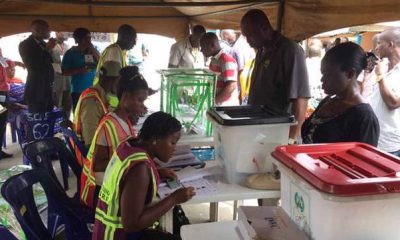
Yiaga Africa said 84 per cent of Nigerians intend to vote during the 2027 general elections, urging political parties to mobilise citizens to ensure they vote in spite of insecurity, distrust and vote buying threat to turnout.
Yiaga Africa Board Chairman, Hussein Abdul said this on Wednesday while unveiling its third National Voting Intentions Survey, based on interviews with 2,470 Nigerians across 36 states and FCT.
He said, Yiaga’s third voters’ intention study examines Nigerians’ readiness, motivations and expectations ahead of the 2027 general elections.
Abdul said insecurity, fears of election-related violence and low confidence in INEC, judiciary and security agencies could influence citizens’ decisions to vote.
He said the findings were not verdicts, but wake-up calls requiring INEC, security agencies, political parties, civil society organisations and other stakeholders to address identified concerns.
Abdul urged political parties to mobilise voters and strengthen civic education, saying low turnout undermines democracy in spite of more than 100 million registered voters.
The findings showed that 61 per cent of the respondents’ feared violence could prevent them from voting, rising to 78 per cent in the North-East, while 83 per cent wanted improved security.
The survey showed declining trust in INEC, with only 34 per cent confident of credible elections, while 63 per cent had little or no confidence in judicial resolution of electoral disputes.
It said 54 per cent disapproved of the President’s performance, while 71 per cent rated the economy poorly, with 49 per cent seeking leadership change as a voting motivation.
The report urged government and security agencies to strengthen election security, while INEC, judiciary, parties, media and civil society should improve credibility, voter confidence and combat vote buying.
Speaking on the report, Safiya Bichi, Head, Knowledge Management and Learning, Yiaga Africa, said: “Nigerians have not given up on democracy, but wanted votes to count.
Bichi said they see elections as their duty and they believe their votes can make a difference.
“What stands between that willingness and the ballot box is fear, distrust and money.
“Low turnout in Nigeria is a conversion problem, not an apathy problem and the responsibility for fixing it lies with the institutions and actors who control security, credibility and logistics.” Bichi said.
In a panel discussion featured at the launch, Ene Obi, Executive Director, Ene Obi Centre for Development said Nigeria would get it right and there would be more confidence if citizens vote and guard their votes.
The panel discussion was focused on ‘Intensions, Commitments and Pathways to Increasing Turnout’.
“We need to encourage citizens to go out and vote because this is their country, for civil society we are not worried about who wins but about the process, because the process must be fair and transparent.
“We must also take cognisance of those in the IDP camps and the areas they call ungovernable.”
Also speaking at the panel discussion, Chief Ezenwa Nwagwu, Executive Director Peering Advocacy and Advancement Center in Africa (PAACA), called on the media to highlight the positive side of the report of 84 per cent willing to vote.
He also called for investment in political reforms and not only electoral reforms, adding that the values and attitudes of politicians also affect election integrity.
Speaking on behalf of INEC, Victoria Efa-Mesi, Director Voter Education and Publicity called on Nigerians to do the right thing at all times, affirming that INEC was prepared for the 2027 elections.(NAN)


ASUSS Opposes NUT Strike in FCT, Urges Teachers to Ignore Stay-at-home Directive
ShareBy Laide Akinboade, Abuja The Academic Staff Union of Secondary Schools (ASUSS), Federal Capital Territory (FCT) Chapter, has dissociated itself...
Edo Varsity Lecturer Dies after Sex Romp in Hotel
ShareA senior lecturer at the Ambrose Alli University, Ekpoma in Edo State, Dr. Matthew Uwuigbe, has died under mysterious circumstances...

Over 84 Per Cent Nigerians willing to Vote During 2027 Elections – Yiaga
ShareYiaga Africa said 84 per cent of Nigerians intend to vote during the 2027 general elections, urging political parties to...


PNC 2026: NCDMB, DMG Affirm Collaboration with Bayelsa, Unveil New Activities
ShareFrom Mike Tayese, Yenagoa As preparations intensify for the 2026 edition of the Practical Nigerian Content (PNC) Forum, slated for...

Tinubu’s $700 Billion Mineral Resources Deal With America at Whose Interest?
ShareBy Hajia Hadiza Mohammed For some time now the hottest issue of debate in the Nigeria media space has been...

Atiku’s Production Subsidy: Has politics overtaken economics?
ShareBy Kayode Oladele Alhaji Atiku Abubakar, former Vice President of Nigeria and presidential candidate of the African Democratic Congress, (ADC),...

2027: Governors’ Backing Boosts Tinubu’s Chances, says Presidency
ShareBy Tambaya Julius, Abuja The Presidency has said the growing number of governors backing President Bola Tinubu has strengthened his...
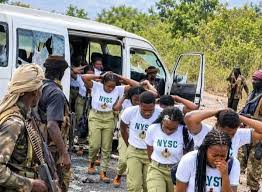

Security Operatives Rescue 20 Abducted NYSC Members in Imo
ShareBy Tambaya Julius, Abuja Security operatives have rescued 20 members of the National Youth Service Corps (NYSC) who were abducted...

Nigeria’s Oil Reforms will Unlock $50bn Deep Offshore Investments – Tinubu
SharePresident Bola Tinubu said recent reforms in Nigeria’s oil and gas sector are designed to unlock up to 50 billion...
Ododo Condoles Families of NAF Personnel, Armed Forces Over Ondo Crash
ShareFrom Joseph Amedu, Lokoja Kogi State Governor, Ahmed Ododo has commiserated with the families of the Nigerian Air Force personnel...