
COVER
Local Refineries ‘ll Begin Production Soon — Tinubu Assures

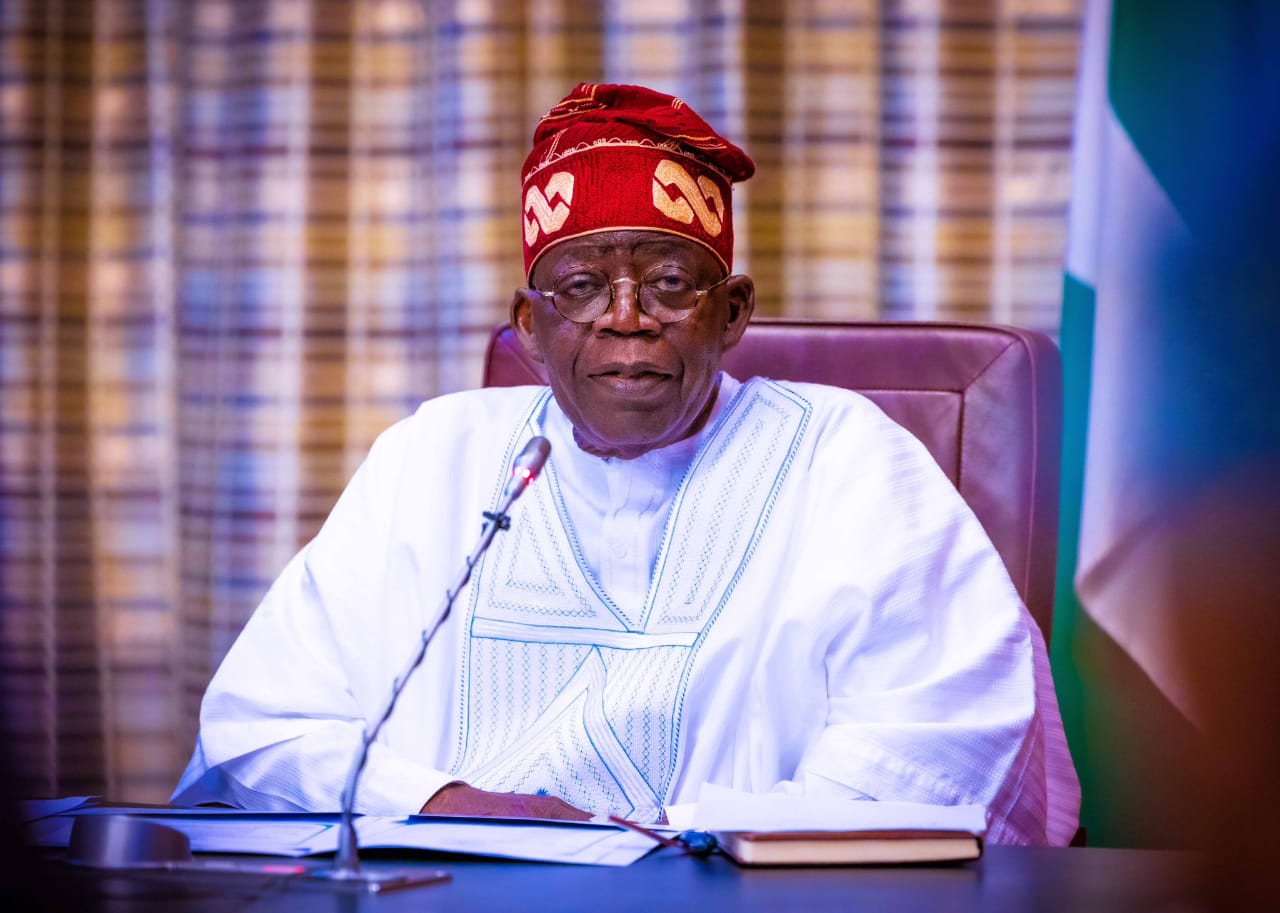
…..Local Refineries ‘ll Begin Production Soon
By David Torough
President Bola Tinubu has again assured Nigerians that local refineries will resume operations for the production of petroleum products in no distant time.
Tinubu who was represented by the Executive Secretary, Agricultural Research Council of Nigeria, Professor Garba Sharubutu at the 11th Convocation of the Michael Okpara University of Agriculture, Umudike (MOUAU) over the weekend, expressed confidence that the prevailing high cost of fuel would significantly decrease once the local refineries commence operations.
On assumption of office in May, Tinubu announced plans for the Port Harcourt refinery to start production before the end of this year.
He stated, “Very soon, some of our local refineries will start production, and the current exorbitant prices of energy will be greatly reduced.
“Bear with us and remain resolute in support of this administration, as we would leave no stone unturned in reversing the severe hardships that our people are currently passing through.
“Part of the supplementary budget that the parliament has approved will be applied to bring interventions to critical segments of the agricultural sector.
“The burden of insecurity is clearly a major challenge in Nigeria, but I assure you that in no distant time, it will become history.”
The promise by Tinubu is coming after the Speaker of the House of Representatives, Abbas Tajuddeen advised that Nigeria should avoid more waste since the Nigerian National Petroleum Company Limited (NNPCL) has been commercialized and is now profit oriented.
Tajuddeen spoke when management of NNPCL, led by the Group Chief Executive Officer (GCEO) Mele Kyari, paid him a courtesy call on Thursday.
He called for measures to turn around the losses suffered by the economy due to the non-productive state of the nation’s refineries by privatising them for better management and productivity.
He lamented the state of Nigeria’s refineries like Kaduna and others, which he said had been moribund for over 20 years even though the staff were maintained, paid and promoted.
He said NNPCL must come up with creative ways for optimal performance to address the issue of non-performing public assets in the oil sector.
In his words, “I am from Kaduna, and the Kaduna refinery has been moribund for more than 20 years. I know of people working there who have been idle all these years receiving salaries and promotions.
“This is inefficiency of a worrisome proportion. The company needs to seek creative ways to repurpose staff strength in such facilities to areas where they can remain productive even in the absence of crude oil at the refineries.”
Meanwhile, Dangote Refinery has secured its first cargo deal of about 6 million barrels, ready for delivery, even as the much-anticipated project begins with 350,000 barrels a day next month, founder Aliko Dangote has disclosed.
The refinery is expected to transform oil trading in the Atlantic Basin and remove a lucrative outlet for fuels produced in Europe and the United States that have for years powered the cars, trucks, and generators on the continent.
According to sources, the refinery will start promoting diesel, kerosene, and jet fuel as soon as December 2023.
Speaking with the Financial Times, Dangote, who described Nigeria’s inability to refine its crude oil as “shameful,” despite being a major oil producer for more than 50 years, said the country will, in a matter of weeks, start producing refined petroleum products again.
Dangote, who conceded there were times when he thought the massive project—long delayed and about $8 billion over budget—might jeopardize his business empire, expressed gratitude to God for delivering the multi-billion-dollar project at last, despite many challenges.
He said, “The challenges that we faced, I don’t know whether other people can face these challenges and even survive. It’s either we sink or we sail through. And we thank the Almighty that at least we’ve arrived at the destination. You will not see this kind of project in Nigeria in the next 20 years. No outside contractor had been willing to take on Nigerian risk. We didn’t cut costs. We didn’t cut corners. We didn’t do it for people to clap us. We did it for posterity.”
The International Monetary Fund, IMF, had said it doubts the refinery will reach more than a third of its 650,000 barrels a day capacity by 2025. However, Aliko Dangote was optimistic as he said he believed the refinery could reach its capacity of 650,000 barrels a day by the end of 2024.
The refinery is located in the Lekki Free Trade zone in Lagos State. Once it is fully up and running, it will turn oil powerhouse Nigeria into a net exporter of fuels, a long-sought goal for the country that is currently almost totally reliant on imports.
By Tony Obiechina, Abuja
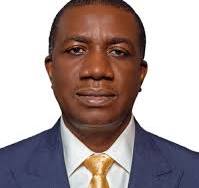
The Development Bank of Nigeria Plc (DBN) has launched DAWN: DBN Action for Women in Nigeria, unveiled its Impact Report and presented MSME Data Assets at the seventh edition of Annual Lecture held in Abuja.
DBN, in a statement on Thursday, said while delivering a welcome address, its Managing Director and Chief Executive Officer, Dr Tony Okpanachi, said the central challenge was no longer reforms themselves but ensuring benefits reach businesses at end of the chain.
He asked how to make sure benefits reach traders in Onitsha, fabricator in Aba, farmer in Kebbi and young founder in Yaba, noting that MSMEs accounted for about half of Nigeria’s GDP and more than eight in every ten jobs, adding that when reform works for MSMEs it works for most Nigerians.
He explained that reform becomes prosperity only when entrepreneurs can act on it whether through long tenor loans to buy equipment, banks willing to take risk or skills and records needed to grow.
He said working through Participating Financial Institutions DBN provides longer term funding, partial credit guarantees through subsidiary Impact Credit Guarantee Limited and capacity building including Entrepreneurship Training Programme.
He disclosed that as at December 2025 DBN had disbursed a cumulative N1.4 trillion to MSMEs through 84 Participating Financial Institutions creating about 1.6 million jobs nationwide.
Under the new five year strategy, the Bank aims to reach more than two million MSMEs with deliberate targets for women led businesses, youth led businesses and underserved states.
On DAWN, Okpanachi said finance alone had not enabled enough women-led businesses to scale.
He said initiative brings together financing, guarantees and credit support, technical assistance, outcome linked grants and market linkages delivered through banks, microfinance institutions, fintechs, aggregators, cooperatives and direct channels.
Its priority sectors are agriculture and exports, healthcare, arts and creatives, technology and green business.
He said DAWN is about moving gender focused lending beyond intention and turning access into opportunity.
On the sidelines of the lecture DBN and African Development Bank held a signing ceremony of AfDB DBN 61 million United States dollars Gender Line of Credit development that reinforces Bank commitment to women led enterprises.
Okpanachi urged Participating Financial Institutions to extend lending into sectors and states where access to finance has been limited, policymakers and regulators to measure reform by what changes for business at end of chain and MSMEs to formalise, keep good records and use support now available.
The Vice President as Special Guest of Honour was represented by Dr Fred Iklaga Senior Technical Adviser in the Office of Special Adviser to the President on Economy.
Keynote speakers were Chief Executive Officer of MTN Nigeria, Dr Karl Toriola, and Chairman of Nigeria Sovereign Investment Authority, Dr Segun Ogunsanya.
Fireside chat featured Chief Executive Officer of Sterling Bank Abubakar Suleiman, manufacturing and trade entrepreneur Mrs Omoyemi Chukwurah and by video Kola Masha of Babban Gona.
The Secretary to the Government of Federation, represented by Augusta Warren Bekaredebo, said 2026 tax reforms would bring relief to many small businesses expressing optimism that a lot of businesses will be smiling by next year because they will be exempted from tax.
By Tambaya Julius, Abuja
The Nigeria Labour Congress (NLC) has threatened possible nationwide industrial action following the failure of talks with the Federal Government over workers’ welfare, petrol prices and other outstanding labour demands.
The warning came after a meeting between the government and organised labour at the Ministry of Labour in Abuja on Thursday, October 22, ended without an agreement.
The congress has given the Federal Government until Tuesday, October 27, to make meaningful progress on the issues, warning that its relevant organs would decide the next line of action if the next meeting fails to produce concrete commitments.
The NLC has also directed its affiliates, state councils and civil society allies to begin mobilising members for possible nationwide action.
In a statement issued after the meeting, the NLC Acting General Secretary, Benson Upah, expressed disappointment over what he described as the government delegation’s lack of preparedness for the negotiations.
According to the congress, organised labour presented its demands in good faith but left the meeting without any concrete commitments from the government.
The demands include a reduction in petrol prices to 2024 levels, renegotiation of the national minimum wage, implementation of agreed tax relief measures and resolution of the terms of settlement involving the Joint Health Sector Unions (JOHESU).
The congress also called for the resolution of issues raised by the Joint Public Service Negotiating Council (JPSNC) over peculiar allowances, wage awards and hazard allowances.
The NLC said the government delegation lacked the necessary authority to engage meaningfully on the issues presented by labour representatives.
“The meeting between the Federal Government and organised labour, convened at the Ministry of Labour in Abuja on 22nd October 2026, has ended without resolution,” the statement said.
It added that the Minister of Labour requested that the meeting be adjourned until October 27 to allow the government to prepare adequately for further discussions.
The preparations, according to the statement, would include bringing relevant ministers and heads of departments and agencies to the negotiating table.
The congress said it remained open to dialogue but would not accept continued delays in addressing workers’ concerns.
“We will report back to our organs, and if no meaningful progress is made on Tuesday, the relevant organs of the NLC will decide the next line of action,” it said.
The labour body urged workers and members of the public to remain calm while the negotiations continue, even as it directed its affiliates and allies to prepare for possible industrial action.
“However, we urge all affiliates of NLC and TUC; all state councils and our civil society allies to be alert and start mobilising for a possible action across the nation while we hope that the tenets of our demands are met by the government,” the statement added.
The October 27 meeting is expected to provide another opportunity for both sides to address the outstanding issues and prevent a possible escalation of the dispute.
However, the NLC’s decision to begin mobilisation suggests that tensions could rise if the next round of talks fails to produce meaningful progress.
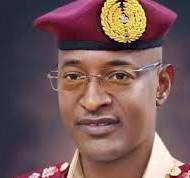
The Federal Road Safety Corps (FRSC) has barred its personnel from escorting politicians during campaigns for the 2027 general elections.
Zonal Commanding Officer, RS6, ACM Abimbola Owolabi, gave the directive during her maiden visit to the Cross River Command in Calabar on Wednesday.
Owolabi said patrol vehicles and sirens must not be used for political activities or private engagements, including weddings and funeral processions.
She directed officers deployed to campaign venues to focus exclusively on traffic management to prevent congestion and road crashes.
The zonal head warned personnel against leading political convoys or providing escorts for politicians, stressing that official vehicles must not be used for unauthorised purposes.




Will new entrant, ESDIAC, ease Nigerians’ international call worries?
ShareBy David Torough After decades of frustration in accessing telephone services, Nigerians were relieved when in 2001, the then President...


AHF Launches Comic Book on Menstrual Health Education in Abuja
ShareFrom Attah Ede, Makurdi The Aids Healthcare Foundation (AHF) Nigeria, has revealed that nearly 2 billion people menstruate, with 500...


BBNaija’s Dorathy Begins Breast Reduction Journey
ShareFormer Big Brother Naija housemate, Dorathy Bachor, has taken the first step towards breast reduction surgery, three years after first...


They Planted Juju in my Jacket at Davido’s House – Peruzzi
ShareSinger Peruzzi has narrated how a charm was planted in his jacket during his stay at Davido’s house. Peruzzi was...


Withdraw all Charges within Two Weeks, Speed Darlington Appeals to Burna Boy, Apologises
ShareControversial Nigerian singer Speed Darlington has appealed to Grammy-winning artiste Burna Boy to withdraw all charges against him within two...
AFSNET Business Conference Kicks off in Calabar
ShareFrom Ene Asuquo, Calabar The 6th African sub – sovereign Governments Network Investment Conference has started in Calabar the cross...
NAFOWA Empowers 18 Widows, Donates Tricycles in Bayelsa
ShareFrom Mike Tayese, Yenagoa The Nigerian Air Force Officers’ Wives Association (NAFOWA), Mobility Command, Yenagoa, has empowered 18 widows of...


RMAFC Advocates Fair Share of 13 Per Cent Revenue Derivation Among Oil Producing States
ShareBy Tony Obiechina, Abuja The Revenue Mobilisation Allocation and Fiscal Commission (RMAFC) has advocated a fair distribution of the 13...


Customs CG Tasks Officers on Discipline, Integrity
ShareBy Tambaya Julius, Abuja The Comptroller-General of the Nigeria Customs Service (NCS), Bashir Adewale Adeniyi, has called on officers and...


2027: ADC Asks EFCC, INEC to Probe Alleged APC Cash Distribution
ShareBy Mvendaga Orjime, Abuja The African Democratic Congress (ADC) has called on the Economic and Financial Crimes Commission (EFCC) and...