
BUSINESS
Bagudu Emphasizes Need for Geospatial Ecosystem in Economic Planning


By Tony Obiechina, Abuja
Minister for Budget and Economic Planning, Senator Abubakar Atiku Bagudu, has emphasized the crucial role of geospatial technology in effective economic planning and development of Nigeria
The Minister who stated this while addressing stakeholders at the Geospatial Ecosystem Roundtable Meeting in Abuja noted that geospatial data has the transformative power and potential to drive evidence-based decision-making.
He stressed that accurate and up-to-date geospatial information was essential for policymakers to understand the dynamics of various sectors and make informed choices that could lead to sustainable economic growth.
The Minister underscored the need for collaboration between Government Agencies, private sector stakeholders and the geospatial community to harness the full potential of geospatial data to support data sharing, standardization and capacity building to build a robust geospatial ecosystem for national development goals.
He also underlined the significance of integrating geospatial technology into various sectors such as; agriculture, urban planning, transportation, and disaster management for policymakers to identify areas of improvement, optimize resource allocation and implement targeted interventions that address specific challenges.
The Minister highlighted the Government’s commitment to investing in geospatial infrastructure and capacity development, expressing his optimism about the future of the geospatial ecosystem in Nigeria.
He assured that by leveraging the power of geospatial technology, the country could achieve sustainable development, improve service delivery and enhance the overall well-being of its citizens.
According to him, the Roundtable meeting with relevant stakeholders remained crucial to the current administration’s Renewed Hope agenda which aimed at improving social welfare inclusion and security in the country.
He added that the use of geospatial data was vital and central to Nigeria’s developmental efforts and it needed to be well streamlined and coordinated for synergy.
“Strengthening the policy framework for synergy and collaboration in the geospatial ecosystem, as well as identifying relevant use cases for geospatial data in line with the government’s agenda is of utmost importance,” he added
The Permanent Secretary in the Ministry, Nebeolisa Anako, explained that the Geo-Reference Infrastructure Demographic Data for Development, GRID3, stakeholders meeting was organized to further deepen the collaboration in production and utilization of geospatial data for evidence-based planning and programme delivery.
According to him, the GRID3 as an Inter MDAs Initiative aims to facilitate the production, collection, utilization and dissemination of high-resolution data on population distribution, administrative based maps of settlements, development infrastructure and sub-national boundaries to support the achievement of national development priorities, the Sustainable Development Goals, SDGs and other humanitarian efforts.
While saying that geospatial technology was central to development planning for the Ministry of Budget and Economic Planning, the Permanent Secretary maintained that GRID3 constituted an important component of the National Monitoring and Evaluation system.
Also, the GRID3 Nigeria Country representative, Nasiru Aliu disclosed that the meeting would help chat a way forward on appropriate utilization of data in Nigeria by bringing together all the relevant national stakeholders in the ecosystem to discuss mandates, synergy and collaborations around the production utilization and use of the special data.
“This gathering is meant to address the critical issues or challenges across various sectors. So, we are gathering here today through the commitment of the federal government of Nigeria at the Ministry of Budget and Economic Planning to bring everyone on the table to find out what are the challenges what are the issues and how can we strengthen collaboration among these agencies that are data-producing agencies and data users to know how the challenges can be fully converted into potentials for Nigeria.”
He emphasized the importance of having up-to-date population data for the implementation of development plans saying that it was also very important to see how the country can utilize new technology and the reason was that there were a lot of new innovations, we have seen things happening in other African countries and beyond which Nigeria must also key into.
The Federal Competition and Consumer Protection Commission (FCCPC) says there is a need for sustained capacity building in competition reporting and issues.
The Executive Vice Chairman of FCCPC, Tunji Bello, said this in a statement made available to the News Agency of Nigeria (NAN) in Abuja on Sunday.
Bello described competition matters as a relatively new area in the country adding that it required specialised knowledge among journalists, regulators and other stakeholders.
He said that competition law and consumer protection regulations had made stakeholders’ education a priority for the commission.
Bello said that the FCCPC recently supported the training of judges through the National Judicial Institute (NJI) to deepen understanding of competition-related matters.
He noted that members of the judiciary also required exposure to the nuances of the emerging field.
“We recognised that because it is a new terrain, the judges themselves are not familiar with the nuances.
”So we brought in experts on competition,” he said.
Bello stressed that the media had a critical role in promoting public understanding of competition and consumer protection issues.
“If FCCPC is becoming more known to the public, it is as a result of the kind of publicity you have given us,” he said. (NAN)
Fire gutted the Nigeria Customs Service (NCS) Western Marine Command office in Apapa, Lagos, on Monday, destroying property worth millions of Naira.
The fire, which reportedly started at about 10:23 a.m. from an electrical surge in the conference room, spread to other sections of the building.
Officers on duty made frantic efforts to contain the fire before officials of the Lagos State Fire and Rescue Service arrived at about 10:45 a.
m.The Deputy Comptroller of Customs, Timothy Jonah, who just resumed at the Command, to take over the affairs from his predecessor, described the incident as unfortunate.
He said: “I just resumed duty to take over, only to witness this fire outbreak.
“Every challenge, though negative, is an opportunity to strengthen our operations.
“In the meantime, we will set up a committee to investigate the cause of the fire.”
He commended the swift response of the personnel on duty and their collaboration with the fire service, saying measures would be taken to strengthen safety protocols and prevent a recurrence. (NAN)
Some traders in the Federal Capital Territory (FCT) have expressed concern over the impact of the recent fuel price increase on their businesses.
The traders on Monday, said the hike had increased transportation costs, reduced their sales and affected their profit margins.
A trader in Suleja, Umar Bayero said the recent increase in fuel prices had significantly increased his overall cost of doing business.
“As a trader, I depend on transportation both to source goods from suppliers and to move them to my place of business.
“From an economic perspective, this has contributed to higher input costs and reduced my profit margin,” he said.
Bayero said the cost of transporting and restocking his goods had increased considerably compared with what obtained before the fuel price increase.
“Depending on the distance and quantity of goods involved, my transportation and logistics expenses have increased by roughly between 30 per cent 50 per cent.
“Suppliers have also increased their prices because they face higher transportation and distribution costs.
“This has forced me to increase my selling prices to partly compensate for the higher cost of restocking and transportation,” he said.
He said he could not pass the entire increase on to his customers, as many now buy smaller quantities and focused only on essential items.
Another trader, Azubuike Okafor, said the situation had negatively affected his sales and profits.
“Higher operating and restocking costs have reduced my profit margin and customers having less money to spend has led to lower sales.
“Compared with the period before the fuel price increase, I am dealing with higher costs, weaker demand, and low profit,” he said.
Okafor said he was comparing suppliers to get better prices, buying items based on demand, and managing his stock more carefully.
He called for stable and affordable energy and transport costs, low-interest business loans, and better roads and transportation.
Another trader in Suleja, said he now spends an additional N70,000 on transportation.
Haneefa Anegbe of Rubis Mart, Suleja, said the cost of transportation had significantly increased, causing the prices of things to go up.
“The impact is not too much, we absorb it, but when an increase is significant, like something selling for N60,000 goes up to N68,000, we have no choice than to increase our price too.”
Anegbe said customers’ purchases had declined, because people were now more conscious that the year was ending and were saving to meet school fees and other expenses.
“The fact that we are not making sales is because our customers do not have so much to spend, so they have to distinguish their needs from their wants and prioritise their needs.
“Another major thing that will help is if income increases because no matter how much goods you purchase, if you are not selling, then you are not doing anything.
“I believe that if the minimum wage increases or customers earn more, spending will increase. They will be able to spend more to afford their basic needs,” she said.
A resident of Kubwa, Auwal Muhammad, said the recent fuel price increase had affected him in many ways.
“Transportation costs have gone up, and the prices of food and other goods have also increased,” he said.
Muhammad said that he now bought in smaller quantities, avoided unnecessary spending, and planned his expenses carefully.
He called for measures that could help reduce the burden of rising living costs.
Another resident, Fauziya Umar, said the fuel price increase had raised transportation fares and the prices of food and other essential commodities.
Unar said she had reduced the quantity of some items she bought.
“My spending ability has been affected, whereas my income remains unchanged,” she added.
She called for measures to reduce transportation costs and the prices of essential goods, as well as support to ease the burden of rising living costs.(NAN)




Police Detain Woman for Alleged Killing of Co-wife in Bauchi
ShareThe police command in Bauchi State, said it has apprehended a housewife over alleged killing of her co-wife following a...
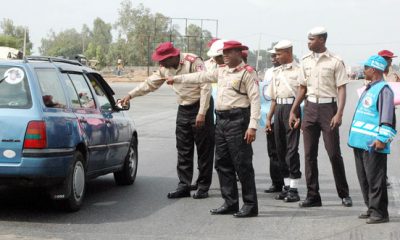

FRSC Deploys 170 Ambulances Nationwide for Emergency Rescue
ShareThe Federal Road Safety Corps (FRSC) has deployed more than 170 ambulances across the country as part of efforts to...


NBA Decries Rising Insecurity in Plateau, Urges Urgent Action
ShareThe Nigerian Bar Association (NBA) has decried the spate of security challenges currently confronting Plateau and other parts of Nigeria....


Benue Begins Compilation of Out-of-school Children
ShareThe Benue Government has begun compilation of out-of-school children as part of efforts to improve child protection and access to...

NAPTIP Uncovers Suspected Baby Trafficking Ring in C’River
ShareThe National Agency for the Prohibition of Trafficking in Persons (NAPTIP) has uncovered an alleged child trafficking operation involving newborn...


Kaduna Pensioners Applaud Uba Sani over N3.65bn Gratuity, Death Benefits
ShareThe Kaduna State Chapter of the Nigeria Union of Pensioners (NUP) has commended Gov. Uba Sani for approving N3.65 billion...

FG Calls for Urgent Action to Protect Nigeria’s Rivers
ShareThe Federal Government has called for integrated management of Nigeria’s rivers, forests, wetlands and watersheds to safeguard water resources, public...
FCCPC Calls for Improved Capacity Building on Competition Reporting, Matters
ShareThe Federal Competition and Consumer Protection Commission (FCCPC) says there is a need for sustained capacity building in competition reporting...
Fire Guts Customs Western Marine Command Office in Lagos
ShareFire gutted the Nigeria Customs Service (NCS) Western Marine Command office in Apapa, Lagos, on Monday, destroying property worth millions...

Fuel Price Hike Reduces Sales, Increases Cost of Doing Business — Traders
ShareSome traders in the Federal Capital Territory (FCT) have expressed concern over the impact of the recent fuel price increase...