
Foreign News
1 killed as Kenyan Anti-government Protests Intensify Again


At least one person was killed in renewed anti-government protests across Kenya on Tuesday, a Reuters reporter said, as police clashed with demonstrators demanding that President William Ruto step down.
Youth-led nationwide protests that broke out a month ago against proposed tax hikes have continued even after Ruto withdrew the legislation and fired almost all of his cabinet.
Activists say they want Ruto to resign and are calling for systemic changes to clean up corruption and address poor governance.
At least 50 people have been killed in the protests to date, the government-funded Kenya National Commission on Human Rights (KNCHR) said on Tuesday.
In Kitengela, a town on the southern outskirts of the capital Nairobi, police fired repeatedly in the direction of hundreds of protesters, some of whom were throwing rocks, Reuters TV footage showed.
The protesters also burned tyres, waved Kenyan flags and chanted “Ruto must go!”
A Reuters reporter saw the body of one protester lying on the ground with blood oozing from a head wound.
The national police spokesperson declined to comment.
Tuesday’s protests appeared to be some of the biggest since Ruto withdrew the tax increases on June 26.
The Nation newspaper reported demonstrations in at least 23 of Kenya’s 47 counties.
In Nairobi’s city centre, riot police fired tear gas at several dozen protesters. An ambulance service posted footage on X showing its personnel carrying away someone injured there on a stretcher.
Demonstrators in the coastal city of Mombasa waved palm fronds as they marched, while litter burned in the street, images on Kenyan television channels showed.
The protests have created the biggest crisis of Ruto’s two years in power.
With Kenya spending over 30 per cent of its revenues just paying the interest bills on its debt, he has been caught between the demands of lenders to cut deficits and a hard-pressed population reeling from rising living costs.
“Ruto is very incompetent. He has no leadership skills. He just wanted the title of president of this country,” said one protester in Nairobi who did not give his name.
“The guy is a puppet to the IMF. That is it. Whatever he’s doing, he’s doing for the IMF.”
The International Monetary Fund (IMF) has been a major target of the ire of young Kenyan protesters, who have accused it of being the driving force behind the proposed tax hikes.
The IMF has said its main goal through its lending programmes with Kenya has been helping the country overcome economic challenges and improve its people’s well-being.
Ruto’s office had announced “multi-sectoral” talks for this week to address grievances raised by the protesters, but there was no sign they had begun.
Most of the leading activists behind the protests have rejected the invitation, instead calling for immediate action on issues like corruption.
Ruto’s spokesperson did not respond to a request for comment.
The protests began peacefully but later turned violent.
Some demonstrators briefly stormed parliament on June 25, and the police opened fire.
In addition to the 50 deaths, 413 people have been injured, 682 have been arbitrarily detained and 59 have been abducted or are missing in connection with the protests, KNCHR said.
Ruto has promised to investigate accusations of abuse but has broadly defended the conduct of the police and accused criminals of hijacking peaceful protests.
On Monday, he accused the Ford Foundation, an American philanthropic organisation, of sponsoring those who had caused “violence and mayhem” in Kenya, without providing evidence.
The Ford Foundation rejected the allegation, saying it did not fund or sponsor the protests and has a strictly non-partisan policy for its grant-making. (Reuters/NAN)
A fire at a nursing home in Chile has killed 16 people, authorities said Saturday.
The blaze began on Friday night at the nursing home in the Araucania region, 640 kilometers (400 miles) south of the capital Santiago, and was extinguished in the early hours of Saturday.
Images shared on social media showed massive flames rising above the building in the darkness.
“We express our sorrow and dismay at the deaths of 16 elderly people in this tragedy,” authorities in the municipality of Pitrufquen said in a statement.
A total of 26 elderly residents were in the nursing home.
Ten of them survived and were taken to the local hospital, the statement said.Local mayor Jacqueline Romero said that municipal health and public safety teams, firefighters and police were deployed in response to the blaze.
“It is a situation that fills our souls with great sorrow and pain. We have been… providing support to the families,” she said.
The cause of the fire remained unclear.
“We are currently carrying out investigative procedures, including examining the scene and conducting inquiries, to determine the origin and cause of the fire, as well as to rule out third-party involvement,” Jorge Granada, the prosecutor assigned to the case, told local media.
Oil prices rose past $100 (£74) a barrel on Wednesday after further strikes in the conflict between the US and Iran and continuing Houthi attacks in Saudi Arabia.
In back and forth attacks, the US hit five Iranian tankers in reprisal strikes after Tehran targeted one of its warships.
Brent crude – which is the global benchmark for prices – has not been as expensive since the end of July, when a ceasefire between Iran and the US collapsed.
Yemen’s Iran-backed Houthi movement also attacked oil facilities in Saudi Arabia on Tuesday and have been targeting tankers in the Red Sea.
Brent crude did dip back down to $99.90 a barrel, but any fresh flare-ups in the Middle East could see it pushed higher again.
Tit-for-tat strikes between Iran and the US have escalated in the past week, more than six months after conflict broke out when the US and Israel launched attacks on Iran on 28 February.
Oil prices have fluctuated wildly since the war began, and pressure on the industry has been exacerbated by wider regional instability.
Before the conflict Brent crude had been priced at about $70 (£52) a barrel.
But the war has seen the effective closure of the Strait of Hormuz, which carries 20% of the world’s oil and liquefied natural gas (LNG).
The rising costs have sparked huge price leaps in petrol around the world for motorists at the pumps.
The US strikes on the five Iranian tankers saw four in the Gulf of Oman linked to Iran’s Revolutionary Guards Corps (IRGC) hit as well as another near Kharg Island.
Tehran responded by launching missiles at a US base in Jordan – most of which were shot down – and said it attacked two US vessels and eight oil tankers in the Strait of Hormuz.
The Houthis and Saudi Arabia have also been exchanging strikes since July after their own informal ceasefire unravelled.
On Monday the Houthis accused Saudi Arabia of bombing a prison in al-Hazm and killing 11 people.
Then on Tuesday the Saudi authorities said Houthis had struck civilian and economic sites in the cities of Abha, Khamis Mushait, Jazan and Najran.
The latest round of escalation comes after Iran targeted a US warship with ballistic missiles, which Centcom said were “successfully evaded”. It added that no American troops were harmed during the attacks.
In response, the US said that the five Iranian oil tankers it targeted were “part of a multi-billion-dollar shadow network that funds the IRGC and its regional proxies”.
One of the ships it had struck, the M/T Riesco, sunk in the Gulf of Oman, Centcom later said, posting a video on X of the damaged vessel.
Kharg Island – where one Iranian tanker was attacked in the latest round of US strikes – hosts Iran’s main terminal for exporting oil.
Some 90% of the country’s crude oil passes through the island in the Gulf, transported through pipes from the mainland.
Also on Tuesday, Yemen’s Iran-backed Houthi movement attacked energy facilities and civilian infrastructure in Saudi Arabia, injuring 73 people, according to Saudi authorities.
The drone and missile attack caused fires at oil facilities and installations that led to a temporary halt in operations, Saudi Arabia’s military and energy ministry said.
When asked by reporters about the latest tit-for-tat strikes between the US and Iran, US Secretary of State Marco Rubio on Tuesday said the situation was “pretty straightforward”.
“Iran continues to try to hit US naval ships. And, for every time they do that or try to do that, they’re going to lose tankers. And I think you’ll see that again today,” Rubio told reporters during a trip in Colombia.
The US strikes on Tuesday came hours after Iran’s Navy claimed it had seized an uncrewed US submarine in the Strait of Hormuz.
US Navy Capt Tim Hawkins, a spokesperson for Centcom, said that the “underwater drone operated by US forces malfunctioned more than a day ago” and was used to survey regional waters “in support of ongoing operations”.
The defective drone was “an older model that neither collected sensitive data nor carried any classified sonar or radar equipment”, he said, adding that US operations in regional waters were ongoing.
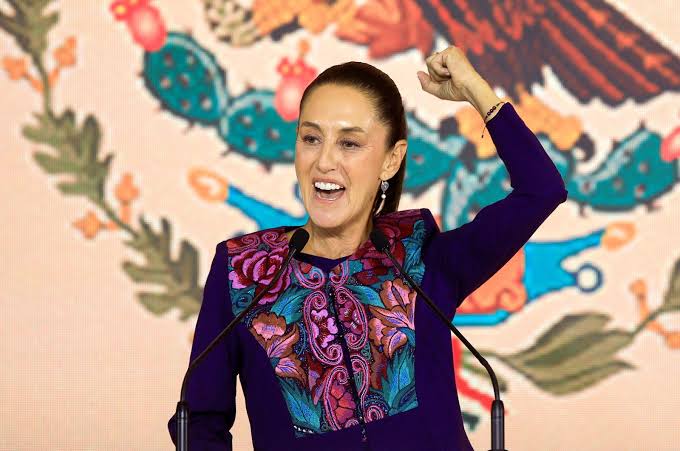
The United States must do its part in the fight against drug trafficking, Mexican President Claudia Sheinbaum said, following recent revelations of corruption at the U.S. Drug Enforcement Administration.
“We insist that they have a very important part to play over there and they shouldn’t just keep pointing the finger at Mexico,” Sheinbaum said at a press conference in the National Palace.
She said Mexico has succeeded in slashing the flow of fentanyl into the United States by more than 70 per cent, a figure acknowledged by U.
S. authorities.She added that the United States is also where the distribution of drugs and money laundering take place on a massive scale due to the high rate of drug consumption.
Sheinbaum also noted that Sara Carter, director of the U.S. Office of National Drug Control Policy, has acknowledged that drug abuse in the United States is a public health issue.
In May, Carter’s office released a document in which the U.S. federal government acknowledges the need for a national public health policy to address drug addiction.
Earlier this year, Carter visited Mexico and expressed interest in the Mexican government’s initiatives aiming to tackle the root causes of violence and prevent drug use.




2026 International Democracy Day: Group Tasks NASS on Special Seat Bill
ShareBy Laide Akinboade, Abuja League of Women Votersof Nigeria (NILOWV) on Tuesday, tasks the National Assembly on the quick passage...


Abia Targets UNESCO Recognition of Heritage Sites
ShareThe Abia Government has elevated selected cultural and natural sites to state heritage and monuments as part of efforts to...


TCN Announces Annual Maintenance at Ajaokuta Transmission Substation
ShareThe Transmission Company of Nigeria (TCN) has announced an annual preventive maintenance of its 330/132 Kilo Volt (kV) at Ajaokuta...
When Government has Too Many Voices: The Benue lesson in Power, PR and Public Trust
ShareBy Tom Chiahemen Sometimes, a controversy that appears to be about one thing is really about something else. Former Anambra...
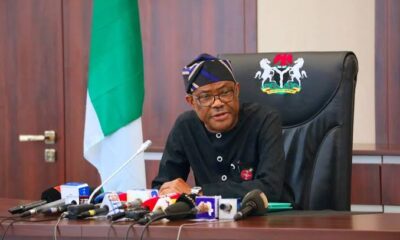

2027: My Support Only for Tinubu Re-election, not APC – Wike
ShareBy Laide Akinboade, Abuja The Federal Capital Territory (FCT) Minister, Nyesom Wike, has reiterated that his support for the reelection...


INEC, African Union Strengthen Electoral Partnership Ahead of 2027 General Elections
ShareBy David Torough, Abuja The Independent National Electoral Commission (INEC) has strengthened its engagement with the African Union (AU) ahead...


NEMA Begins Flood Simulation Exercise for Multi-Stakeholder Preparedness in Benue
ShareFrom Attah Ede, Makurdi In a bid to mitigate the impact of flooding, the National Emergency Management Agency (NEMA) in...

Release My Academic Records, Obi Tells UNN, Other Institutions
SharePresidential candidate of Nigeria Democratic Congress (NDC), Peter Obi, has authorised University of Nigeria, Nsukka (UNN) and other academic institutions...


Dangote IPO: A Caution for Short Term Investors amid the Hype
ShareBy Kenechukwu Aguolu With the Dangote Refinery Initial Public Offering (IPO) opening on Monday, September 14, the excitement among Nigerian...

Nigeria’s Inflation Rate Slides to 15.39 Per Cent in August – NBS
ShareBy Tony Obiechina, Abuja The National Bureau of Statistics (NBS) on Tuesday disclosed that headline inflation has eased to 15.39...