
NEWS
PEACE AND STABILITY: THE BEDROCK OF OUR ECONOMIC RECOVERY AND DRIVER FOR GOOD GOVERNANCE


Esteemed colleagues, Gentlemen of the Press We are gathered here today at An important moment in our nation’s history. A moment sign posted by a combination of challenges and opportunities.
Challenges because Nigerians are passing through unintended economic challenges occasioned a few of the bold policy decisions taken by this administration.
Opportunities because our economy is being refined and recalibrated for better future and when dialogue is a stronger pedestal for good governance. Economic prosperity for the nation remains the ultimate goal of the administration of President Bola Ahmed Tinubu because it is the engine that drives progress, lifts families from poverty, and builds strong, resilient societies.To achieve this goal, we must enjoy peace and stability because it is the cornerstone upon which we build trust, cooperation, and shared purpose. When peace reigns, policies yield results, businesses thrive, investments flourish, and creativity is unleashed.
This administration at inception in May 2023 inherited an economy in need of urgent , bold and imaginative reforms. Policy measures including removal of an unsustainable fuel subsidy regime had to be taken.
This, it must be admitted has resulted in unexpected adjustments that impacted all facets of the economy and our daily lives.The administration similarly inherited a security situation that had existed for two decades and required greater attention in terms of upgrade of security architecture, infrastructure, systems, capability and capacity of personnel.
This has compelled massive infusion of scarce resources from our already dwindling revenue. The objectives have been to secure lives and property, build foreign investors’ confidence, and increase food production by returning our communities to their homes and farm lands in safe and secure environment.President Bola Ahmed Tinubu sought the mandate of Nigerians to lead the nation at this difficult time because he knew that effective leadership was required to address the challenges that had accumulated over several years.
That was why he sought to renew the hope of Nigerians.Within a space of fourteen months of purposeful leadership, the administration has recorded tremendous accomplishments that laid the foundation for immediate, medium and long term prosperity of Nigerians, in an inclusive manner. Let me avail you a few concrete cross cutting examples of achievements.
This is in addition to those specific accomplishments from twenty Ministries as contained in the annex to this briefing. Labour Sector and the Masses:
(a). Consequent upon the impact of the removal of subsidy, the President, working with the Governors released the sum of five billion Naira to each State to cushion the impact in an inclusive manner that prioritised the poor, vulnerable and the elderly;
(b).Mr. President approved a Wage Award of Thirty-five Thousand Naira for a period of six months to cushion the effect on workers. This award was higher than the minimum wage
(c). Mr. President has just signed into law a new National Minimum Wage Act which prescribed N70,000:00. This represents more than 100% increase from the last minimum wage (30,000) and takes retroactive effect from April
(d). Currently, as we speak, States, through their Governors, are receiving twenty trailer loads of assorted grains per state, approved by the President for distribution to citizens.
This is intended to cushion the high cost of foodstuff
(e). Government has removed tariffs on imported food items to bring down the prices of food stuff
(g). Farm inputs including fertilisers, are also being made available to farmers at highly subsidised rates to boost food production and reduce cost. Mr President has also approved the release of sixty four trailer loads of fertizers to each state to boost agricultural production.
(h) The Agricultural land development Agency has also been repositioned to facilitate land preparation for farmers(h). Recently the President established the Ministry for Livestock Development in order to address the challenges in the sector and facilitate access to affordable protein by Nigerians and boost export.
(ii). Infrastructure Development & IndustriesRoad and other critical infrastructure are being developed across the nation as part of long term measures to reposition the economy and ease movement on the roads and by rail.The Bank of Industry is also being supported to fund the growth of MSMEs in the industrial sectorRecently, the Renewed Hope Infrastructure Plan was unveiled as a catalyst for economic boom. Railways infrastructure is also being developed across the nation to facilitate affordable transportation by the citizens
(III). SOCIAL SAFETY NET PROGRAMS
Curently, over 15 million indigent, poor and highly u=vunerable families are beneficiaries of the family support cash grants by the FG (iv) LOCAL GOVERNMENT AUTONOMY
(a). As part of the efforts of the FG to take development to the grass roots, the government approached the Supreme Court for a decision on the funding of LGAs in Nigeria.
The favourable judgement has now set the LGA on the path to their financial and development autonomy.
(v). Ministry of Livestock development :
(a). For the first time in our nation, the President created a stand alone Ministry for the Youth that account for a large percentage of our population
(vi) YOUTH DEVELOPMENT
(a). Under the N35 Billion Nigerian Education Loan Fund (NELFUND) approved beneficiaries have exceeded the 40 thousand mark, of the expected 70 thousand beneficiaries. Ladies and gentlemen, it is in the light of these aforementioned situation and accomplishments that we wish to inform you that Nigeria is work in progress and in due course, we shall breath a sigh of relief. The on-going economic hardships would abate very soon and we shall all enjoy endless prosperity.We therefore appeal to Nigerians of whatever persuation, belief, demography, gender and status to shun calls for protest against hunger by prioritising paece and progress.
For the avoidance of doubts, the government of President Tinubu recognises the right to peaceful protest but circumspection and vigilance should be our watch words. Government is weary of the dangers associated with protests that are vulnerable to being highjacked by bandits, insurgents and other criminals. Rather, we request that dialogue should be advanced and we remain open to such.Our appeal is that Nigerians should please pursue the path of peace, dialogue and collaboration in addressing the challenges that collectively confront us. Please go about your legitimate businesses and avoid actions and/or association that are capable of disturbing the peace of th country. Remain vigilant as well .Let me reassure you that together, we shall create a Nigeria where peace and stability are not merely aspirations but realities, where economic growth is not just a goal but a tangible outcome, and where the dreams of our people are transformed into a shared national destiny.
Thank you for listening
….. speech by Senator Akume SGF at a Special Press Briefing on Wednesday, held in Abuja, July 31, 2024.
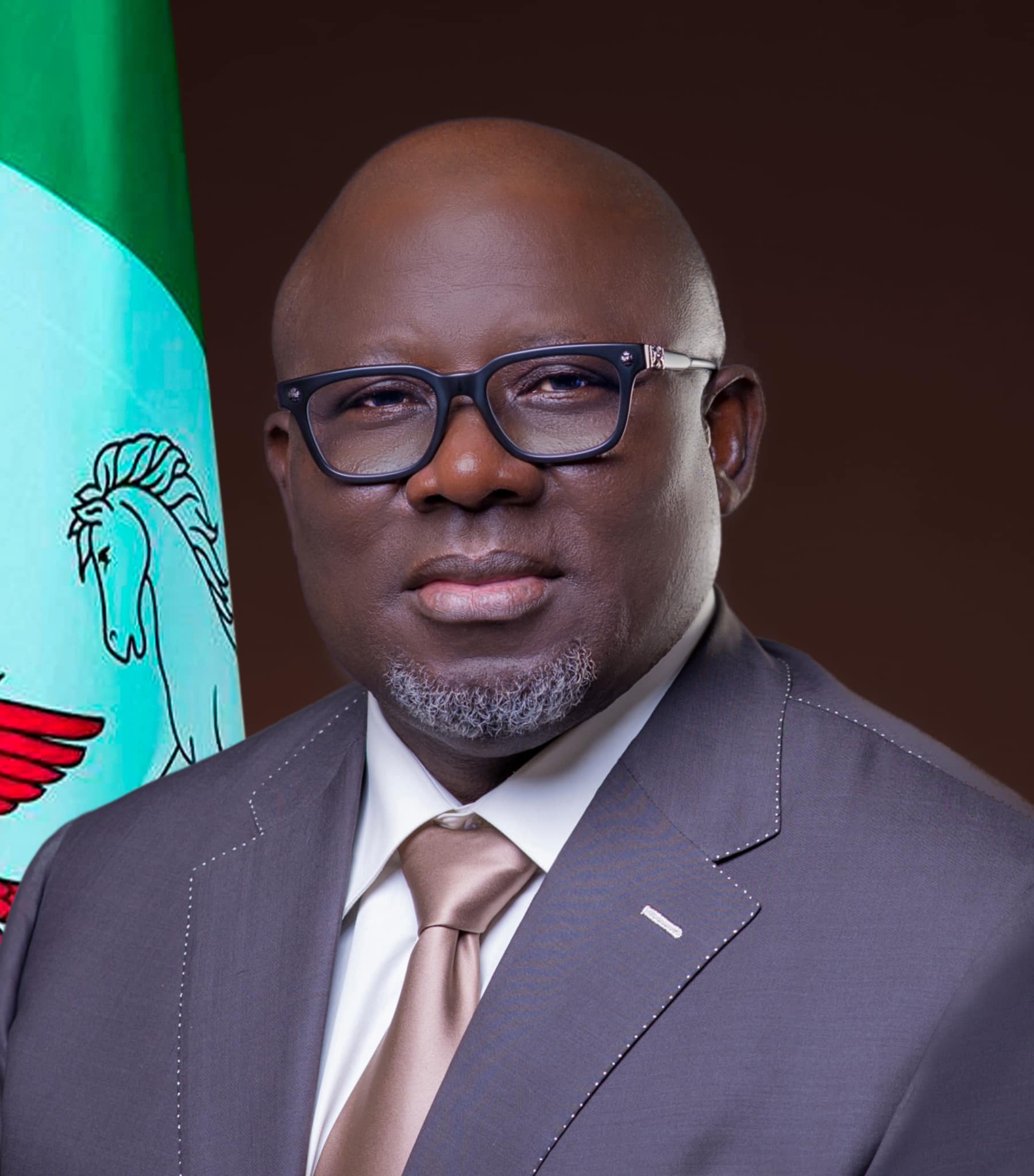
From Francis Sadhere, Delta
Delta State Governor, Rt. Hon. Sheriff Oborevwori, has urged civil service commissions across the country to prioritise continuous training and retraining of personnel to improve efficiency and strengthen public administration.
The Governor said regular capacity development was essential for building a competent workforce capable of responding to emerging administrative challenges and meeting the demands of modern governance.
Oborevwori made the call on Monday in Asaba while receiving members of the Federal Civil Service Commission, led by its Chairman, Prof.
Tunji Olaopa, on a courtesy visit.Represented by his Deputy, Sir Monday Onyeme, Ph.D., the Governor maintained that the effectiveness of government institutions depended largely on the quality, welfare and professional competence of their workforce.
He noted that rapid changes in global administrative practices had made continuous learning imperative for civil servants at both state and federal levels.
According to him, Delta State has continued to invest in the welfare and professional development of its workforce, a commitment he said had positioned the state’s civil service among the best in the country.
Oborevwori also called on the leadership of the National Council on Civil Service to encourage civil service commissions across the federation to embrace sustained manpower development.
He expressed delight that Delta State was hosting the 2026 edition of the National Council on Civil Service, describing the event as an opportunity to showcase the state’s commitment to excellence in public administration.
“We are very happy to host the 2026 edition of your National Council; Delta State likes to be first in everything, and our civil service stands among the best in the country because our personnel are properly trained and their welfare is prioritised,” he said.
The Governor added that keeping public institutions abreast of changing global standards required deliberate investment in continuous training and retraining.
“Things are changing rapidly across the globe, and continuous training and retraining remain the only path to keeping our institutions abreast of modern demands.
“I urge the leadership of the National Council to encourage civil service commissions across the federation to adopt this continuous learning approach,” he said.
Chairman of the Federal Civil Service Commission, Prof. Tunji Olaopa, commended the Oborevwori administration for hosting the national gathering.
Olaopa explained that the annual event features a targeted conference aimed at addressing contemporary issues in the civil service, advancing reforms and shaping the future of public administration in Nigeria.
He also applauded Governor Oborevwori for his performance and developmental strides across Delta State.
From Joseph Amedu, Lokoja
The Kogi State Government has defended the recent review of tuition fees at Prince Abubakar Audu University, Anyigba, (PAAU) saying that the Vice-Chancellor, Professor Salisu Usman acted in line with government directive.
Government also said that the review was part of a unified policy aimed at harmonising charges across all state-owned universities.
The Vice Chancellor of Prince Abubakar Audu University (PAAU), Anyigba, Prof. Salisu Ogbo Usman, and the Commissioner for Education, Hon. Wemi Jones, made this clarification on Monday while appearing before the Kogi State House of Assembly Committee on Education over a petition alleging an increase in school fees at PAAU and Kogi State Polytechnic, Lokoja.
The committee, chaired by Alhaji Idris Maikudi, also had Hon. Bode Ogunmola, representing Ogori-Magongo, and Hon. Abu Jibril, representing Ajaokuta State Constituency, in attendance.
Explaining the rationale behind the review, the Commissioner for Education said adjustments to school fees were never undertaken in isolation, noting that the state government usually sets up a committee to accommodate different interests whenever such a review becomes necessary, particularly in view of the administration’s free education policy.
Jones disclosed that a letter conveying the directive for the fee review was sent to PAAU as far back as 2024 but was not fully implemented at the time.
He said the current implementation was in line with a uniform fee structure for state-owned universities, which had already been adopted by other institutions in the state.
In his remarks, the Vice Chancellor, Prof. Usman, maintained that the university merely implemented the state government’s directive, stressing that his administration did not independently increase the fees.
He said his humble background had naturally made him sympathetic to the plight of students and parents, but added that as the head of an institution, he was obligated to operate within the provisions of the law and government policies.
The Vice Chancellor further argued that despite the review, fees charged by Kogi State universities remained considerably lower than those of neighbouring states.
He cited Edo, Ekiti, Ondo and Osun States as examples, where students studying Medicine and Law pay significantly higher fees, in response to questions from members of the committee.
Prof. Usman also highlighted the state government’s investment in sustaining Medical Sciences programmes, recalling that the Medical programme at PAAU collapsed in 2012, forcing students to be transferred to Ebonyi and Kaduna States to complete their studies.
He said the administration of Governor Ahmed Usman Ododo had addressed the challenge by putting structures in place to sustain medical training in two state-owned universities.
The Vice Chancellor urged students to take advantage of the Nigerian Education Loan Fund (NELFUND), revealing that 4,032 students of the university had been approved for the scheme, with N562 million cleared for payment.
He added that applications from another 600 students were being processed, while beneficiaries were also entitled to a monthly upkeep allowance of N20,000.
On the allegation involving Kogi State Polytechnic, Lokoja, the Rector, Prof. Salihu Sanusi Avidime, said he was not aware of any petition concerning an increase in fees, insisting that his administration had not raised school charges.
Rather, he explained that the institution had reduced accommodation fees following complaints by parents over accommodation challenges.
The Commissioner for Education corroborated the Rector’s position, describing the inclusion of the Polytechnic in the petition as strange and frivolous.
Meanwhile, the House Committee cautioned individuals and groups against submitting petitions to the Assembly without making themselves available to defend the allegations contained therein.
The committee observed that such practice amounted to a waste of legislative time and was unfair to institutions invited to respond to claims that had not been substantiated.
However, the lawmakers requested additional documents as part of efforts to conduct a thorough examination of the petition, assuring that the matter would be handled with due diligence and in accordance with legislative procedures in the interest of the institutions and students.
In their separate appeals, the National Chairman of the National Association of Kogi State Students (NAKOSS), Comrade Isiaka Amoto, and the President of the National Association of Nigerian Students (NANS), Adams Abdulrazaq, urged the lawmakers to prevail on Governor Ahmed Usman Ododo to reconsider the fees with a view to effecting a slight reduction to ease the financial burden on students and their parents.
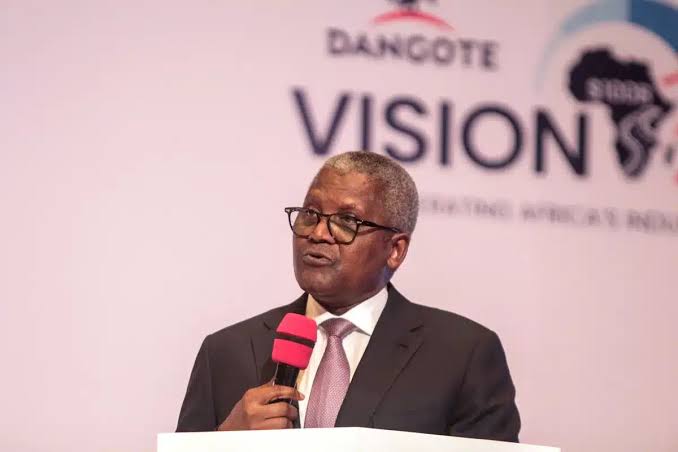
By David Torough, Abuja
Dangote Group is considering expanding its industrial investments into Egypt as part of its broader pan-African growth strategy, opening new opportunities for economic cooperation between Nigeria and Egypt.
The development followed a visit by a high-level Egyptian delegation led by the Minister of Investment and Foreign Trade, Dr.
Mohamed Saleh, to the Dangote Industries complex in Lagos. The visit focused on identifying opportunities for industrial collaboration, investment partnerships and capacity development across key sectors.The delegation, which included officials from Egypt’s Ministry of Petroleum and executives from its oil and petrochemical industries, explored potential partnerships between Nigerian and Egyptian businesses, particularly in refining, petrochemicals, fertiliser production and manufacturing.
President and Chief Executive of Dangote Industries Limited, Aliko Dangote, described the engagement as a significant step towards strengthening African economic integration and accelerating industrial development across the continent.
He said the visit reflected the Group’s commitment to expanding African businesses beyond national borders and creating industries that generate value, employment and sustainable economic growth.
Dangote noted that the engagement also provided an opportunity to showcase the Group’s industrial capabilities while identifying areas where both countries could combine their expertise to strengthen production capacity.
Speaking during the visit, Saleh said Egypt was keen to translate existing diplomatic and business relations with Nigeria into practical investment opportunities and long-term industrial partnerships.
He explained that the visit followed previous engagements involving Dangote Group at the Alamein Economic Conference and other international investment forums hosted by Egypt.
According to the minister, Egypt was particularly interested in studying Dangote Group’s achievements in refining, petrochemicals, fertiliser production and related manufacturing operations to identify opportunities for cooperation.
Saleh emphasised that stronger private-sector partnerships would play a crucial role in deepening economic relations between both countries, attracting investment and expanding industrial production.
He added that combining the strengths and experiences of Nigerian and Egyptian businesses could unlock new opportunities for sustainable growth and shared prosperity.
The potential expansion into Egypt aligns with Dangote Group’s Vision 2030 agenda and reinforces its ambition to become a leading driver of industrialisation and economic development across Africa.




Youth and Human Development are my Priorities” – Hon Shekari
ShareHonourable Rijo Shekari is the aspirant contesting for the House of Representatives on the platform of the Peoples Democratic Party...


Oborevwori Calls for Continuous Training to Strengthen Civil Service
ShareFrom Francis Sadhere, Delta Delta State Governor, Rt. Hon. Sheriff Oborevwori, has urged civil service commissions across the country to...
Tuition Fees Review: Kogi Says PAAU VC Acted On Directive
ShareFrom Joseph Amedu, Lokoja The Kogi State Government has defended the recent review of tuition fees at Prince Abubakar Audu...
Post-evacuation: Nigeria’s Continuous Ebola Surveillance
ShareBy Folasade Akpan With Nigeria’s imported Bundibugyo Ebola patient now evacuated to Switzerland, the country’s health response has pivoted from...

Dangote Hosts Egyptian Delegation, Weighs Industrial Expansion
ShareBy David Torough, Abuja Dangote Group is considering expanding its industrial investments into Egypt as part of its broader pan-African...

State Police: NASS Secures Approval of 28 State Assemblies
ShareBy David Torough, Abuja The National Assembly has crossed a major constitutional hurdle in its bid to establish State Police...

FG Records 2,512 Terrorism Convictions, Moves against Collaborators
ShareBy David Torough, Abuja Nigeria has recorded 2,512 convictions in 11 phases of terrorism-related trials, as the Federal Government intensifies...


AHOBA Elects Ejeziem as Third President-General, Youngest in 24 Years
ShareBy David Torough, Abuja Ejeziem Chukwuemeka Joseph has been elected President General of the All Hallows Seminary Old Boys Association...

NOA, Speaker Mobilise Northwest against Drug Abuse, Domestic Violence
ShareThe National Orientation Agency (NOA) and the Speaker of the House of Representatives, Tajudeen Abbas, have launched a campaign against...

FG Calls for Stronger Agricultural Value Chains to Boost Food Security
ShareThe Federal Government has called for a stronger agricultural value chains, increased agro-industrialisation and improved market access to boost food...