
OPINION
A Call On The Attorney General Of The Federation To Expedite Action On Constitution Reform

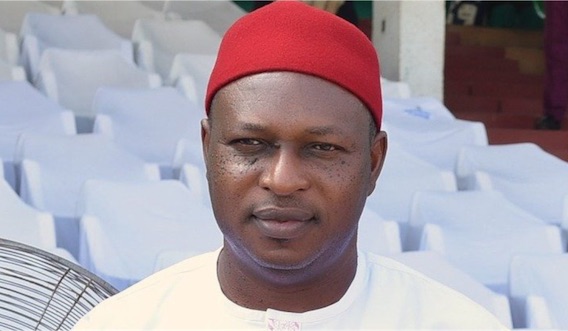
By Chijioke Edeoga
Following the July 11, 2024 judgement of the Supreme Court of Nigeria, which affirmed full financial autonomy to the 774 local government areas of the country, Nigerians from across political, social, and economic divides have praised the courage and vision of the Federal Government team, led by the Attorney General of the Federation, Prince Lateef Fagbemi, to take further steps towards rescuing Nigeria’s third tier of government from the stranglehold of many state governors in the country.
The profound joy and palpable relief expressed by Nigerians were indicative of the belief people have about local councils as efficacious catalysts of local administration and also speak to the avoidable quiescence in grassroots development occasioned by the chokehold which state governors exercise on their political and financial autonomy.
It must be stressed at this point that local government administration is to national political and infrastructure development what micro, small, and medium-scale enterprises (MSME) are to national economic development – just as MSMEs represent the biggest employers of labour in most economies, council administration touches more lives on the aggregate than both states and federal government. In Nigeria for instance, where MSMEs are said to be capable of employing an equivalent of 84 percent of the population, the 774 local government areas in the country, if granted full financial and administrative autonomy, will have the potential to not just employ more people than all the 36 state governments, but also spike the incubation and growth of more businesses at grassroots level.
The impact of emasculated local councils has been the subject of academic and developmental research for many years. In one, titled, “Causes and Consequences of Rural-Urban Migration in Nigeria” conducted by Omonigho T. Okhankhuele and Olaniyan Z. Opafunso, it was established that rural areas in Nigeria are being affected by several incapacities at various levels of severity such as: inaccessibility, seclusion, underdevelopment, poverty, drabness, boredom, ignorance, depopulation, hunger, and all types of sicknesses. It was also held that migration from rural to urban areas leads to a reduction in the number of rural populaces, with direct consequences on agricultural output and overall GDP of the communities in the area and thus hinders the pace of development in the rural areas.
As a former Local Government Chairman, I am aware of the impact an empowered council can have on all the indicators of economic well-being, including income, unemployment, infrastructure, healthcare delivery, urban migration, and education. The autonomy as is now being fully restored to duly elected officers of local governments will spark off rural development in ways that have not been witnessed in Nigeria since 1999.
While the Supreme Court judgement has been greeted with loud celebrations by a large segment of the population, it is important to note that only one in a series of steps towards the liberation of local councils in the country has been taken. For this reason, I am calling on the Attorney Generation of the Federation to initiate, without further delay the process that will secure this hugely reassuring autonomy to firmly cement the authority of local councils to develop to the full extent of the resources legitimately available to them.
This is given the clear and present possibility that the intendment of the judgment which is transparency and accountability in the use of local government resources by duly elected officers of local governments might still be manipulated by governors in whose powers it still is to determine who gets elected as Chairmen of the councils.
Riding on the wave of nationwide acceptance of the judgment of the Supreme Court therefore, the National Assembly should be made to initiate and fast-track amendments to the 1999 Constitution to delist all mentions of state electoral commissions and push the responsibility for this to the Independent National Electoral Commission (INEC).
Thankfully, so many governors have pledged to comply with the Supreme Court judgement, but the National Assembly should note that while Nigerians welcomed the judgment, they have equally pointed out that the judgment would be ineffectual without a corresponding amendment that guarantees relatively fairer and freer council elections.
Such pessimistic views should not be dismissed with a wave of the hand because, their public show of support for the judgment of the Supreme Court notwithstanding, it would not be out of place to find lots of Governors continuing to pressurize their respective state Houses of Assembly to withhold assent to any Bill for such important constitutional amendment to sustain the stranglehold on local councils and the resources due to them from the federation account. This is where the onus lies on the president as a notable deal maker, consensus builder and statesman to convince everyone to work together for the greater good of our country.
While it is true that an amendment process of some critical sections of the Constitution is going on, the particular section that affects local government autonomy should be isolated and its amendment fast-tracked now that a national consensus is already in place.
If this is not done, the judgment of the Supreme Court on that matter will be seen as inchoate, thus providing a lacuna that would be further exploited to the detriment of the functional financial fate of local governments.
To this end, an Executive Bill to excise Section 197 1(b) of the Constitution which created the state Independence Electoral Commissions should be initiated by the office of the Attorney General pf the Federation. Section 153 (1) which created the INEC should also be amended to fully vest the national elections management body with the powers to conduct elections to local government councils.
Efforts should be made to isolate the sections relating to local government elections from the basket of other amendments that have been proposed to the 1999 Constitution by the National Assembly and give it immediate attention to attain quick passage and Presidential assent.
Speed is of the essence given that at least 22 of the 36 states currently run the local government areas in their respective states under undemocratic caretaker arrangements. This means that if the amendment is fast-tracked and approved by the President, elections in the local councils can be arranged to fall into a single calendar.
Hon Barr Chijioke Edeoga
Enugu State Labour Party Governorship candidate in the 2023 elections

By Hakeem Jamiu
In his seminal work, Political Order in Changing Societies (1968), Professor Samuel P Huntington argues that political order is essential for societal development. He emphasises that strong, adaptable political institutions are necessary to manage conflicts and meet growing societal demands during periods of rapid change.
Huntington warns that failure to adapt swiftly to societal shifts often results in political decline and instability.
These insights offer a valuable perspective for analysing the recent palace coup in Guinea-Bissau, a country on the verge of greater unrest.Between 24 and 26 September, I was in Guinea-Bissau for the Economic Community of West African States (ECOWAS) pre-summit as the lead facilitator nominated by the Amandla Institute for Policy and Leadership Advancement (AIPLA).
During this time, I predicted that political upheaval was imminent. It was no surprise, therefore, when, on 26 November, a palace coup took place, leading to the forced evacuation of former President Goodluck Jonathan, head of the West African Elders Forum Election Observation Mission.
He described it as a “ceremonial coup,” an unusual act in which President Umaro Embaló himself announced the coup, despite claiming to be under arrest. This move was clearly staged to prevent the announcement of election results, ultimately undermining democracy in the country.
Embalo’s strategy to consolidate power began long before the coup. He had previously excluded his main challenger, PAIGC’s Domingos Simões Pereira from the electoral process, through judicial manipulation by the Supreme Court, which barred Pereira from contesting the election.
Pereira, a former prime minister, had supported the independent candidacy of lawyer Fernando Dias. Despite his official term ending on 27 February, Embaló remained in office, citing a different inauguration date.
His controversial decision to seek re-election, despite initial promises not to, prompted public protests, which were suppressed by force, with activists arrested and opposition movements restricted.
The road to Bissau, however, was not just fraught with political instability but also physical danger. As I journeyed from Zinguinchor to Bissau, a typically two-hour trip extended to eight hours due to the dilapidated roads, squeezed between rising rivers. The road was perilous, especially when we learnt of the armed insurgents operating along the route.
The driver, having initially misled us about the condition of the road, almost abandoned us at the Senegalese border. Fortunately, immigration officials ensured that we continued. Later, it was revealed that the road’s poor condition has been intentionally kept so as to prevent insurgents from reaching the capital easily.
The coup, led by General Horta Inta-A, just a day before the announcement of presidential election results, claimed that it was necessary in order to prevent “narcotics traffickers” from manipulating the election.
Both President Embaló and opposition candidate Fernando Dias claimed victory, with Dias seeking asylum in the Nigerian embassy, due to credible threats to his life. The people’s resolve for change had been underestimated by Embaló, who believed he could easily eliminate the opposition.
Despite the country’s dire economic situation, with deteriorated infrastructure and widespread poverty, the people of Bissau maintained a remarkable sense of joy.
Young men and women danced in the streets at 3 a.m., while others gathered at the hotel we stayed in, socialising late into the night. These youthful social gatherings reflect a society aware of global trends, including political unrest, despite being influenced by their leader’s poverty politics.
The summit, held at the Royal Hotel in Bissau from 24 to 26 September, focused on the future of ECOWAS, in its 50th anniversary. The theme, “Political Stability, Peace, and Security in West Africa,” seemed ironically prescient.
The dialogue, involving the civil society, youths, and security experts, examined the challenges facing ECOWAS, particularly Unconstitutional Changes of Government (UCG).
My prediction that Guinea-Bissau would soon face political turmoil was echoed by ECOWAS’ General Ojabo, who remarked that his troops were primarily tasked with “guard duties at the homes of politicians,” reflecting the mistrust between Guinea-Bissau’s political class and its military. “The minute ECOWAS pulls out of GB, there will be chaos,” he warned, a grim foreshadowing of what was to come.
The coup, led by General Horta Inta-A, just a day before the announcement of presidential election results, claimed that it was necessary in order to prevent “narcotics traffickers” from manipulating the election. Both President Embaló and opposition candidate Fernando Dias claimed victory, with Dias seeking asylum in the Nigerian embassy, due to credible threats to his life. The people’s resolve for change had been underestimated by Embaló, who believed he could easily eliminate the opposition.
This turned out to be a grave miscalculation, and the coup was a direct result of the president’s failure to meet the people’s expectations. As Huntington’s theory suggests, political instability often arises when rising societal expectations are unmet, leading to frustration and disorder.
The African Union (AU) has also suspended Guinea-Bissau from its activities, calling for respect for the electoral process. The United Nations has urged restraint and respect for the rule of law. The coup in Guinea-Bissau presents another challenge to ECOWAS’s credibility, especially as the region has seen an alarming rise in military takeovers. The coup belt, stretching across West Africa, is increasingly a source of concern.
ECOWAS, having strongly condemned the coup, has suspended Guinea-Bissau from its decision-making bodies and is advocating for the restoration of constitutional order in the country. Meanwhile, the African Union (AU) has also suspended Guinea-Bissau from its activities, calling for respect for the electoral process.
The United Nations has urged restraint and respect for the rule of law. The coup in Guinea-Bissau presents another challenge to ECOWAS’s credibility, especially as the region has seen an alarming rise in military takeovers. The coup belt, stretching across West Africa, is increasingly a source of concern.
Guinea-Bissau, with its fragile political and economic situation, faces considerable instability. With a population of only two million and a per capita GDP of $670, the country ranks among the poorest in the world. Around 70 per cent of the people live below the poverty line, with limited access to essential services such as healthcare, roads, education, and sanitation. As the political crisis deepens, there are concerns that drug trafficking could intensify, further destabilising the region.
For ECOWAS, the challenge is clear: it must persist in applying diplomatic pressure on the coup leaders to restore constitutional order. Military force alone is insufficient; what is needed is a sustained diplomatic strategy supported by respected statesmen.
ECOWAS needs to rediscover its role as a facilitator of West African peace, rather than as an end in itself. The organisation must act consistently and enhance its operational capabilities to tackle the root causes of instability. Unconstitutional changes of government are not merely political anomalies but symptoms of systemic governance failures that must be addressed to prevent further crises across the region. The time for action is now.
Hakeem Jamiu, an ECOWAS facilitator, writes from Ado-Ekiti.

By Folasade Akpan
For Mrs Schola Effiong, a 58-year-old confidential secretary in Calabar, managing diabetes in today’s economy feels like “climbing a hill that only gets steeper”.
Diagnosed in 2009, she said her monthly expenditure on insulin, tablets, laboratory tests and monitoring supplies now exceeds ₦150,000.
“You cannot stop taking the drugs, yet the cost keeps going up.
“Sometimes I do not have the money to buy some of them at the same time,” she said.
Her struggle mirrors the experiences of thousands of Nigerians at a time when experts warn that diabetes is becoming a major public health concern.
According to a 2018 national meta-analysis by Uloko et al.
, titled “Prevalence and Risk Factors for Diabetes Mellitus in Nigeria: A Systematic Review and Meta-Analysis”, Nigeria’s diabetes prevalence stands at 5.7 per cent, representing 11.2 million adults.The authors defined diabetes mellitus as a metabolic disorder of chronic hyperglycaemia caused by absolute or relative insulin deficiency and associated with disturbances in carbohydrate, protein and fat metabolism.
The study, which pooled data from numerous research works across the country, revealed wide regional disparities.
The prevalence rate was 3.0 per cent in the North-West, 5.9 per cent in the North-East, and 3.8 per cent in the North-Central, respectively.
The rates were higher in the southern part of the country: 5.5 per cent in the South-West, 4.6 per cent in the South-East, and 9.8 per cent in the South-South.
Experts say these patterns reflect changing lifestyles, rapid urbanisation and limited access to routine screening.
However, for many patients, statistics tell only a fraction of the real story.
Mr Offum Akung, a 57-year-old teacher in Cross River, said he had to ration his drugs because prices kept rising faster than his salary.
“I spend over ₦40,000 a month and still cannot buy everything on my prescription.
“I rely mostly on Glucophage now; when money allows, I add Neurovite Forte; diabetes management has become more difficult than the disease itself,” he said.
He appealed for government intervention, saying many patients were already “giving up”.
The Second Vice-President of the Diabetes Association of Nigeria, Mr Bernard Enyia, said the economic situation had pushed many Nigerians with diabetes into dangerous coping methods.
He said that he once managed his condition with about ₦70,000 monthly, but currently spends more than ₦180,000.
“Insulin has become something you pray for, while some people are sharing doses or skipping injections.
“Once you break treatment, the complications come quickly.”
Enyia, who lost his job as a health worker in 2017 due to frequent hospital visits, described the emotional toll as immense.
“It affects your finances, your social life, your marriage — everything. Many Nigerians with diabetes are quietly drowning,” he said.
Globally, concerns are also rising.
The World Health Organisation (WHO) estimates that more than 24 million adults in Africa are living with diabetes, a figure projected to rise to 60 million by 2050.
Marking World Diabetes Day 2025, WHO Regional Director for Africa, Prof. Mohamed Janabi, warned that rising obesity, lifestyle changes and weak health systems were fueling an “unprecedented wave of diabetes” across the continent.
He urged governments to prioritise access to affordable insulin, diagnostics and long-term care.
More so, pharmacists say they are witnessing the crisis firsthand.
The Senior Vice-President, Advantage Health Africa, Mr Adewale Oladigbolu, said many patients were no longer able to maintain regular medication schedules.
“People buy drugs today and skip them tomorrow because they do not have money.
“With non-adherence, they never reach therapeutic goals.”
Oladigbolu, a Fellow of the Pharmaceutical Society of Nigeria, said that locally manufactured metformin remained in high demand due to affordability, but insulin-dependent patients faced the harshest burden.
He stressed that diabetes care extended far beyond drugs.
“You need glucometers, strips, blood pressure monitors and regular tests.
“In countries where insurance work, patients do not think about the cost; in Nigeria, they pay for everything out of pocket,” he said.
He called for diabetes care to be covered under health insurance to reduce the financial burden on patients.
President of the Diabetes Association of Nigeria, Prof. Ejiofor Ugwu, described the rising cost of treatment as “a national crisis hiding in plain sight.
He said insulin, which sold for about ₦3,500 four years ago, presently costs ₦18,000 to ₦22,000 per vial.
“Test strips that were ₦2,000 now sell for ₦14,000, while glucometers have risen from ₦5,000 to over ₦25,000.
“On average, a patient now needs between ₦100,000 and ₦120,000 every month. Imagine earning ₦50,000 and being asked to spend twice that on one illness.”
He warned that between half and two-thirds of Nigerians with diabetes remain undiagnosed.
“We are seeing more kidney failure, more limb amputations, more blindness.
“These are late presentations caused by delayed or inconsistent treatment.”
Ugwu urged the Federal Government to urgently subsidise essential anti-diabetic medications and remove taxes on their importation.
“Most of these drugs are produced outside the country.
“Once you add import duties and other charges, prices become unbearable; subsidies and tax waivers could drop costs by at least 30 per cent,” he said.
He also called for expansion of the National Health Insurance Authority (NHIA) to cover a wider range of anti-diabetic medicines, glucose meters and strips — none of which are currently covered.
For many Nigerians, however, the struggle continues daily.
Across households, clinics and pharmacies, the message is the same: as Nigeria’s diabetes prevalence rises and treatment costs soar, more patients are slipping through the cracks — some silently, others painfully — while waiting for meaningful intervention.
In all, stakeholders say diabetes is a national emergency; people are dying quietly because they cannot afford medicine; hence the urgent need for relevant authorities to make anti-diabetic medications accessible and affordable.(NAN)
 | ReplyReply allForwardAdd reaction |

By Dorcas Jonah
In the Nigerian culture, extended families and communities play a crucial role in care-giving, instilling values, and supporting the development of children.
This cultural heritage of community parenting emphasises shared responsibility in raising children.
But in contemporary Nigeria, this age-long practice is facing enormous challenges due to modernisation.
In scrutinising this trend, some parents are of the view that community parenting helps in instilling morals and curbing social vices among children and youths, while others believe it is outdated.
Some parents are of the belief that their children are their responsibility; so they do not tolerate others correcting their children.
By contrast, others say that community parenting, when done with good intentions, can help raise a better society.
Mr Peterson Bangyi, a community leader in Dutse Makaranta, said that community parenting was the bedrock of raising a child.
He said the adage: “it takes a village to raise a child”, remained a powerful principle in contemporary society.
According to him, by Nigeria’s cultural norms and values, a child is owned by everyone; therefore, the grandparents, aunts, uncles, and neighbours actively contribute to raising children.
“This approach fosters a sense of belonging and ensures children grow up with diverse role models.”
Bangyi said that the extended families practiced by more communities were the backbone of parenting.
“But modernisation has taken away this practice as most families do not want people to come close to their children,’’ he said.
Mrs Monica Umeh, a mother of two, emphasising on the importance of community parenting, said that it played significant role in shaping her upbringing as a child and young adult.
Umeh advised that when correcting other people’s children, it is essential to do so with love and good intentions, without any form of bitterness.
“I am a strong advocate of community parenting as long as it is done with love and good intentions.
“I believe no parent can single-handedly raise a child without the support of others,’’ he said.
Mr Temitope Awoyemi, a lecturer, said that community parenting was crucial and could not be over-emphasised.
He said that community parenting helped society in inculcating strong moral values in children and youths, adding that modern life could be isolating for parents.
Awoyemi said that strong community support networks had been shown to lower parental stress levels and promote a more optimistic approach to raising children.
“It also ensures that a child receives guidance and correction from various adults, providing a broader, more consistent moral and social baseline that might be missed by parents who are busy with work.
“Community parenting encourages collaborative, interdisciplinary support from various community members and agencies in addressing a child’s developmental needs comprehensively.
“It focuses on prevention of long-term problems and celebrating individual strengths,’’ he said.
Awoyemi said that as the society continued to evolve, community parenting could adapt to ensure children benefitted from both cultural roots and contemporary innovations.
Mr Fortune Ubong, a cultural enthusiast, attributed the increasing crime rate in Nigeria to lack of community parenting that had extended to schools, and government institutions.
According to him, community parenting remains the foundation of every child’s moral upbringing.
“Most parents are now focused on earning a living and improving their lifestyle, in the process abandoning their primary duty of molding and guiding their children; this is where community parenting plays a greater role,” he said.
However, Mrs Joy Okezia, a businesswoman, said that given the recent developments in the country, correcting a child should be the sole responsibility of their parents.
Okezia said that she preferred to correct her children herself as she knew them better than anyone else.
She also noted that with the rising insecurity in the country, intervening to correct a child could pose a significant risk to the person.
Mrs Ijeoma Osita, a civil servant, also shared Okezia’s view, saying that a child’s behaviour was shaped by their family upbringing.
She said that if a child was not taught to love and respect others at home, an outsider would have little impact in correcting such a child.
Osita emphasised that parents should in still in their children the values of love and respect regardless of their status or background.
According to her, a child brought up with good values is less likely to misbehave well.
She cited the Holy Bible, saying, that says: “Train up a child in the way they should go, and when they are old, they will not depart from it’’.
Osita said that community parenting remained a vital aspect of Nigerian culture, promoting shared responsibility and resilience among families.
He opined that while modernisation posed challenges, blending traditional practices with modern strategies offered a promising path forward.
Observers say robust community connections are linked to better social-emotional development, academic achievement, and overall well-being for children.
They say that in modern society, amidst the digital world, economic instability, and busy work schedules, parents face pressures, making community support systems fundamental.
All in all, stakeholders are of the view that combining traditional community parenting with modern childcare – integrating technology, play-based learning, and skill acquisition – will produce well-rounded children.(NAN)




Palmer out for Chelsea’s Carabao Cup Quarter-final, Says Maresca
ShareChelsea attacker Cole Palmer will not feature in the Blues’ Carabao Cup quarter-final against Cardiff City, head coach Enzo Maresca...


Road Accident Claims Four Persons in Kogi
ShareFrom Joseph Amedu, Lokoja The Federal Road Safety Corps (FRSC), has confirmed the death of four persons in a motor...

Tinubu Happy with PAP’s Scholarship Scheme, Says Otuaro
ShareFrom Mike Tayese, Yenagoa The Administrator of the Presidential Amnesty Programme (PAP), Dr. Dennis Otuaro, has said that President Bola...


Enugu Police Bust Armed Robbery Operation, Arrest Suspect, Recover Arms
ShareFrom Sylvia Udegbunam, Enugu The Enugu State Police Command has sustained its onslaught against criminal activities during the Yuletide season...


NDLEA Busts Drug Suspect, Seizes 457kg Skunk Marijuana in Edo
ShareThe National Drug Law Enforcement Agency (NDLEA) on Monday, said it intercepted 457kg of skunk marijuana, during an intelligence-led raid...

Tinubu Urges Nigerians to Uphold Buhari’s Discipline, Integrity
SharePresident Bola Tinubu on Monday, urged Nigerians to embrace the discipline, integrity and service ethos of former President Muhammadu Buhari,...

PDP Calls for Constitutional Safeguards to Limit President’s Scope of Powers
ShareBy Johnson Eyiangho, Abuja The Peoples Democratic Party (PDP) has urged the National Assembly to urgently initiate constitutional and legislative...


Senate Fumes over Multiple Budgets implementation in Fiscal Year
ShareBy Eze Okechukwu, Abuja The Senate has hammered the federal government over its multiple budgets implementation in a fiscal year,...

FG, States, LGCs Share N1.928trn November 2025 Revenue
ShareBy Tony Obiechina, Abuja A total sum of N1.928 trillion, being November 2025 Federation Account Revenue, has been shared to...


Tinubu Congratulates UNIJOS Graduands, Pledges Support for Education
ShareFrom Jude Dangwam, Jos President Bola Tinubu has congratulated graduands of the University of Jos (UNIJOS) at the institution’s 35th...