
Health
Activist Advocates Special Funding for Women’s Participation in Politics

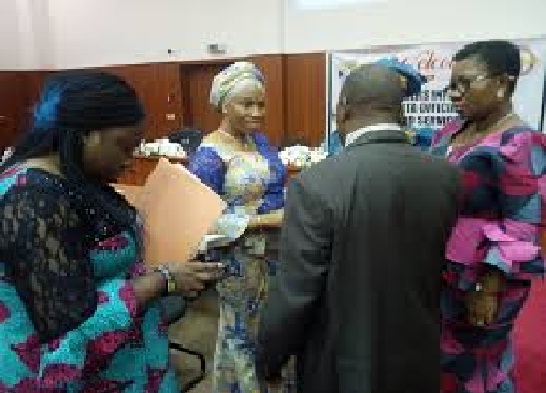
Dr Limota Goroso, the Executive Director, International Women Communication Centre (IWCC) , has advocated for special fund for promotion of women’s participation in politics.
Goroso made the call in a telephone interview with the News Agency of Nigeria (NAN) on Monday and identified three ways to get such financial support.
She said government at all levels should set aside a certain amount of money, through the Nigerian Women Trust fund, to support the participation of women in politics.
The Nigerian Women’s Trust Fund (NWTF), was created in 2011 to increase the representation of women in Nigerian governance at all levels and to address financial issues that hinder their participation in politics.
She noted that this was important because women also need money to pursue their political ambitions like men.
She added that “women are not corrupt; they do not have stolen money to push themselves. So, they must move with the little resources they have.
“Government needs to support women through the Women Trust Fund and other agencies that are ready to assist.
“Donor agencies and international communities can also support Civil Society Organisations (CSOs) to bring out and amplify voices of women who want to participate in politics.
“Political parties can sacrifice by encouraging women to take part in politics by making sure they offset part of the expenses that come with politics.
“This is because if one is interested in a candidate, such a person can finance the candidate. Political parties can also finance women for political positions,” she said.
On the bill seeking to create special seats for women at the National Assembly, the women rights activist said it meant that many Nigerians were ready to have alternative leadership.
“Let us try the women. The men know that without women, nothing can happen and there will be no positive change.
“Now that they are trying to create space for us, it is the right time to also create a system that will allow us to be effective.
“What I mean by effective is that it is a different thing to create a space and it is another thing to allow us to excel,” Goroso said.
The IWCC director advocated for affirmative policy at all levels of government that would allow certain number of women in political positions.
She also demanded the Independent National Electoral Commission (INEC) to be empowered to disqualify any political party that violates the arrangement.
“The third way to ensure participation of women in politics is to mobilise women who are interested to come out, and be courageous enough to vie for any vacant position that they think they can occupy.
“We need a change from what we are used to, and women are ready to make the necessary change for Nigeria to excel.”
She called for synergy among women rights groups, women in politics and women journalists, to promote women’s rights, as well as amplify and resolve those challenges inhibiting their participation in politics. (NAN)








By Folasade Akpan
In December 2025, the reported death of Nigerian Law School student Ayomiposi Ojajuni reignited concerns about the fragile state of students’ mental health in Nigeria.
He was allegedly barred from writing the Bar Final examinations at the Yola campus in Adamawa.
The incident, though still under investigation, has once again brought to the fore the intense academic pressure, emotional strain and limited psychological support systems confronting many young people in tertiary institutions.
Ojajuni, a graduate of Olabisi Onabanjo University, was said to have received a series of queries from the school authorities and later discovered he would not be allowed to sit for the professional examinations scheduled for the same day.
Indeed, available data underscores the urgency of the issue.
According to the World Health Organisation (WHO), one in every eight people globally lives with a mental health condition, with depression and anxiety among the leading causes of illness among adolescents and young adults.
In Nigeria, experts estimate that one in four young people may be experiencing some form of mental health challenge, yet access to care remains limited due to stigma, cost and shortage of professionals.
Against this backdrop, students across universities and professional schools face mounting pressures, including heavy academic workloads, financial constraints, family expectations, and social comparisons.
Experts say these factors can greatly affect mental wellbeing if not properly managed.
Sharing his experience, Mr Funbi Phillip, a law graduate of Lead City University, Ibadan, described the mental strain associated with studying law as one of the most demanding aspects of his academic journey.
According to him, the constant pressure to keep up with coursework, assignments, legal drafting and memorisation of numerous cases often felt overwhelming.
“The most challenging part for me was the mental pressure of having to keep up with heavy coursework, assignments, drafting briefs and memorising cases.
“It is a lot, but with consistency, it becomes manageable,” he said.
Phillip emphasised that effective time management was critical to navigating the demands of law school.
“I prioritise my time based on urgency. I make sure I handle continuous assessments before focusing on exams. Everything is about planning”.
He added that a turning point in his academic journey came when he shifted from rote memorisation to a deeper understanding of legal principles, noting that success in law school requires critical thinking, strong writing skills, time management and emotional resilience.
Similarly, students in other demanding disciplines report comparable experiences.
A pharmacy undergraduate, Ms Tiamiyu Omotayo of the same institution, said balancing academic expectations with personal wellbeing and career aspirations could be challenging.
According to her, practical exposure through internships helped her cope with the rigours of pharmacy education.
“The transition from theory to clinical practice is very important. It helps you appreciate what you have learned in class,” she said.
However, she noted that one of her biggest struggles was coping with unmet personal expectations regarding academic performance.
Omotayo said that although her results were good, they did not always align with the high standards she set for herself.
To manage stress, she said she deliberately took breaks and remained focused on her long-term goals, advising prospective students to pursue the profession out of passion rather than financial expectations.
Experts say such experiences are far from isolated.
Rev. Fr. Anthony Azuwike, Head of the Department of Private and Property Law at Veritas University, Abuja, said emotional distress among young people was becoming an increasing concern.
According to him, students are particularly vulnerable because they face academic demands alongside broader socio-economic challenges.
He identified parental expectations as a major source of stress, noting that the inability to meet such expectations often leaves young people feeling overwhelmed.
Azuwike also cited financial hardship, relationship challenges and health conditions as contributing factors.
He further pointed to policy gaps in Nigeria’s mental health framework.
While acknowledging the Mental Health Act signed in 2023 as a step forward, he noted that it does not fully decriminalise attempted suicide nationwide.
“The law recognises attempted suicide as a psychiatric emergency, which is progress.
“However, it does not explicitly decriminalise it, despite growing understanding that such cases require care rather than punishment,” he said.
He stressed that institutions have a duty to protect students’ wellbeing through accessible counselling services, confidentiality and supportive environments that discourage stigma.
Corroborating this view, mental health professionals highlight systemic challenges.
Mrs Rosemary Uwaleme, a mental health counsellor at Inspire Minds Services, said emotional distress among Nigerian undergraduates was widespread.
She attributed this to financial difficulties, unstable family backgrounds and limited access to support systems.
“Many students do not seek help because of stigma. There is also the issue of cost and the limited availability of services on campuses,” she said.
Uwaleme called for stronger counselling systems, increased awareness and regular training for mental health professionals within educational institutions.
In the same vein, psychologists emphasise preventive approaches.
Prof. Remi Alarape of the University of Ibadan urged tertiary institutions to establish robust mental health support systems to prevent students in distress from reaching breaking points.
“Without effective coping strategies, students may equate failure in examinations with failure in life. This can lead to deep emotional distress,” he said.
He advocated a culture that prioritises wellbeing alongside academic achievement and encourages open conversations about mental health.
Beyond institutions, civil society organisations are also stepping in.
The Dora-Care Behavioral Foundation recently organised a Mental Health First Aid outreach for students in Lagos, aimed at equipping young people with knowledge and basic support skills.
Its founder, Ms Akinyelure Feyikemi, said early awareness was key to building resilience among students.
“Equipping students with the tools to understand and support their mental health is crucial for raising a generation that is both academically capable and emotionally resilient,” she said.
Medical experts also underscore the link between mental and physical health.
Dr Joseph Ogba of the Federal Neuropsychiatric Hospital, Yaba, described mental health as fundamental to overall wellbeing.
“There is no physical health without mental health,” he said.
Similarly, Mr Lucky Jet, Head of the Child and Adolescent Occupational Therapy Unit at the hospital, encouraged peer support among students.
“If you notice changes in a friend, reach out. Support can make a significant difference,” he said.
As conversations around mental health continue to gain traction in Nigeria, stakeholders say more coordinated action is needed.
They stress that the incident involving Ojajuni should serve as a wake-up call for institutions, families and policymakers.
Ultimately, experts agree that academic excellence must not come at the expense of psychological wellbeing.
For many, the way forward lies in strengthening campus counselling systems, reducing stigma, expanding access to care and fostering a culture where seeking help is viewed as a sign of strength rather than weakness.
Only then can Nigeria’s education system produce not just academically successful graduates, but emotionally resilient individuals equipped to navigate life beyond the classroom. (NAN)
By Laide Akinboade, Abuja
World Health Organization (WHO), on Tuesday, said health is imperative and central for every society and for human development.
Dr. Pavel Ursu the World Health Organization (WHO) Representative to Nigeria, stated this when he led the walk for the commemoration of 2026 World Health Day, (WHD) in Abuja.
Ursu said, they kicked starts the day with ‘health walk’ because, physical exercise contributes to physical and mental health.
The theme for this year’s WHD, ‘Together for health. Stand with science’.
He stressed that 30 minutes of moderate physical exercise contributes to better physical and mental health.
According to the WHO boss, “The achievements which are grounded on science. And the 2026 World Health Day, is focusing on science.
“We started the day with a health walk. And we do that traditionally because, physical exercise is contributing to our physical and mental health”.
He said, “Today we celebrate not only the World Health Day as such, but also we celebrate the major achievements in human health.
“What I want to tell the Nigerians today is, first of all, to congratulate them with this very important day, which marks and emphasizes that health is central for everybody. Health is central for human development. Health is central for this generation and next generations.
“I would like to mention that 30 minutes of moderate physical exercise contributes to better health. There is a lot of scientific evidence that if everyone can be active for at least 30 minutes per day, that contributes to a stronger physical and mental health. This is why we started the day together with the colleagues from the Federal Ministry of Health, with our partners, with WHO staff, with Health Fellows to celebrate the day, to flag off the World Health Day 2026”.
He mentioned the series of events to mark the day, including a press conference at 2 p.m. here at the Ministry of Health.
Speaking about miss information in the sector, he said, “I would like to also mention that in today’s world, the information about health sometimes is confusing. There are too many channels. We are consuming that information from different influencers, from different channels, and not all the information is rigorous enough in terms of the evidence. So I’d like really to call for Nigerians to be responsible consumers of the information, making sure that they can assess the source of every single advice, making sure that advice comes from a trusted source. That is very important”.
Also speaking, the Minister of State for Health and Social Welfare, Iziaq Salako, reiterated the need for Nigerians to trust science and adhere strictly to professional health advice.
“We call on Nigerians to trust science and follow scientific advice because it is life-saving. What we have achieved globally and in Nigeria is largely due to evidence-based interventions,” Salako said.
He stressed that health remains central to national development and societal progress, urging citizens to prioritise healthy living and informed decision-making.
“Health is central to development, central to society, and central to both present and future generations. By following scientific guidance, we can advance health outcomes and save many lives,” he added

The World Health Organisation (WHO) has urged countries to include the needs of refugees and migrants in their health policies, noting a major shift in how nations are responding to their needs.
WHO, in a statement, welcomed the progress made and urged governments, partners and donors to accelerate progress by embedding refugees and migrants in all national health policies, strategies and plans.
The UN health agency reports a major shift in how countries are responding to the health needs of refugees and migrants, with new data showing more than 60 countries – two thirds of those surveyed – now include them in their national health policies and laws.
The new “World report on promoting the health and refugees and migrants monitoring progress on the WHO global action plan” shows that countries are relying on evidence.
It shows that even in politically sensitive contexts, countries are increasingly relying on evidence, data, science, and established norms and standards to guide how migration and health are addressed within national health systems.
Case studies from all six WHO regions illustrate how progress can be achieved in practice – from expanded migrant health insurance coverage in Thailand, to the use of cross-cultural communication mediators in Belgium, and the inclusion of migrant community representatives in decision-making on primary health care delivery in Chile.
Drawing on data from 93 Member States, the report establishes the first global baseline for tracking progress toward inclusive, migrant-responsive health systems.
The UN agency stated that human migration had been a defining feature of that shared history, driving cultural, social and economic developments across generations.
“Today, over one billion people – over 1 in 8 globally – live as refugees or migrants.
“Reasons for moving range from conflict and disasters, to economic opportunity, education or family needs.
“Yet many refugees and migrants face barriers to accessing care, heightened risks of infectious and chronic diseases, mental-health challenges, and unsafe living or working conditions.”
Commenting on the report, WHO Director-General, Dr. Tedros Ghebreyesus said:“ refugees and migrants are not just recipients of care, they are also health workers, caregivers and community leaders.
“Health systems are only truly universal when they serve everyone. WHO’s new report on the health of migrants and refugees shows that inclusion benefits whole societies and strengthens preparedness for future health challenges.”
WHO noted that investment in refugee and migrant health deliver far-reaching dividends and they support better social and economic integration, strengthen the resilience of health systems and reinforce global health security.
“Inclusive, migrant-responsive health systems also reduce long-term costs by enabling healthy, well-integrated populations to contribute fully to the societies in which they live.”
The UN agency stated that in spite of progress, the report highlighted persisting gaps as only 37 per cent of responding countries routinely collect, analyze and disseminate migration-related health data as part of national health information systems.
It noted that just 42 per cent included refugees and migrants in emergency preparedness, disaster risk reduction or response plans, while fewer than 40 per cent report training health workers in culturally responsive care for refugees and migrants.
It further noted that only 30 per cent had implemented communication campaigns to counter misperceptions and discrimination related to refugee and migrant health.


UNILAG Alumni awards scholarship to 28 indigent students
ShareBy Laide Akinboade, Abuja The University of Lagos Alumni Association, Federal Capital Territory (FCT), chapter on Thursday, awarded scholarship to...


JAMB Releases 2026 UTME Examination Slips for Candidates
ShareThe Joint Admissions and Matriculation Board (JAMB) has announced that candidates who registered for the 2026 Unified Tertiary Matriculation Examination (UTME) can now print...
Lobi Stars Target Promotion to NPFL in 2026/2027 Season
ShareThe Chairman of Lobi Stars Football Club of Makurdi, Simon Ikya, said the club’s sole target is to gain promotion...


Gambia Appoints British Barrister to Prosecute Gruesome Jammeh-era Crimes
ShareBritish barrister Martin Hackett has been appointed as The Gambia’s first special prosecutor to try those responsible for human rights abuses carried out...


Court Frees Terror Victim, Jails another 10 Years
ShareJustice Peter Lifu of the Federal High Court, Abuja, on Thursday, sentenced a Boko Haram victim, Ali Kolo, to nine years’ imprisonment...
Lassa Fever Deaths Rise in Nigeria —NCDC
ShareThe Nigeria Centre for Disease Control and Prevention (NCDC), said Lassa fever fatalities have risen sharply in 2026, in spite of a decline in...


Recapitalisation: CBN Demands Tougher Risk Discipline, Governance Reforms
Share The Central Bank of Nigeria (CBN) said strong governance and risk discipline are critical to the success of Nigeria’s...


DHQ Confirms Terrorists, Soldiers Deaths in Borno Base Midnight Attack
ShareBy David Torough, Abuja A fierce overnight assault on a military base in Benisheikh, Borno State, has left several soldiers...


Nigeria’s Democracy Must Thrive, Obasanjo, Jonathan Declare
ShareBy David Torough, Abuja Former Presidents Olusegun Obasanjo and Goodluck Jonathan have issued a strong call for national unity, institutional...
Akpabio Steps in to Unveil Lagos Projects on Tinubu’s Behalf
ShareSenate President Godswill Akpabio has inaugurated the new Open-Mende-Ojota Link Bridge Project and the Multi-agency complex, Alausa, now known as...