
NEWS
Afreximbank Total Assets Grow to $48.5bn in 2025


By Tony Obiechina, Abuja
The African Export-Import Bank (Afreximbank) said it has grown its total assets and contingencies to $48.5 billion in 2025, highlighting strong financial performance and reinforcing its role in funding trade, industrialisation and infrastructure across Africa and the Caribbean.
The bank also reported a 21% increase in total assets and contingencies from $40.
1 billion as at December 31, 2024, underlining sustained balance sheet expansion despite global geopolitical tensions and rating pressures.“Despite continuing global geopolitical challenges and disruptions caused by some rating actions, the group delivered excellent financial performance in 2025, a fitting tribute to a decade of consequential leadership under Benedict Oramah, with total assets and contingencies reaching $49 billion,” Denys Denya, Afreximbank’s senior executive vice president said.
He added that, “Pleasingly, the group is way ahead on most of its targets in delivery on its 6th Strategic plan that ends on December 31, 2026. With recently established subsidiaries such as FEDA and AfrexInsure becoming profitable, net income grew by 19% to stand at $1.2 billion, underpinned by a strong capital base of $8.4 billion.
“The group’s balance sheet is at its strongest level ever, with liquidity levels and capitalisation well above target and good asset quality. These results are a testament to the unwavering execution by the group’s hard working human capital.
“We entered the 2026 financial year with significant momentum, ready to scale the group’s impact, accelerate trade integration and value addition across Global Africa, and deliver greater value to our shareholders.”
“Net loans and advances closed the year at $33,5 billion, representing a 16% increase, supported by continued disbursements across Africa and the Caribbean through a range of financing instruments,” he further explained.
The bank added that Liquidity also remained strong, with cash and cash equivalents at $6.0 billion.
Liquid assets accounted for 14% of total assets, above the bank’s strategic minimum threshold of 10%. Shareholders’ funds rose 17% to $8.4 billion, supported by net income and fresh equity inflows raised under the General Capital Increase II.
Gross income increased by 6,06% to US$3.5 billion. Operating expenses also rose to $459.2 million, reflecting strategic staff expansion and inflationary pressures, although the group maintained strong cost efficiency with a cost-to-income ratio of 21%, well below the strategic ceiling of 30%.
“Contrary to concerns raised by some rating agencies during the year, the bank accessed international bond markets by successfully raising over US$800 million from Japan and China, courtesy of the Samurai and Panda bonds in 2025,” the Bank further noted in a statement.“This demonstrated the group’s fund-raising capabilities and the solid nature of the Bank’s DNA as a pan-African multilateral financial institution committed to ensuring that Africa’s full and sustainable self-reliance remains firm.”, the statement added
From Joseph Amedu, Lokoja
The Kogi State Government has responded to a viral voice note allegedly recorded by a female civil servant, dismissing claims of ethnic exclusion in employment while reaffirming its commitment to fairness, inclusivity and merit in the state civil service.
In a press release issued and signed by Kingsley Femi Fanwo, Commissioner for Information and Communications on Saturday, the government said it had observed the voice note and a related video that sparked reactions, particularly over allegations that Ebira youths were being sidelined in recruitment processes.
The statement emphasized that Governor Ahmed Usman Ododo remains committed to inclusive governance, describing him as a servant-leader who prioritizes active listening, constructive engagement, and responsiveness to citizens’ concerns.
While acknowledging that the views expressed in the voice note were personal, the government stressed that civil servants are expected to follow established channels for communication and redress. It, however, maintained that the administration would uphold freedom of expression and would not victimise any citizen for peacefully sharing their opinions.
The government expressed concern over what it described as attempts by some individuals and groups to sensationalise the issue, warning that such actions could inflame public sentiment unnecessarily. It noted that the matter should be handled through institutional mechanisms and constructive dialogue.
According to the statement, Ododo has directed that the civil servant involved be provided with adequate protection. He also mandated the civil service to strengthen its internal feedback systems to ensure grievances are addressed promptly and effectively.
Reiterating its stance, the government said recruitment into the civil service would continue to be based on competence, capacity, and available resources, while ensuring equitable representation across the state.
The administration further called on residents to remain calm and disregard misinformation, assuring citizens of its commitment to transparency, public enlightenment, and continuous engagement.
The statement concluded by affirming that the voices of all citizens matter and would always be treated with respect, adding that dialogue and due process remain central to the state’s development.

President Donald Trump on Sunday ordered a US naval blockade of the Strait of Hormuz in response to Iran’s “unyielding” refusal to give up its nuclear ambitions during peace talks in Islamabad.
While acknowledging that the marathon negotiations in Pakistan had gone “well” and “most points were agreed to,” Trump said Tehran had refused to concede on the issue of its nuclear program.
“Effective immediately, the United States Navy, the Finest in the World, will begin the process of BLOCKADING any and all Ships trying to enter, or leave, the Strait of Hormuz,” Trump said on his Truth Social platform.
“Any Iranian who fires at us, or at peaceful vessels, will be Blown To Hell!”
US Vice President JD Vance left Pakistan without a deal after weekend talks with a team led by Iran’s parliamentary speaker Mohammad Bagher Ghalibaf — the highest-level meeting between the two sides since the 1979 Islamic revolution.
Tehran’s delegation also included Foreign Minister Abbas Araghchi.
“We leave here with a very simple proposal, a method of understanding that is our final and best offer. We’ll see if the Iranians accept it,” Vance told reporters.
In two lengthy posts on Truth Social, Trump slammed Iran for promising to open the Strait of Hormuz, a strategic waterway through which a fifth of the world’s crude oil passes, and “knowingly” failing to deliver.
“They say they put mines in the water, even though all of their Navy, and most of their ‘mine droppers,’ have been completely blown up. They may have done so, but what ship owner would want to take the chance?” Trump said.
Iran had effectively blocked the Strait of Hormuz for weeks, since the United States and Israel launched a bombing campaign against the Islamic republic more than six weeks ago.
On Saturday, the US military announced that two US warships had transited the strait at the start of a mine clearance operation.
By Tony Obiechina, Abuja
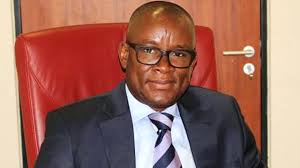
The Federal Government has urged the Dangote Group to expand the annual production capacity of its subsidiary, Dangote Sugar Refinery, to 600,000 metric tonnes by 2030 as part of efforts to boost Nigeria’s sugar self-sufficiency drive.
The Minister of State for Industry, Senator John Enoh, gave the charge during a visit to the DSR complex in Numan, Adamawa State, accompanied by the Executive Secretary of the National Sugar Development Council, Kamar Bakrin.
According to a statement on Sunday, the visit formed part of an inspection of sugar projects nationwide in line with President Bola Tinubu’s directive to accelerate Nigeria’s attainment of self-sufficiency in sugar production.
The minister said Nigeria’s current local sugar output falls far short of its annual consumption of about 1.8 million metric tonnes, adding that Dangote Sugar Refinery, as a leading operator in the sector, must contribute significantly to bridging the gap.
“DSR is a very big player in the industry, one of the three major operators. Our circumstances in this sector will continue to depend on what DSR does. It is very important. I mean since coming to this ministry, I found the NSDC Executive Secretary to be hardworking and passionate about sugar sector development. I have seen the commitment he has demonstrated.
“But that is the much he can give, he needs to get the cooperation of everyone to make sure that we achieve the laudable goals of the Nigeria Sugar Master Plan (NSMP)
“I have lost count of the number of times Mr President has talked about developments in the sugar industry in Federal Executive Council (FEC) meetings and other sessions,” he said.
Enoh added that “the 600,000 MT target must be delivered by DSR before 2031.”
He also commended the NSDC for its role in driving and monitoring operators under the sector’s Backward Integration Programme, noting that developments at the company’s facilities reflected strong commitment to the policy.
“The scale of infrastructure, level of investment, and degree of project advancement—especially at the new 6000 TCD plant—observed at DSR reflect a tangible commitment to the objectives of the Backward Integration Programme (BIP),” he said.
The minister further said the Federal Government remained willing to work with operators to remove obstacles hindering increased local sugar production.
“I am indeed very happy with what I have seen today but scaling up production to be able to meet Mr President’s expectations is very important.
“My final comment would be to encourage you, just to let you know that my visit here is to show the government’s continuous seriousness and how important the government looks at our ability as a country to be self-sufficient in sugar production,” he said.
Speaking to journalists during the visit, Enoh said the NSMP remained central to the government’s industrialisation agenda.
“The DSR is not new to the government’s Backward Integration Programme (BIP). I can appreciate the entire ecosystem, the community of people, people all work here, people gainfully employed, there is value addition in terms of harvested cane being processed to refine sugar.
“So, the programme is on course, you know, the only thing is that it needs to be accelerated much more. The NSMP is in its 12th or 13th year. It has expectations and projections in terms of what is supposed to be achieved for a country whose sugar consumption yearly is about 1.8 million metric tonnes. And the fact that Dangote Sugar is at the top among the major operators, so much more is expected from it.
“I mean, there is a commitment on the part of Dangote Sugar to be able to increase its annual production to about 600,000 metric tonnes by 2030 and the government is available and ready to work with them in terms of what needs to be done to push them over the line.
“We are aware that there are issues that remain nagging and one of those issues has to do with affordable long term finance, what is called patient capital. We are looking to what extent the government can get involved to assist and enable them raise the required capital,” he added.
Vice President of Dangote Group, Olakunle Alake, assured the minister of the company’s commitment to expanding production capacity, saying the 600,000MT target would be achieved by 2030.
During the visit, the minister and NSDC boss inspected the 6000TCD factory expansion site, harvest fields, haulage operations and new field developments.
They also visited the mills, boilers, turbine evaporators, and the sugar bagging warehouse.


Kogi Dismisses Claims of Ethnic Exclusion in Employment
ShareFrom Joseph Amedu, Lokoja The Kogi State Government has responded to a viral voice note allegedly recorded by a female civil servant,...
Prosperity Cup 2026: LGA Finals Get Dates
ShareFrom Mike Tayese, Yenagoa The Central Organizing Committee (COC) of Nigeria’s biggest grassroots football spectacle, the Bayelsa Governor’s Football Tournament,...


Trump Orders US Naval Blockade of Strait of Hormuz
SharePresident Donald Trump on Sunday ordered a US naval blockade of the Strait of Hormuz in response to Iran’s “unyielding” refusal to give up its nuclear ambitions during...
Psychiatrist Decries High Cost of Mental Illness Treatment, Seeks Interventions
ShareA Consultant Psychiatrist, Prof. Taiwo Obindo has decried the cost of care and drugs for individuals undergoing treatment for various mental health conditions, calling for interventions to reverse the...

ENSIEC Fixes 2026 Council Election Timetable Sept 26
Share From Sylvia Udegbunam, Enugu The Enugu State Independent Electoral Commission (ENSIEC) have released a revised timetable for the 2026 local...
Afreximbank Total Assets Grow to $48.5bn in 2025
ShareBy Tony Obiechina, Abuja The African Export-Import Bank (Afreximbank) said it has grown its total assets and contingencies to $48.5...

FG Tasks Dangote Sugar on 600,000MT Capacity Expansion
ShareBy Tony Obiechina, Abuja The Federal Government has urged the Dangote Group to expand the annual production capacity of its...


NAF Airstrike Hits Borno–Yobe Boundary Market, Kills 30 Terrorists
ShareBy David Torough, Abuja Conflicting accounts have emerged following a Nigerian Air Force (NAF) airstrike on Saturday in Jilli, a...


Byuan Rallies Support, Pledges Two Million Votes for Tinubu in Benue
ShareBy David Torough, Abuja A frontline governorship aspirant on the platform of the All Progressives Congress (APC) in Benue State,...


Efiko Rebrands, Expands Globally To Tackle Execution Plan
ShareBy Raphael Atuu, Abuja Every organization, it seems, needs an Efiko Management Consulting firm because of its rebrand and expanded...