
Foreign News
Archbishop of Canterbury, others Condole Buhari Over Kyari


By Mathew Dadiya, Abuja
The Archbishop of Canterbury, The Most Reverend and Right Honourable Justin Welby, has expressed sadness over the passage of the Chief of Staff to the President, Mallam Abba Kyari.
In a letter of condolence dated April 21, 2020 to President Muhammadu Buhari, the revered world religious leader said he recognised that “the Chief of Staff is a role on which one depends more than almost any other.
Presidential spokesman, Malam Garba Shehu in a statement on Friday, quoted the Archbishop to have stressed that occupants of that strategic position “need to be trusted…and willing to have your interests most closely at heart.
According to the Archbishop, who is a personal friend of the President, “the fact that you entrusted Abba Kyari with your messages to me and to others demonstrates the faith you have in him,” adding, “I am sure that his death is a significant blow to you personally, as well as to your government.
“This letter therefore brings my condolence at the loss of a man who struck me as remarkably intelligent and thoughtful…” he noted, while also extending his commiserations to Mallam Kyari’s family.
The pioneer Director-General of the Department os State Services Chief Albert Korubo Horsfall, also sympathized with President Buhari on the loss of his Chief of Staff.
The Oil and Gas Trainers’ Association of Nigeria (OGTAN) in a condolence letter signed by its President, Dr Mayowa Afe to President Buhari, described Mallam Kyari as “a trusted friend, dependable ally and a man of uncommon loyalty…”, while also acknowledging his contributions to strengthening the “economy and the Oil and Gas Industry.”






Senegal’s prime minister said it is “regrettable” that 18 people from the country have been handed prison sentences after being convicted of hooliganism offences related to disturbances at the 2025 Africa Cup of Nations final.
The Teranga Lions followers were detained after being accused of violence against security forces and of causing damage during the match in Rabat on 18 January.
There was unrest in the stands after Morocco were awarded a penalty deep into stoppage time, with a section of Senegal’s support attempting to invade the pitch.
Some Senegal players left the field of play in protest at the referee’s decision but eventually returned and Morocco and Real Madrid forward Brahim Diaz had his penalty attempt saved before the West Africans won 1-0 after extra time.
Last Thursday a court in the Moroccan capital handed out the prison sentences ranging from three months to one year and fines worth up to 5,000 dirhams ($545, £403).
“It seems this matter goes beyond the realm of sport and that is regrettable,” Senegal’s Prime Minister Ousmane Sonko said.
“For two countries that call each other friends, like Morocco and Senegal, things should not have gone this far.”
Moroccan prosecutors had sought a maximum two-year sentence for some of those involved, saying the defendants had “deliberately sought to disrupt the proper conduct of the match”.
The 18 men denied any wrongdoing, decided not to appeal, but are set to submit a request for a royal pardon to Morocco’s King Mohammed VI.
Senegal’s football federation (FSF) expressed “profound dismay and distress” at the verdicts, which were described as “incomprehensibly harsh” by Bacary Cisse, president of the FSF’s communications committee.
Sonko said Morocco’s handling of the case “does not honour” relations between the two countries, adding that Senegal had done “all it should” to secure their release.
He added that Senegal could, if necessary, activate a bilateral agreement allowing the mutual transfer of convicts in order to expedite the return of the 18 supporters.

Uganda plans to link a new railway line to neighbouring Tanzania, potentially opening up a new export route for minerals like gold, copper and iron ore.
Uganda currently sends the bulk of its commodities exports via the Kenyan port of Mombasa and has already announced plans to link its Standard Gauge Railway project to the one being built in Kenya, an initiative that remains in progress.
Uganda had not previously said it would seek to also connect the railway to Tanzania’s network and its port of Dar es Salaam.
In an official document, the Ugandan Ministry of Works and Transport said the railway would run from the border with Tanzania through the south and southwest of Uganda, ending at the town of Mpondwe on the border with Democratic Republic of Congo.
“The main objective of the project is to connect the vast and mineral-rich regions of both countries (Uganda and Tanzania) to the port of Dar es Salaam whilst saving time and transportation costs,” the document said.
The document also said that the African Development Bank (AfDB) could fund the project and that Democratic Republic of Congo could seek to link to it later.
A spokesman for the Ugandan ministry could not immediately be reached for comment.
The AfDB said it was considering a request to fund “preparation activities” for the rail project.
“The bank may consider financing the project, depending on the outcomes of the studies, if the project is found to be bankable,’’ bank official Epifanio Carvalho de Melo said.

“Late and clumsy” intervention by the government in trying to overturn the banning of Israeli Maccabi Tel Aviv fans from a match against Aston Villa only served to “inflame tensions”, a committee of MPs has found.
The move was “ineffective” and reflected “unfavourably on the culture of the Home Office”, the Home Affairs Committee report concluded.
The report into events surrounding the November Europa League match also found the decision by Birmingham’s Safety Advisory Group (SAG) may have been “unduly influenced by political pressure”.
A Home Office spokesperson said it was only informed a ban was “one possible option” before the decision was taken.
After reviewing evidence presented by West Midlands Police (WMP) the SAG ruled supporters of the Israeli club should not be permitted to attend the fixture over safety concerns. The force has since admitted it “overstated the evidence” used to make the decision.
Following the ban announcement, the government said it would do everything in its power to have the ban overturned.
Government intervention was “clumsy and came too late,” said Karen Bradley, chair of the Home Affairs Committee.
Police use of AI in drawing up its evidence led to “inaccurate and unverified information” which “reinforced false narratives”, said the report.
The “extraordinary measure” to ban fans seemed to have been taken to “make policing the match much easier”, added the Conservative committee chair.
“To justify this step, information that showed the Maccabi fans to be a high risk was trusted without proper scrutiny. Shockingly, this included unverified information generated by AI,” she said.
The former chief constable of the force, Craig Guildford announced his retirement on 16 January in the wake of damning criticism surrounding the issue.
It was “right” the chief constable had retired so the force could rebuild trust, the MPs’ report said.
Guildford’s retirement came after he admitted inaccuracies in evidence to the committee, including a denial the force had used AI to research evidence, including a non-existent match between the Israeli club and West Ham.
Senior officers did not intentionally mislead the committee over AI generated intelligence, but demonstrated a “remarkable lack of professional curiosity”, said the report.
The committee said it had considered the presence of Birmingham city councillors on the SAG, including one who had been campaigning against the fixture taking place.
Councillor for Aston ward, Mumtaz Hussain, had failed to declare an interest when attending a SAG meeting on 7 October, and “later characterised some Maccabi Tel Aviv fans as ‘thugs'”, the report states.
She recused herself from a later meeting on 24 October.
Councillor Waseem Zaffar, who has since passed away, did declare an interest as a campaigner against the match at the first SAG meeting.
It recommended that changes be made to ensure elected politicians can no longer sit on such groups.
Following a first appearance giving evidence to the committee, the force wrote to members of the Jewish community, apologising for giving the impression they had been consulted on the decision.
The report said it was “surprising and disappointing” Assistant Chief Constable Mike O’Hara was not more precise in his remarks about whether Jewish representatives had supported the ban.
The report concluded the government should give serious consideration to the proposal to introduce a new category for football matches of national significance.
The Home Office said it had sought to find ways by which fans could safely attend the game.
Following the incident, the home secretary withdrew confidence in the chief constable and said she planned to restore the power of government to sack police chiefs.
The report also criticised the West Midlands Police and Crime Commissioner (PCC) who “appeared to prioritise defending the chief constable above holding him to account”.
In a statement, the PCC Simon Foster said he would be giving the report “careful consideration” but that he continued to hold the force to account.
WMP said it was “fully committed” to learning from the events surrounding the ban and was seeking to restore the public’s trust and confidence in the force.
Birmingham City Council leader John Cotton said that police evidence was the key driver of the SAG’s decision, “but there are also clear actions for the council, which we will undertake”.




Electoral Act 2026 As Legacy of Akpabio-led 10th Assembly
ShareBy Ola Awoniyi Parliaments are remembered by the signature Bills that they passed. For the Godswill Akpabio-led 10th National Assembly,...

Hagher Alleges Genocide in Benue’s Sankera, Urges Federal Emergency Rule
ShareBy David Torough, Abuja A former Nigerian senator and diplomat, Iyorwuese Hagher, has accused armed herdsmen and bandits of carrying...

Senegal Decries Imprisonment of Fans after Afcon Clashes
ShareSenegal’s prime minister said it is “regrettable” that 18 people from the country have been handed prison sentences after being convicted of...

Gombe Dry Season Farmers Lament Poor Harvest
ShareWheat farmers in Gombe State have lamented the impact of climate change on wheat cultivation in the state, amid poor harvest. Chairman, Gombe Chapter of...
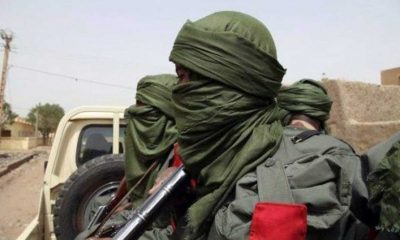

Terrorists Attack Adamawa Community, Kill 10 Persons
ShareFrom Yagana Ali, Yola Suspected Boko Haram terrorists have launched a brutal assault on the towns of Shuwa and Kirchiga in Madagali...


JAMB Targets N23.8bn IGR, Remits N6bn into Federation Account
ShareBy Eze Okechukwu, Abuja The Joint Admission and Matriculation Board (JAMB) yesterday said it is targeting N23.8 billion in internally...


Over N98bn Injects into Primary Health Sector in 2025 — Tinubu
SharePresident Bola Tinubu on Wednesday revealed that over N98 billion was disbursed last year to strengthen primary healthcare delivery across...
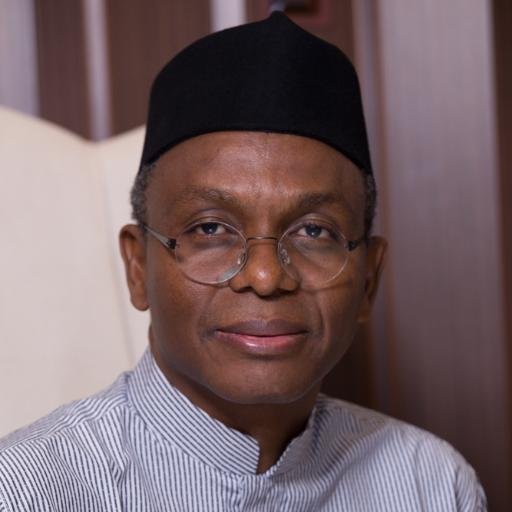
Court Adjourns El-Rufai’s Arraignment to April 23
ShareThe arraignment of former Kaduna State Governor, Nasir El-Rufai, was stalled on Wednesday, following his absence in court, with the...
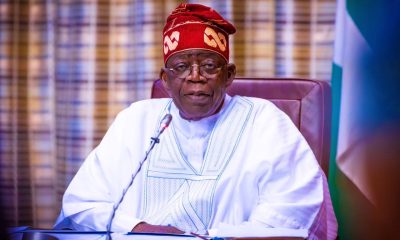

Tinubu Decorates Disu as Acting IGP
SharePresident Bola Tinubu has decorated Tunji Disu with his new rank as the acting Inspector-General of Police at the State...


ShareFG Targets 12 Per Cent Annual Growth Rate, Eyes $1trn Economy Landmark By Tony Obiechina, Abuja The Federal Government has...