
NEWS
Atiku, Rivers Stakeholders Kick against Conduct of LG Polls by Sole Administrator

By Mike Odiakose, Abuja
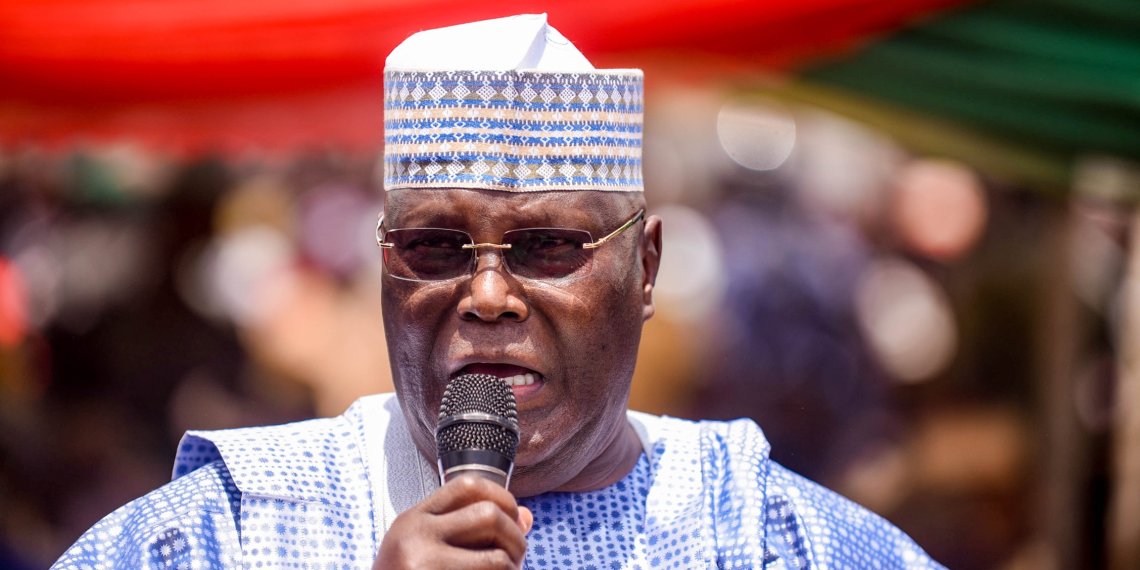
Former Vice President Atiku Abubakar and Leaders in Rivers State have kicked against the conduct of local government election by the unelected Sole Administrator, Vice Admiral Ibok-Ete Ibas (retd).
In their separate reactions to the plans by the Sole Administrator to conduct local government polls, they are in agreement that such an exercise could lead to a constitutional crisis.
They added that allowing an illegal Sole Administrator to conduct the polls has dire implications for the Nation’s democracy.
Atiku, who stated these following the condemnation and protests by some key stakeholders in the State led by Atedo Peterside against the conduct of Local Government elections in Rivers State, said the provisions of the constitution must be observed and respected by the Federal Government.
The Peterside-led group had warned the Federal Government against making nonsense of Nigeria’s democracy with the planned local government election in Rivers.
Atiku, who took to X handle on Saturday, took a critical look at the development, stressing that all constitutional and legal procedures have been totally jettisoned and observed in breach, all in a desperate attempt to conduct Local Government elections by an illegal Sole Administrator that is being prompted.
Atiku wrote on X: “It is in one’s interest to help put out the fire in your neighbour’s house to safeguard against your house being torched.
“I agree that what is playing out in Rivers State, with an illegal sole administrator, unknown to our constitution, conducting council elections, has implications for the rest of the country.
“I join other men and women of goodwill to condemn this absurdity unequivocally,” he emphasised.
The Rivers State major stakeholders and advocates for democratic principles expressed deep concern over what they described as the “violation of constitutional governance and due process in the unlawful” attempt to hold Local Government Council elections in the state.
The stakeholders in a joint statement addressed to President Bola Ahmed Tinubu, declared that Section 7(1) of the 1999 Constitution vests exclusive responsibility for local council elections in state governments, stressing that a federally appointed agent—lacking any legal foundation—cannot lawfully step into this role.
The concerned stakeholders further said that the doctrine of agency, affirmed in landmark cases such as Adebayo v. Plastic Ltd. and Okafor v. Umeh, holds that an agent’s authority is strictly derivative; and emphasised that without a constitutional grant, the actions of the Sole Administrator are ultra vires and void.
They therefore declared that it is a blatant usurpation of state autonomy which desecrates the federal architecture and impedes democratic governance, stressing that the proposed Local Government Council elections in Rivers State are nothing short of an underhand assault on the nation’s democracy and a brazen flouting of the Nigeria’s Constitution.
The concerned stakeholders included: Atedo N A Peterside, H.E Celestine N Omehia, Prince Uche Secondus, Chief Dr Abiye Sekibo, Senator Lee Maeba, Dr Dakuku Adol Peterside, Senator Andrew Uchendu, HE Engr Tele Ikuru, Prince Fafaa Dan Princewill, Dr Austin Tam-George, Donu Kogbara, Hon Dr Sokonte Davies, Dr Glory Emeh, George Feyii, Hon Honourable Asita, Surv Sam Agwor, Ann-Kio Briggs, HE Group Captain John Ibiwari Ben-Kalio (rtd) and Pastor Tonye P. Cole.
Others are Ambassador Oji Nyiminote Ngofa, Hon Randolph Iwo O. Brown, and Engr Reynolds Bekinbo Dagogo-Jack.
They noted that the elections, orchestrated by a “Sole Administrator” with no constitutional mandate and allegedly imposed by the federal government, threaten the very foundations of Nigeria’s federal system, the rule of law, and the peace of Rivers State.According to the stakeholders; “There is currently no legally constituted Rivers State Independent Electoral Commission (RSIEC) as mandated by Sections 2, 3, 5, and 12 of the Rivers State Independent Electoral Commission Law, 2018. Consequently, any electoral activities undertaken by such an illegal body are null and void.“The combined interpretation of the specified sections of the RSIEC Law alongside Section 7(1) of the 1999 Constitution (as amended) establishes that only the elected Governor, upon confirmation by the Rivers State House of Assembly, is empowered to appoint the Chairman and members of RSIEC.“Any appointment process outside this constitutional procedure is invalid and unconstitutional.“The illegitimate Rivers State Independent Electoral Commission (RSIEC) has flagrantly ignored the mandatory 90-day notice requirement before an election, as stipulated in Section 20 of the RSIEC Law.“With no formal notification for candidate nominations, polling timetables—and an election date of August 30, 2025, announced on short notice—this process bears a resemblance to the 2024 polls, which the Supreme Court annulled due to procedural failures.“Ignoring these safeguards is not an oversight; it is a deliberate attack on the principle of due process.“Courts across the land are actively adjudicating the legality of the Sole Administrator’s appointment and the very existence of a functioning RSIEC.“Yet, despite pending Supreme Court and Federal High Court injunctions—and multiple sub-judice challenges by political parties—electoral machinery grinds on under a so-called “emergency” guise.“Rivers State has been plunged into a constitutional crisis and a de facto state of emergency due to the federal suspension of its executive and legislative branches. If INEC deems its elections untenable under such conditions, how can local government polls—unrelated to any genuine emergency—be justified?The concerned stakeholders therefore, called on President Tinubu, the National Assembly, the Nigerian Judiciary, civil society, the media, the international community, and all defenders of democracy to intervene decisively.They warned saying; “Rivers State stands at a crossroads, currently to impunity or uphold the Constitution and the will of the people. The choice is ours and the stakes could not be higher”.

By David Torough, Abuja
Troops of Joint Task Force South East Operation UDO KA launched a decisive assault on 26 February 2026, storming the notorious Mother Valley in Nkwere, Anambra State, long described by authorities as a stronghold of the Indigenous People of Biafra (IPOB) and its armed wing, the Eastern Security Network (ESN).
The Joint Task Force (JTF) South East—Operation UDO KA, comprising the Nigerian Army, Nigeria Police Force, and Nigeria Security and Civil Defence Corps—advanced for over three hours through difficult terrain before penetrating and dominating the valley.
Troops reportedly faced heavy gunfire and locally made improvised explosive devices during the operation.According to the statement, one IPOB member was neutralized during the exchange, while several others fled with gunshot wounds. Security forces said they recovered two pump-action guns, a locally fabricated firearm, a tear gas gun, seven gas cylinders, an electric kettle, and flags described as linked to extremist propaganda.
Troops also destroyed structures identified as the group’s “Supreme Headquarters,” including solar panels and a Mikano generator, which officials said were sustaining operations in the valley.
In a related action, two suspected IPOB members were arrested—one allegedly attempting to plant an improvised explosive device and another accused of spying on troop movements.
Security forces also recovered a KIA saloon car and a black Toyota Sequoia jeep from what they described as a terrorist car park within the valley.
The suspects are currently in custody for further investigation, while clearance operations continue in the area. Authorities said the operation underscores their resolve to dismantle armed groups and maintain security across the South East.

BearingPoint commissioned a new survey showing Germany and Austria still lead Europe in cash usage, defying the broader continental shift toward digital payments and card-based transactions across retail and services sectors.
The poll, conducted in December by YouGov, found that 73 per cent of respondents in Germany cited cash as their most frequently used payment method, rising from 69 per cent a year earlier.
In Austria, 71 per cent of participants said they regularly paid with banknotes and coins, confirming the country’s continued preference for physical currency in spite of growing availability of digital and contactless alternatives.
By contrast, cash usage declined across the seven other European countries surveyed, highlighting a widening divide between German-speaking nations and much of the rest of Europe in payment preferences.
In Switzerland, 61 per cent of respondents reported often using cash, followed by 58 per cent in Ireland, 51 per cent in France and 46 per cent in the Netherlands.
Northern European countries demonstrated the lowest reliance on physical currency, reflecting more advanced digital infrastructure and stronger consumer adoption of mobile wallets, cards and instant electronic payment systems.
Only 25 per cent of respondents in Sweden said they frequently used cash, compared with 32 per cent in Denmark and 42 per cent in Finland.
More than a quarter of Swedes said they never used cash, while 18 per cent of Danes reported the same, underscoring the rapid shift toward fully digital payment ecosystems.
In Germany and Austria, by comparison, only 2 per cent and 1 per cent of respondents respectively said they did not use cash at all.
Across all nine countries surveyed, 37 per cent of respondents said it was certain or very likely they would stop using cash entirely within the next decade.
The survey also revealed limited public awareness of the proposed digital euro project currently under discussion among eurozone policymakers and financial institutions across the region.
Around one-third of respondents in eurozone countries said they had not heard of the initiative being developed by the European Central Bank, which could launch as early as 2029.
Eurozone monetary authorities had repeatedly stressed that the digital euro would complement, rather than replace, physical cash, aiming to preserve consumer choice while modernising Europe’s payments infrastructure.
Former U.S. Secretary of State Hillary Clinton is due to testify before the U.S. Congress on Thursday relating to the scandal surrounding sex offender Jeffrey Epstein.
Initially, Hillary Clinton, 78, is expected to testify under oath on Thursday, before her husband and former president Bill Clinton, 79, is questioned on Friday.
According to US media, they will be questioned not in Congress in Washington, but via video link.
These are expected to be closed sessions, so it is unclear how much information will be made public.
Hillary and Bill Clinton refused for months to testify before the U.S. Congress in the investigation of the Epstein case.
The Democrats accused the Republican chairman of the relevant House oversight committee, James Comer, of conducting a politically motivated process.
According to U.S. media reports, their agreement to testify in early February led to the Republicans cancelling a vote on a contempt of Congress procedure against the Clintons.
Bill Clinton’s name and pictures of him appear in documents related to the Epstein investigations.
However, a mention in itself means nothing.
The former president has repeatedly denied any wrongdoing in connection with his acquaintance with Epstein.
Epstein operated an abuse ring for years, victimising dozens of young women and minors.
The New York financier had excellent connections in U.S. high society.
He died in his prison cell in 2019, before a conviction could have been reached.
ReplyReply allForward
Add reaction




Tiwa Savage Unveils Music Foundation to Empower Young African Creatives
ShareInternational Afrobeats star, Tiwa Savage, has unveiled the Tiwa Savage Music Foundation to support young African creatives across multiple areas...


I’ve been Paid N40m for Boxing Match with Carter Efe – Portable
ShareControversial Nigerian street pop artiste, Portable, has been paid the sum of N40 million for agreeing to engage in a...


Army Kills Scores of Terrorists, Rescue Hundreds in February Offensive
ShareBy David Torough, Abuja The Armed Forces of Nigeria (AFN) said it intensified nationwide military operations in February 2026, killing...


Troops Crush IPOB/ESN Stronghold in Mother Valley Assault
ShareBy David Torough, Abuja Troops of Joint Task Force South East Operation UDO KA launched a decisive assault on 26...


Burna Boy’s Associate, Rahman Jago Confirms Singer Convert to Islam
ShareRahman Jago, a socialite and associate of Grammy-winning singer Burna Boy, has confirmed that the singer has converted to Islam....


UCL: Osimhen Slams Galatasaray Display Despite Win over Juventus
ShareSuper Eagles striker Victor Osimhen has expressed disappointment with Galatasaray’s performance despite their UEFA Champions League playoff victory over Juventus,...
NPFL: Enyimba Must Adapt Quickly To Deutsch’s Style of Play – Odeh
ShareEnyimba star Paul Odeh has disclosed that the players must adapt quickly to new head coach Emmanuel Deutsch’s style of...

Ronaldo Becomes Co-owner of Spanish Side Almeria
ShareCristiano Ronaldo has become co-owner of Spanish second division side Almeria after acquiring a 25% share in the club. The...


Germany, Austria Remain Europe’s Cash Strongholds, Survey Finds
ShareBearingPoint commissioned a new survey showing Germany and Austria still lead Europe in cash usage, defying the broader continental shift...

Hillary Clinton Testifies before U.S. Congress in Epstein Affair
ShareFormer U.S. Secretary of State Hillary Clinton is due to testify before the U.S. Congress on Thursday relating to the...