
NEWS
Bayelsa Electricity: Power from IPP Won’t Be Free, Says Diri

From Mike Tayese, Yenagoa
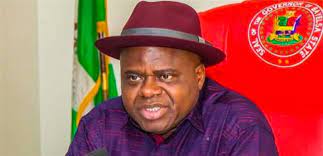
As part of effort to make Bayelsa state economically viable, Governor Douye Diri has on Wednesday inspected the six 6 Gas Turbines out of eight that have been brought to the state for steady power supply.During the inspection, Governor Douye Diri said that the power generated and distributed from the state’s independent power plant will not be free and that Bayelsans will pay for the service.
Governor Diri made the clarification while answering questions from journalists after inspecting round the project site to inspect six out of the eight new 60mw gas turbines procured by the state government at Elebele in Ogbia Local Government Area. The power equipment and their accessories arrived in the state about a week ago.Accompanied by his deputy, Senator Lawrence Ewhrudjakpo, Speaker of the House of Assembly, Abraham Ingobere, chairman of the state Peoples Democratic Party (PDP), Solomon Agwana, the Commissioner for Power, Kharin Komuko, and other government officials, the Bayelsa governor told journalists that people of the state were upbeat about the prospect of 24-hour power supply by end of this year.He explained that consumption would be metered and paid for as the government had already signed a Memorandum of Understanding with the Jampur Group for establishing a customised metering production plant in the state.He said: “I had given the end of this year as the deadline for this project and we are sticking to that. Hopefully before Christmas, we will have these turbines fired up and by God’s grace Bayelsa will begin to have 24 hours uninterrupted power supply.“We are actually expecting eight gas turbines but six have arrived and I have been assured that the remaining two with some accessories will be here next week. These are the most modern gas turbines.“Initially, we planned to have two very large plants but later, the experts advised that there could be a blackout if one of them breaks down. So I had to approve the eight.“As you know, to maintain these equipment and the gas to fire them, even though it is on our soil, we will spend money to procure it from the company. So it is not free. For there to be constant electricity everybody must pay for it. It is pay as you consume.”The Commissioner for Power, Kharin Komuko, who also spoke, described the project as a dream come true for the ASSURED Prosperity administration.He said when the governor first spoke about it, there was open cynicism by critics of the government and thanked him for making good his promise.Also, Managing Director of the Bayelsa State Electricity Company, Olice Kemenanabo, who explained the role of the Port Harcourt Electricity Distribution Company (PHEDC) in the state’s IPP project, said the Electricity Act had grey areas that were interwoven to ensure that all legacy distribution companies were carried along.Kemenanabo said the state and PHEDC were working together to avoid any legal tussle between the franchise owners and the distribution network.He further stated that the PHEDC existing network, which has over four hundred transformers in the state, would be utilised for power distribution.Speaking on behalf of the Jampur Group, technical partners to the state electricity company, the Project Manager, Mr. Sharif Abu, described the gas turbine project as very crucial and sensitive, noting that the precise time schedule for completion would be met.The governor also inspected sites of the ongoing construction of the 25,000-capacity stadium at Igbogene and the nine-storey civil servants secretariat project at Ovom, both in Yenagoa Local Government Area.
The Federal Government has secured a partnership with Coventry University under a Transnational Education (TNE) arrangement to establish a campus in Nigeria for the delivery of affordable, globally recognised degrees.
The Minister of Education, Dr Tunji Alausa, disclosed this in a statement issued recently in Abuja by Folasade Boriowo, Director of Press and Public Relations, Federal Ministry of Education.
Alausa, who is currently in the United Kingdom accompanying President Bola Tinubu, said he had engaged with UK university leadership, key investors, and development partners to drive the initiative.
He said the proposed campus would be located in Alaro City, Lagos State, and would offer Bachelor’s and Master’s programmes in Science, Technology, Engineering, Mathematics and Medicine (STEMM), Business, and Technical and Vocational Education and Training.
According to him, the degrees would be equivalent to those awarded in the United Kingdom, with admissions expected to commence between the third and fourth quarters of 2026, subject to regulatory approvals.
The minister said the initiative was designed to expand access to world-class education at reduced cost, while strengthening skills development and improving graduate employability.
He added that the programme would enable Nigerian students to study locally while receiving international-standard education.
Alausa noted that the partnership, supported by the UK’s Department for Business and Trade, underscored the government’s commitment to positioning Nigeria as a hub for knowledge, skills, and innovation.
The Philippine National Police (PNP) said on Monday that more than 400 gasoline stations across the Philippines had stopped operation due to rising fuel prices.
The PNP spokesperson Randulf Tuano told a news conference that the number of closed stations in the Philippines has increased to 403 from 273 recorded on March 18.
He added that PNP has monitored a total of 14,313 gas stations nationwide, and that the country’s existing fuel supply is expected to last until mid-April.
The PNP has already filed cases related to illegal fuel selling, hoarding, and profiteering in several areas.
The agency said it was working closely with the Department of Energy to investigate the allegations.
It said it had intensified the monitoring of gasoline stations that have ceased operations amid suspicions that some closures may be linked to price manipulation.
The South African Chamber of Commerce and Industry (SACCI) on Monday warned that the conflict in the Middle East has increased instability in global financial markets.
SACCI also warned that it could weigh on economic recovery prospects in South Africa and beyond.
Alan Mukoki, the chief executive officer of SACCI, said in a statement that disruptions to major supply routes and supply chains are likely to negatively affect the business cycle and lead to a clear deterioration in inflation, interest rates, economic growth, exchange rates, and commodity prices.
“This does not bode well for any prospect of recovery that we would have anticipated as South Africa,” said Muloki.
There are multilateral institutions that have been built over the years to resolve conflicts, he said, urging parties to the conflict to exercise restraint and have an immediate ceasefire.
Muloki also called on the South African government to take a diplomatic initiative and lobby international partners to have a ceasefire, warning that the destruction of civil infrastructure in energy and water has a devastating effect globally.
The United States and Israel launched massive attacks on Iran on Feb. 28, disrupting global shipping, sending oil prices soaring, and negatively affecting the global economy.
China Urges U.S, Israel to Stop Military Action in Middle East
China has urged all parties involved in the Middle East conflict, particularly the U.S. and Israel, to cease military operations, warning of a “vicious cycle.’’
“The one who tied the bell must be the one to untie it,” said Chinese special envoy to the Middle East Zhai Jun at a briefing after his shuttle-diplomacy trip that included stops in Saudi Arabia, the United Arab Emirates, and Kuwait.
China will maintain close communication with all parties concerned and make unremitting efforts to ease tensions and promote regional peace and stability, he said.
In a separate briefing, foreign ministry spokesperson Lin Jian cautioned that the use of force would only lead to a “vicious cycle” and that the war should not have been started.
“Should the hostilities continue to spread and intensify, the entire region will be plunged into chaos,” he said.
Trump on Saturday imposed a 48-hour deadline on Tehran to reopen the Strait of Hormuz to all shipping, threatening to destroy Iranian power plants otherwise.
Iranian attacks have effectively closed the key waterway, which carries a fifth of global oil and liquefied natural gas, causing the worst oil crisis since the 1970s.
Analysts have said that if the war is prolonged, it could undermine global growth and weaken demand for Chinese exports.
While Beijing did not detail its concerns, a prolonged conflict could weigh on China’s export outlook.
Emerging markets, key drivers of Chinese export growth, are particularly vulnerable due to limited oil reserves and sensitivity to rising energy costs.
Goldman Sachs’s Hui Shan said in a report about the current near-term risks to China’s economy that “weakening growth in China’s emerging market trading partners will likely weigh on Chinese exports to these countries in the coming quarters.’’
China is better positioned to absorb higher oil prices, with coal accounting for about 60 per cent of its energy mix, ample oil stockpiles, and imports via the Strait of Hormuz, which represent only around 5 per cent of total energy consumption.
Still, rising oil and gas prices could lift inflation and end producer price deflation, according to the chief China economist.
The bank has cut its forecast for China’s second-quarter growth and raised its 2026 inflation outlook.
Asked whether China had pressed Iran to ensure safe passage for Chinese vessels and oil shipments through the strait, Lin said Beijing remains in communication with all parties and is committed to easing tensions.


FG Secures Coventry University Deal to Deliver UK Degrees in Nigeria
ShareThe Federal Government has secured a partnership with Coventry University under a Transnational Education (TNE) arrangement to establish a campus...


Fernandez: There Was No Way I Would Turn Down Super Eagles Invitation
ShareSuper Eagles invitee Emmanuel Fernandez has disclosed that it was impossible for him to turn down the opportunity to represent...


Ballard to Miss Northern Ireland’s Italy Play-off
ShareDan Ballard will miss Northern Ireland’s crucial World Cup play-off semi-final against Italy on Thursday because of a hamstring injury....

Guinea Denies Contesting Morocco’s 1976 AFCON Title
ShareThe Guinean Football Federation has denied reports claiming it filed an appeal with the Confederation of African Football to challenge...

England to Host Canada in World Cup Final Rematch
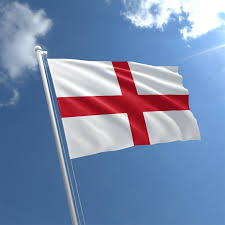
ShareEngland will face Canada in a rematch of the 2025 Women’s Rugby World Cup final as part of a trio...


White Gets First England Call-up Since 2022
ShareArsenal defender Ben White has been called up to the England squad for the first time in more than three...

Arteta’s Costly Gamble on Kepa Backfires in Cup Final Loss
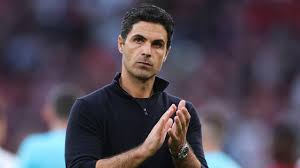
ShareArsenal manager Mikel Arteta’s choice to stick with Kepa Arrizabalaga will be one that haunts him as it proved costly...
Over 400 Philippine Gas Stations Shut Down Amid Fuel Price Surge
ShareThe Philippine National Police (PNP) said on Monday that more than 400 gasoline stations across the Philippines had stopped operation...
S’African Organisation Says Mideast Conflict Hurts Global Economic Recovery Prospects
ShareThe South African Chamber of Commerce and Industry (SACCI) on Monday warned that the conflict in the Middle East has...
Benin Presidential Candidate Vows New Police Forces in Border Towns to Fight Jihadists
ShareThe ruling party candidate in Benin Republic’s upcoming presidential election has vowed to create municipal police forces in northern border...