
NEWS
Bayelsa Seeks Stake in $3.5b Brass Fertiliser, Petrochemical Project

From Mike Tayese, Yenagoa
Bayelsa State government has solicited for equity stake in the Brass Fertiliser and Petrochemical Company project about to commence on the Brass Island in the state.
Governor Douye Diri made the request on Tuesday when the management team of the company paid him a courtesy visit in Government House, Yenagoa.
The Bayelsa governor said the state’s position became necessary due to the negative fallouts in excluding oil producing states and local governments from the Petroleum Industry Act (PIA).
Senator Diri in a statement by his Chief Press Secretary, Mr. Daniel Alabrah, contended that implementation of the PIA had been hampered in host communities due to the anomaly in the legislation.
He noted that the disregard in the PIA of the Nigerian Constitution, which vests control of land in the state government, was a flaw that has necessitated calls for its review.
His words: “Let us ensure that the state is not totally excluded from being partners in progress in this whole process. The PIA is one good example.
“When it was in its formative stages as a bill, we made a presentation through the Attorney General and Commissioner for Justice. We did that after consulting with our people, communities and chiefs. But at the end of the day, our inputs were ignored and thrown overboard as the PIA excluded the oil producing states and their local governments.
“The federal government now interacts directly with the communities and that is an affront on the Nigerian Constitution. The Constitution says the land belongs to the state government and not the federal government.
“The Constitution recognises communities as under the local government and the state government. These anomalies in the PIA have made the law a time bomb.
“Today, because of the PIA, there are intra and inter-communal conflicts and litigations. So even funds that have been realised for their development cannot be disbursed to the communities. If anybody thinks the state is not very important, we will then wash off our hands.”
The governor expressed the hope that the petrochemical company would be different and urged the management to partner the state government to correct the imbalance and avert conflicts in its host communities.
Diri, who commended the President Bola Tinubu administration for resuscitating the project, said it was long overdue.
He said that the Brass Fertiliser and Petrochemical Company was conceptualised in 2009 but gained some traction during the administration of his predecessor before it fizzled out again.
He equally appreciated the president for his positive response to the state’s requests for federal government presence as exemplified in revival of the fertiliser and petrochemical project.
Speaking earlier, Managing Director of the Brass Fertiliser and Petrochemical Company, Chief Ben Okoye, said the visit was to formally inform the state government that work on the $3.5 billion project would start in October this year.
Chief Okoye explained that the 10,000 metric tonnes of methanol per day project was delayed as there was no agreement reached on the gas component but that President Tinubu last October directed the Minister of State for Petroleum (Gas) to get it started and that the agreement was signed in January this year.
He assured the state government that the necessary steps have been taken to implement the project in full and thanked the governor for constructing the Nembe-Brass road, which he noted would save the company up to $100,000 in logistics costs in moving equipment and materials on the river to the project site.
The Project Coordinator, Mr. Cyril Akika, in a presentation, listed the benefits of the project to include economic transformation as more than 15,000 jobs would be created during construction and over 5,000 permanent jobs.
He also stated that the project would increase tax revenues, royalties, internally generated revenue, boost Bayelsa SMEs through project supply chains and equity dividends for the state.
Other benefits include infrastructure and community impact, positioning of the Brass Free Zone as global petrochemical hub as well as development of port, jetty, logistics base and a 300MW gas-fired power plant to ensure energy security among others.
From Rabiu Sanusi, Kano
The Northern States Governors Forum (NSGF) has expressed deep sorrow over the demise of the Speaker of the Kebbi State House of Assembly, Rt. Hon. Muhammad Usman Zuru, who died in the early hours of today in Egypt.
In a condolence message, the Chairman of the Forum and Governor of Gombe State, Muhammadu Inuwa Yahaya, described the death of the late Speaker as a painful and monumental loss not only to Kebbi State, but to the North’s democratic and legislative community.
Yahaya said the late Muhammad Zuru was an accomplished lawmaker, a stabilizing force in governance and a patriotic leader who served his people with uncommon commitment, wisdom and humility.
He noted that the deceased Speaker distinguished himself through selfless service, commitment to democratic ideals, and unalloyed loyalty to the progress and development of Kebbi State.
He extends his heartfelt condolences to the Governor of Kebbi State, Comrade Nasir Idris, the immediate family of the deceased, members of the Kebbi State House of Assembly and the Zuru Emirate Council over the deeply painful loss.
Governor Inuwa Yahaya prayed to Almighty Allah to forgive the shortcomings of the deceased, reward his lifetime of service to humanity and grant him Aljannat Firdaus.
The Petroleum Technology Development Fund (PTDF) has begun screening of 5,885 shortlisted candidates nationwide for its 2026/2027 Overseas Scholarship Scheme (OSS) for MSc and Ph.D award.
Deputy General Manager, Education and Training, PTDF, Dr. Bello Mustapha said this during the commencement of the interview on Tuesday in Abuja.
He said the Fund received over 38,000 applications while 5,885 were shortlisted under transparent process.
The exercise is taking place concurrently across the six geo-political zones of Nigeria as follows: North-central – Abuja; North-East – Bauchi; North-West – Kaduna; South-South – Rivers; South-East – Enugu; South-West – Oyo.
“The shortlisted candidates are drawn from over 38,000 applicants who indicated interest in the scholarship programme. The selection is based on strict criteria, including academic performance, relevant work experience and overall qualifications of applicants.
“Candidates must possess at least a second class upper degree, alongside other requirements, to qualify for consideration. Secondary school results are also assessed, with grades contributing to the overall evaluation of applicants,” he said.
He said the interview process was being conducted simultaneously in six centres across the six geopolitical zones, adding that candidates were allowed to attend interviews at any centre of their choice, regardless of their state of origin.
Mustapha said the final selection would reflect the Federal Character principle, ensuring equitable representation across states.
He added that the number of successful candidates would depend on available budgetary provisions and management approval.
According to him, the scheme covers petroleum-related courses, with some supporting programmes such as management and petroleum law also included.
Some of the candidates also expressed delight to the Federal Government for the opportunity to be selected for postgraduates studies abroad and promised to utilise the career advancement properly if successful.
Maria Ochanya, a graduate of Biochemistry who expressed gratitude for the opportunity said the scheme would give her the foundation to study MSc in Industrial Biotechnology and equally give back to the society.
Alhaji ikoh, who applied for MSc Environmental Science with a background in Architecture described the process as professional, while expressing optimism to be awarded to study abroad.

Global oil markets are no longer reacting to supply and demand; they are reacting to deadlines.
With President Donald Trump declaring a final Tuesday deadline for Iran to strike a deal, tensions have entered a more binary phase: agreement or escalation.
The ultimatum has raised the stakes not just diplomatically, but economically, as markets weigh the potential for further disruption to one of the world’s most critical energy corridors.
So far, the response from Tehran has been firm as Iran has rejected a proposed ceasefire framework, insisting on a more permanent resolution and broader concessions, including sanctions relief and security guarantees.
That rejection keeps the Strait of Hormuz effectively constrained, maintaining pressure on global energy flows and limiting any near-term easing of risk.
The result is a market caught in a narrow band of uncertainty.
Oil prices have made only modest moves in recent sessions, reflecting a balance between two competing forces, the risk of escalation and the possibility, however slim, of a negotiated outcome.
Prices surged earlier, with U.S. crude jumping more than 11% in a single move, before stabilizing as traders assessed shifting signals from both sides.
This kind of price behavior is telling. Markets are no longer reacting in a straight line.
Instead, they are recalibrating constantly, pricing in worst-case scenarios, then pulling back slightly as diplomatic headlines emerge, only to reset again when talks stall.
It is less about direction and more about probability. And for investors, the probabilities still lean toward disruption.
Even as negotiations continue behind the scenes, confidence in a quick resolution remains low.
Each rejected proposal and each new ultimatum reinforces the idea that the conflict could persist longer than initially expected. That, in turn, keeps energy disruption at the center of global market thinking.
Because this is not just about oil prices. It is about access, timing, and reliability.
The Strait of Hormuz remains the critical variable. As long as flows through the corridor are constrained, even partially, the market must assume tighter supply conditions, longer shipping routes, higher insurance costs, and increased volatility across both crude and refined products.
That is why energy disruption remains top of mind for investors. Not because supply has fully disappeared, but because the system that moves it has become less predictable.
In today’s market, uncertainty itself is enough to sustain higher prices and elevated risk premiums.
Even a ceasefire, if it comes, may not immediately resolve that.
Shipping, insurance, and logistical systems take time to normalize. Trust in safe passage takes even longer. Markets understand that reopening flows is not the same as restoring stability.
Which brings the focus back to the deadline.
Trump’s “final” timeline is meant to force clarity, but in energy markets, clarity rarely arrives on schedule. Instead, what matters is how long uncertainty persists and how deeply it reshapes behavior.
Right now, the signal is clear. This is no longer just a geopolitical standoff. It is a market event where diplomacy, disruption, and risk perception are all moving prices at the same time.
And until one of those forces definitively breaks, oil will remain less about fundamentals, and more about what happens next.

Northern Govs Mourn Kebbi Assembly Speaker, Zuru
ShareFrom Rabiu Sanusi, Kano The Northern States Governors Forum (NSGF) has expressed deep sorrow over the demise of the Speaker of the...
Marathon World Championships Planned from 2030
ShareWorld Athletics plans to launch a standalone World Marathon Championships from 2030, with Athens in Greece potentially hosting the inaugural event. The marathon will remain part of the World Athletics Championships...


Army Dismisses Claims by Discharged Soldier, Reaffirms Troops’ Safety, Welfare
ShareBy David Torough, Abuja The Nigerian Army has dismissed as false and misleading allegations by a dismissed soldier, Lance Cpl. Rotimi Olamilekan, describing them as deliberate...
PTDF Screens 5,885 Candidates for Overseas Scholarship
ShareThe Petroleum Technology Development Fund (PTDF) has begun screening of 5,885 shortlisted candidates nationwide for its 2026/2027 Overseas Scholarship Scheme...
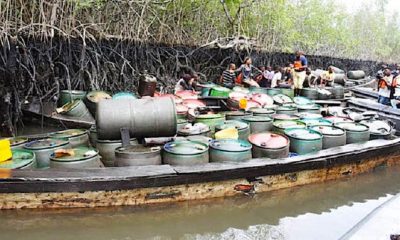

Global Oil Markets Reacts to U.S Deadline to Iran
ShareGlobal oil markets are no longer reacting to supply and demand; they are reacting to deadlines. With President Donald Trump...


COVID-19 Loans: House of Reps Urges Flexible Repayment Plan
ShareThe House of Representatives has directed the Central Bank of Nigeria (CBN), NIRSAL, and SMEDAN to restructure the repayment system...


Zenith Bank Posts N1.26trn Profit before Tax, Proposes Higher Dividend
Share Zenith Bank Plc has recorded a profit before tax (PBT) of N1.26 trillion for the year ended Dec. 31,...


FG Launches N30bn Innovation Programme, Targets Talent – To- Wealth
ShareBy Tony Obiechina, Abuja Nigeria has taken a significant step toward positioning itself as Africa’s leader in artificial intelligence (AI)...
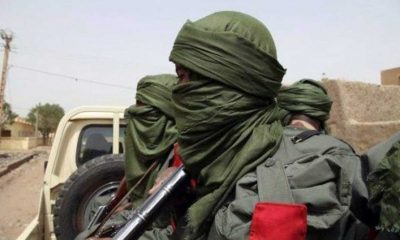

Again, Terrorists Kill Five, Abduct Scores in Niger
ShareFrom Dan Amasingha, Minna A fresh wave of coordinated attacks by armed groups has left at least eight people dead,...

WHD: Health is central to every society, WHO insists
ShareBy Laide Akinboade, Abuja World Health Organization (WHO), on Tuesday, said health is imperative and central for every society and...