
NEWS
Benue Places Embargo on Use of Customised Books, Others for Basic School Pupils

From Attah Ede, Makurdi
Ahead of September school resumption, Benue State Government has placed an Embargo on all forms of graduation ceremonies conducted for Kindergarten, Nursery and Basic school pupils in the state beginning from the 2025/26 academic session.The State government equally announced abolition of the use of customised books in schools which hindered such books to be transferred to other students for use.
The Permanent Secretary, State Ministry of Education and Knowledge Management, Helen Zeramo, disclosed this yesterday in a statement in Makurdi. The statement, which was copied to all proprietors of private schools, mission schools, all parents and guardians, as well as other education stakeholders in the state, also prohibited compulsory and extended lessons held after regular school hours except with the express permission of parents.The directive, according to the statement, takes effect upon resumption of the 2025/2026 academic year.The statement, which was sighted by Vanguard, was captioned “New Education Policy in Benue Public and Private Schools.”Part of it read: “Pursuant to the policies of the Rev. Fr. Hyacinth Alla’s administration which seeks to emancipate the Benue masses, the management of the Ministry of Education has adopted the following policies: The unpopular use of restricted customized education materials such as text/exercise books in Benue State Schools making them non transferable to subsequent learners is hereby abolished.“All schools are by this notice directed to revert automatically to the traditional practice of senior students/pupils using and passing books down to pupils and students in lower classes.“Compulsory and extended lessons after regular schools’ hours ceases except where parental rights are sought and granted.“All compulsory school graduation ceremonies in Benue state are hereby abolished especially for Kindergarten, Nursery and Basic schools.“The implementation of these policies should be strictly adhered to upon the commencement of the first term of the 2025/2026 academic year.“In light of the above, a meeting has been scheduled for Tuesday August 26, 2025 to engage with Proprietors of schools, PTA and concerned Education Stakeholders.”
BPE Projects N189.1bn Revenue in 2026
By Tony Obiechina, Abuja
The Bureau of Public Enterprises (BPE) said it has an approved work plan comprising fifteen (15) strategic projects with estimated revenue of ₦189.1 Billion for 2026, reflecting its deliberate effort to contribute meaningfully to fiscal consolidation, reduce reliance on debt financing and support capital expenditure priorities of the Government.
This is just as it contributed the sum of N185 billion to the Federal Government Treasury in 2025, supporting macroeconomic stability which is a prerequisite for sustained Gross Domestic Product (GDP) growth.
At the Annual General Meeting of the Finance Correspondents Association of Nigeria (FICAN), Director-General of BPE, Ayodeji Gbeleyi, said the 2026 portfolio includes the proposed commercialisation of two from the ten (10) National Integrated Power Plants (NIPPs), public listing of shares of a Disco on the Nigerian Exchange Limited (NGX), concession of Oyan Dam, and assets optimisation initiatives in the oil and gas sector.
Represented by the Director, Industries and Services, BPE, Toibudeen Oduniyi, the BPE boss said Nigeria’s solid minerals sector presents significant opportunities for export diversification and value-chain development. Adding that ongoing initiative by the Bureau in leasing out four (4) coal blocks is aimed at moving from a dormant asset holding to productive exploitation and supporting Mr. President’s economic diversification agenda and the expansion of non-oil GDP.
Gbeleyi said beyond revenue, these transactions are structured to enhance operational efficiency, unlock stranded value, attract domestic and foreign investments, deepen the capital market and stimulate job creation.
In addition, he said the Bureau continues to drive other reform initiatives such as the Distribution Sector Recovery Programme (DISREP) towards bridging the country’s metering gap and strengthening distribution network infrastructure, and the development and upgrading of strategic infrastructure through Public-Private Partnership (PPP).
Noting that these reforms are foundational to improving service delivery, strengthening sector governance and accelerating inclusive growth. “We are equally focused on resolving legacy disputes that have historically constrained asset performance and investor confidence.
The BPE boss said in the broader strategic context, the Bureau recognises that Nigeria faces a substantial infrastructure gap and that sustainable economic transformation requires robust private sector participation.
While submitting that the journey towards a US$1 trillion economy demands fiscal discipline, institutional strengthening, improved asset performance, and a vibrant private sector, Gbeleyi said the Bureau remains committed to delivering reforms that are transparent, accountable and aligned with national development priorities.
He noted that accurate and responsible financial journalism strengthens market confidence, promotes accountability, educates investors and fosters informed public discourse, therefore encouraging continued collaboration between the Bureau and the Association in advancing transparency around reform, privatisation, commercialisation and PPP initiatives.
Meanwhile Jaiz Bank has reaffirmed its commitment to the growth of Micro, Small, and Medium Enterprises (MSMEs) in Nigeria, announcing an approved annual portfolio limit of ₦10 billion dedicated to the sector.
The announcement was made by the Managing Director of Jaiz Bank, Sirajo Salisu, who was represented by the Group Head of Corporate Communications, Halima Ishaq, during the 2025 Financial Correspondents Association of Nigeria (FICAN) Annual General Meeting held in Abuja on Wednesday.
Speaking on the bank’s strategic focus for the year, Ishaq noted that the ₦10 billion allocation is subject to periodic review to ensure it meets the evolving needs of small businesses.
The bank’s intensified support for the sector recently culminated in its appointment as the Stockley Manager for GrowFund. This initiative aims to provide affordable capital to approximately 6,132 MSMEs across the federation.
In a gesture of continued partnership, the bank also announced a financial donation toward the successful hosting of the FICAN AGM. Ishaq noted that the contribution underscores the bank’s belief in the vital role financial journalists play in the economic ecosystem.
Despite the bank’s growth, the spokesperson issued a gentle appeal to media partners and the public regarding the bank’s visual identity. Following a rebranding exercise in August 2024, the bank noted that its old logo is still frequently used in media reports and on social media.
”The old logo is gone,” Ishaq emphasized. “We have noticed that despite rebranding last August, some of our assets are still represented by the old logo. This often causes confusion online.”
The bank urged journalists and digital content creators to update their databases to reflect the current brand assets to ensure consistency and professional representation.
In another development, NEXIM Bank said it disbursed about N179.79 billion to exporters in 2025.
The Managing Director and Chief Executive Officer of the Bank, Abubakar Bello disclosed this on Wednesday, at the 2025 Annual General Meeting (AGM) of the Finance Correspondents Association of Nigeria (FICAN) in Abuja.
Represented at the event by a Senior Manager in the Strategic Planning Department, Dr. Babagana Musti, the NEXIM bank boss said by empowering the Nigerian Exporter, the bank is aggressively providing targeted, low-interest funding and guarantees.
He noted that the goal was to ensure that a ‘Made in Nigeria’ label is synonymous with global quality, adding that by de-risking the export business, the bank is ensuring that local businesses—from Small and Medium Enterprises (SMEs) to large conglomerates—could compete and win in the international marketplace.
Bello said to reach a $1 trillion Gross Domestic Product (GDP), the mathematics is simple, but the execution is rigorous, saying that Nigeria must diversify.
Bello said “at NEXIM Bank, this isn’t just a policy statement; it is our daily mandate. We see the $1 trillion target as a call to arms to unlock the untapped potential in our solid minerals, agriculture, and creative industries. We are moving from a ‘resource-based’ mindset to an ‘export-led’ growth model.”
He said the NEXIM Bank is practically moving the needle toward the $1 trillion milestone by ensuring that Nigeria not only participates in the African Continental Free Trade Area (AfCFTA), but also leads it.
The MD said the bank is also working towards achieving the $1 trillion target by removing bottlenecks in the system. This, he said, was being done through its Sealink project.
Bello called on the journalists, especially those under the umbrella of FICAN, to build confidence required to hit that $1 trillion mark through their effective reportage of the sector.
By Ubong Ukpong, Abuja
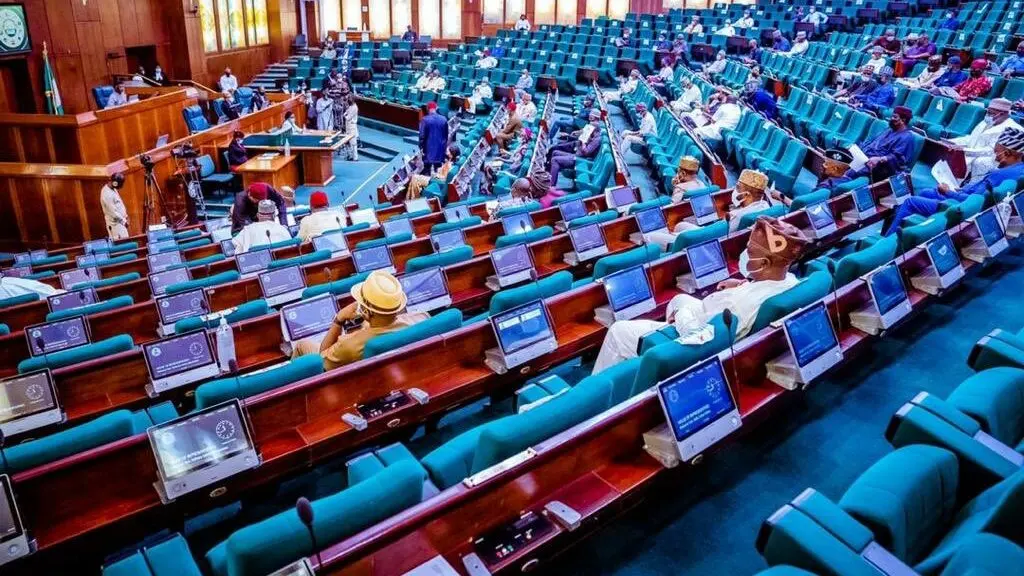
The House of Representatives Committee on Renewable Energy has directed the Managing Director of the Rural Electrification Agency (REA) to appear in person before it on Tuesday, March 2, following his absence at an ongoing investigative hearing in Abuja.
Chairman of the Committee, Hon.
Afam Ogene, issued the directive on Wednesday, warning that official responsibilities must not be trivialized. He also ordered the Agency to submit a comprehensive written response to issues raised by the Committee within 48 hours.“We as lawmakers are elected to hold public officers accountable in line with Sections 88 and 89 of the 1999 Constitution as amended,” Ogene stated.
The Committee members expressed strong displeasure over the absence of the REA Managing Director.
Rep. Kwamoti Laori (Demsa/Numan/Lamurde, Adamawa) described the development as highly disrespectful, warning that such conduct should no longer be tolerated. He called for the issuance of a warrant of arrest through the Inspector-General of Police if the directive is not complied with.
Similarly, Rep. Shina Oyedeji (Iseyin/Itesiwaju/Kajola/Iwajowa, Oyo) stressed that public officers must account for their stewardship, particularly given the substantial grants and public funds managed by the Agency.
Responding on behalf of the Agency, the Executive Director, Corporate Services, Gboyega Ayoade, tendered an unreserved apology and appealed for more time, insisting that the Managing Director’s absence was neither deliberate nor intended to disrespect the Committee.
Meanwhile, the National President of the Licensed Electrical Contractors Association of Nigeria (LECAN), High Chief Vitus Ofodum Vitus Ikenna, urged the Committee to mandate the use of certified electrical professionals in renewable energy projects nationwide.
He warned that domiciling green energy projects with entities lacking technical capacity could result in substandard installations, safety hazards, and loss of public funds.
LECAN, whose members are certified by the Nigerian Electricity Management Services Agency (NEMSA) under the Electricity Act 2023, expressed concern that many donor-funded renewable energy projects are awarded to unqualified contractors, leading to abandoned or failed installations.
Ikenna called for stronger enforcement powers for NEMSA to prosecute safety and standards violations, maintaining that stricter oversight is critical to protecting lives, ensuring sustainability, and guaranteeing value for money in Nigeria’s renewable energy sector.

Senegal’s prime minister said it is “regrettable” that 18 people from the country have been handed prison sentences after being convicted of hooliganism offences related to disturbances at the 2025 Africa Cup of Nations final.
The Teranga Lions followers were detained after being accused of violence against security forces and of causing damage during the match in Rabat on 18 January.
There was unrest in the stands after Morocco were awarded a penalty deep into stoppage time, with a section of Senegal’s support attempting to invade the pitch.
Some Senegal players left the field of play in protest at the referee’s decision but eventually returned and Morocco and Real Madrid forward Brahim Diaz had his penalty attempt saved before the West Africans won 1-0 after extra time.
Last Thursday a court in the Moroccan capital handed out the prison sentences ranging from three months to one year and fines worth up to 5,000 dirhams ($545, £403).
“It seems this matter goes beyond the realm of sport and that is regrettable,” Senegal’s Prime Minister Ousmane Sonko said.
“For two countries that call each other friends, like Morocco and Senegal, things should not have gone this far.”
Moroccan prosecutors had sought a maximum two-year sentence for some of those involved, saying the defendants had “deliberately sought to disrupt the proper conduct of the match”.
The 18 men denied any wrongdoing, decided not to appeal, but are set to submit a request for a royal pardon to Morocco’s King Mohammed VI.
Senegal’s football federation (FSF) expressed “profound dismay and distress” at the verdicts, which were described as “incomprehensibly harsh” by Bacary Cisse, president of the FSF’s communications committee.
Sonko said Morocco’s handling of the case “does not honour” relations between the two countries, adding that Senegal had done “all it should” to secure their release.
He added that Senegal could, if necessary, activate a bilateral agreement allowing the mutual transfer of convicts in order to expedite the return of the 18 supporters.



ShareBPE Projects N189.1bn Revenue in 2026 By Tony Obiechina, Abuja The Bureau of Public Enterprises (BPE) said it has an...

Joint Security Operatives Arrest 113 Suspected Kidnappers in Edo
ShareFrom Jude Dangwam, Jos Heightened security concerns gripped parts of the country on Thursday as authorities in Plateau State, Edo...


Electoral Act: Atiku, Obi, Amaechi, Mark, Others Reject Amendment
ShareBy David Torough, Abuja Leaders of the African Democratic Congress (ADC) and the New Nigeria Peoples Party (NNPP) have called...
Lugbe Residents Appeal to Tinubu over Deteriorating Roads in Area
ShareConcerned residents and road users in Lugbe, Abuja, have appealed to President Bola Tinubu to urgently intervene in the deteriorating...


Reps Summon REA MD, Demand Written Response within 48 Hours
ShareBy Ubong Ukpong, Abuja The House of Representatives Committee on Renewable Energy has directed the Managing Director of the Rural...

ShareDele Giwa: Alive in Words By Sam Akpe Finally, here it is! Dele Giwa, the late journalism icon, is back...
Disarmament and Demobilization of Armed Groups and Violent Extremism in Benue State?
ShareBy Uji, Wilfred The idea of disarmament and demobilization of armed and military groups dates back to the United Nations...


Do Nigerians Really Deserve The Leadership They Get?
ShareBy Pius Mordi Although the American media portrayed him as an advocate of violent resistance in the civil rights struggle,...

Electoral Act 2026 As Legacy of Akpabio-led 10th Assembly
ShareBy Ola Awoniyi Parliaments are remembered by the signature Bills that they passed. For the Godswill Akpabio-led 10th National Assembly,...

Hagher Alleges Genocide in Benue’s Sankera, Urges Federal Emergency Rule
ShareBy David Torough, Abuja A former Nigerian senator and diplomat, Iyorwuese Hagher, has accused armed herdsmen and bandits of carrying...