
Foreign News
Brazil Vows to Match US Tariffs after Trump Threatens 50% Levy

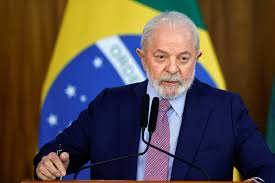
Brazilian President Luiz Inácio Lula da Silva has said he is ready to match any tariffs imposed on Brazil by the United States.
Lula was responding to Wednesday’s threat by his US counterpart, Donald Trump, to impose a 50% import tax on Brazilian goods from August 1.
In a letter, Trump cited Brazil’s treatment of former President Jair Bolsonaro as a trigger for tariff-hike.
Bolsonaro is currently on trial for allegedly attempting to stage a coup against Lula after being defeated by him in the 2022 election.
Trump referred to Bolsonaro as “a highly respected leader throughout the world”. “This Trial should not be taking place,” he wrote, calling on Brazil to immediately end the “witch hunt” against the former president.
Trump’s support for Bolsonaro does not come as a surprise as the two men have long been considered allies.
The US president had already slammed Brazil for its treatment of Bolsonaro on Monday, comparing it to the legal cases he himself had faced in US courts.
The 50% tariff threat was met with a robust and lengthy response by President Lula.
In a post on X, he stressed that Brazil was “a sovereign country with independent institutions and will not accept any tutelage”.
The Brazilian leader also announced that “any unilateral tariff increases” would be met with reciprocal tariffs imposed on US goods.
The US is Brazil’s second-largest trade partner after China, so the hike from a tariff rate of 10% to an eye-watering 50% – if it comes into force – would hit the South American nation hard.
But Lula also made a point of challenging Trump’s assertion that the US had a trade deficit with Brazil, calling it “inaccurate”.
Lula’s rebuttal is backed up by US government data, which suggests the US had a goods trade surplus with Brazil of $7.4bn (£5.4bn) in 2024.
Brazil is the US’s 15th largest trading partner and among its main imports from the US are mineral fuels, aircraft and machinery.
For its part, the US imports gas and petroleum, iron, and coffee from Brazil.
Brazil was not the only country Trump threatened with higher tariffs on Wednesday.
Japan, South Korea and Sri Lanka were among 22 nations which received letters warning of higher levies.
But the letter Trump sent to his Brazilian counterpart was the only one focussing matters beyond alleged trade deficits.
As well as denouncing the treatment of ex-President Bolsonaro, Trump slammed what he said were “secret and unlawful censorship orders to US social media platforms” which he said Brazil had imposed.
Trump Media, which operates the US president’s Truth Social platform and is majority-owned by him, is among the US tech companies fighting Brazilian court rulings over orders suspending social media accounts.
Lula fought back on that front too, justifying the rulings by arguing that “Brazilian society rejects hateful content, racism, child pornography, scams, fraud, and speeches against human rights and democratic freedom”.
Rafael Cortez, a political scientist with Brazilian consulting firm Tendências Consultoria, told BBC News Brasil that rather than hurt him, the overly political tone of Trump’s letter could end up benefiting Lula.
“Those confronting Trump win at home when Trump and other conservative leaders speak out on issues pertaining to their countries. That happened, to a certain degree, in Mexico, and the elections in Canada and Australia,” Mr Cortez says of other leaders who have challenged Trump and reaped the rewards in the form of rising popularity levels.
Creomar de Souza of the political risk consultancy Dharma Politics said that it would depend on the Lula government coming up with an organised and united response if it is to “score a goal” against Trump.
Bangladesh has launched an emergency vaccination campaign after a fast-spreading measles outbreak is suspected of killing more than 100 people, mostly children, in what may be the country’s most lethal wave of the disease in recent history.
The campaign, which began on Sunday, comes amid more than 7,500 suspected measles cases since 15 March, according to health ministry data.
More than 900 of these cases have been confirmed – a sharp increase from 2025, when just 125 measles cases were recorded over the entire year, local media report.
While Bangladesh has long vaccinated children against the highly contagious disease, the recent outbreak has exposed gaps in its programme, raising concern.
“Vaccines are foundational to child survival,” Rana Flowers, the Unicef representative in Bangladesh, said in a statement on Sunday, adding that the current measles outbreak was “putting thousands of children, especially the youngest and most vulnerable, at serious risk.”
In Bangladesh, a nation of 170 million people, routine measles vaccines are given to children as young as nine months old.
But Shahriar Sajjad, deputy director of the Health Department, said that about one-third of those infected in the recent outbreak were under nine months old.
The infections of these young infants “who are not yet eligible for routine vaccination, are especially alarming”, said Flowers from Unicef.
On top of routine vaccinations, Bangladesh conducts special measles vaccination campaigns every four years.
But these campaigns haven’t gone according to plan.
There have been no special measles vaccination campaigns since 2020, first because of Covid then because of the “political situation”, Sajjad said.
Bangladesh experienced political upheaval in 2024, when massive anti-government protests toppled its long-ruling leader Sheikh Hasina. An interim government took over after Hasina’s ousting, and only in February this year did the country elect a new government.
A measles vaccination campaign was supposed to be held in April this year, “but it did not happen”, Sajjad said.
A health official said procurement issues had led to a shortage of vaccines, including for measles.
Many in Bangladesh have blamed the vaccine shortages on the former interim government, which oversaw a new vaccine procurement system.
But measles resurgences “are typically the result of these accumulated gaps rather than a single factor”, Unicef said in its statement.
“Bangladesh has a strong history of high immunisation coverage, but even small disruptions can lead to the gradual accumulation of immunity gaps over time.”
Along with international partners like Unicef and the World Health Organization (WHO), Bangladesh has launched an emergency vaccination campaign for measles and rubella, a milder disease with similar symptoms to measles.
This campaign, which started on Sunday, will be rolled out across 30 upazilas – sub-districts in Bangladesh – and targets more than 1.2 million children between six months and five years old.
The campaign will prioritise “children who have missed routine immunisation and are most vulnerable to severe illness and complications”, according to Unicef.
There will also be a particular focus on Dhaka, the densely populated capital, and Cox’s Bazar, home to crowded Rohingya refugee camps, Unicef said.
Besides the vaccination drive, health authorities are also publishing infographics that teach people how to identify and prevent measles. Measles is a highly contagious airborne disease, which can lead to severe complications and death.
Common symptoms include: High fever, sore, red and watery eyes, coughing and sneezing
In 2024, an estimated 95,000 people were killed by measles around the world – most of them children under five years old, according to the WHO.
Measles can be prevented through vaccination – but according to the WHO, 95% of the population has to be vaccinated in order to stop the disease from spreading.
Over the past two decades, the number of global measles cases and deaths resulting from the disease have fallen sharply.
There were 11 million cases of measles worldwide in 2024 – a significant decrease from 38 million in 2000, according to the WHO.
But the organisation has warned about a resurgence in parts of the world as vaccination rates fall. In 2024 and 2025, the world saw the highest number of measles outbreaks in more than 20 years, according to medical journal The Lancet.
Cases of measles have risen in some countries in Asia and Africa, as well as in Europe, the US and the UK, where there is growing scepticism against vaccines, especially after the pandemic.
In February, an outbreak of measles in some schools in north London prompted health authorities to remind parents to vaccinate their children.
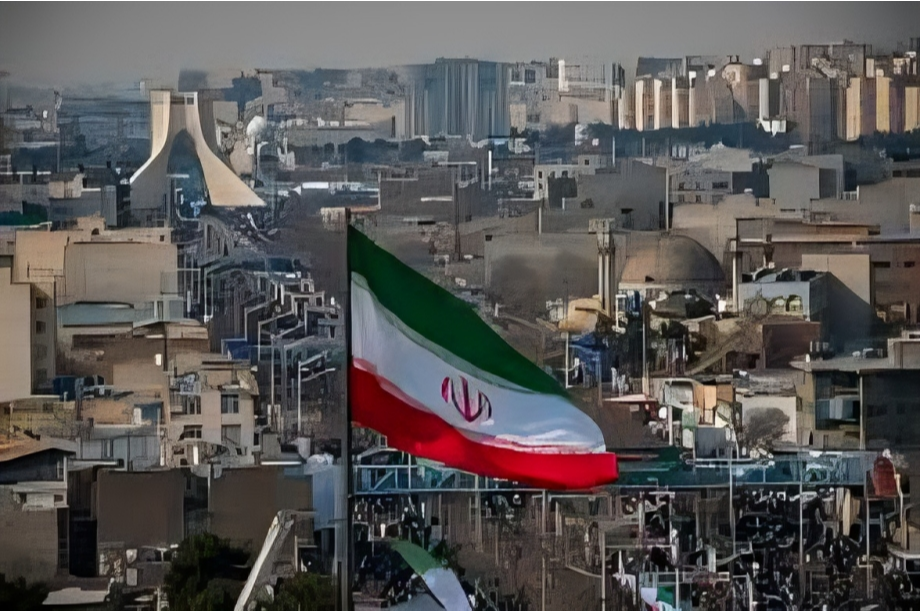
Iran has warned the United States (U.S.) and Israel that it would launch further and more severe attacks, escalating tensions amid ongoing hostilities.
A spokesman for the country’s armed forces headquarters said yesterday that Iran’s adversaries underestimated its military capabilities.
”You know nothing about our very extensive and strategic capabilities,” the spokesman said, adding that recent strikes by the U.
S. and Israel had failed to significantly weaken Iran’s military strength.The spokesman dismissed the importance of previously targeted sites, describing them as insignificant, and insisted that key military production facilities remained intact and beyond the reach of foreign forces.
He also rejected claims that Iran’s strategic weapons programmes, including missile systems, long-range drones, air defence technologies and electronic warfare capabilities had been seriously damaged.
The warning signals a potential intensification of the conflict, with the spokesman stating that military operations would continue until Iran’s opponents “capitulate”.
Syria rejects forced deportations from Germany amid migration debate
Syria has rejected proposals for the large-scale return of its nationals from Germany, warning against any forced deportations amid an ongoing migration debate in Europe.
Syrian Foreign Minister, Asaad al-Shaibani, said Syrians living abroad should be viewed as “strategic resources, not a burden”, dismissing suggestions that they should be compelled to return.
”We categorically reject any attempts at forced deportation. Authorities are working with international partners to rebuild infrastructure and create conditions for a voluntary and dignified return,” he wrote on X.
At a joint press conference, German Chancellor Friedrich Merz had said that up to 80 per cent of the more than 900,000 Syrians living in Germany could return home within three years.
He said that returnees would be needed to support reconstruction efforts, while noting that well-integrated Syrians would be allowed to remain.
The remarks sparked criticism across Germany’s political spectrum.
A day later, Merz said the figure had been cited by al-Sharaa, a claim the Syrian leader rejected during an event in London.
Al-Sharaa insisted that any return of refugees must be voluntary and linked to improvements on the ground in Syria, warning that forced deportations could trigger further displacement.
Germany has hosted more Syrians than any other European Union country since the outbreak of the Syrian civil war, which lasted 14 years.
Following the ousting of longtime ruler Bashar al-Assad in late 2024 by a rebel alliance led by al-Sharaa, calls have intensified among conservative politicians in Germany for refugees to return.
U.S. Military Strikes Over 12,300 Targets in Iran, Says Centcom
The U.S. military on Wednesday said that it had struck more than 12,300 targets in Iran during the conflict, which has been ongoing for just over a month.
The U.S. Central Command (CENTCOM), which oversees U.S. forces in the region, said in an update on Wednesday that its forces “Damaged or Destroyed” more than 155 Iranian vessels among the more than 12,300 targets struck since the start of the war.
“CENTCOM forces are striking targets to dismantle the Iranian regime’s security apparatus, prioritising locations that pose an imminent threat,” the command said.
The Israeli military said on Wednesday that Israel had so far carried out more than 800 strikes in Iran.
Israel and the United States have been attacking Iran since Feb. 28, with Iran responding with attacks on Israel and U.S. allies in the Gulf region.
Israel has intensified its attacks on Lebanon this week, hitting areas outside of Hezbollah’s control on Tuesday.
Strikes without warning hit a vehicle north of Beirut and the Jnah neighbourhood in the heart of the capital.
Attacks also continued in the city’s southern suburbs and the country’s south, both where Hezbollah has a strong presence.
A building was destroyed on the road to Beirut’s airport after an evacuation order, and in the south, a strike hit a health facility, killing a paramedic, according to Lebanon’s health ministry.
Israel’s military said it had hit Hezbollah infrastructure in Beirut and killed a senior commander and another senior figure from the Iran-backed armed group.
Hezbollah joined the ongoing regional war on 2 March, sending missiles towards Israel, after the US and Israel attacked the armed group’s ally Iran on 28 February.
Israeli attacks have kept bombarding Lebanon as its troops have moved into the country’s south.
On Tuesday, a vehicle was targeted in the Mansourieh area, a predominantly Christian residential neighbourhood north of Beirut.
Meanwhile, the Jnah neighbourhood in the heart of the capital was attacked after midnight. The Lebanese health ministry said the Al-Zahraa Hospital had received and treated “a number of those injured in the air strike”.
Hassan Jalwan, who lives near Jnah, said he heard several “big explosions” overnight.
“Nobody knows what’s happening,” he said, adding that “displaced people have been sleeping in the open” in the area.
The Dahieh neighbourhood to the south of Beirut, where Hezbollah has a strong presence, continues to be a target. A building was destroyed on Tuesday in Ghobeiry on the road to the airport following an evacuation order.
Also on Tuesday, Lebanon’s health ministry said at least seven people had been killed by Israeli strikes in the country’s south, including the paramedic.
The number of health workers who have been killed since the start of the war has now reached 53.
Earlier, the Lebanese army cleared its last positions in the south, pulling out from Ain Ibel and Rmeish villages a day after an army checkpoint was hit and a soldier was killed by an Israeli air strike, according to the Lebanese Armed Forces. The Israeli military has not appeared to have commented yet on the reported death.
However, some residents of the villages refuse to leave.
In the predominantly Christian village of Rmeish, Father Najib Al Amil appeared in a video on social media, where he said: “There is grass and soil. We rely on God and will stay in our village. We either all die together and lose our land or live and our villages will live with us.”
Israel has announced its decision to control large swathes of land in southern Lebanon – up to the Litani River, about 30km from the border with Israel to create a buffer security zone.
Israeli Defence Minister Israel Katz said Israel would keep security control over the territory even after the end of the current war against Hezbollah. The plan has drawn criticism from the UN.
Hundreds of thousands of people have been forced to leave the south, but there are still tens of thousands who have refused to go.
Supply lines to the south have been cut by Israel targeting bridges and infrastructure, making villages in the south uninhabitable.
Katz said more than 600,000 displaced Lebanese residents would be “completely prohibited” from returning to that area until the safety of residents of northern Israel was guaranteed.
The Israeli defence minister also said all houses in villages near the border in Lebanon will be destroyed “according to the model of Rafah and Beit Hanoun in Gaza”.
In total, 1,268 people in Lebanon have been killed since the beginning of the attacks, the country’s health ministry said on Tuesday.
More than one million people have been displaced, the UN reported.
This is a critical time for Lebanon and the residents of the south. Many see Israel’s strategy in the south mimicking that of Gaza destruction, depopulation and occupation.
The government said earlier that this constitutes a violation of the country’s sovereignty.
South Lebanon previously lived under Israeli occupation for nearly 18 years, between 1982 and 2000.
Some Lebanese have lived through the displacement and loss of land generation after generation.
Many in Lebanon believe that Israel is more powerful than Hezbollah and capable of destroying the south with its advanced missiles and drones. At the same time, if Israel is to stay in the south, Hezbollah is more powerful on the ground and can engage in a guerrilla war to wear out the Israelis and prevent them from staying put.
In short, for the hundreds of thousands who have been forced out of their homes, this war is not ending anytime soon.

NUJ Tackles Wike Over Threat to Shoot Journalist
ShareThe Nigeria Union of Journalists (NUJ) has expressed shock and outrage at the “reckless and violent” statement made by Federal Capital Territory...

NNL: League Body Shifts 2025/2026 Season Finale April 15
ShareOrganisers of Nigeria’s second-tier league, the NNL, have confirmed a shift in date for the final round of matches for...

Emergency Jabs after 100 Children Die of Suspected Measles in Bangladesh
ShareBangladesh has launched an emergency vaccination campaign after a fast-spreading measles outbreak is suspected of killing more than 100 people, mostly children, in what may be the country’s...


Lagos begins Prosecution of 45 Alleged Tax Defaulters
ShareThe Lagos State Government said it has begun prosecuting 45 individuals and companies over alleged tax defaults running into billions of naira. The Attorney-General...
Sebastine Hon Dumps APC for PDP
ShareBy Raphael Atuu, Abuja A top Benue State governorship hopeful, Chief Professor Sebastine Hon (SAN) has resigned his membership from...


New Tax Law: NRS Takes over Collection of Mineral Royalties
Share The Nigeria Revenue Service (NRS), has taken over the collection of mineral royalties from mining sector operators across the...


Benue Killings: Amnesty International Faults FG over Death of 17 Persons
ShareFrom Attah Ede, Makurdi Amnesty International has condemned the massacre of at least ten persons in Mbalom, Gwer East Local...


ADC, Presidency Clash over INEC Role as 2027 Battlelines Emerge
ShareBy David Torough, Abuja A fresh political confrontation has erupted ahead of the 2027 general elections, with the African Democratic...


Makurdi-Guma House of Reps:Nongov Community pledges Overwhelming Support for Apera
ShareBy David Torough, Abuja The Nongov Community in Makurdi yesterday declared unanimously a total support for Dr Iorwakwagh Apera’s bid...


Easter: ‘Nigeria Must Rise, This Is Our Moment’ — CAN
Shareas it’s urges Nigerians to look out for eachother and not giveup By Laide Akinboade, Abuja The Christian Association of...