
Education
Buhari to Open WAEC’s 70th Annual Council Meeting


President Muhammadu Buhari is expected to declare open the 70th annual council meeting of West African Examinations Council (WAEC) next Monday in Abuja.
WAEC’s Head of National Office (HNO) in Nigeria, Mr Patrick Areghan, disclosed this at a news conference on Monday in Lagos.
According to him, the annual council meeting of WAEC is rotated amongst the five member countries.
“The last time the Nigeria National Office hosted the meeting was in 2017, which was the 65th meeting.
”It meets annually to review the activities and operations of its various committees and national offices in the five member countries,” he stated.
Areghan said that the council meeting would be followed by presentation of International Excellence and National Distinction Merit awards.
“No doubt, WAEC has creditably executed its functions by successfully meeting the educational aspirations of its teeming clientele across the sub-region for 70 years now,” Areghan said.
He added that the success of WAEC was hinged on the support it garnered from the governments of the five member countries, most especially the Nigeria national office.
“It promises to be a groundbreaking event. Though holding both virtually and physically, various awards would be presented to deserving awardees and personalities from Nigeria and other member countries.
“The award is coming under the auspices of the WAEC Endowment Fund, International Excellence and National Distinction/ Merit Awards in respect of WASSCE for School Candidates, 2021 and are to be presented to deserving candidates.
“The annual council meeting is to encourage academic and moral excellence, promote sustainable human resource development and promote international cooperation among the five member countries,” he said
The WAEC boss expressed appreciation to all stakeholders in the education sector for the huge amount of funding, human and material resources which the council had received for its operations in the past 70 years. (NAN)






An Information and Communication Technology (ICT) expert, Abiona Solomon, has cautioned students against over-reliance on Artificial Intelligence (AI), urging them to embrace practice and independent thinking in their academic work.
Solomon, the Chief Executive Officer of Solo InfoTech, gave the advice on Saturday in Ilorin during an interview.
He said that many students depend heavily on AI tools to handle their research and class assignments, a trend he noted was discouraging critical thinking.
According to him, the growing use of AI has made some students reluctant to engage their intellect, thereby promoting laziness.
“Many students now look for shortcuts to complete their tasks and no longer challenge themselves intellectually because of the availability of AI.
“This trend cuts across all levels of education, as students increasingly rely on AI instead of making efforts to think independently.
“Students should be encouraged to be self-reliant and always attempt solving problems on their own before turning to AI.
“Over-dependence on AI can weaken their ability to think critically,” he said.
Solomon, however, acknowledged that AI remains a valuable tool for learning, noting that it is vast and makes research easier.
He added that AI has simplified academic work and exposed students to global developments.
The expert, therefore, advised students to use AI responsibly and not abuse its benefits.
Education
Expert Urges Stronger Teacher-student Bonding to Curb Cultism, Bullying in Secondary Schools


An Education Evaluation expert at the University of Ibadan, Prof. Adams Onuka, has called for stronger teacher-student and parent-child relationships to curb cultism and bullying in secondary schools.
Onuka made the call in an interview recently in Ibadan, while reacting to the growing concerns over cult-related activities and bullying in schools.
He said that unfriendly attitudes by some teachers and weak parental bonding often pushed students toward cult groups and other harmful associations.
According to him, students who are not emotionally supported by teachers and parents can become vulnerable to manipulation by cult groups.
“Teaching can only be effective when there is a healthy relationship between teachers and students.
“If teachers relate well with students, the students will trust them, open up to them and such teachers can prevent them from joining cult groups,” he said.
However, the don said that when teachers bully, insult or intimidate students, they unknowingly create the kind of emotional gap that cult groups exploit.
He explained that some students joined cult groups in search of protection, especially when being bullied by peers or mistreated by adults in school.
Onuka said investigation had shown that the behaviour of some lecturers and workers contributed to students’ attraction to cult groups.
He said that the same pattern could be found in secondary schools.
Onuka stressed the need for school administrators, teachers and parents to deliberately build trust with students by being approachable, empathetic and genuinely interested in their welfare.
According to him, teachers should see students as important stakeholders in the education process and not as subordinates to be controlled through fear.
“We are not more important than the students; we are just first among equals.
“When teachers change their attitude and become approachable, students will be able to open up about their fears and challenges before they are lured into dangerous groups,” he said.
The education evaluation expert urged schools to create safe environments where cases of bullying could be reported early and addressed promptly before they escalated into violence or legal disputes.
The don also advised teachers to adopt flexible teaching methods, saying that students had different learning needs and should not be treated with a one-size-fits-all approach.
According to him, poor classroom engagement and insensitive teaching methods can alienate students and push them toward negative peer influences.
He further stressed that teachers must lead by example, noting that character formation was a critical part of education.
“Teaching is not only about building knowledge and skills; it is also about building character.
“Character is not taught only by words; it is displayed, and students learn by observing their teachers,” he said.
Onuka also said that children were more likely to confide in parents who were friendly, accessible and trustworthy.
He called for deliberate efforts by all stakeholders to create school cultures built on empathy, trust, discipline and mutual respect.
The Federal Government has secured a partnership with Coventry University under a Transnational Education (TNE) arrangement to establish a campus in Nigeria for the delivery of affordable, globally recognised degrees.
The Minister of Education, Dr Tunji Alausa, disclosed this in a statement issued recently in Abuja by Folasade Boriowo, Director of Press and Public Relations, Federal Ministry of Education.
Alausa, who is currently in the United Kingdom accompanying President Bola Tinubu, said he had engaged with UK university leadership, key investors, and development partners to drive the initiative.
He said the proposed campus would be located in Alaro City, Lagos State, and would offer Bachelor’s and Master’s programmes in Science, Technology, Engineering, Mathematics and Medicine (STEMM), Business, and Technical and Vocational Education and Training.
According to him, the degrees would be equivalent to those awarded in the United Kingdom, with admissions expected to commence between the third and fourth quarters of 2026, subject to regulatory approvals.
The minister said the initiative was designed to expand access to world-class education at reduced cost, while strengthening skills development and improving graduate employability.
He added that the programme would enable Nigerian students to study locally while receiving international-standard education.
Alausa noted that the partnership, supported by the UK’s Department for Business and Trade, underscored the government’s commitment to positioning Nigeria as a hub for knowledge, skills, and innovation.



TB screening outreach: Experts screened over 800 people
ShareBy Laide Akinboade, Abuja Experts in health sector on Friday, screened over 800 people for Tuberculosis (TB), in some selected...


PINL Urges Communities to Take ownership of Oil,Gas Assets within their Environment,
ShareFrom Mike Tayese, Yenagoa Pipeline Infrastructure Nigeria Limited (PINL) has called for stronger collaboration with host communities to enhance the...


Amnesty Programme is Now on its Right Path, Ex-agitators
ShareFrom Mike Tayese, Yenagoa Niger Delta Ex-Agitators Forum (Phase 3) on Friday made it clear that the 30,000 ex-agitators in...


Niger Delta Investment Summit Set to Unlock Regional Opportunities
ShareFrom Mike Tayese, Yenagoa Plans are underway to host a major investment forum aimed at unlocking economic opportunities and accelerating...


From Strategy to Results: Why Every Organization Needs an Efiko – Barrow
ShareBy Raphael Atuu, Abuja Every organization, it seems, needs an Efiko.That was the bold assertion from Omagbitse Barrow as he...


APC Convention: FG Shutsdown Secretariat, Orders Workers Stay at Home
ShareBy David Torough, Abuja Ahead of the All Progressives Congress (APC) national convention in Abuja, the Federal Government has ordered...
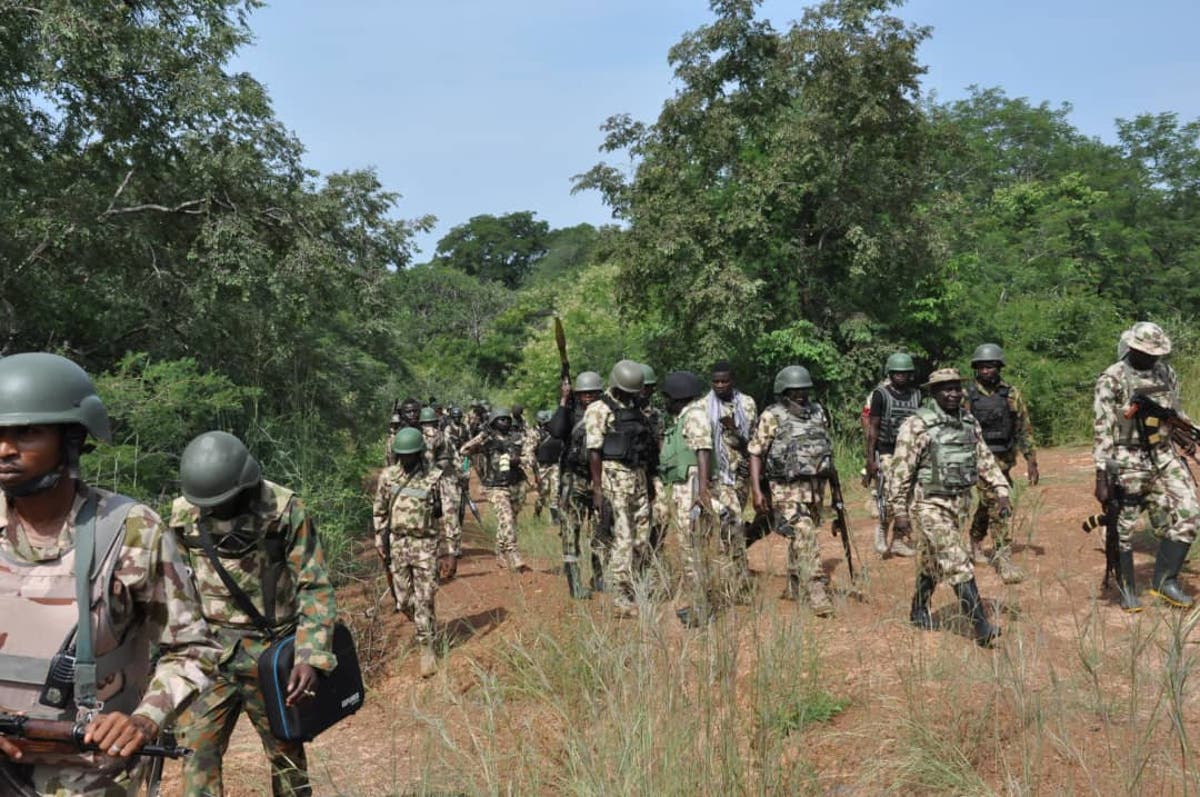
Soldiers Eliminate Six Bandits in Sokoto, Zamfara, Kebbi
ShareTroops of Sector 2, Operation FANSAN YAMMA, have intensified coordinated offensives against terrorist enclaves across Sokoto, Zamfara, and Kebbi states, killing at least six suspected bandits and recovering arms...


IOC Bars Transgender Athletes from Women’s Olympic Events
ShareThe International Olympic Committee has announced a new policy limiting eligibility for the female category at Olympic events to biological...


Out of School Children Climb to 273m Globally – UNESCO
ShareThe number of children and young people out of school worldwide has climbed to 273 million, the UN Educational Scientific and Cultural...


FAAN Outlines Airport upgrades, Private Funding Push
ShareThe Managing Director of the Federal Airports Authority of Nigeria, Olubunmi Kuku, has outlined efforts to bridge long-standing infrastructure deficits at Lagos airports. Kuku spoke...