
JUDICIARY
COVID-19: NJC Releases Guidelines for Court Sittings

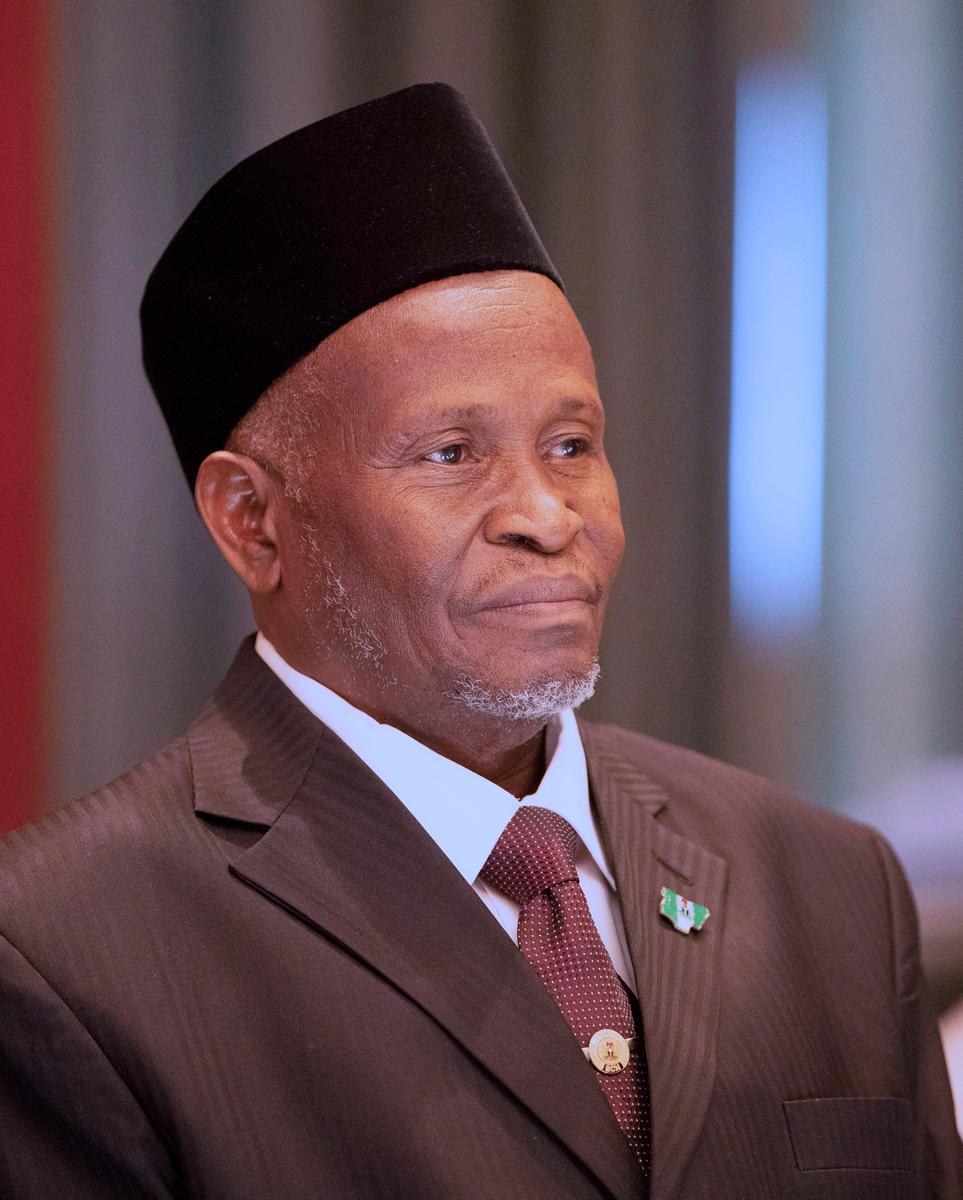
The National Judicial Council (NJC) has released guidelines for court sittings during the COVID-19 pandemic to reduce spread.
The guidelines issued by the NJC Committee headed by Justice Olabode Rhodes-Vivour are contained in a statement issued by the NJC Director of information, Mr Soji Oye, on Thursday.
It is entitled: “The National Judicial Council Guidelines for Court Sittings and Related Matters in the COVID-19 period”.
Oye said the Chief Justice of Nigeria, Justice I. T. Muhammad, in a corresponding circular with Reference Number NJC/CIR/HOC/II/660, urged all heads of federal and state courts to abide by the guidelines in the formulation of their rules and directives.
“Heads of court shall have primary responsibility of ensuring compliance of judicial officers, over whom they superintend, with the provisions of this guidelines.
“Heads of courts shall liaise with relevant security agencies to ensure that entrances to court premises are well manned by security personnel and entry into the premises are regulated in a manner that guarantees and enforces the minimum two-meter (six feet) distance between persons as it relates to all entrants into the premises.
“The courts shall ensure that all security personnel who work in the court premises and in particular the security personnel who man the entrance(s) to the court premises are well informed on COVID-19 including in particular, the methods of its spread, its basic symptoms, how to prevent its spread, etc,” it said.
It added that heads of courts should ensure that all security personnel including those attached to judicial officers and courtrooms would be well-kitted and supplied with disposable gloves, facemasks and hand sanitisers.
It also listed guidelines which should apply with regard to admission of persons into the court premises.
“Security personnel at the entrance of the court premises shall be equipped with temperature monitors for testing and determining the temperature of each visitor to the court premises.
” They should be trained in the use of the temperature monitors, and visitors must be shown their temperature readings on the monitors before their admission into the court premises.
“Every person wishing to go into the court premises, without exception, shall be subjected to the temperature monitor reading for the determination of his or her body temperature,” it said.
It added that anyone who would refuse to submit himself or herself for the reading of temperature should be politely refused entry into the court premises and advised to leave the entrance immediately.
“Heads of courts should procure advice of health experts on the temperature levels that warrant concern and be indicative of a person with fever (‘high temperature threshold).
“The security personnel at the court entrance(s) must be trained in that regard.
“Any visitor to the court premises, who has a high temperature, based on the temperature monitor reading at the entrance to the court or who is coughing while going through the entry protocols, should be politely advised to seek immediate medical assistance and refused entry into the court premises.
“Security personnel at the court premises shall further ensure that only persons with facemasks are allowed entry into the court premises, without exception.”
It said that judicial officers and legsl counsel must be exemplary in that regard and must ensure that their support personnel would comply strictly with the requirement.
“At no time and in no circumstance should anyone, while within the court premises, including inside courtrooms, offices and the chambers of judicial officers, not wear a facemask.
“Anyone who refuses, neglects or is unwilling to wear facemask at any time while in the court premises should be politely advised to leave and be escorted outside the premises by security personnel.
“Facemasks must be properly worn by everyone within the court premises to cover their mouths and noses at all times.
“With regard to the court premises itself, as much as possible, heads of courts must ensure that toilet facilities in the court premises are functional and have constant running water, soap and tissue papers.”
It said that the toilets must be kept clean at all times.
It added that visitors to the court premises must maintain social and physical distance and avoid congregations or assembly of more than 10 persons within the court premises, excluding courtrooms.
It said that court-related businesses that could be transacted without physical visits to the court premises should be transacted through available alternative channels. (NAN)










Gov. Douye Diri of Bayelsa says the judiciary remains the hope of the common man in the society, charging officers in the temple of justice to always strive to be upright.Diri said this on Friday in Yenagoa at a Thanksgiving/Valedictory Court Section for the commencement of the 2025/2026 Legal Year in the state.
The governor said: “It has become an annual ritual but we all know that the bible says seek ye first the kingdom of God and all other things shall be added on to thee. “Today we are handing over this new legal year to God for His protection to the judiciary. I believe you are going to do beyond our expectations with God on your side.“In this country today without exception, I appeal to us Nigerians, Bayelsa people to allow the judiciary to be used by God, to be allowed to work to the best of their ability and conscience to deliver incorruptible and sound judgement.”Diri said that the trust of the public lies with the judiciary which demands justice for all manner of people, irrespective of the class in the society.The governor urged the judiciary especially the judges to always stand tall on what is right, as they are highly autonomous as an arm of the government.On her part, Justice Matilda Ayemieye, the Chief Judge of Bayelsa, commended the Bayelsa government for the support in various ways to ensure that the judiciary is autonomous.She said that the judiciary enjoys cordial working relationship with the Nigeria Bar Association, the Legislature and the Executive.The chief judge said that the new legal year allows them to assess the previous year, adding that it is a day of accountability towards the people they serve and to strengthen the rule of law.Ayemieye said that the Bayelsa judiciary aspires to be one of the best judiciary as they have earned respect among other judiciary in the country.Also, Mr Biriyai Dambo (SAN) the Attorney General and Commissioner for Justice, expressed happiness over the commencement of the new legal year.He said that they are committed to service delivery in Bayelsa and commended the bar and the bench for their hard work to ensure that justice is served in Bayelsa.The Commissioner said that for the past years the judicial system had changed and that the welfare of the judiciary and that of the Ministry Justice is one of the priorities of Diri’s administration which has paid in full all monies owed law officers.“This current administration has boosted the morale of law officers, as they have contributed to the justice delivery in Bayelsa state.“This current administration has equally assisted the NBA Yenagoa and Sagbama branches respectively. My office is wide open to enhance the justice system in Bayelsa state,” he said. (NAN)
The Federal High Court in Abuja has dismissed cybercrime charges filed by the Inspector-General of Police against a female medical doctor, Bolanle Aseyan. Delivering judgment on Friday, Justice Peter Lifu discharged and acquitted Aseyan, stating that the police failed to prove the essential elements of the alleged offences.
The Inspector-General had arraigned Aseyan on a four-count charge of defamation, harassment, and intimidation against another doctor, Olufunmilayo Ogunsanya. The police alleged that Aseyan used social media platforms to harm Ogunsanya’s reputation. He was said to be her former boyfriend. The charges were filed under Section 24 of the Cybercrime (Prohibition, Prevention) Act, which addresses online threats and cyber harassment. To support the case, the police presented three witnesses. Aseyan also called two witnesses to testify in her defence during the trial. Justice Lifu, while reviewing the matter, noted both doctors were once in a romantic relationship before it turned sour. He further observed that the two had sexual relations while in the United Kingdom and later made conflicting social media posts against each other. The judge held that the prosecution failed to prove its case beyond reasonable doubt and therefore could not secure a conviction. Specifically, the judge said the defendant’s alleged Twitter handle used in the cyberbullying was not tendered as evidence before the court. Justice Lifu also said there was no proof of threats or intimidation, but rather evidence of a previous affectionate relationship. Consequently, the judge dismissed all four charges, discharged and acquitted Aseyan, and declared the case closed. He ordered the police to immediately return all seized items, including her international passport, upon service of the judgment. Aseyan said she met Ogunsanya online in 2019 and travelled to the United Kingdom in 2020, where she claimed she was raped. She stated that upon arrival in Leeds on March 7, 2020, tired and disoriented, Ogunsanya offered her wine shortly after she got to his home. She alleged that after taking the drink, she passed out and later woke up to find that he had allegedly had sex with her without consent. Aseyan further claimed that Ogunsanya maltreated her before she returned to Nigeria shortly after the alleged incident. (NAN) From Abdullahi Abubakar, Ilorin.
A Kwara State High court sitting in Ilorin has sentenced Abdulrahman Bello, a self-acclaimed cleric and the killer of Hafsoh Lawal, a final year student of the Kwara State College of Education to death, by hanging. This was contained in a judgement delivered by Justice Hannah Ajayi on Thursday, in which, four other defendants were set free and cleared of any wrongdoings.
Charged with five-count, the judge started by acquitting the four out of the five defendants namely Ahmed Abdulwasiu, Jamiu Uthman, Suleiman Muyideen and Abdulrahman Jamiu of any complicity, subsequently setting them free of taking part in the death of the victim (Hafsoh Lawal).
However, Justice Ajayi, while delivering judgment on the main culprit, described Bello’s act as cruel, wicked, and an extreme display of human wickedness, saying all evidence proved that Hafsoh was killed in order to be used for money ritual and trading in human parts.
The judge further noted that Abdulrahman’s confession of love and plan to marry the victim, are all concocted lies to lure her to his residence in order to kill her. She therefore sentenced Abdulrahman Bello to death by hanging while setting free the other four suspects not guilty.
It would be recalled that the victim went missing, sometimes in February 2025, shortly after attending the naming ceremony of a family member. When she left, but didn’t return later in the day, her parents went into panic mode, and search party was raised, and a complaint was lodged at the police station.
Her phone line was tracked, and traced to the suspect’s (as it were) area. Upon invitation and interrogation, it was discovered that he is a serial killer, who had killed many victims before Hafsoh.



COAS Urges NMS Students to Uphold Discipline, Excellence, Promises Better Learning Environment
ShareBy David Torough, Abuja The Chief of Army Staff (COAS), Lieutenant General Waidi Shaibu, has charged students of the Nigerian...


Gov Adeleke Didn’t Join APC Because Osun People Already Hated the Party – Jackson Ojo
Share…Says Defectors to Ruling Party Will Regret By Mike Odiakose, Abuja A former chieftain of the All Progressives Congress (APC),...


COAS Charges 3,439 New Army Recruits on Loyalty, Discipline
ShareBy David Torough, Abuja The Chief of Army Staff (COAS), Lieutenant General Waidi Shaibu (NAM), has charged 3,439 newly trained...


CBN Revamps Agric Guarantee Scheme, Targets Smallholder Farmers
Share The Central Bank of Nigeria (CBN) has launched a major overhaul of the Agricultural Credit Guarantee Scheme Fund (ACGSF),...


Okonjo-Iweala, Others Urge Youths to Drive Reforms, Strengthen Civic Action
ShareNational leaders have challenged youths to lead Nigeria’s renewal, warning that meaningful change now depends on young citizens organizing, demanding...


Eight Students Die, Three Injure in Jos Road Crash
ShareFrom Jude Dangwam, Jos The Vice Chancellor of the University of Jos, Prof. Ishaya Tanko has confirmed the sad death...


ShareUNICEF Hails Bayelsa as Champion of Primary Healthcare Devt in Nigeria From Mike Tayese, Yenagoa The United Nations Children’s Fund...


EFCC Seeks Stronger Alliance with CSOs, Media in Anti-corruption Fight
ShareThe Economic and Financial Crimes Commission (EFCC) has called for deeper collaboration with Civil Society Organisations (CSOs) and the media...

ShareMutfwang Pledges Support for Minister of Defence in Fight against Insecurity From Jude Dangwam, Jos Plateau State Governor, Caleb Mutfwang,...


FRSC Deploys New Sector Commander to Benue
ShareThe Federal Road Safety Corps (FRSC) on Thursday, announced the deployment of Corps Commander (CC) Kehinde Dahunsi as new commander...