
Education
Dangote Varsity Confers Honorary Degrees on Kwankwaso, Mangal, others

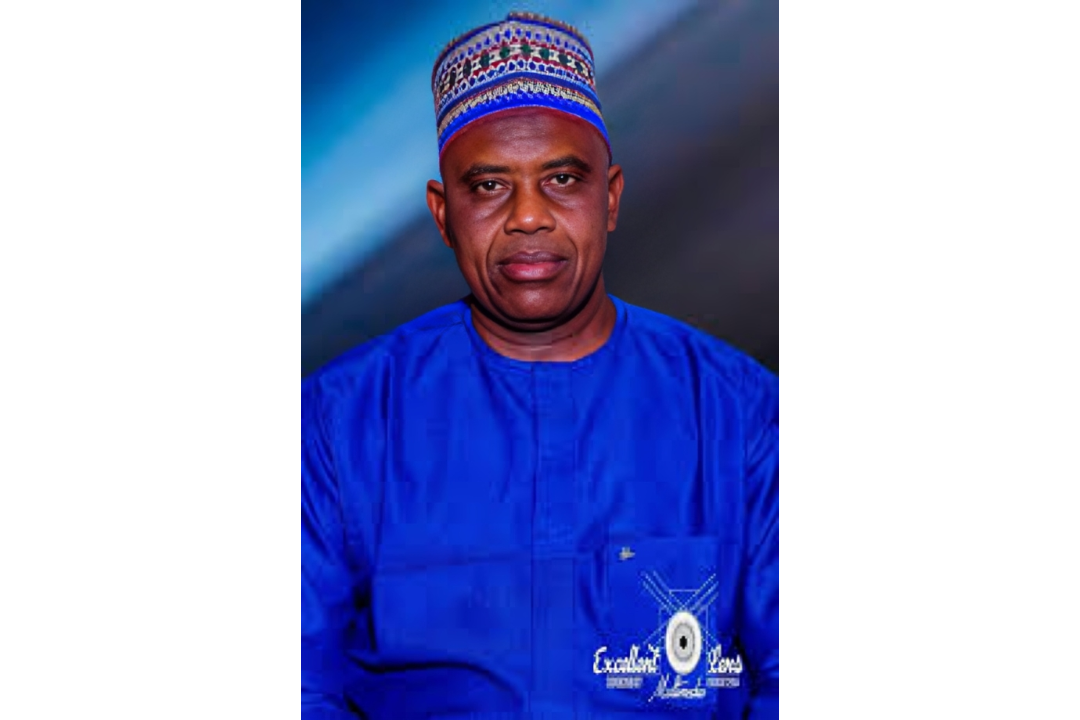
The Aliko Dangote University of Science and Technology Wudil has announced plans to confer honourary Doctorate Degrees on some notable Nigerians in recognition of their selfless services to the nation.
The recipients include: Alhaji Dahiru Mangal, Chief Author Eze, Dr Adeniyi Raji (SAN), Alhaji Ado Mohammad and Sen.
Musa Kwankwaso.The university’s Vice-Chancellor, Prof.
Musa Yakasai, made this known on Tuesday at a pre-convocation press briefing.He said that the individuals were carefully selected based on their characters and humanitarian services.
The vice-chancellor said that the convocation ceremony was scheduled to commence on Wednesday.
Yakassai also added that, 18,000 students who have graduated from the university over the past seven years would be celebrated.
He further confirmed that comprehensive security measures have been implemented to guarantee the safety of lives and property throughout the event.
Yakassai said that Alhaji Aliko Dangote would be reappointed as the university’s Chancellor for the second time.
The vice-chancellor also announced that Gov. Yusuf of Kano State would be the visitor of the university during the ceremony.
He expressed appreciation to the state government for providing all the necessary logistics in preparations for a smooch convocation

The minister of education, Tunji Alausa, has said that the key to reducing Almajiri and out-of-school children in Nigeria was stronger collaboration between the federal and sub national governments.
The Almajiri system is a traditional Islamic educational practice in Northern Nigeria where young boys (aged 4-12) leave home to study the Qur’an under a teacher (Mallam).
The term “Almajiri” is derived from an Arabic word, rendered “al-Muhajirun” in English transliteration, meaning a person who leaves his home in search of knowledge.
However, it has evolved from a respected system into one characterized by begging, child neglect, and, in some cases, exploitation.
Alausa made the remarks on Sunday during a peer-learning webinar with the committee of states commissioners of education in Nigeria (COSCEN) aimed at advancing coordinated education reforms nationwide, Alausa said, “Reducing out-of-school children requires shared accountability, harmonised implementation frameworks, and evidence-based planning across all tiers of government.”
In its maiden edition, the webinar spotlights reforms in Gombe state under the theme, ‘Gombe Strategy in Addressing Out-of-School Children: Innovative models, measurable results and scalable options’.
He described the webinar as timely and aligned with national education priorities, noting that Nigeria is now better positioned to confront the longstanding challenge of Almajiri and out-of-school children across the country.
In September 2024, the United Nations Children’s Fund (UNICEF) warned that Nigeria’s education system faces an alarming crisis, with 10.2 million children of primary school age and another 8.1 million of junior secondary school age out of school, while 74 percent of children aged 7–14 lack basic reading and numeracy skills.
The agency also linked the crisis to insecurity, citing 19 attacks on schools between 2022 and 2023 and the closure of 113 schools in Borno, Adamawa and Yobe states.
Even against this alarming backdrop, Alausa said recent institutional reforms are creating a renewed outlook for tackling the challenge.
He said the renewed outlook is anchored on the establishment of the National Commission for Almajiri and Out-of-School Children Education, which he described as a strategic response to a decades-long challenge.
He added that the commission’s executive secretary, Muhammad Idris, combines lived experience and administrative expertise, having risen from an Almajiri background to earn a PhD and previously served as commissioner for education in Yobe state.
Advertisement
“Today, on the issue of Almajiri and out-of-school children, the work starts in the states, and I am encouraged by the renewed commitment we are seeing across the country as states design context-specific strategies to tackle the burden.
“The country is now better positioned to address this problem decisively in a strategic, forward-looking and sustainable manner,” he said.
The minister also commended reform engagements led by COSCEN, noting that institutionalised peer learning would deepen policy coherence and accelerate measurable progress in access and equity.
He commended Lawal Olohungbebe, COSCEN chairman, for strengthening the committee’s coordination framework, urging the body to maximise the use of its secretariat to drive sustained reforms.
Advertisement
Olohungbebe, who is also Kwara state commissioner for education, said the initiative marks a transition from consultations to results-driven coordination anchored on data, peer accountability and policy alignment.
“This platform moves us beyond discussions to structured solution sharing that aligns state innovations with federal frameworks, ensuring our complementary mandates deliver measurable outcomes for children,” he said.
Leo Ebenezer, national coordinator of COSCEN, said the virtual session advances the committee’s peer-learning agenda and strengthens coordinated reforms aimed at reducing the out-of-school population nationwide.
The Gombe state commissioner for education, Aishatu Maigari, presented data-driven interventions that have improved enrolment and retention, highlighting models that could be adapted across other states with similar socio-economic realities.

Lotus Bank, in strategic partnership with Heckerbella, has unveiled the Smart ID Project at the University of Lagos (UNILAG).
The Managing Director of Lotus Bank, Dr Isiaka Ajani-Lawal said ”the initiative brings in a new identification system that combines campus ID and secure debit card features in one.
”Ajani-Lawal emphasized that the initiative reflected the Bank’s broader commitment to advancing financial inclusion and delivering integrated, secure digital banking solutions tailored to institutional ecosystems.
“The Smart ID Project represents a forward-thinking collaboration that merges identity management, access control, and financial services into a single secure platform.
”In partnership with UNILAG and Heckerbella, we are delivering a solution that enhances convenience, strengthens security, and accelerates the transition toward a modern, cashless campus.”
According to him, the Smart ID Card is designed as a dual-function solution — serving as the university’s official identification credential while also operating as a secure debit card powered by Lotus Bank.
”The innovation enables seamless identity verification, efficient access control, and safe financial transactions both within and beyond the campus environment.
”The Smart ID Project is expected to streamline administrative processes, improve operational efficiency across faculties and departments, and deepen financial literacy and inclusion among students.
”With embedded debit functionality, the card supports secure, cashless transactions while reinforcing the University’s transition to a technology-driven academic ecosystem.”
According to him, as technology and implementation partner, Heckerbella is responsible for comprehensive data capture for students and staff, as well as the secure production and issuance of the Smart ID Cards.
”The process is built to ensure data accuracy, robust security standards, and operational efficiency throughout deployment.”
The ceremony featured the University’s leadership, faculty members, students, senior executives from Lotus Bank and Heckerbella, and key stakeholders
During the event, the Vice Chancellor of the university, Prof. Folasade Ogunsola, formally presented the Smart ID Cards to students and staff, marking a defining milestone in UNILAG’s digital transformation journey.
In her remarks, the vice chancellor reaffirmed the university’s commitment to innovation and strategic partnerships that enhance service delivery and elevate the overall campus experience.
Speaking during the card unveiling, the Managing Director of Heckerbella, Yemi Keri, highlighted the importance of secure identity infrastructure in modern institutions.
She noted that her firm’s collaboration with Lotus Bank on the project demonstrates how technology, banking, and education can converge to deliver practical, future-focused solutions.
Lotus Bank is a full-fledged non-interest commercial bank committed to ethical banking, financial inclusion, and innovative digital solutions for individuals, businesses, and institutions across Nigeria.
The Nigerian Maritime Administration and Safety Agency (NIMASA), has renewed its strategic capacity development partnership with the World Maritime University (WMU), Malmö, Sweden, through the signing of a four-year Memorandum of Understanding (MoU) aimed at strengthening Nigeria’s maritime human capital and institutional capacity.
Speaking at the MoU signing ceremony, the Director General of NIMASA, Dr.
Dayo Mobereola described the partnership as a critical pillar in NIMASA’s human capital development framework and a strategic investment in Nigeria’s maritime future.“This collaboration has significantly strengthened our technical and regulatory capabilities over the years.
Officers trained at WMU have enhanced our effectiveness in maritime safety administration, environmental compliance, maritime law, and shipping management. Their expertise has also reinforced Nigeria’s participation at the International Maritime Organization and other international maritime platforms,” he stated.Under the renewed MoU, which was first signed in 2022, NIMASA will sponsor at least ten officers annually for the 14-month Master of Science programme at WMU in Malmö for the 2026–2029 intakes, as well as at least one officer for the Master of Philosophy (MPhil) programme jointly delivered by WMU and the International Maritime Law Institute (IMLI), Malta.
The MoU also provides for distance learning, executive professional development courses, research collaboration and technical assistance to strengthen NIMASA’s capacity in maritime safety, environmental management, seafarer certification and implementation of international maritime instruments. WMU will further seek additional fellowships from international donors for qualified NIMASA candidates.
Dr. Mobereola endorsed the MoU on behalf of NIMASA with the President of WMU, Professor Maximo Q. Mejia Jr signing on behalf of the University while Executive Director Finance and Administration NIMASA Chudi Offodile and the Registrar of WMU, Mr. Peter Marriott both signed as witnesses.
Established in 1983 by the International Maritime Organization, WMU was mandated to strengthen global maritime capacity, particularly in developing countries. The University has since become a leading centre of excellence, and Nigeria has benefited significantly through the training of NIMASA officers who continue to enhance national maritime governance and international engagement.


Tinubu’s Renewed Hope Agenda gaining traction, Amgbare Lauds RTIFN
ShareFrom Mike Tayese, Yenagoa Managing Director/CEO of the Niger Delta Basin Development Authority (NDBDA), Prince Ebitimi Amgbare, has expressed confidence...


NGF Backs Tinubu on Direct Federation Account Remittance
ShareBy Tony Obiechina, Abuja The Nigeria Governors’ Forum (NGF), under the chairmanship of AbdulRahman AbdulRazaq, has expressed strong support for...

Rescued Kidnap Victim Gives Birth to Twin at IDP Camp
ShareFrom Joseph Amedu, Lokoja The Kogi State Government has confirmed that a rescued kidnap victim has safely delivered twin girls...


Enugu Gov’t Grants 90-Day Amnesty for Buildings Without Approval
ShareFrom Sylvia Udegbunam Enugu The Enugu State Government has announced a 90-day amnesty window for property owners without approved building...


FG, States Collaboration Panacea to Tackling Almajiri Crisis, Says Alausa
ShareThe minister of education, Tunji Alausa, has said that the key to reducing Almajiri and out-of-school children in Nigeria was...
Bank, Heckerbella unveil Smart Identity, Digital Payment Card in Unilag
ShareLotus Bank, in strategic partnership with Heckerbella, has unveiled the Smart ID Project at the University of Lagos (UNILAG). The...
NIMASA Renews Partnership with World Maritime University
ShareThe Nigerian Maritime Administration and Safety Agency (NIMASA), has renewed its strategic capacity development partnership with the World Maritime University...


Expert Calls for Continuation of Niger Delta Pipeline Surveillance Contract
ShareBy Eze Okechukwu, Abuja A legal practitioner and security expert, Blessing Agbomhere, has urged the Federal Government to sustain the...


Nasarawa Secures $1.008bn in Domestic, Foreign Investments
ShareFrom Abel Zwanke, Lafia Nasarawa State secured domestic and foreign direct investments totaling $1,008,529,220 between January and December 2025. The figure is separate from other investments attracted within the...


India, Canada Reset Ties with Landmark Nuclear Energy Deal
ShareIndia and Canada have announced a host of agreements, including a 10-year nuclear energy deal, after their prime ministers met in Delhi to reset ties that...