
DEFENCE
Government Reviews Security Strategy in Anambra

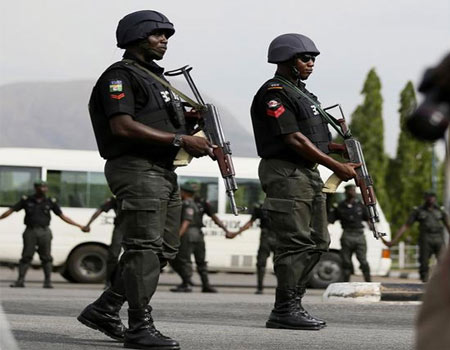
The Anambra Government has reviewed security strategy, especially at checking points and around various security formations in the state.
Under the new order, every person moving in a vehicle, be it private or commercial, is directed to disembark and hands up while crossing checkpoints.
Mr C-Don Adinuba, Anambra Commissioner for Information and Public Enlightenment, gave the information in a statement on Tuesday in Awka.
Adinuba explained that the new arrangement was in response to the security challenges in the Southeast geopolitical zone.
“The review has resulted in traffic delays at security checkpoints in different parts of the state.
“The delays have caused much inconvenience to travellers who are sometimes required to disembark from their vehicles for security checks,’’ he stated.
Adinuba noted that the government was aware that a lot of people returned home for Easter and he apologised for the inconvenience being experienced.
“We urge you to continue to cooperate fully with various security officers.
“The ongoing security review is for the public good.’’
Meanwhile, the Police have tightened security arrangements around its headquarters in Amawbia near Awka, even as motorists are barred from driving across the area.
NAN reports that a barricade was put at Amawbia roundabout near the Governor’s Lodge and the frontage of Custodian Centre of Nigeria Correctional Service, forcing motorists to use alternative routes. (NAN)








The Nigeria Security and Civil Defence Corps (NSCDC) Kano State Command has warned contractors against tampering with fibre-optic cables during excavation and construction works.
State Commandant, Mohammed Hassan-Agalama, issued the warning in a statement on Tuesday in Kano through the Command’s Public Relations Officer, Ibrahim Idris-Abdullahi.
He expressed concern over rising cases of accidental and negligent destruction of underground fibre-optic cables across the state.
Hassan-Agalama said the incidents had disrupted telecommunications, internet services, banking operations and other essential services relied upon by residents and businesses.
He urged construction firms and property developers to obtain necessary approvals and right-of-way clearances before commencing excavation works.
The commandant advised contractors to liaise with utility providers to identify and map underground fibre routes before digging.
He said telecom operators’ technical representatives must be present during major excavation works to prevent costly damage.
“Contractors must adopt best practices and deploy modern equipment to safeguard critical infrastructure,” he said.
Hassan-Agalama reiterated that fibre-optic cables and telecom installations are designated Critical National Assets and Infrastructure protected by law.
“Any individual or corporate body found culpable of wilful destruction, negligence or sabotage will be arrested and prosecuted,” he warned.
He affirmed the command’s commitment to safeguarding public assets in line with its statutory mandate.
According to him, the corps will intensify surveillance and enforcement operations at construction sites to ensure compliance.
He called on stakeholders and residents to report suspicious activities or unauthorised excavation near fibre routes to the nearest Civil Defence office.
Hassan-Agalama assured residents of the command’s dedication to protecting infrastructure vital to economic growth, public safety and national development.
The Corps Marshal of the Federal Road Safety Corps, Shehu Mohammed, has warned personnel against indiscipline, extortion and abuse of authority.
Mohammed issued the warning on Tuesday during a sensitisation engagement with staff in Umuahia.
The event, organised by the corps, was titled ‘Sensitisation Programme on Discipline, Reinforcement and Strengthening of Command and Control in the Field Command’.
Represented by the Corps Commander in charge of Medical Services at the national headquarters, Paul Ogoegbunam, Mohammed described the meeting as a deliberate intervention.
He said it was aimed at addressing recent operational concerns and restoring professionalism, discipline and effective command and control within the corps.
According to him, the deployment of senior officers to various commands followed reports of declining discipline and unethical practices in some formations.
He expressed concern over “disturbing trends”, including extortion, harassment, reckless enforcement and abuse of authority.
Mohammed noted that such actions erode public trust and damage the reputation of the corps.
“Such behaviours are unacceptable. They violate our regulations, betray our training and contradict our core values,” he said.
He stressed that the FRSC was established not merely to enforce traffic laws but to save lives and serve the public with integrity.
The corps marshal said the sensitisation was not a witch-hunt but a corrective measure to reorient personnel and reinforce ethical standards.
He explained that deployed senior officers would mentor personnel, strengthen leadership responsibility and ensure effective command and control structures.
Mohammed emphasised that professionalism was mandatory, urging officers to be firm but fair, and authoritative yet humane.
He warned that extortion and other unethical practices would attract sanctions, while commendable conduct would be rewarded.
The corps marshal urged commanding officers to lead by example, noting that silence in the face of wrongdoing amounts to complicity.
He encouraged junior officers to uphold the honour of the uniform, reminding them that their conduct reflects on the corps’ image.
Mohammed assured that discipline and accountability would be strengthened to rebuild public confidence and uphold the corps’ mandate.
He called on personnel to embrace the sensitisation exercise with renewed commitment to professionalism and integrity.
In her remarks, the Abia Sector Commander, Ngozi Ezeoma, reiterated the command’s commitment to discipline and improved operational efficiency.
Ezeoma said the visit underscored headquarters’ resolve to enhance service delivery and operational effectiveness across field commands.
She described the supervisory visit as timely, saying it offered officers the opportunity to align with the Corps Marshal’s vision.
According to her, the engagement also provided a platform for performance review and identification of areas requiring improvement.
The sector commander said the command had intensified patrols, public enlightenment and enforcement despite operational challenges.
She commended officers for their resilience and dedication, noting efforts were focused on reducing road traffic crashes.
Ezeoma expressed optimism that the programme would strengthen discipline and reinforce effective command and control in the state.
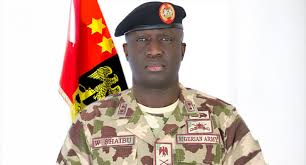
The Chief of Army Staff, (COAS) Lt.-Gen. Waidi Shaibu, has emphasized the need for enhanced tactical-level leadership among commanding officers to boost combat readiness in a joint and multi-agency environment.
The Army Chief made the call on Tuesday in Abuja, while declaring open the First Commanding Officers’ Workshop 2026 with the theme ”Enhancing Tactical-Level Leadership in a Joint and Multi-Agency Environment”.
Shaibu was represented by the Chief of Transformation and Innovation, Army, Maj.
-Gen. Olusegun Abai.According to Shaibu, the workshop is a crucial aspect of the Nigerian Army’s efforts to strengthen training standards and address contemporary operational and administrative challenges.
“The theme of this workshop, ‘Enhancing Tactical-Level Leadership for Combat Readiness in a Joint and Multi-Agency Environment’, is adequately crafted and aligns with my command philosophy.”
The COAS noted that commanding officers bore significant responsibility for executing operational directives and translating them into favorable outcomes.
He urged the officers to leverage the workshop to reflect on their units’ performance and devise workable methods to retrain troops to be combat-ready and professionally competent.
According to him, the workshop reflects deliberate efforts to strengthen training standards through focused lectures and robust discussions on contemporary operational and administrative challenges.
”As a critical link between the operational and tactical levels of command, commanding officers occupy a position of immense responsibility.
”It is therefore imperative that they are continually exposed to the principles of military leadership, art of command and professional excellence, all geared towards ensuring troops’ combat readiness.
”I therefore consider the theme for this workshop, which is Enhancing Tactical-Level Leadership for Combat Readiness in a Joint and Multi-Agency Environment, adequately crafted as it is in line with the tenets of my command philosophy.
”As commanding officers, you all bear the significant responsibility of executing operational directives and translating them into favorable outcomes”.
Shaibu also tasked the commanding officers with building a solid foundation of regimentation, discipline, and junior leadership in the Nigerian Army.
He called on the officers to guide young officers and soldiers under their command, providing leadership, mentorship, and direction.
”As commanding officers, you are directly responsible for building a solid foundation of regimentation, discipline and, of course, junior leadership in the Nigerian Army.
”In essence, you must guide the young officers and soldiers who will look up to you for leadership, mentorship and direction.
”Therefore, as you participate in this workshop, begin to ask yourself some pertinent questions individually and collectively,” he said.
He further urged participants to take vital takeaways from the scheduled lectures and interactive sessions, and to regularly ask themselves questions on how to improve their units’ performance.
The Commander of Army Headquarters Garrison, Maj.-Gen. Maxwell Dangana, in his remarks, emphasised the need for adaptive, collaborative, and mission-focused leadership among commanding officers in Nigeria’s complex security landscape.
Dangana noted that threats were asymmetrical and transnational, requiring coordinated responses from multiple security stakeholders.
“As commanding officers, you occupy a critical position in Nigeria’s army command structure. You are the direct link between policy and execution, translating strategic intent into actionable plans,” he said.
The Commander stressed that tactical leadership must go beyond traditional command and control, emphasising the need for seamless cooperation with sister services and other security agencies.
He urged commanding officers to understand not only army doctrine but also the procedures, capabilities, and limitations of other services and agencies.
Dangana expressed confidence that the workshop would strengthen the collective resolve to enhance tactical leadership in line with contemporary operational realities.
Similarly, the Chief of Training, Army, Maj.-Gen. Valentine Okoro, urged commanding officers to enhance their tactical leadership skills to effectively respond to the complex security challenges facing the Nigerian Army.
According to Okoro, the initiative supports the COAS’ command philosophy, which aims to transform the Nigerian Army into a more professional, adaptable, combat-ready, and resilient force.
He emphasised that commanding officers were the drivers of transformation at the tactical level, and their leadership decisions and professional conduct set the standards for discipline, morale, and operational excellence.
He urged the officers to take full advantage of the seminar, engage actively in lectures and discussions, and internalise the lessons to improve their leadership skills.
He assured that the Department of Army Training would continue to provide guidance and institutional support to enable commanding officers to meet the core intent of sustaining a highly professional and combat-ready Nigerian Army.
The workshop focuses on enhancing command efficiency, effective group administration, cyber security awareness, objectivity in performance evaluation reporting, and equipment maintenance in the field.




Blood on Nigerian Roads: How Lucky Elohor’s Death Reveals Nigeria’s MRI Emergency
ShareBy Jane Eze Lucky Elohor was still conscious when they placed her in the ambulance. The 29 year old founder...


Plateau Procures 70 Transformers for Communities
ShareThe Plateau Government has procured 70 new transformers to boost power supply in rural communities in the state. Gov Caleb Mutfwang, who inaugurated the transformers on Wednesday in Jos, described the...


Commonwealth Games: 128 Boxers Jostle for 10 Slots at National Trials
ShareThe Brai Ayonote Boxing Complex has come alive with intense action as no fewer than 128 boxers battle for places at the National...
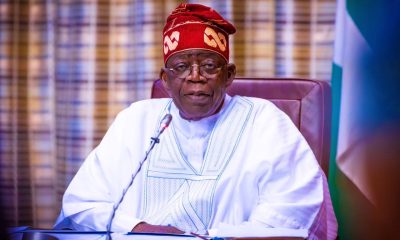

Tinubu Celebrates Obasanjo’s Towering Influence at 89
SharePresident Bola Tinubu has paid glowing tribute to former President Olusegun Obasanjo on his 89th birthday. Tinubu rejoiced with the elder statesman, describing his influence in Nigeria,...
Benue NBA Faults Code of Conduct Bureau over Invitation of Federal H’Court Chief Judge
ShareBy David Torough, Abuja The United Benue Bar, comprising the Makurdi, Gboko and Otukpo branches of the Nigerian Bar Association (NBA), has...


ShareCBN Diversifies Reserves with $3.5bn Locally Sourced LBMA Gold The Central Bank of Nigeria (CBN) has taken delivery of responsibly...
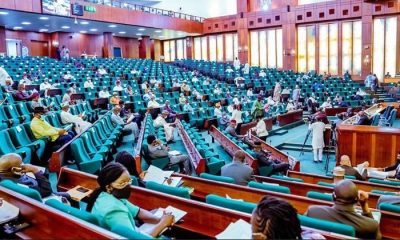

Reps Back Green Bank, Approve $100m Climate Finance Initiative
ShareBy Ubong Ukpong, Abuja The House of Representatives on Wednesday signalled a dual push for economic reform, backing the creation...
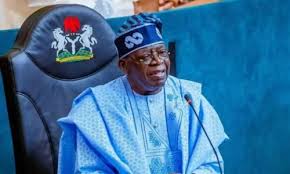

Tinubu Revises FAAN Cashless Toll Policy after Airport Chaos
ShareBy David Torough, Abuja President Bola Tinubu has suspended the controversial cashless toll payment system introduced at the nation’s airports...

NSCDC Warns Contractors against Damaging Fibre-optic Cables in Kano
ShareThe Nigeria Security and Civil Defence Corps (NSCDC) Kano State Command has warned contractors against tampering with fibre-optic cables during...
FRSC Corps Marshal Warns against Indiscipline, Extortion
ShareThe Corps Marshal of the Federal Road Safety Corps, Shehu Mohammed, has warned personnel against indiscipline, extortion and abuse of...