
Uncategorized
Immunization fund: Group raise alarm over unreleased N108b for 2024


By Laide Akinboade, Abuja
As Nigeria accounts for over 30% of zero dose children worldwide, a group has urged the Federal Government (FG), to release the N108 billion for 2024.
Chika Offor, Chief Executive Officer (CEO),
Vaccine Network for Disease Control (VNDC), stated this in a press briefing, in Abuja.
She advocated for the full release of the N231.
7 billion allocated for 2025.Among those who were present at the occasion included, Gerald Teleh, Chairman, State Ward Development Committee (WDC), Saratu Abomann, National Council of Women’s Societies (NCWS), Hon. Mohammed Usman, former member House of Representatives, Chairman Healthcare services and Hajiya Hallmark Saluhu, Federation of Women’s Associations of Nigeria (FOWAN).
She noted it is imperative for the Federal, State and Local Governments, to prioritize immunization fund because this would address mataenal mortality rate in Nigeria.
She added that Immunizing Nigeria’s children is the most cost-effective public health interventions, preventing diseases, reducing mortality, and contributing to healthier communities and a stronger economy.
According to her, “We are here today because our future depends on it. We are here today to underscore a matter of utmost national and global importance: Prioritizing Immunization Financing for Child Survival, making a case for immunization.
“Immunization remains one of the most cost-effective public health interventions, preventing diseases, reducing mortality, and contributing to healthier communities and a stronger economy.
“We acknowledge, with deep appreciation:
President Bola Ahmed Tinubu, in his unwavering commitment to child health and survival, released all 2022 and 2023 outstanding domestic vaccine financing and also released 25% of the 2024 domestic vaccine financing”.
She said even though Nigeria government have saved millions of lives through vaccines but more need to be done, “Vaccines have saved millions of lives and remain central to achieving Nigeria’s health and development goals. Nigeria has made concerted efforts to reduce child mortality through vaccination programs carried out in all Primary Healthcare Centers (PHCs) in the country.
“Over the past few years, immunization efforts in Nigeria have, Expanded routine immunization coverage,;Introduced new, life-saving vaccines, including the HPV vaccine, Rotavirus vaccine, and malaria vaccine and Eradicated the wild poliovirus, once a major public health threat”.
She lamented, “These are remarkable achievements. But the journey is far from over. Nigeria still has one of the highest numbers of zero-dose children—those who have never received a single routine vaccine.
“As stated in the District Health Information Software 2 (DHIS2), Nigeria alone accounts for approximately 30% of zero-dose children worldwide, causing high child mortality rates. Behind each of those numbers is a child at risk of disease, disability, or death.
“These gaps in coverage threaten to reverse the progress we have made. Behind every statistic is a name, a face, a family, and a future hanging in the balance. This is not just data. This is a national emergency hidden in plain sight.
“Immunization is one of the greatest success stories in public health. It is affordable, accessible, and proven. It saves lives. It safeguards communities. It strengthens economies. Yet, in 2025, the basic right of every child to be protected from vaccine-preventable diseases is still being negotiated in fiscal terms”.
She said, globally, World Health Organization (WHO) and United Nations Children’s Fund (UNICEF), estimate that 3.5 to 5 million deaths are prevented each year, primarily among children under five. Yet, 1.5 million children still die annually from diseases that could have been prevented by vaccines. That is why vaccination is not optional—it is essential to child survival.
She stressed, that delaying
funding for immunization programs puts millions of Nigerian children at risk—risk of diphtheria, meningitis, vaccine stockouts, and other preventable crises.
“Without consistent vaccine funding, over 1 million Nigerian children under five remain at risk of dying from diseases we already have the power to prevent.
“Additionally, Immunization saves an estimated ₦6,000–₦11,000 in treatment costs per child—money that poor families simply do not have. For every ₦1 invested in vaccines, ₦16 is returned in health and economic benefits.
“That is not just a smart investment—it is a life-saving one. Yet funding gaps and delays mean vaccines sometimes arrive after outbreaks begin. By then, it is often too late”, she said.
She said, strengthening domestic financing for immunization is essential to reducing dependence on donor funding and achieving sustainable, equitable health outcomes.
She therefore urged the Federal Ministry of Finance, to choose immunization by releasing the outstanding ₦108 billion for 2024 and ensuring the full release of the ₦231.7 billion allocated for 2025.
She said, “In Nigeria, timely immunization is not just a calendar event—it is a lifeline.
Every day vaccines are delayed due to slow, fragmented, or incomplete funding, a child somewhere is left vulnerable—their tiny body wide open to diseases they should have been protected from before their first birthday”.
She urged, the State Governments to adopt and adapt frameworks that ensure routine and emergency immunization funding are embedded in state budgets, released timely and utilized efficiently and Legislators must ensure that policies environment supports the allocation and timely release of immunization funds. Because every naira released late could mean the difference between a child’s first birthday and their final breath.
She therefore urged all stakeholders to recommit themselves to building a health system that leaves no child behind, and to ensure that immunization remains a top priority on the national health agenda—with sustainable financing at its core.
Meanwhile, the National Assembly (NASS), has called for the local production of vaccine in Nigeria.
He said it would be an investment for the Federal Government (FG), to invest in production of vaccines in the country.
Accordimg to him, “As you are well aware, investment in vaccine, that’s why I call it an investment, health generally, spending on health is not expenditure, it is actually an investment. For many reasons, communicable, non-communicable diseases that you decided, or any nation that you decided not to prevent, protect people from, would later spend if not a hundred times that amount treating people. And of course, not just the issue of treatment, it may even get to a point whereby when life is lost.
“And if life is lost, there is no amount of money that can be spent to get the life back. And therefore, money spent, and especially the quality of a nation is determined by the quality of her children and the youth, because they are the future of the nation. So also, productivity of the nation is directly proportional to how healthy the citizens are.
“And then as a nation, if we, one of the pointers to our human capital development is to look at the health, and that’s why most times we say health is wealth. And where do we see this health? We look at it, the big man you see today was once a baby. And most of these health challenges start triggering from childhood”.
Narrating a story about his former classmate in the university who is a medical doctor, that had polio as a child
he was lucky that it affected just one of his limbs. And he could still walk without using crutches or he’s not on wheelchair .
He said, “But he needs support before he walks. I mean he supports that limb with his hand. But there are several children you see or adult in sometimes in our traffic light.
“I think recently we hardly see them in Abuja, but they are there sometimes in the marketplace. And so you see them in this makeshift scooter that they use to move around. Many of them we check it is polio.
“Now these are those that have survived even the killer diseases. But how many children have died due to preventable illnesses? And that’s why when we come to the issue of vaccines, we are not only speaking loud on vaccines. I mean the administration, the funding for vaccines”.
He noted, “We’re also speaking on domestic production of vaccines. This is what we are shouting on this period. Now with the dwindling funding that we are experiencing all over the world.
“We cannot afford to be using so much money to procure vaccines abroad. If we manufacture vaccines here, it’s also going to build local capacity. It’s going to be cheaper”.
He lamented that it is unacceptable that Nigeria’s maternal mortality is almost about 1,000 per 100,000 births.
“While you are have countries in the world that are having one. One..
“In fact the next country to Nigeria is about 700. Followed by some 500. So Nigeria is almost doubling the world’s next country to eat on maternal mortality.
“So we cannot sit down like this and see a woman dies because of preventable complications arising from pregnancy or after birth. And then you now also look at the children that are dying. Do you know what it means to carry a baby for nine months?”.
Hon. Usman in his goodwill message lamented that, if immunization had been prioritized then Nigeria won’t be where, it is on in terms of zero dose.
He said, “It is lack of priotisation that is causing child motalitity. Lack of prioritizing is a major issue and it is imperative the government should change . Govenment shouldn’t take chances with people’s lives in Nigeria. We need to continue to urge the government to release the outstanding funds.
“This type of outstanding discourages parliamentarian”.
He lamented that for 2024 N108billion is not released and already in August 2025 over N231 billion are yet to be released for 2025, government need to do more on immunization fund.
 | ReplyReply allForwardAdd reaction |
Uncategorized
Adebayo, Obi Have Capacity, Knowledge Determination to Lead Nigeria – Pastor Ituah Ighodalo

Pastor Ituah Ighodalo is a prominent man of God who supritends Trinity House, a non denominational Christian fellowship centre. He is also the founder, African Leadership, a platform which seeks to informs and finds solutions to the leadership problems plaguing Nigeria.
In this interview filed by Mike Odiakose, he talks about the ingredients that a good leader must possess, the perceived Christian genocide, the USA threat against Nigeria, Adewole Adebayo and Peter Obi and their place in political history.
You have a platform for discussing leadership traits that can benefit government and governance. What inspired its formation?
The African Leadership Group, (ALG), that’s what it is called under the auspices of the Tri Africa Foundation, is our response to trying to solve three or four issues in Nigeria and in Africa or in Africa.
Number one, what are the people’s thoughts on an effective and efficient society?Number two; how do we resolve our leadership question and get the right leaders? Number three; how do we better inform the people about what is going on around them? Number four; how do we identify leadership potential and potential leaders. That’s what the African Leadership Group is set up to do? It does that through about three or four different kinds of activities.
The first activity is the discussion that we have once a week where we identify people who speak on the subject matter that we have identified in terms of leadership. We do this through this conversation and that conversation, informs and identifies potential leaders and advises leadership. Two: we have some town hall meetings where we go around the whole world educating Africans and Africans in diaspora about what the situation is.
Three; we have some trainings in the school of leadership and development. And also the community impact activities that we do. Then, we have a fund, Hope Alive Fund that we use in empowering indigent people who qualify.
Adewole Adebayo, Peter Obi were some of your guests on the platform. What is your assessment of their grasp of the issues affecting the country, and do you think they have the capacity to lead?

I think both Peter Obi and and Adewole Adebayo have the capacity and the knowledge and the determination to lead the country. I think they do. Peter Obi is not even young anymore. He’s 64. That’s not a young man. Maybe relative to what we’ve experienced in Nigeria, he may look young. But 64 is not young. Adewole Adebayo is 53 years, he is young. He has the energy and the strength and the knowledge. What he probably may not have is the wide bandwidth. You know, the wide bandwidth of interrelationships and connections. But that is what a party system does for you. If for example, he was in a party that was a broad-based party, a strong party, they will make up for his lack of bandwidth and they will pull the party together and promote him as a good candidate.
Adebayo speaks very well. He’s very knowledgeable. Although I have not tested his capacity to implement things. But in terms of his knowledge, his enthusiasm, and his roadmap, he does he’s spoken very well.
Q.Peter Obi is another individual with a huge followership. What is your opinion of him?*
A.Peter Obi has the added advantage that he has been tested before as a governor in Anambra State. He claims that he left a very good record there. He did very well. When you talk to the people of the state, they’re in two opinions. Some think he did well, some think he could have done better. But also he’s a hard-working man. He has the reputation of being frugal, a good manager of money and so and so forth. I think he would have done a decent job as the president of Nigeria if he were president. But I still think that in Nigeria, we’re still looking for that man who has the capacity, wherewithal, compassion, determination, who has the energy, and who has the love for Nigeria, genuine and sincere love for Nigeria that really really wants to turn Nigeria around.
Younger person, a person with energy, you know with some level of maturity. So you can’t be too young. I think a person between the ages of 45 and 65 should be able to do this job. I think there is need some maturity.
Candidate below 40, might be a bit too inexperienced and not have the network and the broad base to handle a complex place like Nigeria. But if we have 40 and 45 years above and is surrounded by a very good party system or good social system, good team of advisors who have seen different aspects of Nigeria. such candidate should be able to run the country.
What does it really take to effectively govern Nigeria?
The person must understand the history of Nigeria, the background of Nigeria, the formation of Nigeria, the different tribes and persons, and their complexities, and their interests, the religions of Nigeria. You must be a very accommodating person. Very honest, corruption-free, hard-working. Must be a visionary, who sees a great future for Nigeria. Must be bold. Have the capacity for international relations and interconnections. And you must be determined to see Nigeria work. You must not be a greedy, selfish, self-oriented person, which is the unfortunate lot of our leaders today. They’re more interested in themselves and what they want to do for themselves and not in the collective good of the average Nigerian.
Looking at these leadership qualities, do you think we have someone that can fill into this gap?
I just said that we’re still looking for that person. But I can assure you that people like that exist. It’s just that we may not know them. We may not know them because they’ve not been loud people. They’ve not made noise all over the place. They’ve not been exposed to public attention and all that, but they do exist. They’re very very competent people in Nigeria. And if you go all over the world, a lot of Nigerians are doing extremely well. They are available, which is part of what we are trying to do at ALG to find these people to bring them out, to talk to them, to find out where they are, what they are doing. And even if they are not president, they can be so support material. Because to run Nigeria, you need quite a good team. You need a good team of different kinds of people.
Nigeria and leadership challenge. What’s the way out?
There’s a way out. We are just in a moment in time. We don’t know what’s going to happen in 30 years time, 40 years time, 50 years time. Nigeria is evolving and definitely there is a way out. Right now we have even a new crop of young Nigerians below 20, below 25. Their thinking is different. In another 30 40 years, they’ll be the ones in leadership. They will be able to clear us out. This cannot continue. But what I think for the present time, what we need to do is one; educate Nigerians. A lot of people get away with what they do in Nigeria because a lot of people are not informed. They’re not educated. They don’t know the difference between right and wrong, good and bad. So, if you educate Nigerians and get them informed, they’ll be able to take a much more stronger stake in in their well-being and in their production.
This is what changed France and took them out of feudal rulership of kings and monarchs. It took them out of the monarchy because over time,the French people became much more educated, much more aware, much more informed. And one day there was enough people who are very well informed who led the revolution against the king Louis XVI. He was beheaded. His execution by guillotine on January 21, 1793, at the Place de la Révolution in Paris, marked a dramatic and irreversible end to centuries of a continuous monarchy, including the earlier feudal period.
That kind of thing will also happen in Nigeria that by the time a lot more people are well informed, they will stand and say, we are not going to take this any more.They will define properly the kind of president or leader they want and they will not allow their votes to be bought. Not allow votes to be manipulated and them taking advantage of.
It would happen over time, then you have enough people that are educated and bold enough, a lot of what is going on now will not be possible in Nigeria or anywhere else in the world.
The second is that by divine providence, something can happen that can put somebody of reasonable quality and depth in leadership in Nigeria. And it has happened before. At least three or four times. Divine providence brought in Obasanjo his first time. He was second to Murtala Muhammed, unfortunately, Muhammed who was also a great leader, lost his life and that made Obasanjo becoming president, it was divine providence. God brought him again the second time. The second time around, it was Abiola that was running for presidency. Between Babangida and Abacha, they prevented Abiola from claiming his mandate.
Then all of a sudden, Abacha died, Abiola died, and again, we brought in Abdul Salam. Because divine providence that brought in Abdul Salam who for fear of his life and international community in about 11 months conducted an election and divine providence also brought Obasanjo out of prison with no money to become president of Nigeria.
This is probably divine providence. A lot of things are providential, and then somehow God can also make that happen again. Divine providence made Jonathan President. Jonathan on his own wouldn’t say he wants to be president of Nigeria, never could have happened based on his exposure and his background at that time. But somehow, Obasanjo hand picked him to be number two to Umaru Musa Yar’Adua who was sick and died and providence brought Jonathan into leadership and so on so forth.
To be honest, almost everything that has happened or not happened, there’s been providence in it. Okay, even our president President Bola Tinubu, again was pushed in there by divine providence. To become governor of Lagos state, it was divine providence. And that changed the trajectory of his life. That hand of providence is still working and has not failed and will not fail.
And that’s why prayer is important. Calling upon the name of the Lord is important. Everybody who’s thinking that people are wasting their time praying, they don’t know that God walks through a process. Pharaoh was still very much in charge of Egypt, but Moses was growing also in the same Egypt. And when the time came, Moses took his place and let the children of Israel out of Egypt. When the israelite were going to leave Egypt, they didn’t know. They thought it was impossible. They didn’t see the way out.
They didn’t know that there was a Moses in the wilderness just waiting to come about to speak to Pharaoh and challenge him. Nobody else had the guts or the authority to do that. But Moses had to be in the wilderness to come back and do it. And he did it with the backing of God. So, God is still alive. Joseph was living happily in the same Egypt. They didn’t know that he wanted to become leader of Egypt. He was even in prison just like Obasanjo.
We have a lot of David’s all over the place. Waiting to be discovered. Divine providence brought David too and he killed Goliath and his fame grew. So that hand is still available and that hand can only be moved by prayer and righteousness of a few. You know it doesn’t even have to be the whole country.
God is still alive. And what he says in 2 Chronicles 71:14 that:If my people, which are called by my name, shall humble themselves, and pray, and seek my face, and turn from their wicked ways; then will I hear from heaven, and will forgive their sin, and will heal their land.
I have no doubt about it. Nigeria is too blessed. Nigeria is too important to God. Nigeria is too favored for it not to succeed. There is a lot of hope.
To be honest, if we look at the country critically, one can still go out there and walk and make some money………It’s still a big economy in spite of the level of not so good leadership because God has been extremely gracious to us. There are many many worse countries than Nigeria.
Even in terms of human rights, the human rights record is not terrible. The banditry is horrible now. The insecurity is disastrous. The level of infrastructure is so poor and so and so forth. But all these things can change very quickly if we get the right kind of people who are saying the right kind of things.
You mean Nigeria is not doing bad despite economy challenges, perceived genocide against Christians, terrorist having free day in the country?
Well, there’s a lot of poverty in Nigeria. But thank God, it’s not at the level of starvation. There’s some countries today where there’s a whole lot of starvation. You can’t live in Gaza right now. There are some parts of Lebanon you can’t leave in. You can’t go to Southern Sudan. It’s terrible. And there’s some parts of South Africa with black people living there that is really horrible.
But in Nigeria, there is a lot of resilience and people still keep coping. Lives are wasted, no doubt. People are hungry, no doubt. But people keep going and keep going . So, I’m even grateful to God that we are not at the point of war or the point of starvation where we experience disease outbreak, or kwashiorkor. That gives us a lot of energy and a lot of hope and a lot of potential To be honest, we’ve a bit of orientation. We can up our game very quickly. There’s nobody in Nigeria that cannot be productive.
And on insecurity…?
To the insecurity, it’s all politics. some people are using religion and and banditry and destruction of people to play politics, to make places ungovernable for people, to make some people lose elections, to make some people look bad in terms of governance. That is part of the origin.
Then some people are insisting that unless they have power in one way or the other, then they will continue to ferment this crisis and make Nigeria look terrible until they are in power. The third is that some people are misled in terms of their religion thinking that this is the right thing to do, but some people know the right thing, but they are deliberately misleading them and getting them to cause this havoc. But the most painful thing now is that people are making money from it. People are making money on both sides, The bandits are making a lot of money. They have never seen that kind of money before. Then, the people sponsoring them are making money and then the people who are supposed to capture them, some of the leaders in security forces are making money. They’re doing their best to make sure that they sabotage the process. It is going to take a lot of determination. It will take very sincere leader, determined and objective leader to change this scenario.
The whole process again has been corrupted. So you have people making money. The security forces are making money through the investment in money to buy equipment.Those getting benefit from it and making other people homeless and unhappy, should remember God is not asleep. He is the right judge who will judge everyone accordingly. People should think for posterity, legacy, think for things that will happen after they have gone. We should learn to fear God and leave behind something that the world will celebrate them for.
The United States has designated Nigeria as a “Country of Particular Concern” due to religious freedom issues. What are the implications of this, and what is your take on the speculation about the US government intervening in Nigeria over perceived genocide against Christians?
The first effect is what it is having now. Our government is waking up and getting a bit anxious that America is putting their eyes on them. That’s the first effect. The second effect is that America has told the whole world that I am interested in Nigeria. There’s not been a time in our history that America has shown so much interest in Nigeria.
The third implication that there are sanctions, against the country and against individuals. There are some people now on what they call a watch list by America. That means that their movement, finances, activity is being watched. And some of them may not be allowed to come into America. Maybe at some stages there’s enough evidence they will track their money and they may confiscate their assets. Okay? If they think that the assets or monies were wrongly obtained here and there, they will confiscate it. So things that they would never have bothered with before they are now bothering with.
And then finally there’s a threat of some kind of military action not to cause a war against Nigeria, at least we haven’t got into that level, but to rescue these people that we have not been able to rescue or to capture the bandits, you know? So there’s that threat. There’s no way that sort of a thing would happen that would not destabilize our own internal security and all of our people.
And the danger with America is that once they start and they begin to taste blood, they don’t stop. They may begin to look for ways of even destabilizing our politics and causing us trouble. They’ve done it before in Afghanistan, Iraq, Southern Sudan, Libya. They removed Gaddafi on a false pretext and or whatever it is.
It was all wrong what they did. It was all politics and they’ve left Libya prostrate now. Libya is like a ghost of itself. Places where education was free, resources were free, petrol was almost free. Now they are almost like a like a barren land, and that’s America for you. They will cause this array so that they can take advantage of places and resource and they’re now looking at Nigeria that way.
We must come together as reasonable Nigerians and resist this by doing whatever we need to do. The first thing is to do the right thing. Our leaders know the right thing to do. Let them do it.
Even as the Nation is grapple with renewed waves of banditry, mass abductions, and violent attacks across the country, minister of defence, tender his resignation letter few days ago
Well, I think when Nigerians learn to really tell us the truth that we can begin to respond to whatever they are saying. It’s very coincidental that we’re having defense problems and the minister tendered resignation and then the excuse we are giving is that is on health challenge, we will believe them.
But all I know is that since he’s done that, he gives the president an opportunity to make sure that he appropriately fits that position for whatever good reason he should appropriately fit that position. He shouldn’t bring into that position anybody that doesn’t have the experience or competence.
I just want to look at it from that positive angle and let’s pray that God will Give the retiring minister good health and long life in Jesus name. Amen.
How has been the running of the ministry especially since the demise of your your wife?
It is God’s ministry and God is doing his work. We are just there as instruments in his hands to obey Him. People ask me, how do we do it? How do I do it? I say I do it one day at a time. We have set ourselves a vision, direction that God is taking us through and we’re running the ministry. I thank God for my late wife. She did an awesome job. She worked with a group of women that are truly outstanding. And most of the things that she was doing, she didn’t do alone. She did it in consultation with people. And the people are still with us and they’re running along with it and doing it as well as they can and even as well as she did if not even a bit better. I am thankful to God that God has been able to fill in the gap that she left and kept the ministry going. And I do know that even on my own demise or retirement whatever, the ministry will continue to go and work strong.
There’s nobody that is indispensable and nobody has any monopoly of anything. Just make sure that you are an instrument in God’s hands and you will continue to run his own ministry and you continue to play your part.
I still feel very much the effect and the influence of my late wife. And somehow she still gets people to do a lot of things that she’s not physically able to do. So, I still think that the benefits of that relationship is still around me and around the children that God gave to us. So I can see God working. I take everything one day at a time. I don’t put any determination to anything. I allow God to lead me.
Any message to Nigerians?
My message to Nigerians as a minister of God is for them to know God and fear Him because the Bible also says the fear of the Lord is the beginning of outstanding things. It’s the beginning of wisdom, it’s the beginning of knowledge. is beginning of being who God wants you to be.
Anybody who fears God will also respect men and treat them well. If Nigerians can fear God and respect men, we’ll have a beautiful Nigeria. What is wrong with Nigeria right now is that not enough people fear God and respect men. A lot of people fear their herbalist, they fear their onishegun, they fear themselves, they fear other human beings. They have no regard for ordinary men. They are more interested in themselves and that’s what weighs Nigeria down.
Whereas, most developed societies have been able to evolve a system where there’s self-respect, where people’s lives matter, where people’s opinions matter, where people are not unnecessarily downtrodden and look down upon by a few and taking advantage of where people are accountable and you can hold them to record and responsibility.
That is what is missing in Nigeria. So, I wish Nigerians a Merry Christmas. I want them to look and seek for the God of the Christmas and for them to serve him and fear him and be determined that they will all collectively work hard for a greater society and a great a greater nation

The Centre for the Promotion of Private Enterprise (CPPE) has urged policymakers to prioritise targeted interventions to address uneasiness around cost of living to ensure Gross Domestic Product (GDP) growth translated into real improvements in citizens’ welfare.
The Founder, CPPE, Dr.
Muda Yusuf, gave the advice on Tuesday in Lagos in reaction to the country’s third quarter GDP report which grew by 3. 98 per cent.Yusuf noted that though the report showed slight moderation from the 4.3 per cent growth in the second quarter.
However, data confirms the economy remains firmly on a path of steady recovery and consolidation.
Yusuf said the performance highlighted the positive impact of ongoing economic reforms, especially in stabilising the exchange rate, moderating inflation, improving fiscal conditions and gradually restoring investors’ confidence.
According to him, these macroeconomic gains have strengthened business sentiment and supported activity across key sectors of the economy.
He, however, noted that in spite of improving fundamentals, the cost-of-living crisis remains a concern.
Yusuf said while disinflation was underway and prices of some food items and manufactured products were easing, the social outcomes of economic reforms continued to weigh on households.
“It is, therefore, imperative for policymaking to prioritise targeted interventions to address the uneasiness around cost of living and ensure that GDP growth and macroeconomic stability translate into real improvements in citizens’ welfare—particularly for vulnerable groups,” he said.
Yusuf said to consolidate the gains recorded in Q3 and unlock stronger, more inclusive growth, certain policy interventions were critical.
He emphasised the need to reduce structural bottlenecks, mitigate the cost of the living crisis, strengthen agricultural productivity, rebuild manufacturing competitiveness and address housing affordability.
Yusuf also called for increased funding for social sectors such as health and education, enhancement of non-oil exports, stabilised oil output and security of critical infrastructure.
He reaffirmed that targeted policies to ease cost-of-living pressures was crucial to making the reform process inclusive.

Uncategorized
Reps Order Forensic Audit of NMDPRA over Alleged Mismanagement of Gas Infrastructure Fund
By Ubong Ukpong, Abuja
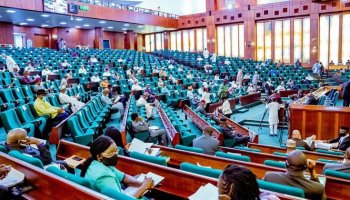
Public Accounts Committee (PAC), of the House of Representatives, on Monday, ordered a forensic audit of theMidstream and Downstream Gas Infrastructure Fund by the Nigerian Midstream and Downstream Petroleum Regulatory Authority (NMDPRA), over the alleged mismanagement of the Fund’s operations from 2021 to date.
The Committee Chaired by Representative Bamidele Salam on Monday made the decision after a motion, titled “Motion on the Urgent Need to Investigate Misapplication and Mismanagement of Midstream and Downstream Gas Infrastructure Fund by the Nigerian Midstream and Downstream Petroleum Regulatory Authority (NMDPRA) from Year 2021 to Date in Contravention of the Petroleum Industry Act (PIA) 2021,” was moved by Hon. Cyriacus Umeha and seconded by Hon. Kafilat Ogbara.The Committee noted that Section 52(1) of the Petroleum Industry Act (PIA) 2021 established the Midstream and Downstream Gas Infrastructure Development Fund, stating that its utilisation must be subjected to appropriation by the National Assembly.It further observed that Section 52(7a) stipulates that the fund should be financed through 0.5 percent of the wholesale price of petroleum products and natural gas sold in Nigeria, collected from wholesale customers in addition to levies outlined in Section 47(2)(c) of the Act.Lawmakers also drew attention to Sections 52(8) and (9) of the Act, which mandate the NMDPRA to ensure the prompt collection of all such sums into the Fund’s account within 21 days of the sale of petroleum products and natural gas in the country.The Committee highlighted that Order 20, Rule 6(5) of the House Standing Orders (11th Edition) empowers the Public Accounts Committee to investigate loss of public revenue, non-remittance of fees, and violations of financial laws in the administration of public funds.However, concerns were raised after the Public Accounts Committee, in a letter dated July 21, 2025, requested the NMDPRA to submit relevant information on the administration and utilization of the Fund and to appear before the Committee on August 12, 2025.According to the motion, the Authority neither responded to the request nor honoured the invitation.The Committee explained that it issued a final reminder on August 26, 2025, but the NMDPRA still failed to comply, raising further suspicion about the management of the fund.Lawmakers expressed alarm that several wholesale customers had defaulted in paying the mandatory 0.5 percent levy, despite Section 52(9) empowering the Authority to set regulations for late or non-payment.They also cited serious allegations of due process violations, disregard for financial regulations, and the absence of audit reports on the fund since its establishment.In response, the House resolved to mandate the Office of the Auditor-General for the Federation to conduct a comprehensive forensic audit of all funds collected by the NMDPRA since 2021.The Committee said the audit is expected to uncover the extent of alleged mismanagement, misappropriation, and fraudulent diversion of funds, as well as identify wholesale customers who failed to remit the required levy.PAC ordered the Auditor-General to report back to the Committee within 60 days.
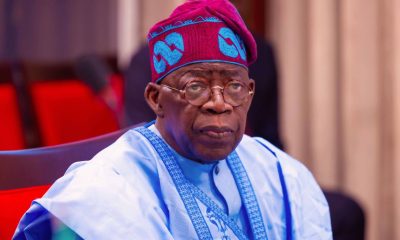

Group Backs Tinubu, Urges Sule to Run for Senate
ShareFrom Abel Zwanke, Lafia The Chief Executive Officer of the Community Initiative for Character Moulding and Entrepreneurship Development (CiCMED) and...
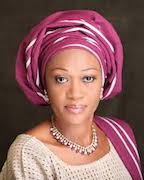
Ooni Installs Oluremi Tinubu as Yeye Asiwaju Ile Oodua
ShareFrom Ayinde Akintade, Osogbo The Permanent Chairman, Southern Nigeria Traditional Rulers Council (SNTRC), Arole Oodua Olofin Adimula and Ooni of...

NYSC Presidential Honor Award Winner Returns to Benue, Shows Appreciations
ShareFrom Attah Ede, Makurdi An ex- corps member and a recipient of Presidential Honour Award, Udokpo Abasi, at the weekend...


NGO Launches Climate Project Steering Committee in Benue
ShareFrom Attah Ede, Makurdi A global Non-Governmental Organisation (NGO), International Alert has inaugurated Climate Project Steering Committee in Benue State,...

A silent Emergency: Soaring Costs of Diabetes Care Spark Alarm
ShareBy Folasade Akpan For Mrs Schola Effiong, a 58-year-old confidential secretary in Calabar, managing diabetes in today’s economy feels like...

World Bank, Partners Record Progress Toward 1.5bn Healthcare Goal
ShareThe World Bank Group, global partners and countries on Saturday announced continued progress toward the goal of delivering affordable and...


UN Commits to Strengthening Nigeria’s Policy Framework, Enhancing Digital Safety
ShareThe UN Women has reaffirmed its commitment to strengthening policy frameworks, enhancing digital safety, and promoting accountability for online harms...

Nightclub Fire in India’s Goa Kills 25 People
ShareA fire at a popular nightclub in India’s coastal region of Goa has killed 25 people, local officials say. Police...

Hong Kong votes in Election as City Mourns Deadly Fire
ShareHongkongers are voting in an election seen as a test of public sentiment following a deadly fire that angered some...


PDP Crisis: Wike Camp Moves to Conduct Fresh Congresses, Convention
ShareBy Laide Akinboade, Abuja The factional Board of Trustees (BoT) of the Nyesom Wike tendency in the Peoples Democratic Party...