
COVER
IPPIS: FG Recovers N21bn Salary Fraud in Single Investigation, Says ICPC

By David Torough, Abuja
Chairman of the Independent Corrupt Practices and Other Related Offences Commission (ICPC), Dr. Musa Aliyu yesterday confirmed the recovery of N21bn salary fraud in a single investigation, as a result of the adoption of the Integrated Payroll and Personnel Information System (IPPIS).
Aliyu, who spoke in Abuja at the 2025 National Conference on Public Accounts and Fiscal Governance organised by the Senate and House of Representatives Public Accounts Committees, called for the establishment of a special court to prosecute economic crimes. To close leakages and enhance transparency, he advocated for the digitisation of key government processes, including payroll, procurement, and revenue collection.He said, “If we digitize our systems and eliminate human discretion, we will cut out most of the corruption,” referencing international examples like Bulgaria, where procurement processes are fully transparent and publicly accessible.He also called on lawmakers to pass a comprehensive whistleblower protection law, describing it as a vital tool to encourage citizen reporting of corruption.He also stressed that tackling cases like the N21bn salary fraud requires more than policy declarations.“Let it not just be policy. Let it be law, with protection and incentives for those who speak out,” he said.In addition, he called for the establishment of special anti-corruption courts through constitutional amendment to speed up justice in corruption-related cases.He gave a vivid account of his experience as a prosecutor, citing how some EFCC cases dated back to 2006, which the Commission is yet to secure convictions for due to endless adjournments and changes in judges.He warned that Nigeria’s continued survival depends on the outcome of the anti-corruption fight.He applauded the National Assembly for organising the conference and called for greater collaboration with civil society organizations and the media to deepen public accountability, educate citizens, and expose wrongdoing.“This war is not the EFCC’s alone. It must be fought by all Nigerians. All hands must be on deck,” he said.While calling on the National Assembly to intensify its oversight functions on revenue-generating agencies, he warned that many of these agencies operate with impunity, treating public funds as personal property.In a bid to address the menace head-on, he advocated for stronger legislative scrutiny to ensure that all revenues collected by these agencies are duly remitted to the national coffers.Represented by the Director of Finance, Akporo Michael, he also threw his weight behind the fiscal policy reforms of the present administration, particularly the recent tax legislation signed into law, which he said would reposition Nigeria’s fiscal framework and significantly boost revenue mobilization.These reforms aim to increase our tax-to-GDP ratio to between 18% and 20% in the coming years,” he said, adding that this would help the country meet its growing development needs.He said Nigeria’s low tax-to-GDP ratio of 7.8 percent is among the lowest in sub-Saharan Africa. In contrast, countries like Kenya, South Africa, and Egypt are recording double-digit ratios and reaping the benefits in infrastructural development and service delivery, he said.While expressing grief over the opacity of the Nigerian National Petroleum Corporation Limited (NNPCL), he observed: “Around the world, Saudi Arabia—their national oil company—in the year 2024 posted a net profit of $106.25 billion. Around the same year, you can do a good mix. Our NNPC—how much did it post? $2.4 billion profit in 2024.The ICPC boss also called for the overhaul of Nigeria’s public sector salary structure, which he described as unjust and demoralising.He urged the National Assembly to engage the Salaries and Wages Commission and harmonize pay scales in a way that reflects fairness, justice, and economic reality.While applauding recent gains in Nigeria’s global corruption ranking, the EFCC official warned that the fight is far from over.He reminded the audience of Nigeria’s past designation as one of the world’s most corrupt countries by Transparency International and cautioned against complacency.“We’ve improved, but we’re still not where we should be. Out of 140 countries ranked by Transparency International in 2024, Nigeria is still behind 100. That means only 40 countries are below us,” he said.He linked widespread corruption to poor accountability, misuse of public office, weak sanctions, and a lack of transparency in governance.He argued that corruption has led to a trust deficit between citizens and the government and scared away investors.In his presentation, the Governor of the Central Bank of Nigeria (CBN), Olayemi Cardoso, called for greater synergy between monetary and fiscal authorities to enhance Nigeria’s macroeconomic stability and ensure sustained national development.Cardoso, who was represented at the National Conference on Public Accounts and Fiscal Governance by a senior CBN official, reaffirmed that the roles of both the Central Bank and fiscal authorities were not at odds, contrary to popular opinion.He said while the fiscal authorities focus on revenue generation and development, the CBN’s primary mandate is to ensure that fiscal actions do not destabilize the economy.Cardoso noted that one of the CBN’s central concerns is to balance government spending with the need to maintain macroeconomic stability, especially in areas like inflation, exchange rate management, and the strength of the naira.He highlighted that since the inauguration of the current management at the CBN, the bank has adopted a proactive approach to both global and domestic economic developments.He cited the minimal impact of recent geopolitical tensions as proof of this shift in strategy.The CBN Governor stressed that a well-coordinated macroeconomic framework, underpinned by transparency, consultation, and shared objectives between fiscal and monetary actors, is essential to navigating Nigeria’s complex economic terrain.EFCC Tasks NASS on Passage of Law Criminalising Unexplained WealthChairman of the Economic and Financial Crimes Commission (EFCC), Ola Olukoyede yesterday tasked the leadership and members of the 10th National Assembly with the urgent need to pass a law criminalising unexplained wealth.Olukoyede, who spoke in Abuja during the National Conference on Public Accounts and Fiscal Governance organised by the Senate and House of Representatives’ Committees on Public Accounts, described the magnitude of public sector corruption as disturbing.Olukoyede, who previously served as Secretary to the EFCC before his confirmation as Chairman, lamented the legal bottlenecks hindering the Commission’s ability to prosecute suspicious cases.He recounted how investigations of public officers are often stalled because the law still requires a “predicate offence” — a specific crime such as theft or fraud — before assets can be seized or charges filed.The proposed legislation, when passed into law, would make it a strict liability offence for any individual to possess assets grossly beyond their known and legal income sources.Despite the successes achieved so far, the EFCC helmsman warned that Nigeria cannot win the anti-corruption war without legal backing to hold public officers accountable for assets far beyond their legitimate earnings.He cited an analysis presented during his Senate confirmation, which showed that 90% of stolen public funds in a single year ended up abroad. He maintained that the recovered funds could have built several hospitals, schools, and supported millions of Nigerian students from primary to tertiary level.He also revealed that the EFCC had only just begun examining the books of the Nigerian National Petroleum Company (NNPC) Limited, and what had emerged so far was mind-boggling — yet only a fraction of the rot.The EFCC Chairman said this discovery underscores how deeply embedded fiscal misgovernance is across the system, calling fiscal rascality and mismanagement of public resources a core driver of Nigeria’s economic woes and security challenges.Olukoyede painted a grim picture of the global dimensions of Nigeria’s looted wealth, revealing that the Commission is currently tracking illicit assets across multiple jurisdictions — from America and Turkey to the most unexpected locations, like Iceland.The EFCC boss admitted that no anti-graft agency, no matter how efficient, can recover more than half of what has been looted.Olukoyede did not spare those foreign governments either. He called them out for enabling corruption by keeping stolen funds under various pretexts.He added that under international law, the custodian of stolen assets is just as guilty as the original thief.The EFCC Chairman criticised the widespread culture of impunity in Nigeria’s public service, where those already under prosecution are often celebrated, and compliance with financial laws is flouted with impunity.He said even calls for compliance are often met with subtle resistance, noting that over 700 federal Ministries, Departments, and Agencies (MDAs) continue to operate without adequate internal controls.He questioned the National Assembly’s capacity to oversee them all and called for structural reforms that can prevent leakages before they happen.Olukoyede said that corruption is stalling Nigeria’s economic potential.He emphasised that Nigeria has no business borrowing to survive, given the natural and mineral wealth it possesses.Olukoyede called on political leaders to unite across party and ethnic lines to confront corruption head-on, describing the current administration as Nigeria’s “last best chance” to get it right.He urged members of the National Assembly and the public to ignore the inevitable backlash from vested interests and social media trolls.
By Laide Akinboade, Abuja
As part of efforts to reposition the newspaper for optimum corporate performance, the management of Asset Newspapers Limited, Publishers of DAILY ASSET, has announced the appointment of David Torough as the Editor of the Abuja-based national daily.
A statement by the management said the appointments were part of the company’s new strategy to further penetrate the various states in the country and raise its readership and patronage.
“DAILY ASSET is widely acceptable across the country and to maintain our leadership position, we need to increase management presence, hence the need to create new Bureau offices in some locations outside Abuja and Lagos,” the statement quoted the Publisher/ Editor-in-Chief, Dr Cletus Akwaya to have said.
In a statement yesterday, Publisher and Editor-in-Chief of the fast-growing daily, Dr. Cletus Akwaya said the appointment was part of the new strategy to properly situate the paper for better productivity.
“DAILY ASSET has a commitment with the Nigerian people. We are determined to weather the storm and give Nigerian readers a Newspaper that satisfies their yearnings and reading pleasure and we can only do that with the right set of professionals,” the statement said.
Akwaya, a former Commissioner of Information from Benue State said the difficult times being faced by Nigerians posed a great challenge to the media as the people deserved credible information with which to make choices.
“We have a bond with the people, to offer credible information at all times in the best tradition of the Nigerian Press and on this scale of objectivity, truth and fairness, we pledge to remain steadfast no matter the challenges,” Akwaya was quoted to have said.
He said the newspaper will maiantin its daily print run and circulation to all states of the federation and urged advertisers to take advantage of the deep penetration of the Daily Asset brand to send their messages.
Torough, the new Editor has had a steady rise in the Newspaper in the last five years.
A graduate of Mass communication of the Benue State University, Makurdi, Torough joined the company in 2022 as Benue State Correspondent. He was spotted for his brilliance and redeployed to Abuja the following year and promoted to Deputy News Editor. He was subswuently named Deputy Editor of the paper, a position he held until the recent appointment.
Torough has attended several journalistic workshops and trainings to properly equip himself for the task ahead.
The statement also said the Management named Eze Okechukwu as Deputy Editor.
Before his elevation as Deputy Editor, Eze has been Deputy Politics Editor and DAILY ASSET Newspaper correspondent covering the Senate, having joined the organization in 2021.
Born on March 10, 1975, Eze holds a Masters Degree in Mass Communication from the Enugu State University of Science and Technology.
Eze began his journalism career with Daily Star, Enugu and later worked with Daily Trust Newspaper, Abuja as sports reporter.
Aside from his journalistic excellence, he has a great deal of passion for sports.

From Ngutor Dekera, Kaduna and Aliyu Askira, Kano
Northern governors and traditional rulers yesterday called for the suspension of mining activities across the region for six months, blaming illegal mining for worsening insecurity in many states.The resolution was contained in a communiqué issued after a joint meeting of the Northern States Governors’ Forum and the Northern Traditional Rulers’ Council held at the Sir Kashim Ibrahim House, Kaduna.
The meeting, chaired by the Gombe State Governor and NSGF Chairman, Muhammadu Yahaya, had in attendance the 19 northern governors and chairmen of the 19 states’ traditional councils. The Forum expressed concern over the escalating violence in parts of the North, including the killings and abductions recently recorded in Kebbi, Kwara, Kogi, Niger, Sokoto, Jigawa and Kano states, as well as renewed Boko Haram attacks in Borno and Yobe.“The Forum extends its deepest condolences and solidarity to the governments and good people of the affected states,” the communiqué said, noting that the attacks on schoolchildren and other citizens had become “unacceptable tragedies” that required urgent collective action.It commended President Bola Tinubu for what it described as the Federal Government’s “firm response” to recent abductions and insurgency threats, especially the rescue of some abducted pupils.The governors also saluted security agencies for their sacrifices on the frontlines.“We resolved to renew our support for every step taken by the President and Commander-in-Chief to take the fight to insurgents’ enclaves in order to end the criminality,” the Forum stated.A major highlight of the meeting was the North’s renewed push for the establishment of state police, with governors and traditional rulers insisting that decentralised policing had become inevitable.“The Forum reaffirms its wholehearted support and commitment to the establishment of state police,” the communiqué added, urging federal and state lawmakers from the region to “expedite action for its actualisation.”On illegal mining, the governors said criminal mining networks were fuelling violence and providing resources for armed groups.As a corrective measure, they asked Tinubu to direct the Minister of Solid Minerals to impose a six-month suspension of mining activities in order to allow for a full audit and revalidation of licences.“The Forum observed that illegal mining has become a major contributory factor to the security crises in Northern Nigeria. “We strongly recommend a suspension of mining exploration for six months to allow proper audit and to arrest the menace of artisanal illegal mining,” it said.To strengthen the fight against insecurity, the governors also announced the creation of a regional Security Trust Fund.Under the proposed arrangement, each state and its local governments will contribute ₦1bn monthly, to be deducted at source under an agreed framework.They said the fund would help provide sustainable financing for joint operations, intelligence-driven interventions and coordinated security responses across the region.At the end of the meeting, the Forum reaffirmed its commitment to unity and collective responsibility.“Only through unity, peer review and cooperation can we overcome the pressing challenges before us,” it declared.The Forum agreed to reconvene on a date to be announced.Meanwhile, Nigeria’s worsening security crisis took a grim turn on Monday as bandits launched fresh attacks in Kano State, abducting 25 villagers, even as the Federal Government raced to secure the release of more than 300 Catholic school children kidnapped in Niger State.In the early hours of Monday, armed bandits invaded Unguwar Tsamiya—popularly called Dabawa—in Shanono Local Government Area of Kano State, whisking away nine men and two women after shooting into the air and assaulting residents. The attackers also rustled two cows.A resident lamented the community’s helplessness: “We cannot do otherwise; most of us cannot leave because we have nowhere to go. This is our place, our land and everything is here.”The assault came less than 24 hours after a similar attack on Yan Kamaye in Tsanyawa LGA, a community along the volatile Katsina border.In Niger State, National Security Adviser Nuhu Ribadu has assured distraught families of St. Mary’s Co-Education School, Kontagora that the more than 300 students and staff abducted on November 21 will return home “soon.” Ribadu, who led a high-level federal delegation to the school on Monday, said the abductees are safe, though he offered no specifics on their location or the status of rescue operations.According to Daniel Atori, spokesman for the Catholic bishop overseeing the school, the NSA reassured officials: “The children are where they are and will come back safely.”The St. Mary’s attack is part of a worrying resurgence of mass kidnappings reminiscent of the 2014 Chibok schoolgirls’ abduction. Security analysts warn that banditry has evolved into a “structured, profit-seeking industry,” with hundreds of Nigerians abducted in November alone.The Kontagora school abduction occurred the same week 25 girls were kidnapped in Kebbi State—victims who authorities say have since been rescued through “non-kinetic” means. About 50 of the St. Mary’s hostages have also managed to escape.Ribadu’s delegation, which included the Minister of Humanitarian Affairs and the Director-General of the Department of State Services (DSS), reaffirmed the government’s commitment to securing the freedom of all abducted citizens.As communities from Kano to Niger continue to bear the brunt of these violent incursions, the escalating spate of kidnappings underscores the urgent national demand for a more decisive and coordinated security response.
By David Torough, Abuja
The Economic and Financial Crimes Commission (EFCC) said former Attorney‑General of the Federation and Minister of Justice, Abubakar Malami, will face a team of interrogators at its office daily throughout December.A credible source in the EFCC said on Monday that the daily appearance was part of an ongoing investigation into the whereabouts of an alleged 490 million dollars Abacha loot secured through a Mutual Legal Assistance (MLAT) request.
The source said that Malami, who was summoned for interrogation by the EFCC on Saturday, was barred from leaving Nigeria for the next one month.According to the source, one of the conditions for his release on Saturday was that he should report daily to the EFCC Headquarters in Abuja for further interrogation.The source said Malami would have to appear daily at the anti-graft office due to the volume of the investigation and the seriousness of the charges against him.”We seized his passport, it is the normal routine during investigation, but he has to report at the EFCC headquarters in Abuja every day for the next month.”He will be reporting for further investigation throughout December.”He will be reporting every day, starting from Dec. 1st to Dec. 31st.He will appear before the team of investigators for the entire month of December.”He will be reporting to EFCC for investigation for the period because of the volume of the investigation and the seriousness of the charges against him,” the source added.According to the source, a fact sheet on the former minister revealed that Malami had several issues to clarify with the EFCC within the coming weeks.“We have asked him to explain the whereabouts of the $490 million Abacha loot secured through MLAT.“We didn’t say he stole money, but he should account for the loot. This is one of the issues he will clarify to our investigators.”The commission cited the large volume of documents he must review and the need for extensive interviews as reasons for seizing his passport.The source said EFCC would not engage in a war of words but would release its findings after a thorough investigation.Malami, in a statement by his media aide, Mohammed Doka, on Monday in Abuja, however, described the EFCC investigation as a political witch‑hunt.He confirmed he honored an EFCC invitation on Nov. 28, describing the engagement as fruitful and expressing confidence that the probe would vindicate him.Malami described the EFCC’s allegations as baseless, illogical and devoid of substance, insisting they collapse under factual scrutiny.

Street Named After Business Mogul, Sam Maduka Onyishi Unveiled in Asokoro
ShareBy David Torough, Abuja Authorities in the Federal Capital Territory on Saturday honoured renowned entrepreneur and philanthropist, Chief Dr. Sam...


Experts Task Government on Increase in Domestic Funding
ShareBy Laide Akinboade, Abuja Experts in the health sector, at the weekend agreed that even though foreign grants and aid...
BBNaija’s Queen Mercy Confirms crash of Her One-year Marriage
ShareBig Brother Naija reality show star, Queen Mercy Atang, has finally confirmed the crash of her one-year marriage. The single...

Obi, TCM Condemn Tinubu’s Distribution of Vehicles to Renewed Hope Ambassadors
ShareBy Mike Odiakose Abuja Presidential Candidate of the Labour Party, Peter Obi and a socio-political organisation, The Collective Movement (TCM),...

Bayelsa Urges NDDC to Complete Abandoned Akenfa Bridge Project
ShareFrom Mike Tayese, Yenagoa The Bayelsa State Government has called on the Niger Delta Development Commission (NDDC) to resume and...


Road Accident Claims Six Lives in Kogi
ShareFrom Joseph Amedu, Lokoja The Kogi State Government has expressed sadness over a tragic accident involving a bus conveying some...

Adebayo at 53 Young Enough to Lead Nigeria – Ighodalo
ShareBy Mike Odiakose, Abuja Pastor in charge of Trinity House, a non-denominational, Christian fellowship centre and founder, African Leadership Group...

Four Dies as Bandits Launches Attack in Kogi Community
ShareFrom Joseph Amedu, Lokoja Four persons were reportedly dead on Wednesday when suspected bandits launched an attack on Irunda Ile...
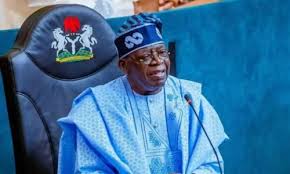

Musa Takes Oath, Vows United Front against Insecurity
ShareBy David Torough, Abuja President Bola Tinubu yesterday swore in former Chief of Defense Staff, General Christopher Musa (rtd), as...


OPay Secures Double Honors at Tech Innovation Awards
ShareIn a major recognition of its innovation and security leadership, OPay, Nigeria’s premier financial technology company, has been named Fintech...