
NEWS
Julius Berger is Bringing Positive Development to Warri, Says Residents

By Mike Odiakose, Abuja
Residents, business owners and community leaders in Warri-Effurun, Delta State have expressed confidence in the transformation taking place through the Warri/Effurun Roads and Flyovers Project.
The Delta State Government awarded Julius Berger the N78 billion contracts to build three flyovers and expand roads in Warri and Effurun, aiming to ease traffic congestion and improve mobility.
The contract includes the construction of a flyover from Enerhen Junction to Marine Gate, and expansion of the DSC/NPA Expressway flyover.
Many believe that the project will deliver lasting benefits, easing traffic congestion and unlocking economic opportunities.
Their expressed enthusiasm came just as the Project Manager; Thomas Haug, informed that tremendous progress was being made in the execution of the project to possibly beat the agreed deadline for the completion of the job.
At the DSC flyover, where construction is in full swing, petty traders, artisans and small businesses have sprung up and are thriving.
An estate agent, Friday Onome, said the decision to bring Julius Berger to handle the city’s renewal was the best one the state government could have made.
He noted that the project was already making a visible impact. “Look at what is happening here. The flyovers are taking shape, and roads that were once in terrible condition are coming back to life.”
Onome, who relocated his office from Jakpa Road to Osubi Road to be closer to the emerging development, described Julius Berger’s Life Camp as a testament to the company’s high standards.
“If their staff camp is that well-built, imagine what they’re delivering with these roads and bridges,” he added.
At Enerhen Junction, where a new flyover is under construction, businesses have quickly adapted. Food vendors, PoS operators, second-hand clothing sellers, and commercial motorcycle riders have moved into the area, anticipating the increased commercial activity the completed infrastructure will bring.
“We can’t wait for the day Julius Berger finishes this job and opens up the roads,” said Mama Ejiroghene, a food vendor.
“Then Warri will be booming again. That’s why everyone is happy and cooperating with them. Anyone against this project is against progress,” she said.
As for the Project Manager, “Yes, we are making tremendous progress; we have that going for us.”
He acknowledged the strong support from the community.
“The people see the bigger picture. They know this project will improve their lives, so their cooperation has been excellent. Even in areas where we’ve had to regulate traffic, they understand and are patient.”
On the DSC Flyover, Haug said all beams have been placed, and in the section along with its access roads, everything is on track for completion before the year’s end.
At Enerhen junction, pedestrian walkways have been provided while vehicle access is temporarily restricted. Despite this, people are not complaining. They know this development is for their benefit,” Haug said.
According to Haug, work on the PTI Flyover is progressing, though relocating high-tension overhead cables has posed some challenges.
As of last month, two ends of the flyover were completed, and Julius Berger was awaiting the arrival of specialised equipment to move the overhead cables.
Last week, Haug confirmed tremendous progress on the flyover and roads in the PTI area.
He said work is ongoing in that area saying, we are doing the foundation work there; and despite the rains that are already here, we are still working to deliver the project; and the completion date is still intact.
Meanwhile, in consonance with the acclaimed Julius Berger efforts at partnering with communities surrounding project sites, the company has carried out CSR activities with the repair and maintenance of community roads as well as doing same at the community primary school, gestures for which the residents are appreciative.
By Mike Odiakose, Abuja
A chieftain of the Peoples Democratic Party (PDP) in Ogun State, Segun Sowunmi, has described Prince Adewole Adebayo as a credible symbol of generational shift in Nigerian politics.
In an interview, Sowunmi said Adebayo embodies the kind of prepared, articulate and ideologically grounded leadership Nigeria needs.
“People like Adebayo fit into the category of giving them a chance,” he said, urging Nigerians to open the political space to competent younger leaders with fresh ideas.
Sowunmi, who runs a civic platform known as The Alternative, stressed that democracy must go beyond partisanship and focus on results, competence and national development.
According to him, leadership renewal is essential to prevent power from circulating endlessly within the same political class.While acknowledging Nigeria’s complex political realities, he maintained that credible emerging leaders should not be ignored simply because they operate outside dominant party structures.
Concluding, Sowunmi urged citizens to vote responsibly and prioritise competence, noting that “the best among us should lead the rest of us” — a remark seen as reinforcing confidence in Adebayo’s place in Nigeria’s evolving political future.
…Says He is Dishonoring Legacy of Democratic Struggle in Nigeria
By Mike Odiakose, Abuja
Prominent politician and former presidential candidate of the Social Democratic Party (SDP), Prince Adewole Adebayo, has strongly criticised the recent amendments to Nigeria’s Electoral Act signed into law by President Bola Tinubu, describing the move as a setback for transparency and democratic integrity.
In a statement posted on his official X (formerly Twitter) account, @Pres_Adebayo, Adebayo accused the Federal Government of prioritising “loopholes over transparency” by weakening provisions for the electronic transmission of election results.
According to the SDP leader, while electronic transmission has not been completely abolished, the new revisions to the 2022 Electoral Act make it discretionary rather than mandatory — a shift he believes could undermine the credibility of future elections.
“I was in Abuja and saw the anger of the Nigerian people after the government approved revisions to the 2022 Electoral Act,” Adebayo wrote.
“What should have been mandatory, real-time transmission has been left open to discretion. That loophole matters.”
He argued that making electronic transmission optional effectively returns the system to manual collation as the default practice, increasing the risk of manipulation and eroding public trust.
“When electronic transmission is optional, manual collation of results becomes the practical default. And when results move through opaque channels, trust in the process is damaged,” he said.
The SDP chieftain described the signing of the amended law as “a blow against the very essence of Nigerian democracy,” alleging that the administration is deliberately shielding itself from transparency.
“Removing the mandatory electronic transmission makes it easier to manipulate the results — and that is unacceptable,” Adebayo stated.
“This administration is attacking the very democracy that generations of Nigerians fought so hard to secure.”
He further accused President Tinubu of dishonouring the legacy of democratic struggle in Nigeria, claiming the changes represent “a shameless attempt to remain in power.”
Adebayo maintained that Nigeria should be advancing toward full electronic voting rather than weakening technological safeguards in the electoral process.
He pointed out that Nigerians already rely on electronic systems for banking, business, and communication, questioning why similar trust should not apply to the protection of votes.
“When votes are transmitted transparently and in real time, there is a record. There is verification. There is accountability,” he added.
Despite the new law, Adebayo called on citizens and communities across the country to continue demanding transparency and fairness in the electoral system.
“The law may have changed, but the demand for transparency has not,” he said, pledging to stand with Nigerians who believe the country “deserves better.”
The amendments to the Electoral Act have sparked debate among political stakeholders and civil society groups, with critics warning that weakening electronic transmission provisions could impact public confidence ahead of the 2027 general elections.

The US has imposed sanctions on the Rwandan army and four of its senior commanders, accusing them of fuelling the conflict in neighbouring Democratic Republic of the Congo.
Fighting has persisted despite a US-brokered peace deal in December between the Congolese and Rwandan governments aimed at ending the long-running conflict in eastern DR Congo.
The US treasury department accused the Rwandan army of undermining the peace deal by training, equipping and fighting alongside the M23 rebel group.
Rwanda swiftly rejected the accusations, saying the sanctions had unfairly targeted one side and “misrepresented the reality and distorted the facts of the conflict”.
Kigali denies supporting the M23, despite overwhelming evidence, and says its military presence in the region is a defensive measure against threats posed by armed groups in DR Congo to Rwanda’s security.
The sanctions come three months after Congolese President Félix Tshisekedi and his Rwandan counterpart Paul Kagame signed the Washington Accords, aimed at ending hostilities.
The ceremony was hosted by US President Donald Trump, who expressed optimism that it would bring lasting peace and described the signing as “historic”.
The M23 rebels were not signatories but have been part of a parallel peace process led by Qatar, a US ally that has strong ties with Rwanda.
Days after the Washington deal, the M23 captured the strategic Congolese city of Uvira, near the border with Burundi, forcing thousands to flee.
The group later withdrew under pressure from the US government.
However, the treasury department said on Monday that the M23’s continued presence near Burundi’s border “carries the risk of escalating the conflict into a broader regional war”.
Thousands of Rwandan troops were deployed across eastern DR Congo “where they actively engage in combat operations and facilitate M23’s control of territory”, it added.
The US expected “the immediate withdrawal of Rwanda Defence Force troops, weapons, and equipment”, Treasury Secretary Scott Bessent said.
In a separate statement about the sanctions, US state department spokesman Tommy Pigott said the M23 was “responsible for horrific human rights abuses, including summary executions and violence against civilians, including women and children”.
The sanctioned Rwandan officials include army chief of staff Vincent Nyakarundi, Ruki Karusisi, commander of the 5th Infantry Division, Mubarakh Muganga, Rwanda’s chief of defence staff and Stanislas Gashugi, head of special operations.
The sanctions freeze any assets held in the US by the RDF or the four officers, and bar US individuals and entities from conducting financial transactions with them.
The Congolese government expressed its “deep appreciation” to the US and said the sanctions were “a clear signal of support” for the respect of its “sovereignty and territorial integrity”.
The Trump administration said it was “prepared to use all available tools” to ensure Rwanda and the DR Congo delivered on their promises.
Trump had hailed the December deal as a way to secure critical minerals from eastern DR Congo – the country has reserves of copper and cobalt, which are used to make batteries for products including mobile phones and electric vehicles.
The mineral-rich east of DR Congo has been dogged by conflict for more than 30 years, since the 1994 Rwandan genocide.
Numerous armed groups have since competed for power and control of a potential fortune.
The latest unrest escalated early last year when the M23 captured Goma, the capital of North Kivu province, on the border with Rwanda.

Ronaldo Leaves Saudi Arabia for Madrid Following Strikes
ShareCaptain and forward for Al-Nassr, Cristiano Ronaldo, has left Saudi Arabia for Madrid, Spain, following escalating tensions in the Middle...
Players Flee Court after UAE Drone Attack Causes nearby Fire
SharePlayers and officials ran from the court at an ATP Challenger event in the United Arab Emirates when an Iranian...

Adebayo Represents Nigeria’s Next-Generation Leadership – Sowunmi
ShareBy Mike Odiakose, Abuja A chieftain of the Peoples Democratic Party (PDP) in Ogun State, Segun Sowunmi, has described Prince...
Adebayo Accuses Tinubu of Weakening Electoral Transparency
Share…Says He is Dishonoring Legacy of Democratic Struggle in Nigeria By Mike Odiakose, Abuja Prominent politician and former presidential candidate...


Benue, Taraba Governors Visit IDPs on Border Communities
ShareTaraba State Governor, Agbu Kefas and Benue State Governor, Hycienth Alia on Monday visited IDPs on the border communities of the two states. Alia said the Benue government was...


Falcons Seek Redemption against Cameroon in Second Friendly
ShareReigning African champions Nigeria are keen to redeem themselves after losing to a late goal by Cameroon’s Indomitable Lionesses on Saturday in the first of two friendly matches in...

US Sanctions Rwanda’s Military, Top Commanders over Fight in DR Congo
ShareThe US has imposed sanctions on the Rwandan army and four of its senior commanders, accusing them of fuelling the conflict in neighbouring Democratic Republic of the Congo. Fighting has persisted despite a US-brokered...


Reps Reiterate Imperatives of Improving Polytechnics System
ShareBy Ubong Ukpong, Abuja The House of Representatives on Tuesday, said it was very imperative to intentionally invest in the nation’s Polytechnics System, towards...
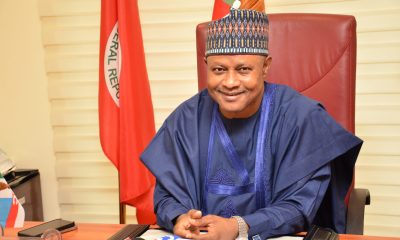

Sani Warns Conflict Merchants, Pledges to Safeguard Peace in Kaduna
ShareFrom Nicholas Dekera, Kaduna Kaduna State Governor, Uba Sani has declared that his administration will not tolerate any individual or group seeking to undermine peace and...
ShareDisCos Meter 109,556 Customers in 2025 – NERC The Nigerian Electricity Regulatory Commission (NERC) said Electricity Distribution Companies (DisCos) metered...