
Health
Kogi Govt to Provide 10,000 Vulnerable Citizens Free Quality Healthcare—Official

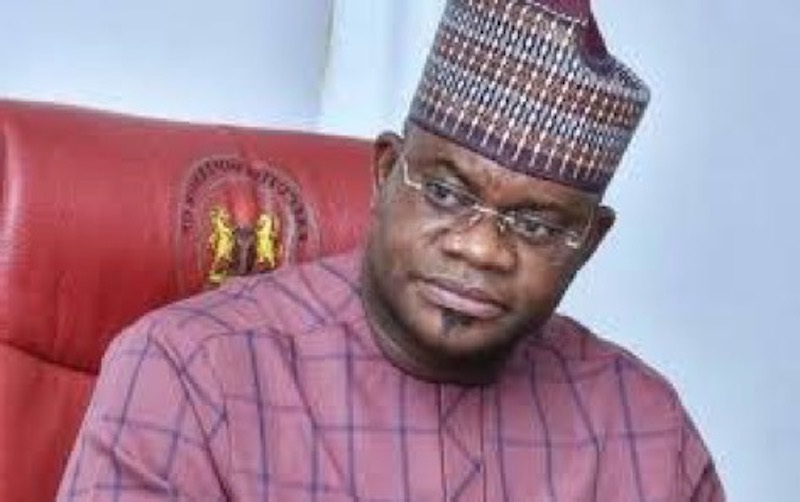
Kogi Government says it will provide no fewer than 10, 000 vulnerable residents of the state, free quality healthcare services under the BelloCare equity fund of the State,s Health Insurance Agency (KGSHIA).
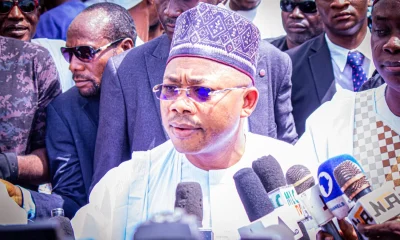
The Kogi state’s Commissioner for Health, Dr Saka Audu, disclosed this on Saturday at the inauguration ceremony of the health insurance benefits for the people in Ajaokuta, Kogi.
The commissioner said that the gesture was part of #BelloCare Health Insurance, which was one of the programmes of the State,s Health Insurance Scheme.
According to Audu, the 10,000 people are in addition to the 31,491 vulnerable citizens already enrolled by the Federal Government’s Basic Health Care Fund across the state.
The commissioner noted that he had also in his capacity procured Health Insurance benefit package for 50 vulnerable citizens of Ajaokuta constituency in Kogi.
”We are happy to announce that we have been able to procure Health Insurance benefit package for the good people of Ajaokuta constituency as part of #BelloCare Health Insurance; one of the programmes in KGSHIA’s Scheme.
”Aside from the 31, 491 vulnerable people already enrolled by the Federal Government’s Basic Health Care Fund, the #BelloCare Programme is covering additional 10,000 vulnerable people across the State, a laudable move to ensure low economic standing doesn’t hinder people from access to quality healthcare.
”In my capacity, i have been able to secure coverage for 50 persons in my constituency, to be registered under the #BelloCare programme.
”This is to increase coverage for our people in our match toward the attainment of Universal Health coverage (Health for all) which is the utmost desire of this government,” Audu said.
He urged all sons and daughters of the State to procure any of the available Health Insurance packages for their own people, to cushion the effect of the current wave of harsh economic downturn in the country.
He added that the government of Gov. Yahaya Bello, had done so much in improving the Supply side of healthcare .
”Our current push is to improve the demand side by improving accessibility to healthcare for the people of Kogi State.
”This is our collective responsibility as i do not think the Government if left alone can achieve the milestone of reaching Universal Health coverage,” he said.
He further appreciated the outstanding work being done by KGSHIA under the leadership of the Executive Secretary, Dr Aledare Adekunle, saying, ”thank you for the brilliant job.” (NAN)







By David Torough, Abuja
As Nigeria marks Universal Health Coverage (UHC) Day 2025, new findings suggest that adolescent girls and young women continue to face serious barriers in accessing basic health services, despite years of policy commitments aimed at expanding coverage.
The assessment, released by the Gem Hub Initiative, points to rising out-of-pocket costs, weak primary healthcare capacity and limited youth-focused services as key obstacles preventing young people—particularly females—from obtaining timely and confidential care.
Nigeria has pledged to achieve universal health coverage, ensuring that all citizens can access essential services without financial hardship.
However, the report says progress remains uneven, with adolescents among the least served groups within the health system.According to Gem Hub, many young women are unable to afford services such as testing and treatment for sexually transmitted infections, especially those not enrolled in health insurance schemes. The financial burden often leads to delays or avoidance of care altogether, increasing health risks.
The findings are based on a rapid assessment of youth-friendly health services and a perception survey conducted in Rivers State, which the organisation said reflects challenges seen in other parts of the country. The review found that several primary health facilities lacked key sexual and reproductive health commodities, including emergency contraception, while shortages of trained staff and inconsistent application of youth-friendly service guidelines were also reported.
Infrastructure challenges were another recurring concern. Poor road networks, seasonal flooding, irregular clinic hours and unreliable electricity were cited as factors limiting physical access to care, particularly in rural and hard-to-reach communities. The report also notes low levels of community and parental engagement, which can discourage adolescents—many of whom depend on family members for health decisions—from seeking services.
A frontline health worker interviewed during the assessment said many young women were reluctant to return to facilities where they felt judged or lacked privacy. “When adolescents feel exposed or uncomfortable, they simply stop coming,” the provider said.
Universal Health Coverage Day is observed globally to highlight the importance of affordable and accessible healthcare. This year’s theme focuses on the burden of health costs, a challenge that remains acute in Nigeria, where out-of-pocket spending continues to account for a large share of healthcare financing.
Gem Hub Initiative says its findings underline the gap between national health policies and the lived experiences of young people, particularly girls and young women, whose health needs are often overlooked within the broader system.
The organisation works with adolescents and young adults across Nigeria on health, education and empowerment programmes, with a focus on generating evidence to inform public debate and policy.
The World Bank Group, global partners and countries on Saturday announced continued progress toward the goal of delivering affordable and quality health services to 1.5 billion people by 2030.
A statement by the World Bank Online Media Briefing Centre said 15 countries introduced National Health Compacts, outlining practical five-year reforms aimed to expand primary healthcare, improve affordability and support job-rich economic growth.
The statement said that since the goal was set in April 2024, the Bank and partners had supported countries to provide quality and affordable care to 375 million people.
It said work was underway with roughly 45 countries to scale proven primary care approaches that strengthen health outcomes while generating employment across health workforces, local supply chains and supporting industries.
“This progress comes as governments confront aging populations, rising chronic disease, and financial pressures.”
The statement said the 2025 Global Monitoring Report released at the Tokyo Universal Health Coverage (UHC) High-Level Forum showed that 4.6 billion people globally still lacked access to essential health services.
It said the report also revealed that 2.1 billion people faced financial hardship due to health expenses.
“These challenges underscored the need for long-term, coordinated reforms that help countries build more resilient and equitable health systems.”
World Bank Group President, Ajay Banga, is quoted in the statement as saying, “strong primary healthcare systems are central to both health protection and economic growth.
“Strong primary health systems do more than safeguard health, they support jobs and economic opportunity.
“Countries are stepping forward with clear priorities, and we are working alongside them to deliver practical solutions at scale.”
According to the statement, the 15 countries that introduced National Health Compacts at the forum in Tokyo are Bangladesh, Egypt, Ethiopia, Fiji, Indonesia, Mexico, Morocco, Nigeria, Philippines, Sierra Leone, Syria, Tajikistan, Uganda, Uzbekistan and Zambia.
The statement said the compacts, which were endorsed at the highest levels of government, outlined five-year, country-led reforms aimed at expanding the reach and quality of primary healthcare, improving financial protection and strengthening health workforces.
“They also align Health and Finance Ministries behind measurable targets, provide a roadmap for coordinated action and guide support from development partners across country-led priorities.”
It said key commitments by countries include mobilising new financing, growing and digitally enabling their health workforce, modernising health facilities, expanding insurance coverage, and digitising service delivery.
“For example, in terms of boosting regional manufacturing of health products and technologies, Nigeria will train 10,000 pharmaceutical and biotech professionals and establish Centres of Excellence.
“Nigeria will also provide tax incentives to expand local production of vaccines, medicines, diagnostic and health technologies, strengthen regulatory agencies through digital systems and global alignment.”
It said that to help countries advance their compacts and broader reforms, the World Bank Group, Gavi and the Global Fund announced aligned financing, including two billion dollars in co-financing with each institution.
The statement added that philanthropic partners working through the Global Financing Facility and the Health Systems Transformation and Resilience Fund aim to mobilise up to 410 million dollars for critical health areas.
It said Seed Global Health was working with compact countries to build capacity and provide support for assessment, planning and policy development, with a focus on advanced health workforce development.
The statement said Japan, the United Kingdom and other partners were also providing technical assistance.
“Japan, WHO and the World Bank jointly launched a Universal Health Coverage Knowledge Hub to support countries with practical evidence-based solutions and peer learning.”
It said the UHC High-Level Forum, co-hosted by the Japanese Government, the WHO, and the World Bank Group, brought together ministers of health and finance, business leaders, philanthropies, global health agencies and civil society.

The UN Women has reaffirmed its commitment to strengthening policy frameworks, enhancing digital safety, and promoting accountability for online harms in Nigeria.
Deputy Executive Director for Normative Support, UNWomen, Nyara Gumbonzvanda, said this at a press conference on Saturday in Abuja.
The press conference was on Gumbonzvanda’s high-level mission to Nigeria and commemoration of the 2025 16 Days of Activism Against Gender-Based Violence (GBV).
She said that the visit was to deepen partnerships, reinforce national leadership, and accelerate collective action to advance gender equality and the empowerment of women and girls in Nigeria.
“A critical area of concern remains technology-facilitated GBV, which is rising globally and nationally.
“Between 16 per cent and 58 per cent of women worldwide experience some form of online or technology-facilitated GBV, depending on the region.
“UN Women is supporting the government and stakeholders in strengthening policy frameworks, enhancing digital safety, and promoting accountability for online harms,” she said.
She commended the National Assembly’s commitment to strengthening legislation that protects women and girls and advance women’s participation in governance, and called for effective legal frameworks and inclusive governance.
Gumbonzvanda decried low representation of women at the National Assembly, which she said stood at only 3.8 per cent, far below the global average of 27.2 per cent.
She, therefore, emphasised the need for legislative reforms such as affirmative action, quotas, and the proposed special seats bill, which she described as globally recognised tools to accelerate women’s participation.
”This is critical because globally, nearly one in three women experiences physical or sexual violence in their lifetime.
”Effective legal frameworks and inclusive governance are essential to reversing this trend,” she said.
On insecurity in Nigeria, she called for the release of abducted girls and reaffirm the need to ensure that every girl has the right to security and education.
She listed the impact of UN Women’s work in communities, including the commissioning of new WASH facilities.
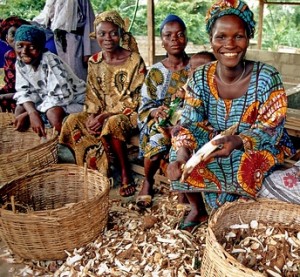
She said that there was also rehabilitation of agro-processing centre in Kwali to improve women’s safety, reduce time burdens, and expand income-generating opportunities.
”UN Wornen will continue to mobilise partnerships across government, development partners, and the private sector to ensure that frontline organisations and national institutions have the resources required to deliver lasting change,” she said.
On her part, Beatrice Eyong, UN Country Representative to Nigeria and ECOWAS, commended the media for amplifying issues affecting women and girls in the country.



Osimhen, Fulham Trio Dazzle in Final Club Games before AFCON
ShareSuper Eagles stars Victor Osimhen, Calvin Bassey, Samuel Chukwueze, and Alex Iwobi all impressed in their final club appearances before...


AFCON 2025: Senegal Coach Names Injured Trio in Final Squad
ShareSenegal head coach Pape Thiaw has named three injured players Ismaila Sarr, Habib Diarra and Assane Diao in his final...


John Cena Retires from WWE after 24-year Career
ShareWWE legend John Cena has retired from professional wrestling, bringing the curtain down on a 24-year in-ring career after his...

Women, Girls Still Struggle to Access Healthcare in Nigeria – Findings
ShareBy David Torough, Abuja As Nigeria marks Universal Health Coverage (UHC) Day 2025, new findings suggest that adolescent girls and...


Five Arrested over Plot to Attack German Christmas Market
ShareFive men have been arrested in Germany suspected of being involved in a plot to drive a vehicle into people...


INEC Begins Display of Preliminary Voter Register in Delta
ShareFrom Francis Sadhere, Delta The Independent National Electoral Commission (INEC), Delta State Office, has announced the commencement of the display...


NAF Begins Nationwide Aptitude Test for 2025 Recruitment of 20,000 Candidates
ShareNo fewer than 20,000 applicants nationwide are participating in the Nigerian Air Force (NAF) Zonal General Aptitude Test for the...

NDLEA Arrests Fleeing Bandits’ Drug Supplier in Niger
ShareThe National Drug Law Enforcement Agency (NDLEA) has arrested a notorious supplier of illicit drugs to bandits operating in the...


Transportation Expert Lauds Mbah over Security, Infrastructure in Enugu
ShareA transportation expert and elder statesman, Chief Chris Chigboh, has commended Gov. Peter Mbah of Enugu State for the remarkable...

Baby, Female Passenger Die in Ikorodu Road Crash
ShareThe Lagos State Traffic Management Authority (LASTMA) said a fatal road traffic collision on Ikorodu Road has claimed the lives...