
POLITICS
Kwankwaso Urges Edo People to Vote for NNPP in Governorship Poll

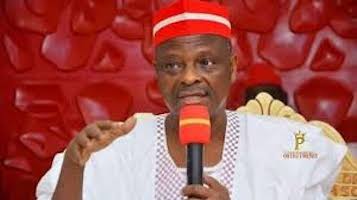
The National Leader of New Nigeria People’s Party (NNPP), Sen. Rabiu Musa Kwankwaso, has urged the people of Edo to vote for the party’s candidate in the Sept.21 governorship poll.
Kwankwaso said when he presented Certificate of Return to the party’s candidate for the election, Dr Azemhe Azena.
“Therefore the only alternative that the people of Edo state have today is our party, the NNPP.
“I am happy that we have a very credible candidate, a man of God, somebody who has a lot of credibility known to the people, and the masses in Edo.
“I believe this is the time to advise the good people of Edo to do the right thing, to do what the Kano people have done.
“They should run away from people who are going around to give them peanuts for the masses to vote for them,” he said.
Kwankwaso added:“You know what is happening today in this country in terms of economy, in terms of security, and so on and so forth.
“We believe that this gentleman is capable to handle all those for the good people of Edo just as we are doing in Kano.”
He called on other NNPP aspirants to rally support for Azena to ensure victory at the election.
“Our prayer is that all of them should come together and work with him to make sure the success of the party interested,” Kwankwaso said.
He commended the NNPP primary election committee for conducting credible the primary that produced Azena.
He described the primary as excellent and transparency in line with credibility that the party stood for.
In his response, Azene pleaded to work with all NNPP leaders, governorship aspirants, party members in a formidable force to win Edo.
“I was born and brought up in Edo and I live among my people, I have impacted on them. So, if there is anybody that should be afraid, they should be the one to be afraid.
“Above all, I’m a pastor with not less than branches under me across the 18 local government areas of Edo.
“I am a major voice when it comes to religion and youth development. I’m a major voice when it comes to the society.
“They are the one that should be afraid that a man like me is physically there,“ he said. (NAN)
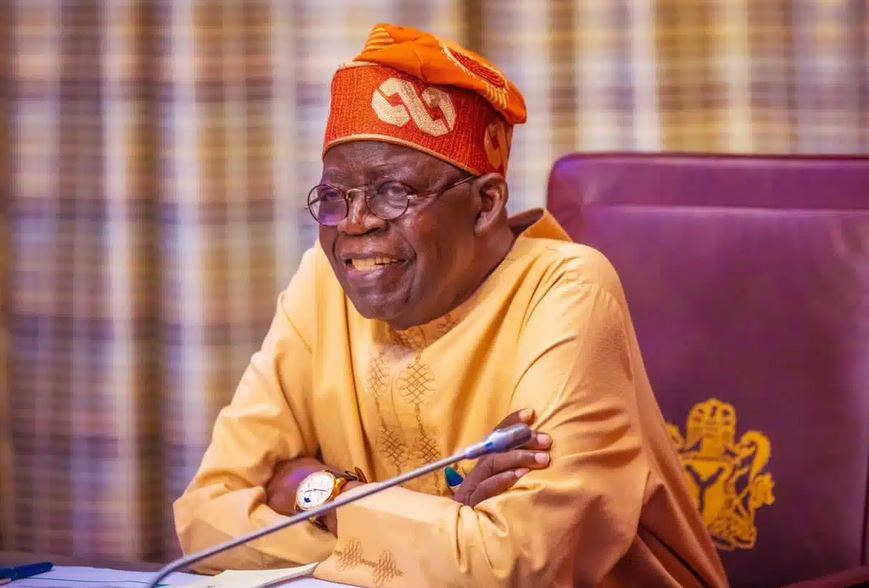
By Simon Tuleh
In the annals of Nigerian history, few milestones carry the weight of democratic endurance.
As President Bola Ahmed Tinubu approaches the midpoint of his first term, culminating in the 2027 elections, speculation and optimism swirls around his potential bid for a second term.
Should he secure victory in 2027 and serve until 2031, Tinubu would etch his name into the nation’s foundational narrative: becoming the first civilian president without any prior military service since Nigeria’s independence in 1960 to complete two full terms in a democratic government.
This achievement would not only symbolize the maturation of Nigeria’s Fourth Republic but also underscore a pivotal shift away from the shadows of military influence that have long loomed over the presidency.
As a citizen of Nigeria concerned about the sustainability of our democratic journey, one must be able to grasp the profundity of this potential landmark, rewind to October 1, 1960, when Nigeria emerged from colonial rule as a sovereign federation.
The early years were marked by civilian governance under the First Republic (1960–1966), led by Dr. Nnamdi Azikiwe, the nation’s ceremonial president. Azikiwe, a journalist and nationalist, embodied the civilian ideal but served only three years before a military coup shattered the Republic in 1966. Subsequent decades were dominated by a carousel of military regimes, from Yakubu Gowon to Muhammadu Buhari’s iron-fisted 1983–1985 interregnum, interrupted briefly by civilian interludes.
The Second Republic (1979–1983) offered a glimmer of democratic hope. Shehu Shagari, a teacher and politician from the north, was elected president in 1979 and reelected in 1983. Yet, his tenure ended prematurely in a coup, denying him a full second term. Shagari, like Tinubu, had no military background—a rarity in a country where barracks and ballots have intertwined fates.
The return to democracy in 1999 ushered in the Fourth Republic, Nigeria’s longest stretch of uninterrupted civilian rule. Olusegun Obasanjo, the republic’s inaugural president, former military general (1999–2007), served two terms, steering the nation through economic reforms and debt relief. But Obasanjo’s path was forged in khaki; he had led as military head of state from 1976 to 1979. His successors followed suit in blending civilian suits with military stripes: Umaru Musa Yar’Adua (2007–2010) died in office after less than three years, handing over to Goodluck Jonathan (2010–2015), who completed one term without military ties but faced electoral defeat in the 2015 wave of “Change” led by the All Progressives Congress (APC) with a former military general again taking the reins of power from a civilian president, this time not with the barrel of a gun but a democratic process general elections 2015. And Buhari became the first opposition candidate to beat an incumbent in a presidential election in Nigeria.
While the administration recorded some successes (especially in infrastructure and rice production), it is widely regarded as having failed to deliver on its core promises: security, economy, and anti-corruption. Most independent analysts and a majority of Nigerians rate the Buhari administration as one of the worst if not the worst in Nigeria’s democratic history, primarily because it took office with enormous goodwill and explicit promises on security and the economy, yet left the country dramatically more insecure, poorer, and more divided than it found it in 2015.
Yet, 2023 saw the dogged emergence of Bola Ahmed Tinubu, an accountant, senator, governor of Lagos State (1999–2007), and presidential candidate of the APC. Unlike Obasanjo and Buhari former military generals, Tinubu’s ascent as a non-military stern democrat is unmarred by fatigue.
A product of Chicago State University and the bustling streets of Lagos commerce, his political DNA is woven from grassroots mobilization, economic acumen, and unyielding opposition to military rule during the Abacha era. Exiled in the 1990s for his pro-democracy activism, Tinubu returned to help architect the Alliance for Democracy and later the All Progressives Congress (APC), the party that propelled him to Aso Rock.
Tinubu’s first term has been a crucible of bold strokes and bruising critiques. His “Renewed Hope” agenda—launched amid fuel subsidy removal, naira floatation, and cybersecurity overhauls has ignited economic tremors but also sown seeds of long-term stability. Inflation has spiked to double digits, and youth unrest simmers, yet GDP growth projections for 2025 hover around 3.5%, buoyed by oil sector tweaks and foreign investment inflows. Tinubu’s deft navigation of ECOWAS crises, including the Niger intervention, has burnished his statesman image on the continental stage.
Politically, the stars align for a 2027 reelection, The APC’s supermajority in the National Assembly, coupled with Tinubu’s patronage networks in the Southwest and beyond, positions him favorably. Constitutional eligibility is unambiguous: Article 135 of the 1999 Constitution permits two four-year terms for the president. At 73 in 2023, Tinubu would be 79 by term’s end in 2031—energetic enough, his allies argue, to outpace predecessors like the octogenarian Joe Biden across the Atlantic.
Critics, however, decry the risks: a personality cult, corruption scandals echoing his gubernatorial days, and the perennial “zoning” debate that could fracture the north-south equilibrium.
Yet history favors incumbents in Nigeria’s democracy; only Jonathan has lost reelection since 1999. Tinubu’s machine, honed in Lagos’ “megacity” governance, could deliver the votes if he sustains infrastructure wins like the Lagos-Calabar highway and student loan expansions.
Why This Matters: Shattering the Military-Civilian Nexus
Tinubu’s hypothetical second term would transcend personal triumph, symbolizing Nigeria’s democratic adolescence. Since independence, every two-term executive Obasanjo and Buhari bore military scars, a vestige of the coups that scarred the 1960s, 1970s, and 1980s.
This pattern has perpetuated a subtle militarism in governance: top-down decrees, security-centric policies, and a presidency that views the state as a command post.
A Tinubu double tenure would affirm civilian supremacy in its purest form. It would honor the sacrifices of pro-democracy icons like Ken Saro-Wiwa and Gani Fawehinmi, who dreamed of leaders accountable to ballots, not barracks. For a nation where 70% of citizens are under 30, per World Bank data, this milestone could inspire a generation to see politics as enterprise, not enforcement fostering innovation in tech hubs like Yaba and agricultural revolutions in the north.
Globally, it bolsters Nigeria’s soft power. As Africa’s largest economy and democracy, a stable two-term civilian leader would counter narratives of fragility, attracting investors wary of the 2023 election violence that claimed over 100 lives.
A Legacy in the Making
President Tinubu often invokes the metaphor of a “moving train” for Nigeria’s progressunstoppable, if guided wisely. Should he steer it through 2027’s polls to 2031, he will not merely extend his mandate but redefine it. For the first time since 1960, a president untainted by military service will have helmed two terms in democratic splendor, proving that in Nigeria’s grand experiment, the ballot box can outlast the bayonet.
As the 2027 campaigns dawn, the nation watches. Will Tinubu join the pantheon of two-term titans, but as the unapologetic civilian among soldiers? If history is any guide, the answer may well lie in the resilience of a man who turned Lagos from a swampy backwater into Africa’s Silicon Valley. Nigeria—and its democratic soul—stands to gain immensely.
Simon Tuleh is a consultant and public analyst based in Abuja 08029640726, simonbigfidel@gmail.com
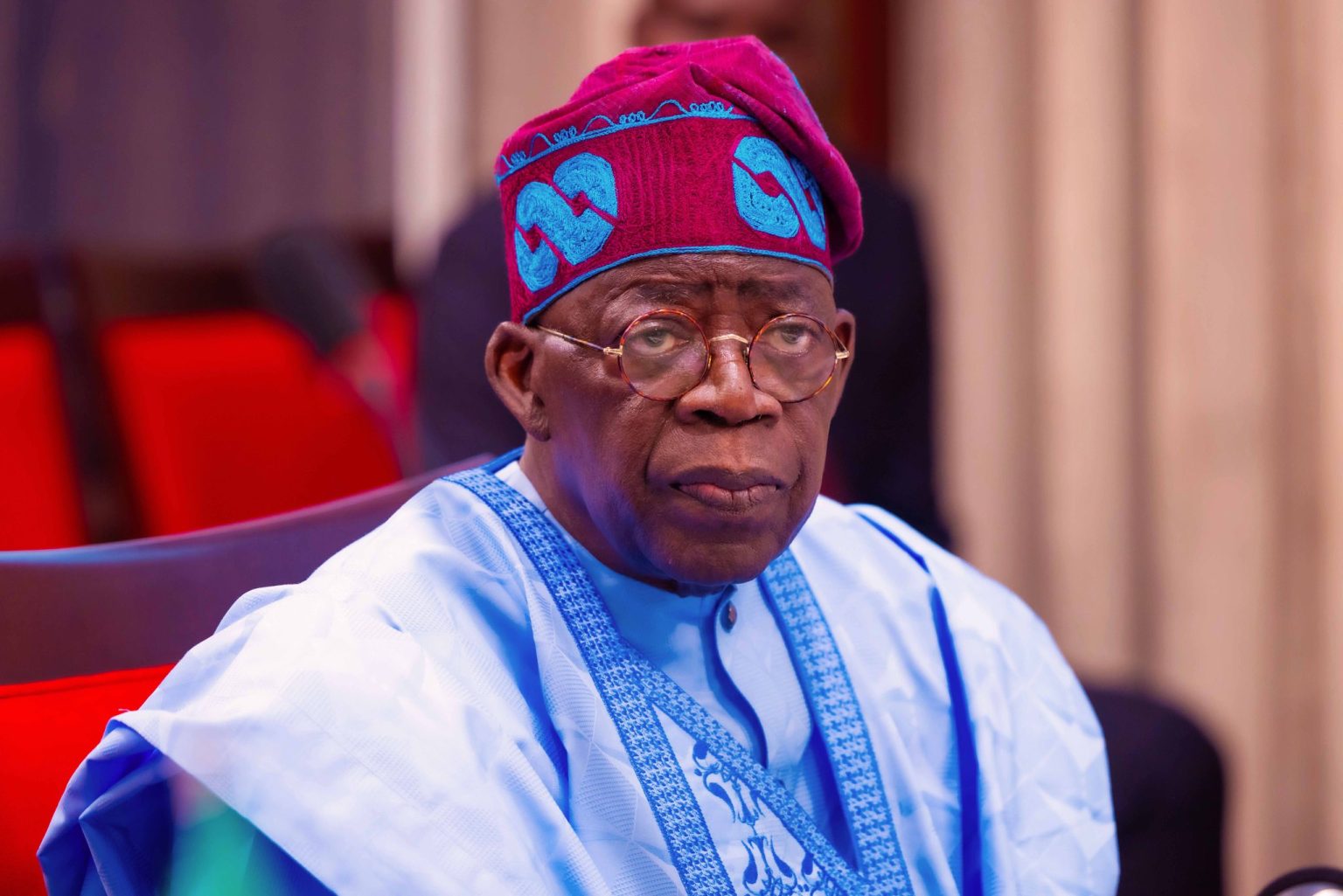
From Abel Zwanke, Lafia
The Chief Executive Officer of the Community Initiative for Character Moulding and Entrepreneurship Development (CiCMED) and Chairman of Keftigga Group, Kefas Elisha Tigga, has reaffirmed support for President Bola Ahmed Tinubu and called on Governor Abdullahi Sule to contest the Nasarawa North Senate seat at the end of his tenure.
Tigga made the call on Sunday during a press conference at the closing ceremony of the Future Planters LEAD Africa Festival 2025 held at Gaji Luxury Hotel, Akwanga.
He described the festival, with the theme “Sowing the Seeds of Change, Harvesting the Future of Africa,” as a major success, noting that it has strengthened the Future Planters Network across Northern Nigeria and the continent.
“This year, we trained hundreds of young people in leadership, agriculture, financial literacy, climate action and entrepreneurship,” he said. “Our network has now grown to over 14,000 members. We are not just planning the future; we are planting and building it.”
Tigga said the country is passing through a challenging period, insisting that Nigerians must support President Tinubu to succeed.
“Anyone who understands leadership knows this is not the easiest season for President Bola Ahmed Tinubu,” he said. “But we choose unity and encouragement. We choose to stand with the President.”
According to him, the administration’s reforms have begun to reflect in economic stability, resource allocation and support for innovation, agriculture and MSMEs.
“This is not the time to tear down the nation with sentiments,” he stated. “This is the time to build together.”
Tigga commended Governor Abdullahi Sule for what he described as “quiet but impactful leadership,” particularly in mining, agriculture, infrastructure and human capital development.
“The story of Nasarawa State cannot be told without your name written in gold,” he said. “As your constitutionally allowed tenure draws near, we in the Future Planters Network urge you to contest for the Senate. This is not retirement; this is deployment.”
He added that Sule’s experience would be valuable in shaping legislation on mining, agriculture, security and youth development.
Tigga expressed gratitude to volunteers, partners, government agencies and supporters of CiCMED’s programmes, while urging youths and development partners to commit to national growth.
“We believe in continuity, sustainability and leadership succession rooted in integrity,” he said. “Together, we will build a stronger Nasarawa, a stronger Nigeria and a rising Africa.”
By Laide Akinboade, Abuja
The Peoples Democratic Party (PDP) Board of Trustees (BoT), Wike’s fraction on Sunday, vowed to restore confidence of its members across Nigeria.
The BoT Chairman, Sen. Mao Ohuabunwa stated this in Abuja.
Ohuabunwa said arrangements are almost concluded to organize congresses in states where they have not yet been held.
He told members that the national leadership is ready to work collaboratively with all state chapters to bring fresh leadership and stability across the country.
He outlined the PDP’s roadmap: conduct overdue state congresses, consolidate ongoing achievements, and support the national leadership to steer the party back on course.
According to him, these steps are critical to ensuring unity, transparency, and strengthening grassroots engagement.
By holding timely congresses and reinforcing organizational discipline, PDP hopes to rebuild trust among members and present a more organized, credible front ahead of future elections.
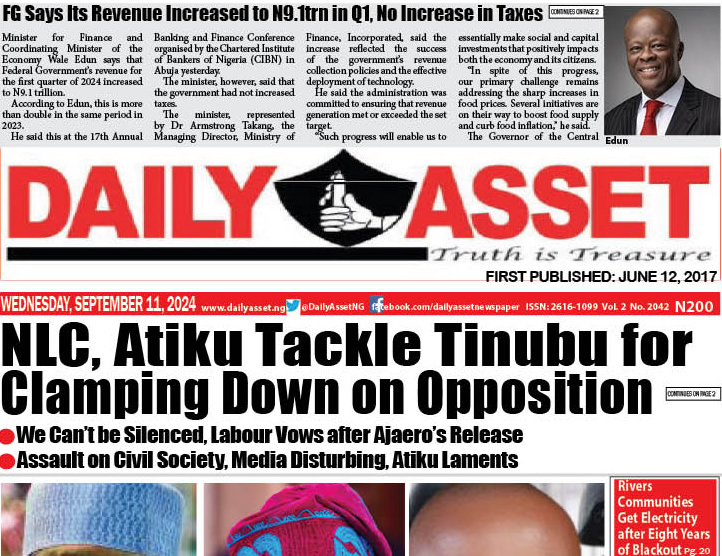


Tinubu’s Second Term: The Hope of Democracy in Nigeria
ShareBy Simon Tuleh In the annals of Nigerian history, few milestones carry the weight of democratic endurance. As President Bola...
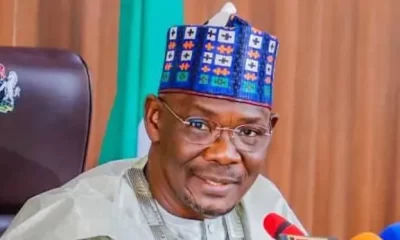

Sule to Launch Nasarawa Branded Rice Dec 17
ShareNasarawa State Governor, Abdullahi Sule said the state, in collaboration with Silvex International, a leading rice processing company, will launch...

Plateau Ranks 7th in Ease of Doing Business – Official
ShareThe Presidential Enabling Business Environment Council (PEBEC) has ranked Plateau 7th in the country in Ease of Doing Business. The...


CBN Reduces Number of Licensed BDCs to 82 Under Revised Guidelines
ShareThe Central Bank of Nigeria (CBN) has granted final licenses to 82 Bureau De Change (BDCs) to operate with effect...
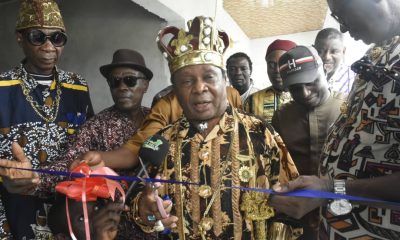

Alesa: Move Begins in Rivers to Kick out Fand Frabbing, Fraud
ShareBy David, Torough Abuja Land grabbing and fraudulent sale of lands may suffer a setback in Rivers State as government-approved...


ShareNNPCL’s New Culture of Transparency, Discipline Strengthens Financial Performance By Enam Obiosio The Nigerian National Petroleum Company Limited (NNPCL) is...


Nigeria: Leadership as Red-Carpet Exchange Programme
ShareBy Ebuka Ukoh Nigeria surprises people who believe leadership involves duty. You watch a government hold an economic summit in...

FG, ICPC Launch Sweeping Audit of N36trn Road Contracts
ShareBy Tony Obiechina, Abuja The Independent Corrupt Practices and Other Related Offences Commission (ICPC) and the Federal Ministry of Works...

Jaiz Bank, IILM Sign Agreement as Africa’s First Primary Dealer
ShareBy Tony Obiechina, Abuja Jaiz Bank, Nigeria’s pioneer non-interest bank, has signed an agreement with the International Islamic Liquidity Management...

NLC threatens Nationwide Protest over Insecurity
ShareThe Nigeria Labour Congress (NLC) has announced plans to hold a nationwide protest on Dec. 17 over insecurity in the...