
Oil & Gas
Lawyers Integral to Optimal Regulatory Compliance in Oil Business – NMDPRA

The Midstream and Downstream Petroleum Regulatory Authority (NMDPRA) said the role of legal practitioners is critical across the midstream and downstream energy business value chain in the promotion of optimal regulatory compliance.
Chief Executive, NMDPRA, Farouk Ahmed said this on Monday in Abuja at its 2025 General Counsel and Legal Advisers Forum for Midstream and Downstream Petroleum Companies in Nigeria.
The forum has its theme as ‘Advancing a Collaborative Compliance Culture in Nigeria’s Midstream and Downstream Petroleum Sectors’.
Ahmed was represented by Ogbugo Ukoha, Executive Director, Distribution System, Storage and Retailing Infrastructure, NMDPRA.
He said that the sector’s complexity required a unified compliance culture, rooted in robust and enabling legal frameworks, transparency, accountability and shared responsibility.
“The scope of operations of the sector covers hydrocarbon processing, wholesale marketing, transportation, storage, distribution and retail, and its complexity requires more than technical efficiency.
“The role of legal practitioners is critical across the midstream and downstream energy business value chain.
“They help to promote optimal regulatory compliance to set rules and standards of operations in our complex operational and volatile market environment,’’ he said.
Ahmed said that strategic and pragmatic solutions would be established from the forum to enhance performance of the sector towards creation of shared value for investors and the extensive market of Nigeria and the region.
He said that the Petroleum Industry Act (PIA 2021) had fundamentally restructured Nigeria’s petroleum industry by delineating regulatory responsibilities of the industry into the Upstream, midstream and downstream Petroleum operations.
According to him, the Act prescribed that all operations in the midstream and downstream sectors could only be conducted under appropriate licenses, permits and authorisations granted by the NMDPRA.
He said the PIA also mandated NMPDRA to make regulations concerning midstream and downstream petroleum operations in consultation with its licensees and stakeholders.
“As a result of the feedback received from our stakeholders on the need to strengthen regulatory compliance through simplified regulations, NMDPRA is implementing an inclusive stakeholder process of streamlining the gazetted and published regulations.
“This process will mitigate the complexities of navigating and implementing numerous regulations; eliminate inconsistencies and repetitions across multiple regulations; streamline regulatory processes for ease of business; and encourage investments in the industry.
“Kindly use this forum to critically review and make recommendations on the above.
This will enable us to improve the overall compliance of operators and the performance of the regulatory instruments (Legal frameworks and licenses) in the midstream and downstream sectors,” He said.
He said that NMDPRA would continue its commitment to effective stakeholder collaborations that would foster ease of doing business, investor confidence and sustainable operations.
Deputy Speaker, House of Representatives, Benjamin Kalu said that the PIA as a testament to the foresight and dedication of the National Assembly, had fundamentally reshaped Nigeria’s petroleum sector.
Kalu was represented by Ugochinyere Ikenga, Chairman, House Committee on Petroleum Resources, Downstream.
He said that the act had proven how strategic legislation could serve as a potent catalyst for compliance, investment attraction, and robust sector growth.
“For the PIA to remain truly effective, adapting to a dynamic global energy landscape and addressing unforeseen challenges, there must be an institutionalised robust mechanism for its continuous refinement.
“This is precisely where the invaluable insights of our nation’s petroleum experts and our general counsels, the legal architects and navigators of this complex framework, become indispensable.
“For or further synchronisation and effective post-legislative scrutiny, we must actively solicit and integrate your concerns.
“We envision a future where the National Assembly’s specialised committees regularly invite you professionals to public hearings and dedicated technical working groups,” he said.
Kalu said that this proactive engagement would transform abstract legal principles into tangible operational realities, furnishing us with the real-world data and case studies needed to truly understand the PIA’s strengths and weaknesses.
“Your feedback will illuminate where the PIA might be technically challenging, where legal interpretations create bottlenecks, or where new global trends necessitate legislative evolution,’’ he said.
he National Bureau of Statistics (NBS) said the average retail price of a litre of petrol witnessed a drop from N1,184.83 in October 2024 to N1,052.31 in October 2025.
The NBS made this known in its Petrol Price Watch for October 2025 released in Abuja yesterday.
It stated that the October 2025 price of N1,052.
31 represented a 11. 18 per cent decrease over the price of N1,184. 83 recorded in October 2024.“Comparing the average price value with the previous month of September, the average retail price increased by 8.42 per cent from N970.59.”
On state profiles analysis, the report said Kogi paid the highest average retail price of N1,110.
00, followed by Sokoto and Borno at N1,105.93 and N1,101.63, respectively.“Conversely, Oyo, Nasarawa and Abia paid the lowest average retail price at N1,001.79, N1,009.38, and N1,012.50, respectively,’’ it stated.
Analysis by zones showed that the North-East recorded the highest average retail price in October 2025 at N1,072.74 while the South-West Zone recorded the lowest price at N1,032.81 per litre.
The NBS also stated in its Diesel Price Watch Report for October 2025 that the average retail price was N1,398.57 per litre.
It said that the October 2025 price of N1,398.57 per litre amounted to a 2.96 per cent decrease on a year-on-year basis over the N1,441.28 per litre paid in October 2024.
“On a month-on-month basis, the price increased by 9.45 per cent from the N1,277.81 per litre recorded in September 2025,’’ it added.
On state profile analysis, the report said the highest average price per litre of diesel in October was recorded in Enugu at N1,468.29, followed by Niger at N1,465.69 and Jigawa at N1,437.40.
On the other hand, the lowest price was recorded in Katsina at N1,301.24 per litre, followed by Edo at N1,307.84 and Kebbi at N1,308.94.In addition, the analysis by zones showed that the South-East Zone had the highest price of N1,415.85 per litre, while the South-South recorded the lowest price at N1,387.18 per litre.(NAN)

Dangote Petroleum Refinery has said that its gantry price reduction actually prompted petrol price downward adjustments by marketers.
The management rejected what it described as series of misleading publications claiming that the recent reduction in pump prices by oil marketers is a consequence of the Federal Government’s reversal of the 15 per cent import tariff.
‘This narrative is entirely false, deliberately misleading, and inconsistent with actual market dynamics.
For the avoidance of doubt, the factor that prompted the price adjustment was our own reduction of PMS gantry and coastal prices on November 6.’ it said in a statement.According to the statement, the subsequent change in pump prices is now being wrongly attributed to a tariff decision in an attempt to distort the facts and misinform the public.
It will be recalled that Dangote Petroleum Refinery, on November 6, reduced its PMS gantry price from N877 to N828 per litre, representing a 5.6 per cent decrease, and its coastal price from N854 to N806 per litre.
These changes were publicly announced across major media platforms, including, but not limited to, The Punch, Vanguard, The Cable, Daily Trust, The Sun, The Street Journal, Petroleumprice.ng, New Telegraph, Business Hallmark, and several others, and were implemented well before marketers adjusted their pump prices.
The claim that the reduction in pump prices was driven by the suspension of the 15 per cent import tariff is therefore incorrect, it said.
‘The import tariff had received the approval of His Excellency, President Bola Ahmed Tinubu, GCFR as far back as October 21 for immediate implementation.
The refinery management noted that contrary to repeated claims by certain interests, imported products which are often below acceptable standards have consistently been sold at higher pump prices than the premium-grade fuel supplied by Dangote Refinery.
The continued importation of substandard fuel constitutes dumping, a harmful practice that undermines economic growth and industrial development.
Nigeria has witnessed the devastating consequences of such unchecked dumping before, including the collapse of the once-thriving textile industry, which was a major employer of labour, it noted.
Dangote Petroleum Refinery further reiterated its commitment to supplying high-quality, internationally benchmarked petroleum products at competitive prices, adding. “Our operations continue to moderate prices in the market, ensuring Nigerian consumers receive genuine value for money.”
The Nigerian National Petroleum Company Limited (NNPC Ltd.) is fast-tracking its transformation through strategic investments in infrastructure, governance reforms, and operational efficiency, positioning the company for a landmark Initial Public Offering (IPO).
Under its “Fit for the Future” strategy, NNPC Ltd.
aims for global competitiveness, public listing, and a pivotal role in connecting Africa to international markets through extensive gas infrastructure development initiatives.Group Chief Executive Officer, Bashir Ojulari, disclosed this during a dialogue at the 2025 Abu Dhabi International Petroleum Exhibition and Conference (ADIPEC), emphasising the company’s commitment to transparency, efficiency, and investor readiness.
Ojulari said NNPC Ltd. was steadily preparing for its IPO under the Petroleum Industry Act (PIA 2021) by improving governance, operational transparency, and accountability to meet international investment standards and expectations.
“Our IPO journey is mandated by law. We are publishing monthly performance reports and embedding global best practices to make NNPC a high-performing, investor-ready company with enhanced transparency.
“The ‘Fit for the Future’ project focuses on market leadership, building the necessary structures for IPO readiness, increasing investor attractiveness, and strengthening the company’s long-term competitiveness and operational capacity,” Ojulari said.
The CEO highlighted the transformation programme’s five core workstreams: production growth, gas monetisation, downstream optimisation, market leadership, and talent development, forming the backbone of NNPC’s strategy to become globally competitive.
Ojulari said the initiative was also reshaping NNPC’s workforce through innovation, digitalisation, and international exposure, enhancing staff capabilities via the “Talent Valley” programme and secondments with global partners.
He stated, “The new board and management were given a clear mission by the President: achieve two million barrels per day by 2027 and three million barrels per day by 2030.”
On gas development, Ojulari noted targets of 10 billion cubic feet per day by 2027 and 12 billion cubic feet by 2030, achievable through partnerships, operational efficiency, and access to broader investment capital.
He added that production recovery had been boosted by collaboration with international and indigenous operators, along with fiscal incentives under the PIA 2021, contributing to growth in oil output and investment confidence.
“Nigeria’s oil output has increased from 1.5 million to about 1.7 million barrels per day. We recently signed our first deepwater Production Sharing Contract in 15 years,” he revealed.
On gas, Ojulari said Nigeria’s reserves, exceeding 600 trillion cubic feet equivalent, positioned the country for full industrialisation and regional economic leadership, underscoring NNPC’s strategic focus on natural gas development.
He said NNPC was leading the Nigeria–Morocco Gas Pipeline Project, connecting West African economies and Europe, allowing countries along the corridor to both consume and supply gas, boosting trade and energy integration.
“The pipeline aligns with our vision to make Africa a major global gas player while promoting economic integration, industrialisation, and sustainable development across participating nations,” Ojulari said.
He added that NNPC was finalising partnerships with global operators to upgrade refineries to international standards, seeking partners with proven expertise and shared investment responsibility to enhance operational efficiency.
Ojulari reaffirmed NNPC’s commitment to advancing energy access and industrial growth across Africa, emphasising that its transformation journey was simultaneously commercial and developmental, with benefits for investors, governments, and communities alike.
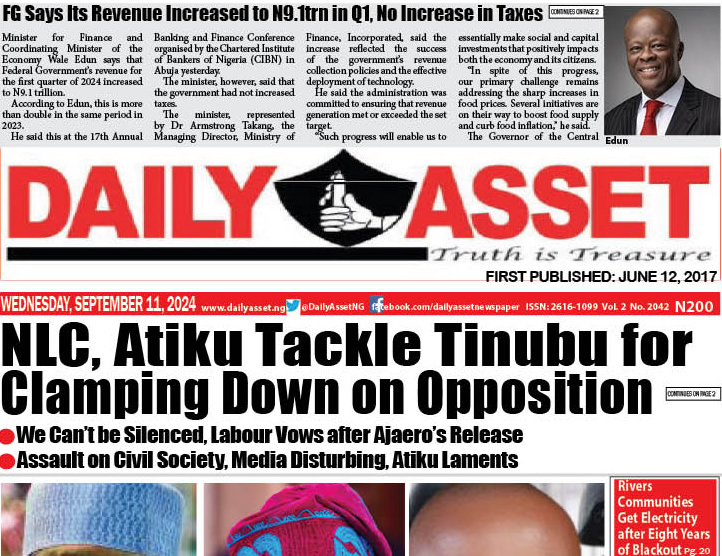


Group Backs Tinubu, Urges Sule to Run for Senate
ShareFrom Abel Zwanke, Lafia The Chief Executive Officer of the Community Initiative for Character Moulding and Entrepreneurship Development (CiCMED) and...

Ooni Installs Oluremi Tinubu as Yeye Asiwaju Ile Oodua
ShareFrom Ayinde Akintade, Osogbo The Permanent Chairman, Southern Nigeria Traditional Rulers Council (SNTRC), Arole Oodua Olofin Adimula and Ooni of...


NYSC Presidential Honor Award Winner Returns to Benue, Shows Appreciations
ShareFrom Attah Ede, Makurdi An ex- corps member and a recipient of Presidential Honour Award, Udokpo Abasi, at the weekend...


NGO Launches Climate Project Steering Committee in Benue
ShareFrom Attah Ede, Makurdi A global Non-Governmental Organisation (NGO), International Alert has inaugurated Climate Project Steering Committee in Benue State,...

A silent Emergency: Soaring Costs of Diabetes Care Spark Alarm
ShareBy Folasade Akpan For Mrs Schola Effiong, a 58-year-old confidential secretary in Calabar, managing diabetes in today’s economy feels like...

World Bank, Partners Record Progress Toward 1.5bn Healthcare Goal
ShareThe World Bank Group, global partners and countries on Saturday announced continued progress toward the goal of delivering affordable and...


UN Commits to Strengthening Nigeria’s Policy Framework, Enhancing Digital Safety
ShareThe UN Women has reaffirmed its commitment to strengthening policy frameworks, enhancing digital safety, and promoting accountability for online harms...

Nightclub Fire in India’s Goa Kills 25 People
ShareA fire at a popular nightclub in India’s coastal region of Goa has killed 25 people, local officials say. Police...
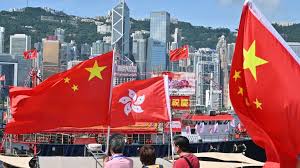

Hong Kong votes in Election as City Mourns Deadly Fire
ShareHongkongers are voting in an election seen as a test of public sentiment following a deadly fire that angered some...


PDP Crisis: Wike Camp Moves to Conduct Fresh Congresses, Convention
ShareBy Laide Akinboade, Abuja The factional Board of Trustees (BoT) of the Nyesom Wike tendency in the Peoples Democratic Party...