
NEWS
Military school ex-boys join drug war, support NDLEA

… As Marwa bags 2021 Daily Asset Public Servant of the Year Award
By Gom Mirian, Abuja
The Nigerian Military School Ex-Boys Association has expressed the willingness of its members to join the ongoing war and advocacy campaigns against the menace of illicit drug trafficking and abuse especially among Nigerian youths.
This was the solidarity message brought to the National Headquarters of the National Drug Law Enforcement Agency, NDLEA in Abuja by some leaders of the group led by their President, Engr.
Ikuponiyi said they were on the visit to identify with Marwa’s strides of accomplishment and vision for the NDLEA as an ex-boy and a pride of the ex-boys family.
He expressed the willingness of ex-boys to join advocacy campaigns to stem and eradicate the menace of use of illicit drugs amongst the Nigerian youths particularly in areas of intelligence gathering and reportage.
He commended Marwa and described him as a pacesetter and an exemplary ambassador of the NMS ExBA.
In his response, Marwa thanked the NMS Ex-Boys for their visit and offer to support the drug war, stressing that such was an indication that the key message of the War Against Drug Abuse, WADA, launched by President Muhammadu Buhari last June is fast achieving its target of mobilising every citizen to take ownership of the battle against the drug scourge.
Meanwhile, Chairman/Chief Executive Officer, National Drug Law Enforcement Agency, NDLEA, Brig. Gen. Mohamed Buba Marwa (Retd), has bagged the DAILY ASSET newspaper’s Public Servant of the year award for 2021.
The award which was presented in a well attended event held at the conference hall of Nicon Luxury Hotels Abuja on Thursday, had Professor Iyorwuese Hagher, a two-time minister of the Federal Republic of Nigeria as the chairman of the occasion.
Speaking on the modalities for selection, the Editor-In- Chief and Publisher of DAILY ASSET newspaper, Dr. Cletus Akwaya, noted that the selection was painstakingly done.
He said Gen. Marwa was selected out of numerous others in recognition of his enormous contribution to the fight against illicit drugs within one year in the saddle as the Chairman/ Chief Executive Officer of the National Drug Law Enforcement Agency.
Dr. Akwaya extolled the sterling qualities of Gen. Marwa in all positions he had occupied in the past including, Military Governor, Borno State, Military Administrator, Lagos State and Nigeria’s Ambassador to South Africa.
He described the successes recorded by Gen. Marwa within one year in office as monumental.
Dr. Akwaya stressed that the arrest of 12,306 drug peddlers, including 7 barons, seizure of 3.4 million kilograms of assorted illicit drugs as well as counselling and rehabilitation of 7,761 drug users within 12 Months remain unparalleled.
The fifth Annual Awards and Lecture had as its theme: “The Media, National Security and 2023 Elections was delivered by the DG, NTA, Mallam Yakubu Ibn Mohammed who was represented at the event.





The National Universities Commission (NUC) has lifted the embargo on the establishment and operation of foreign universities in Nigeria, a move aimed at attracting foreign direct investment and boosting the global competitiveness of the country’s higher education system.
The Executive Secretary of the NUC, Professor Abdullahi Yusufu Ribadu, announced the decision at the weekend during the 10th convocation ceremony of Gregory University, Uturu, Abia State.
He said the policy shift was designed to deepen international collaboration and strengthen the quality of university education in Nigeria.Represented at the event by Offor Chukwuemeka, Ribadu explained that foreign universities would be allowed to operate in Nigeria through six approved partnership models: franchise arrangements, branch campuses, twinning or articulation programmes, open and distance learning, acquisition, and teaching institutions.
He said the Commission had also introduced a Code of Governance for private universities to ensure uniform standards, transparency, and accountability in their operations. In addition, Ribadu noted that the NUC had carried out major curriculum reforms, replacing the Benchmark Minimum Academic Standards (BMAS) with the Core Curriculum and Minimum Academic Standards (CCMAS).
Under the new framework, he said, the NUC provides 70 per cent of compulsory core courses required for graduation, while universities are allowed 30 per cent flexibility to customise their curricula in line with their areas of expertise and emerging global trends.
The NUC boss emphasised that the reforms were geared towards equipping Nigerian graduates with 21st-century skills and enhancing their employability. He commended Gregory University for its contributions to educational innovation and development.
Abia State Governor, Dr. Alex Otti, in his remarks, praised the founder of the institution, Professor Gregory Ibe, for his vision and commitment to quality education. Represented by the Commissioner for Tertiary Education, Professor Uche Eme Uche, the governor reaffirmed his administration’s support for educational transformation in the state.
The Vice-Chancellor of Gregory University, Professor Cele Njoku, disclosed that the university had grown from three colleges to 12 in 13 years, now boasting over 53 academic departments. She added that all eight academic programmes submitted to the NUC in 2024 received full accreditation, while new courses, including Artificial Intelligence and major foreign languages, had been introduced.
Founder of the university, Prof. Gregory Ibe, represented by the Pro-Chancellor, Prof. Augustine Uwakwe, said the institution was established to make quality education accessible to Nigerians and pledged continued investment in education.
The overall best graduating student, Master Onyechere Chinedum Yadirichukwu, who graduated with a CGPA of 4.91, urged young Nigerians to take responsibility for shaping the nation’s future.
The convocation ceremony also featured the award of honorary doctorate degrees to former Enugu State Governor Ifeanyi Ugwuanyi; Chairman of the Abia State Council of Traditional Rulers, HRM Eze Linus Nto Mba; and Chairman of the Manufacturers Association of Nigeria, Imo State chapter, Dr Okenze Sylvester Obinna.

By Tony Obiechina, Abuja
The Revenue Mobilisation Allocation and Fiscal Commission (RMAFC) on Monday organised a 2-Day National Stakeholders’ Discourse on “Enhancing Fiscal Efficiency and Revenue Growth under the Nigeria Tax Act, 2025” in Abuja.
The event brought together key government institutions, regulators, the private sector and development partners to strengthen collaboration and align strategies for the effective implementation of Nigeria’s new tax framework.
Declaring the event open, the Chairman, RMAFC, Dr. Mohammed Bello Shehu described the engagement as both timely and necessary, considering the fact that the Nigeria Tax Act, 2025, will come into force on 1 January 2026.
He said, “One critical but necessary fiscal matter that has elicited and continues to attract public discourse is the Nigeria Tax Act, 2025, which will come into effect on 1st January 2026″.
The Chairman explained that the Act followed extensive consultations and reforms by the Federal Government and represents a major step towards strengthening Nigeria’s fiscal architecture.
According to him, “the Nigeria Tax Act, 2025 has harmonised previously fragmented tax laws, reduced duplication and obsolete provisions, and enhanced the ease of doing business.”
He further stated that the Commission convened the Discourse in line with its constitutional mandate, stressing that “Paragraph 32(c) of Part I of the Third Schedule of the 1999 Constitution mandates the Commission to advise the Federal, State and Local Governments on fiscal efficiency and methods by which their revenue can be increased.”
Highlighting recent fiscal outcomes, the Chairman noted that, “The growth in Federation Account inflows reflects the impact of fiscal reforms, stronger audits, digital tracking and improved coordination among revenue agencies, which have expanded the revenue pool available for allocation to the three tiers of government.”
In his Keynote Address, the Chairman of the Presidential Fiscal Policy and Tax Reforms Committee (PFTRC), Prof. Taiwo Oyedele noted that the Nigeria Tax Act, 2025 was a long-overdue but necessary reset of Nigeria’s tax system.
“This reform should have been done 20 years ago. The next best time is now”, he said.
According to him, incremental fixing of tax could no longer solve the problem; adding that” we needed a transformation.”
Oyedele explained that the reforms are designed to promote fairness, simplify compliance and support economic growth, arguing that “we were taxing poverty and capital investments, and that is not the way to build a prosperous and inclusive economy.”
According to him, the new tax framework is structured to protect low-income earners, support small businesses, simplify multiple tax laws, and create a more predictable environment that restores investor confidence.
He stressed that the success of the reforms must translate into tangible benefits for citizens, stating that, “When we say the economy is improving, it must mean something to households and businesses; macro gains must translate into micro outcomes.”
In his Welcome Address, the Chairman, Fiscal Efficiency and Budget Committee, RMAFC, Ambassador Desmond Akawor, described the discourse as a defining moment in Nigeria’s fiscal journey.
“The choices we make today will shape the stability, sustainability and resilience of Nigeria’s public finances for many years to come,” he said. He added that the Nigeria Tax Act, 2025 is aimed at modernising tax administration, strengthening compliance frameworks, closing revenue leakages, and expanding the revenue base across all tiers of government.
Goodwill messages at the opening ceremony reflected broad stakeholder alignment behind the reforms. The Governor of the Central Bank of Nigeria, Olayemi Cardoso, represented by the Deputy Governor, Mr. Philip Ikeazor said the reforms are designed to broaden the tax base, improve compliance and reduce dependence on oil revenues while strengthening transparency through modernised and digitalised tax administration.
The Comptroller-General of the Nigeria Customs Service, Adewale Adeniyi who was represented at the occassion noted that the reforms signal a more equitable tax environment. He said the measures are indicative of a fairer tax system where businesses can thrive while emphasizing the importance of inter-agency collaboration and technology-driven implementation.
The President of the Nigerian Association of Chambers of Commerce, Industry, Mines and Agriculture (NACCIMA), Engr. Jani Ibrahim, commended RMAFC for engaging the private sector, noting that “When tax policies are clear, predictable and business-friendly, enterprises are better positioned to invest, expand, create employment and contribute meaningfully to national revenue.”
From the industrial sector, the Permanent Secretary, Federal Ministry of Steel Development, Dr. Chris Osa Isokpunwu, described the Nigeria Tax Act, 2025 as a critical step towards modernising the tax system, strengthening compliance, reducing leakages, and promoting fairness and transparency. He highlighted the steel sector’s potential to expand Nigeria’s industrial tax base through value addition and increased production.
Speaking at the close of the opening ceremony, the Secretary to the Commission, Joseph Okechukwu Nwaze, emphasised the importance of sustained engagement beyond the Discourse, noting that the success of the Nigeria Tax Act, 2025 will depend on collective ownership, effective coordination and diligent implementation by all stakeholders across the three tiers of government.
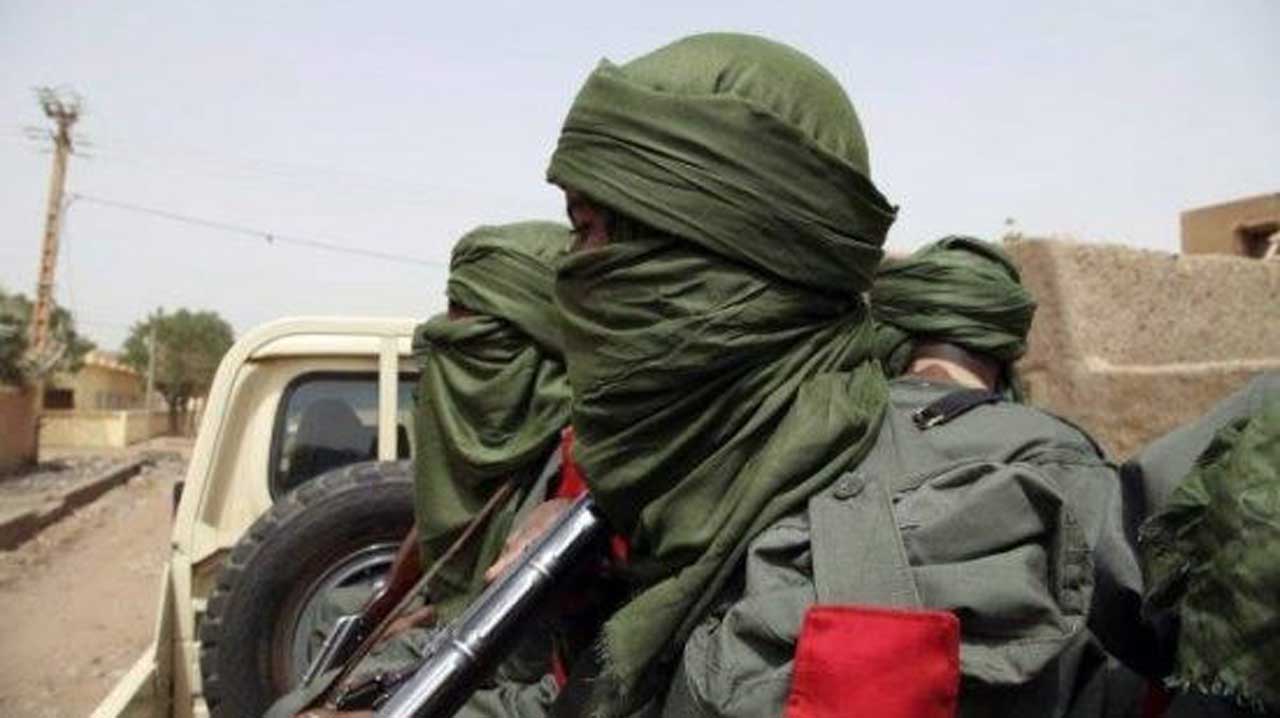
From Joseph Amedu, Lokoja
Oke-Agi and Ilai communities in Mopa-Amuro local government area of Kogi State were attacked by some bandits on Sunday
DAILY ASSET reliably gathered that the attacks which occurred at about 4:00 am on Sunday left three people dead, others injured, and some residents abducted.
DAILY ASSET also learnt that armed bandits were said to have struck two locations almost simultaneously, operating for more than an hour before distress calls were eventually received.
In the first incident, Jamroro settlement, located between Oke-agi and Takete Isao and largely inhabited by Tiv people, was attacked. Two persons were confirmed killed, while three others sustained injuries and are currently receiving treatment at an undisclosed hospital.
The second attack occurred in Bassa community near Ilai Grammar School, less than one kilometre from Ilai town. One person was reportedly killed during the raid, while three others were kidnapped by the attackers.
The incidents were confirmed by the Chairman of Mopamuro Local Government Area, Hon. Ademola Bello, alongside traditional authorities and community leaders from Oke-agi and Ilai.
Residents and community sources expressed deep concern over the delayed response to the attacks, noting that the assailants operated freely for over an hour before help was alerted.
The renewed violence has heightened fear across the area, with residents calling on security agencies and government authorities to urgently deploy decisive measures to curb the rising wave of coordinated bandit attacks in Mopamuro and surrounding communities.
Local officials were said to be with the injured victims at the hospital.
Efforts for police confirmation failed as the Kogi State Police Command’s Spokesman CSP William Aya could not be reached.
 | ReplyReply allForwardAdd reaction |
NUC Opens Nigeria’s University Space to Foreign Institutions
ShareThe National Universities Commission (NUC) has lifted the embargo on the establishment and operation of foreign universities in Nigeria, a...

RMAFC Convenes Stakeholders Confab to Boost Effective Tax Act Implementation
ShareBy Tony Obiechina, Abuja The Revenue Mobilisation Allocation and Fiscal Commission (RMAFC) on Monday organised a 2-Day National Stakeholders’ Discourse...

Bandits Attack Kogi Communities, Kill Three Persons
ShareFrom Joseph Amedu, Lokoja Oke-Agi and Ilai communities in Mopa-Amuro local government area of Kogi State were attacked by some...


Palmer out for Chelsea’s Carabao Cup Quarter-final, Says Maresca
ShareChelsea attacker Cole Palmer will not feature in the Blues’ Carabao Cup quarter-final against Cardiff City, head coach Enzo Maresca...


Road Accident Claims Four Persons in Kogi
ShareFrom Joseph Amedu, Lokoja The Federal Road Safety Corps (FRSC), has confirmed the death of four persons in a motor...

Tinubu Happy with PAP’s Scholarship Scheme, Says Otuaro
ShareFrom Mike Tayese, Yenagoa The Administrator of the Presidential Amnesty Programme (PAP), Dr. Dennis Otuaro, has said that President Bola...


Enugu Police Bust Armed Robbery Operation, Arrest Suspect, Recover Arms
ShareFrom Sylvia Udegbunam, Enugu The Enugu State Police Command has sustained its onslaught against criminal activities during the Yuletide season...

NDLEA Busts Drug Suspect, Seizes 457kg Skunk Marijuana in Edo
ShareThe National Drug Law Enforcement Agency (NDLEA) on Monday, said it intercepted 457kg of skunk marijuana, during an intelligence-led raid...

Tinubu Urges Nigerians to Uphold Buhari’s Discipline, Integrity
SharePresident Bola Tinubu on Monday, urged Nigerians to embrace the discipline, integrity and service ethos of former President Muhammadu Buhari,...

PDP Calls for Constitutional Safeguards to Limit President’s Scope of Powers
ShareBy Johnson Eyiangho, Abuja The Peoples Democratic Party (PDP) has urged the National Assembly to urgently initiate constitutional and legislative...