
POLITICS
Moles, Betrayers Destroying PDP – Suswam

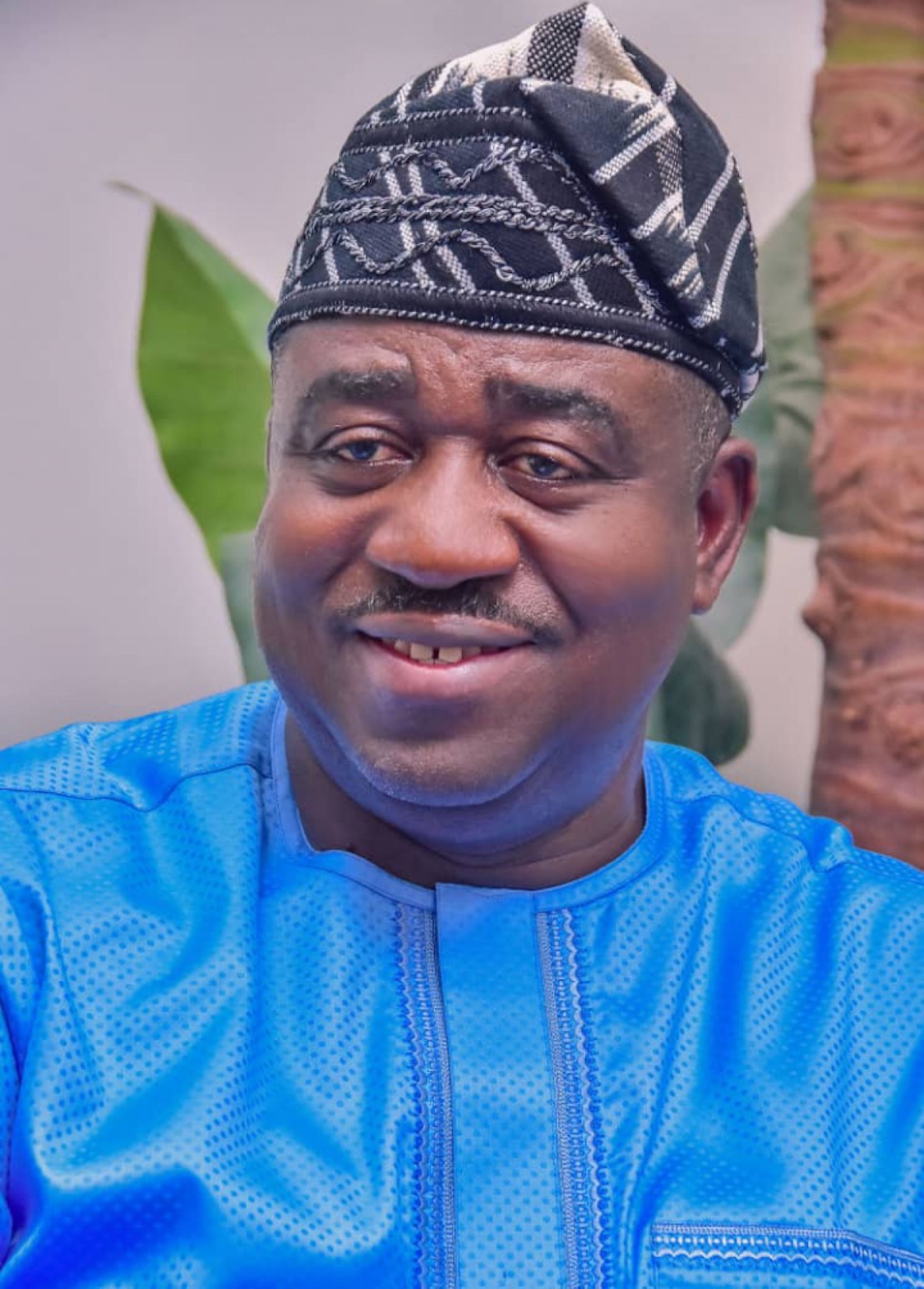
Sen. Gabriel Suswam, former Governor of Benue, has blamed the crises currently rocking the Peoples Democratic Party (PDP), on the activities of moles planted by the enemies of the party to destroy it.
“There are many moles and betrayers in the party, they’re planted to kill the party.
“What PDP wants now is proper leadership and once we have the right leaders, the party will rise again.
God willing, PDP will bounce back,” Suswam told newsmen on Sunday in Abuja.
He recalled that the party was in power at the national level for 16 years, adding that it derailed when some people began to assume the place of untouchable ”lords”
“Such arrogance affected the psyche of the Nigerians and they resisted the arrogance, and started looking for alternatives.
”They were not happy and internal crises set in within the party and that is how PDP lost out,” he said.
Suswam, who is aspiring to be the National Chairman of the party, said that the PDP has a clear chance of reclaiming power at the national level.
“The All Progressive Congress (APC) has been in power for about nine years now and Nigerians believe PDP did well in spite of its shortcomings.
“There are many people waiting for the PDP to organise itself.
“Power is waiting for PDP; people love PDP. We only need to think together, we have to reason together.”he said.
Suswam particularly lamented rate at which some high-profile members of the PDP like former Imo governor, Emeka Ihedioha, were leaving the party.
“It is regrettable that key members are leaving. Some have told me they are leaving because of lack of leadership within the party.
“You need a forward-looking leadership that can boost our confidence. Once we have that in place, those leaving us will come back.
“One major problem is that the major stakeholders of the party do not have confidence in the current leaders and so they are giving up.
“A lot of people want to stay, but they do not see much hope. Others want to join the PDP, but the crisis in the party is discouraging them and those that are leaving are doing so out of frustration, not that they do not like the party.
“We can resuscitate the party once there is confidence in the leaders. Once PDP can unite, we can win elections anytime in Nigeria and all we need to do is to put our house in order,” he said.
Suswam, who spent eight years in the House of Representatives and another eight as governor before moving to the senate, explained why he remain the best man to lead the PDP.
“I joined the party in 1998 and have remained there unlike some that keep jumping from one party to another.
“Those who are calling on me to take up the job say I am the ideal man because I am not controversial.
“I know the party in and out; I know the characters. I also believe that PDP needs somebody who can interact with all the major stakeholders.
“Getting them to discuss requires someone they can trust. I am close to key leaders like former Vice President Atiku Abubakar and FCT Minister, Nyesom Wike, it won’t be difficult for me to bring them together to a roundtable.
“I have my plans on how to bring everyone on board. Once we can iron out the issues, PDP will be back on track,” he said.
He also spoke on how Nigeria had fared under democratic governance.
“I think it is commendable and a huge plus that we have even sustained democracy for this long.
“We have also recorded some improvements, but we should have done better.
“Former President Olusegun Obasanjo started very well, especially in the area of the economy and even politically, he did well.
“Obasanjo gave us a solid base, but mediocrity has taken over with religion and ethnicity becoming key factors in governance.
“But we have failed to enthrone democracy in the states as the ruling parties there take all the seats leaving nothing for the opposition.
“Many leaders have also placed self-interest far above the general interest which has made it impossible to serve the common people.
“For democracy to benefit Nigerians, leaders must place public interest above selfishness and greed,” Suswam said. (NAN)
POLITICS
SDP Leader, Adebayo Urges Nigeria to Reconnect With Independence-era Ideals at Stakeholders’ Summit
By Mike Odiakose, Abuja
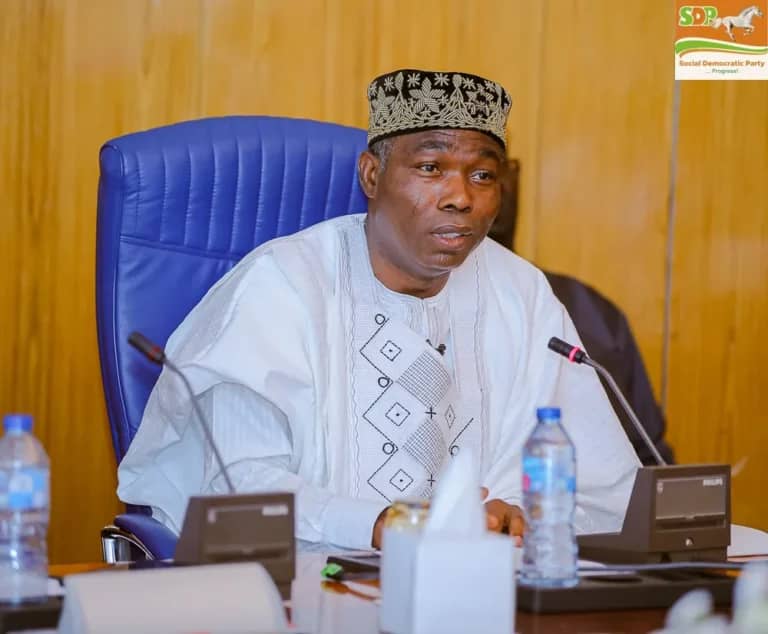
The national leadership and former presidential candidate of the Social Democratic Party (SDP), Prince Adewole Adebayo, has advocated a renewed commitment to the foundational principles that shaped Nigeria’s independence, emphasizing that governance rooted in public good—not transactional politics—should define the nation’s political direction.
He made this call during a high-level meeting held yesterday in Osun State, which brought together Afenifere, the Northern Elders Forum (NEF), the Arewa Consultative Forum (ACF), and other prominent national figures.
Addressing participants at the gathering, Adebayo highlighted that Nigeria was founded as a negotiated federation, with leaders from the North, East, West, and South collaborating to secure independence during the Lancaster House constitutional conferences.
He explained that the country’s early political parties were established to drive development plans grounded in equity and inclusion, but noted that military intervention derailed that trajectory.
“Since then, our political system has largely reflected military influence and post-military tendencies,” he said.
Adebayo stated that the Osun meeting was convened to revive a unifying national philosophy based on social democracy.
According to him, the objective is to ensure that both political aspirants and citizens clearly understand the responsibilities embedded in the social contract of governance.
“Our aim is to deliver the greatest good for the greatest number of Nigerians, through a system that contrasts sharply with what we see today,” he added.
He stressed that the effort transcends the SDP and Afenifere, focusing instead on restoring the core values that underpinned Nigeria’s early political development.
Referencing legacy political groups such as the Action Group, UPN, PRP, NEPU, UMBC, the Northern People’s Congress, and the NCNC, Adebayo noted that they were all driven by a shared commitment to national service and progress.
“We are uniting these philosophies to remind Nigerians that the essence of politics is governance—good governance. It should not be reduced to a pursuit of personal gain or treated like a casino by self-serving politicians,” he said.
He concluded by reiterating that politics must once again serve as a vehicle for advancing the welfare of the Nigerian people, rather than a means for individual enrichment.
By Mike Odiakose, Abuja
The Independent National Electoral Commission (INEC) has removed the names of the National Working Committee (NWC) of the African Democratic Congress (ADC) led by David Mark from its official portal, in compliance with a Court of Appeal directive, as a rival faction staged a protest at its Abuja headquarters demanding recognition.
In a statement on Wednesday, INEC said the decision was taken to obey a March 12, 2026 judgment of the Court of Appeal, which ordered all parties to maintain the status quo ante bellum—the state of affairs before the dispute, pending the determination of a substantive suit before the Federal High Court in Abuja.
The commission explained that although the Mark-led NWC was uploaded to its portal on September 9, 2025, the action occurred seven days after the legal challenge had already been filed. Consequently, it resolved to delist the officials to avoid undermining ongoing judicial proceedings.
INEC also rejected a request by a rival faction led by Nafiu Bala to recognise him as acting national chairman, warning that such a move would violate the appellate court’s order. It further announced a total suspension of engagements with all factions of the party, including monitoring of meetings, congresses, and conventions, until the courts deliver a final ruling.
“The Commission shall not receive any further communication or deal with any of the parties or groups pertaining to the affairs of the party,” INEC stated, reiterating its commitment to neutrality and adherence to judicial pronouncements.
The development comes as supporters of the Bala faction protested at INEC’s headquarters in Abuja, insisting that the commission must recognise their leader in line with the same Court of Appeal judgment.
Led by Bala, the demonstrators carried placards with inscriptions such as “Obey the Court” and “INEC must recognise Nafiu Bala,” accusing the electoral body of disregarding judicial authority and undermining the rule of law.
Speaking during the protest, Abimiku Monday, Special Adviser on Strategy to Bala, said the commission had been formally notified of the court ruling but failed to act, warning that such actions could erode public trust in democratic institutions.
Other speakers, including activist Abdullahi Ahmed and civil society leader Basah Mohammed, said the protest was aimed at defending democratic principles and ensuring institutional accountability. They urged INEC to remain impartial and resist external influence, while calling on the National Assembly to exercise oversight.
However, INEC maintained that its actions were guided strictly by the court order, which it interpreted as requiring a halt to all actions that could prejudice the outcome of the case.
Addressing the protesters, INEC’s Assistant Director of Security, Mohammed Hamma, appealed for calm, noting that the commission’s leadership was attending an official workshop in Lagos. He assured them that their petition would be delivered.
The ADC leadership crisis, which pits the Mark-led faction against Bala’s camp, has triggered multiple legal battles, with both sides seeking judicial affirmation of their claims to the party’s national structure. The dispute now remains in the hands of the courts as INEC steps back from all involvement pending a final verdict.
By Eze Okechukwu, Abuja
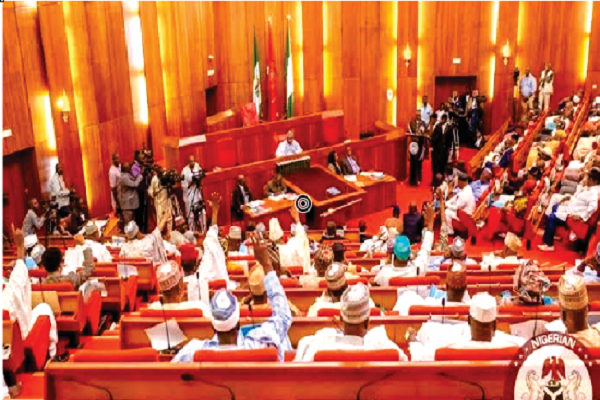
In a series of far-reaching fiscal decisions on Tuesday, the Senate approved a $6 billion external borrowing request by President Bola Tinubu, passed the N68.3 trillion 2026 Appropriation Bill, and extended the implementation of the 2025 capital budget to June 30, signaling an aggressive push to sustain infrastructure spending and stabilize public finances.
The upper chamber, presided over by Senate President Godswill Akpabio, granted expedited approval for the loan request shortly after receiving formal communication from the President.
The package includes $5 billion from Abu Dhabi Bank for budget deficit financing and debt servicing, alongside a $1 billion facility from UK Export Finance through Citibank, London, targeted at rehabilitating critical port infrastructure.The port projects—covering Lagos Port Complex and Tin Can Island Port—are expected to boost efficiency, improve safety standards, and reposition Nigeria as a regional trade hub while supporting non-oil revenue diversification.
The approval followed the adoption of a report presented by Senator Aliyu Wamakko, Chairman of the Senate Committee on Local and Foreign Debts, underscoring the legislature’s backing of the Executive’s borrowing strategy amid widening fiscal gaps.
In a related development, the Senate also passed the 2026 Appropriation Bill of N68.3 trillion after considering a report laid by the Appropriations Committee chaired by Senator Solomon Olamilekan Adeola. The passage reflects an increase over earlier proposals and reinforces the government’s expansionary fiscal stance.
Earlier in plenary, President Tinubu had requested legislative approval for a N9 trillion upward review of the 2026 budget, raising it from N58.4 trillion to N67.4 trillion. The proposal, referred to the Appropriations Committee, is aimed at regularising outstanding obligations, integrating existing debt into the fiscal framework, and aligning expenditure with macroeconomic stability goals.
Meanwhile, lawmakers moved to prevent disruption of ongoing projects by extending the capital component of the 2025 budget from March 31 to June 30, 2026.
Leading debate on the amendment bill, Senate Leader Opeyemi Bamidele warned that without the extension, many projects risk abandonment due to low execution levels, despite about 30 per cent of funds already released to Ministries, Departments, and Agencies.
Supporting the move, Deputy Senate President Barau Jibrin said the extension aligns with the administration’s infrastructure agenda and would ensure continuity of critical national projects.
The developments highlight the Federal Government’s increasing reliance on a mix of domestic and external borrowing to finance ambitious budgets, as well as the National Assembly’s willingness to fast-track fiscal measures aimed at sustaining economic growth and infrastructure development.


Nigerian Military Reports Major Gains in Nationwide Anti-Terror Operations
ShareBy David Torough, Abuja The Armed Forces of Nigeria has announced significant operational successes in its ongoing counter-terrorism and anti-crime...

Group trains 50 girls on Menstrual hygiene, skill acquisition etc
ShareBy Laide Akinboade, Abuja An expert in education, has urged adolescents girls in Abuja, to ensure they acquire vocational Skills...

SDP Leader, Adebayo Urges Nigeria to Reconnect With Independence-era Ideals at Stakeholders’ Summit
ShareBy Mike Odiakose, Abuja The national leadership and former presidential candidate of the Social Democratic Party (SDP), Prince Adewole Adebayo,...


Ododo Flags Off 728 Government-owned Renovated Public Schools in Kogi
ShareFrom Joseph Amedu, Lokoja Kogi state Governor, Usman Ododo has launched the renovation of 728 Government-owned Public Schools under the Adolescent Girls Initiative for Learning...


Super Eagles Set for Poland, Portugal Friendlies Ahead of World Cup
ShareThe Super Eagles will face Poland and Portugal in international friendlies in June as part of preparations for upcoming global competitions, the Nigeria Football...


Iran Threatens U.S, Israel with Harsher Attacks
ShareIran has warned the United States (U.S.) and Israel that it would launch further and more severe attacks, escalating tensions amid ongoing hostilities. A spokesman for...

EFCC Seeks Final Forfeiture of 57 Properties Linked to Malami
ShareThe Economic and Financial Crimes Commission, on Thursday, urged the Federal High Court in Abuja to order the permanent forfeiture...

Easter: NSCDC Deploys 57,000 Personnel Nationwide
ShareThe Nigeria Security and Civil Defence Corps (NSCDC) has deployed 57,000 operatives nationwide to ensure security of lives and property...


NSIA Grows Net Asset Value to $3.40bn in 2025
ShareBy Tony Obiechina, Abuja Nigeria Sovereign Investment Authority(NSIA) has announced its 2025 Group Financial Performance posting a net Asset value...

ADC, APC Clash over INEC Role as Leadership Crisis Deepens
ShareBy David Torough, Abuja A fresh political storm erupted on Thursday as the African Democratic Congress (ADC) and the All...