
NEWS
Mutfwang Light-up Two Rural Communities with 550kWp Solar Hybrid Mini-grid


From Jude Dangwam, Jos
Plateau state Governor, Caleb Mutfwang has lighted up two communities of Bakin-Ciyawa and Kwande in Qua’an Pan Local Government Area of the state with a 550kWp solar hybrid mini-grid projects power supply.
Mutfwang was represented by the Commissioner for Tourism, and Hospitality, Hon.
Cornelius Doeyok, commended the Nigeria Rural Electricity Agency for the partnership to bring light to the rural communities towards improving the lives and living conditions of people of the area.He maintained that with a sustainable power supply new economic opportunities will be unlocked in the coming days as the project will support local businesses, and improve access to key services such as education, ICT and healthcare in the southern part of the state.
Mutfwang recalled that a N1.2 billion counterpart funding was paid to enable the primary health clinics to get lighted through such projects which his administration is determined to ensure it comes to limelight in no distant time.
The 550kWp solar hybrid mini-grid projects implemented by the Rural Electricity Agency were unveiled in both communities to reduce estimated 600 tons of carbon emissions every year in the area.
Recall that the Plateau State governor last year entered into a Memorandum of Understanding (MoU) between the state government and REA to light up rural communities in the state.
The partnership between the Plateau State government and the Rural Electrification Agency (REA) is to improve power supply in rural communities using solar energy.
The Managing Director of Rural Electrification Agency (REA), Abubakar Aliyu at the commissioning disclosed that the project is part of an Interconnected Mini-Grid Accelerated Scheme (IMAS), which aims to reach 125,000 beneficiaries across the six geopolitical regions of the country.
Aliyu, represented by the Executive Director, Doris Uboh, noted that IMAS was established to accelerate the development of Nigeria’s mini-grid market and provide clean, renewable energy to the underserved communities.
According to him, the projects are part of the 11 million Euros grant from the European Union and the German Government to provide electricity for rural communities.
He urged the communities to protect the project, stressing that while some communities are sweating to upgrade to the quantum of the project, 10,000 communities have been mapped out, while over 20, 000 communities across the federation have not been electrified.
The MD assured that protecting the project would encourage the agency to extend the solar project to its adjoining communities stressing that with the commissioning of the project, the communities would experience economic boom and expansion.
He said Carbon Emission Reduction and Environmental Impact is one of the most profound benefits of the solar mini-grids impact on the environment.
The REA boss said by replacing traditional fossil fuel-based energy sources such as diesel generators and kerosene, the mini-grids are significantly reducing carbon emissions.
He further said the carbon emission reduction is equivalent to taking approximately 130 cars off the road or planting about 15,000 trees each year.
The German Ambassador, Dr. Karin Jansin speaking at the commissioning described the project as very important to her country and Plateau State.
She maintained that more than 20,000 people would benefit from the project; the project would aid job creation, especially in agriculture, industries, and many other areas.
Hubert Isah, who spoke on behalf of the two communities, said the project represents a significant step forward for the communities. “It is proof that the government has not forgotten the rural areas.
By David Torough, Abuja
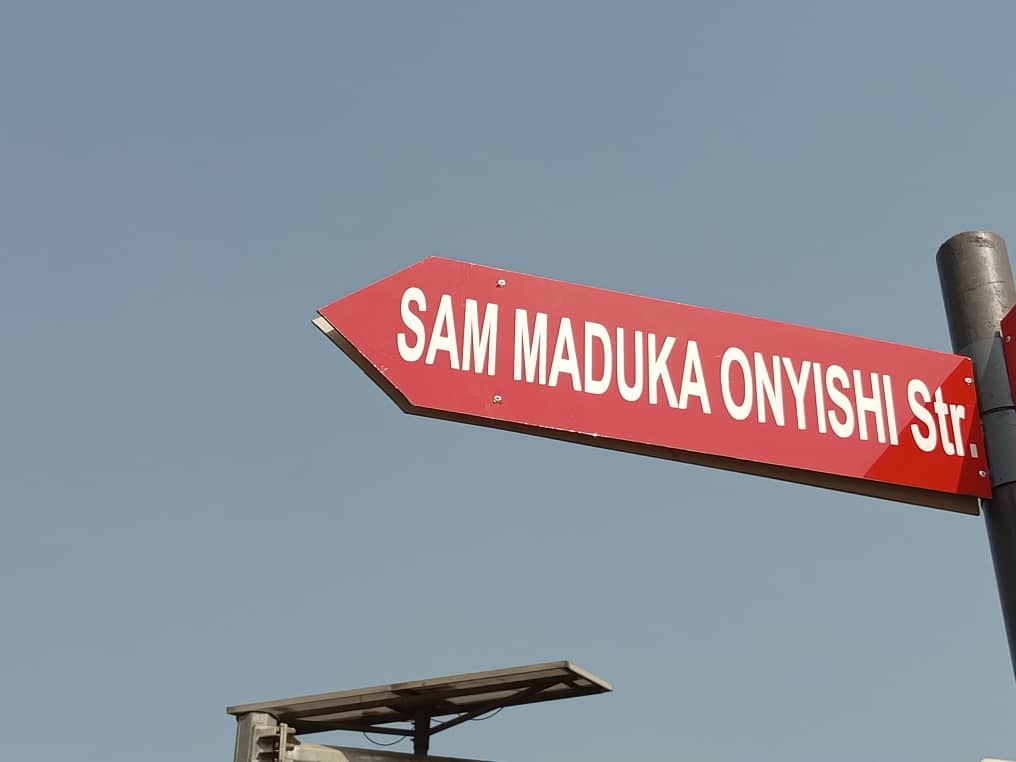
Authorities in the Federal Capital Territory on Saturday honoured renowned entrepreneur and philanthropist, Chief Dr. Sam Maduka Onyishi, with the unveiling of a street named after him in Asokoro, Abuja.
Speaking at the event, the representative of the Abuja Metropolitan Management Council’s Department of Street Naming, Mr.
Charles Adikwu, said the honour was in recognition of Onyishi’s remarkable contributions to national development, job creation, and community upliftment.Adikwu described the Peace Mass Transit founder as “a businessman who built his enterprises from scratch to the top,” noting that Onyishi has grown into one of Nigeria’s most influential private-sector employers.
The honouree is the Chairman of Globus Bank, Peace Microfinance Bank, Peace Oil & Gas, Peace Mass Transit, and the Chancellor of Sam Maduka University, Akwegbo, Enugu. According to Adikwu, Onyishi’s businesses have collectively provided employment to over 150,000 Nigerians, making him “one of the highest employers of labour in the country.”
Adikwu added that naming streets after distinguished Nigerians also enhances security and navigation within Abuja communities.
“If anything happens along this route, it can now be easily identified as taking place at No. 7 Sam Maduka Onyishi Street,” he said. “Before now, locating places involved unnecessary descriptions that sometimes complicated emergency responses.”
Also speaking, the Regional Manager of Peace Mass Transit (Northern Region), Mr. Ngwu Jude Chinweike, said the gesture reflects government’s increasing willingness to recognise individuals who positively impact society.
He expressed delight that his principal was among those honoured, describing the development as a morale boost for communities and a reminder that meaningful contributions do not go unnoticed.
“The public will now understand that when you make positive impact in your community, government has a way of recognising your efforts,” he said.
Chinweike noted that the newly named street is already attracting interest from businesses and institutions, including security agencies, and assured that Peace Mass Transit and Onyishi’s other subsidiaries would support efforts to enhance the area’s outlook.
“Since the street bears his name, we will keep our eyes here and contribute to ensuring it looks good,” he added.
Chief Dr. Sam Maduka Onyishi, widely regarded for his philanthropy and transformative investment footprint, continues to maintain an active presence in transportation, finance, energy, and education sectors across the country.
By Laide Akinboade, Abuja
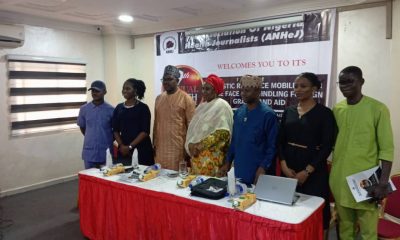
Experts in the health sector, at the weekend agreed that even though foreign grants and aid remain highly valuable, it is imperative for the three tiers of government to increase domestic funding in Nigeria.
They agreed that it is only through the above the nation can build a resilient, domestically financed health system.
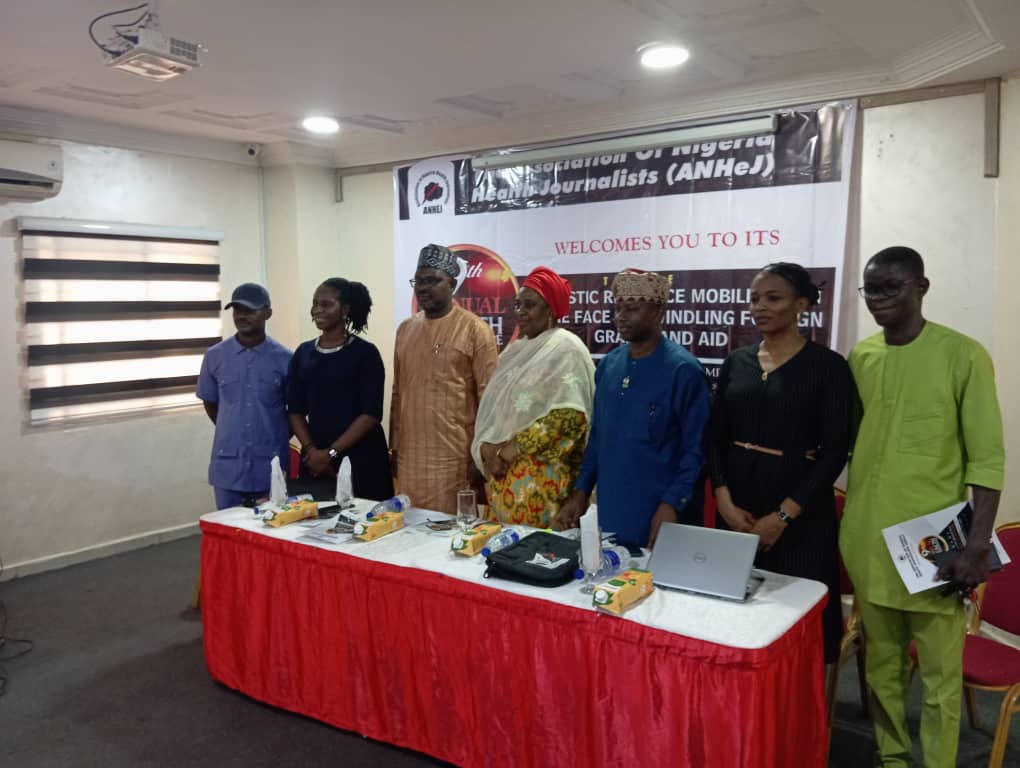
This was agreed at the 9th annual health conference organized by the Association of Nigeria Health Journalists (ANHeJ) in Abuja.
The theme of this year conference is ‘Domestic Resource Mobilization in the Face of Dwindling Foreign Grants and Aids’ .
Among those who spoke at the occasion, include, Special Adviser to President on Health, Dr.
Salma Ibrahim Anas, .Minister of State for Health and Social Welfare, Dr. Kunle Salako, representative from National Agency for Food and Drug Administration and Control, (NAFDAC), Dr. Matins Illuyomade,Salako who was represented by his Special Adviser, Dr. Babatunde Akinyemi, said Nigeria has benefited from substantial foreign health assistance, including over $6 billion from PEPFAR, $2.5 billion from the Global Fund, $1.5 billion from the World Bank, $1.2 billion from Gavi, and $1.6 billion from the Bill & Melinda Gates Foundation.
He stressed, that government initiatives under the Renewed Hope Agenda and the Nigeria Health Sector Renewal Investment Initiative (NHSRII), including the Basic Health Care Provision Fund (BHCPF), which has disbursed over N260 billion to states and the Federal Capital Territory since 2018, and the National Health Insurance Authority (NHIA) Act, mandating health insurance for all Nigerians.
He said, “The United States government, through PEPFAR, has invested over $6 billion in Nigeria’s HIV/AIDS response since 2004, with annual allocations averaging $400-450 million in recent years. In fiscal year 2023 alone, USAID (Now DoS) allocated approximately $535 million for health programs in Nigeria, covering HIV/AIDS, malaria, tuberculosis, and maternal and child health initiatives.
“The Global Fund to Fight AIDS, Tuberculosis, and Malaria has disbursed over $2.5 billion to Nigeria since 2003, making us one of the largest recipients globally. The World Bank currently supports our health sector with approximately $1.5 billion through various projects, including the $500 million Nigeria COVID-19 Action Recovery and Economic Stimulus Program and the $820 million International Development Association credit for primary healthcare strengthening. Similarly, Gavi, the Vaccine Alliance, has committed over $1.2 billion to Nigeria since 2001 for immunization programs, while the Bill and Melinda Gates Foundation has invested approximately $1.6 billion across various health interventions in Nigeria over the past two decades.
“The United Kingdom’s Foreign, Commonwealth and Development Office (FCDO), though reducing its overall aid budget, continues to invest significantly in Nigeria’s health system, particularly through the £210 million Health Systems Strengthening program. The European Union and its member states collectively provide approximately €100 million annually for health-related interventions, while the Government of Japan, through JICA, supports our health infrastructure development with grants averaging $30 million annually.
.Multilateral development banks and financial instruments have also remained vital partners; the World Bank in 2024 approved substantial concessional financing, including a major credit and complementary grant financing package that supports health outcomes and health system resilience across states and communities. Such financing is targeted not only at service delivery but at strengthening our ability to prevent, detect, and respond to emergencies”.
Salako noted, “Foreign grants and aid remain highly valuable and will continue to finance critical interventions for some time. But the future we must build is one where domestic resource mobilization, fiscal discipline, efficient spending, and innovative financing are the engines that sustain our national health priorities. The Government of Nigeria is already advancing legal and budgetary instruments, leaning on proven programme data, and working with partners to protect gains while we scale domestic financing.
“Our commitment is to ensure that no Nigerian is left behind during this transition, and that we convert a period of funding volatility into a long-term opportunity to build a resilient, domestically financed health system”.
The Minister of state also enumerated the innovative domestic financing efforts at the state and private sector levels.
“Lagos State allocates over 12% of its budget to health, Kaduna State’s contributory health scheme has enrolled 1.6 million residents, and Abia State has launched a diaspora health investment fund.
“The Private Sector Health Alliance of Nigeria and the Nigeria Sovereign Investment Authority contributed over N50 billion and $200 million, respectively, to health initiatives,” he said.
Dr. Salma, in her presentation, said, donor fatigue is real, and the inevitable graduation of Nigeria from various aid programs is approaching.
In his welcome address, ANHeJ President, Joseph Kadiri, said the conference theme, “Domestic Resource Mobilisation in the Face of Dwindling Foreign Grants and Aid,” underscores the urgent need to strengthen domestic financing, partnerships, and resilient health institutions.
Kadiri called on journalists to track government commitments, highlight gaps, and amplify the realities faced by Nigerian families.
From Mike Tayese, Yenagoa
The Bayelsa State Government has called on the Niger Delta Development Commission (NDDC) to resume and complete the long abandoned Bridge Project in Akenfa Community, a suburb of the state capital city, Yenagoa
The Deputy Governor, Sen.
Lawrence Ewhrudjakpo, made the call while presiding over an enlarged meeting with representatives of the NDDC, community leaders of Akenfa Community and relevant government officials at his office in Government House, Yenagoa, on Thursday.The Deputy Governor has clarified that, although the state government decided to take over some neglected NDDC projects in the state, including the Polaku-Sabagreia Bridge, that of Akenfa was reverted back to the interventionist federal agency after a mutual discussion between the two parties.
Describing the Akenfa link-Bridge project as strategic and critical to pedestrians and vehicular movements in the oil-producing community, Senator Ewhrudjakpo informed that government officially communicated the re-handing over of the project to NDDC in a letter dated 10th March, 2025.
He empathized with the Akenfa community over the delay in the execution of the project, and urged the NDDC to expedite the process of completing it with a view to putting an end to commuting challenges facing the people.
His words: “The project has actually been sent back to the NDDC to handle. But the NDDC seems to be far away from the Akenfa Community. So they find it easier to come to us.
“We believe that the project has gone a long way. What is required to complete it may not be as much as what has gone in there.
“So, we felt that we should hàve this tripartite interaction to let the community know officially that the project is now in the hands of NDDC, and also to let the agency know that our community is agitated considering the long history of that project.”
Responding on behalf of the NDDC, the Bayelsa representative, Senator Deinyabofa Dimaro, said the Commission would review the entire project and have it captured in its 2026 budget for seamless execution.
Senator Dimaro, who promised to properly relate the issue to the Managing Director of the NDDC, Dr. Samuel Ogbuku, however, requested relevant documents from the State Government regarding the reversion of the project back to the NDDC.
Representatives of Akenfa Community who spoke at the meeting included, former Chief of Staff Government House, Yenagoa, Chief Dikivie Ikiogha, and a one-time paramount ruler of the community, Chief Isiya Albert.
Meanwhile, Senator Lawrence Ewhrudjakpo, has on behalf of the Governor constituted a tripartite contact committee involving the government, the NDDC and the Akenfa community to ensure the resumption and completion of the stalled Akenfa Bridge project.
Members of the committee include the state NDDC representative, Senator Deinyabofa Dimaro; the Commissioner for Special Duties (Central), Mandy Akpallo; and Chief Dikivie Ikiogha.
Others are the Technical Adviser to the Governor on NDDC Matters, Kuro Nyenye; Chief Isiya Albert; Secretary to the Akenfa Community, Wilson Mumeya, the Youth President, Moses Izibekiebo, as well as an engineer to be nominated by the Ministry of Works and Infrastructure.


Street Named After Business Mogul, Sam Maduka Onyishi Unveiled in Asokoro
ShareBy David Torough, Abuja Authorities in the Federal Capital Territory on Saturday honoured renowned entrepreneur and philanthropist, Chief Dr. Sam...

Experts Task Government on Increase in Domestic Funding
ShareBy Laide Akinboade, Abuja Experts in the health sector, at the weekend agreed that even though foreign grants and aid...
BBNaija’s Queen Mercy Confirms crash of Her One-year Marriage
ShareBig Brother Naija reality show star, Queen Mercy Atang, has finally confirmed the crash of her one-year marriage. The single...
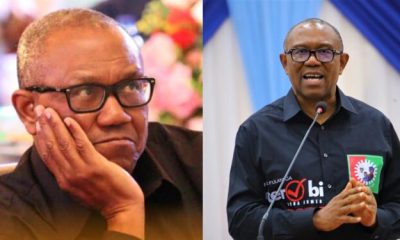

Obi, TCM Condemn Tinubu’s Distribution of Vehicles to Renewed Hope Ambassadors
ShareBy Mike Odiakose Abuja Presidential Candidate of the Labour Party, Peter Obi and a socio-political organisation, The Collective Movement (TCM),...

Bayelsa Urges NDDC to Complete Abandoned Akenfa Bridge Project
ShareFrom Mike Tayese, Yenagoa The Bayelsa State Government has called on the Niger Delta Development Commission (NDDC) to resume and...


Road Accident Claims Six Lives in Kogi
ShareFrom Joseph Amedu, Lokoja The Kogi State Government has expressed sadness over a tragic accident involving a bus conveying some...
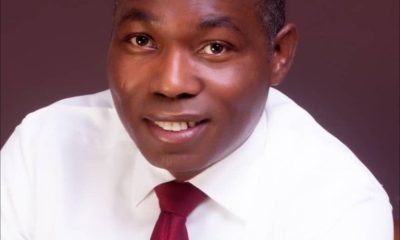

Adebayo at 53 Young Enough to Lead Nigeria – Ighodalo
ShareBy Mike Odiakose, Abuja Pastor in charge of Trinity House, a non-denominational, Christian fellowship centre and founder, African Leadership Group...
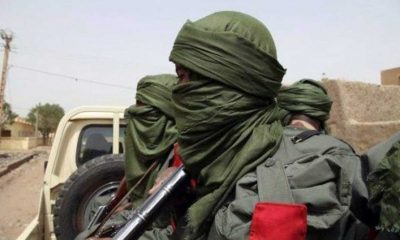

Four Dies as Bandits Launches Attack in Kogi Community
ShareFrom Joseph Amedu, Lokoja Four persons were reportedly dead on Wednesday when suspected bandits launched an attack on Irunda Ile...
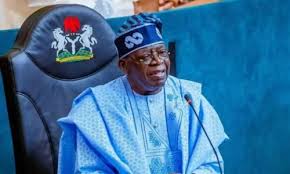

Musa Takes Oath, Vows United Front against Insecurity
ShareBy David Torough, Abuja President Bola Tinubu yesterday swore in former Chief of Defense Staff, General Christopher Musa (rtd), as...


OPay Secures Double Honors at Tech Innovation Awards
ShareIn a major recognition of its innovation and security leadership, OPay, Nigeria’s premier financial technology company, has been named Fintech...