
Health
NGO Provides Palliatives to 400 Persons Living With HIV/AIDS in Kogi

From Joseph Amedu, Lokoja
Aids Healthcare Foundation (AHF), a Non-Governmental Organisation has provided emergency food palliatives to 400 Persons Living With HIV and AIDS (PLWH) to support the fight against the COVID-19 pandemic in the state.
The organisation has also provided 70 hand-washing facilities to Ministries, Departments and Agencies (MDAs) as well as security, Media, religious bodies, youth council, markets, motor parks and groups.
Our Correspondent reports that the intervention programme was in collaboration with Kogi-based Civil Society Organisation (CSO), Initiative for Grassroots Advancement (INGRA).
Mr Temitope Orogbemi, AHF Team Leader in the state disclosed this while presenting the palliatives to the beneficiaries at the premises of the Ministry of Health Headquarters in Lokoja on Friday.
Orogbemi said that through the CSOs, the Foundation would be reaching out to about 1,000 people living with HIV with food palliatives.
He said that other groups and communities would also be reached with hand-washing apparatus which would be mounted at strategic locations and in various MDAs and in different local government areas in the state.
Executive Director, INGRA, Mr Hamza Aliyu, who spoke at the occasion said COVID-19 palliatives had come from public and private sectors but none had been targeted specifically at the most vulnerable and indigent persons whose immune systems were very low.
“We think that we need to be strategic in sending out our palliatives so that those who really need it should be those who get it.
“The first component of the emergency support is that we are providing food palliatives for 400 persons living with HIV and AIDS the number is because we are looking at those who are vulnerable and indigent.
“We have 400 packs of food palliatives including rice, beans, beverages, oil such ingredients as as sachets of tomato pastes and all those things put together in each bag is a pack that should be able to carry a family of four for a week.
“We are providing this because we feel nutrition is one aspect that they lack and many of them do not have enough and could hardly adhere to their drugs and If you don’t have drug adherence, the treatment will not be successful”, he said.
The other component and arm of the support according to him, is to provide hand-washing and hygiene apparatus to the stakeholders and organisations who have large congregation of persons around their areas.
He said said that each of the 40-litre and 21-litre containers and buckets contain hand-washing liquid soaps and facemasks for the stakeholders adding that the 40 litre containers were for environments with larger population of people.
Representatives of various MDAs and groups who spoke at the occasion commended the efforts of the AHF, INGRA, the State Government and other groups in the forefront of alleviating hardship occasioned by COVID-19.





By David Torough, Abuja
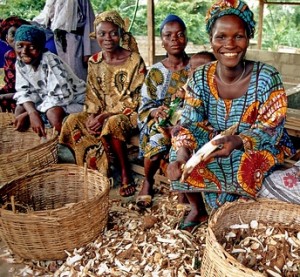
As Nigeria marks Universal Health Coverage (UHC) Day 2025, new findings suggest that adolescent girls and young women continue to face serious barriers in accessing basic health services, despite years of policy commitments aimed at expanding coverage.
The assessment, released by the Gem Hub Initiative, points to rising out-of-pocket costs, weak primary healthcare capacity and limited youth-focused services as key obstacles preventing young people—particularly females—from obtaining timely and confidential care.
Nigeria has pledged to achieve universal health coverage, ensuring that all citizens can access essential services without financial hardship.
However, the report says progress remains uneven, with adolescents among the least served groups within the health system.According to Gem Hub, many young women are unable to afford services such as testing and treatment for sexually transmitted infections, especially those not enrolled in health insurance schemes. The financial burden often leads to delays or avoidance of care altogether, increasing health risks.
The findings are based on a rapid assessment of youth-friendly health services and a perception survey conducted in Rivers State, which the organisation said reflects challenges seen in other parts of the country. The review found that several primary health facilities lacked key sexual and reproductive health commodities, including emergency contraception, while shortages of trained staff and inconsistent application of youth-friendly service guidelines were also reported.
Infrastructure challenges were another recurring concern. Poor road networks, seasonal flooding, irregular clinic hours and unreliable electricity were cited as factors limiting physical access to care, particularly in rural and hard-to-reach communities. The report also notes low levels of community and parental engagement, which can discourage adolescents—many of whom depend on family members for health decisions—from seeking services.
A frontline health worker interviewed during the assessment said many young women were reluctant to return to facilities where they felt judged or lacked privacy. “When adolescents feel exposed or uncomfortable, they simply stop coming,” the provider said.
Universal Health Coverage Day is observed globally to highlight the importance of affordable and accessible healthcare. This year’s theme focuses on the burden of health costs, a challenge that remains acute in Nigeria, where out-of-pocket spending continues to account for a large share of healthcare financing.
Gem Hub Initiative says its findings underline the gap between national health policies and the lived experiences of young people, particularly girls and young women, whose health needs are often overlooked within the broader system.
The organisation works with adolescents and young adults across Nigeria on health, education and empowerment programmes, with a focus on generating evidence to inform public debate and policy.
The World Bank Group, global partners and countries on Saturday announced continued progress toward the goal of delivering affordable and quality health services to 1.5 billion people by 2030.
A statement by the World Bank Online Media Briefing Centre said 15 countries introduced National Health Compacts, outlining practical five-year reforms aimed to expand primary healthcare, improve affordability and support job-rich economic growth.
The statement said that since the goal was set in April 2024, the Bank and partners had supported countries to provide quality and affordable care to 375 million people.
It said work was underway with roughly 45 countries to scale proven primary care approaches that strengthen health outcomes while generating employment across health workforces, local supply chains and supporting industries.
“This progress comes as governments confront aging populations, rising chronic disease, and financial pressures.”
The statement said the 2025 Global Monitoring Report released at the Tokyo Universal Health Coverage (UHC) High-Level Forum showed that 4.6 billion people globally still lacked access to essential health services.
It said the report also revealed that 2.1 billion people faced financial hardship due to health expenses.
“These challenges underscored the need for long-term, coordinated reforms that help countries build more resilient and equitable health systems.”
World Bank Group President, Ajay Banga, is quoted in the statement as saying, “strong primary healthcare systems are central to both health protection and economic growth.
“Strong primary health systems do more than safeguard health, they support jobs and economic opportunity.
“Countries are stepping forward with clear priorities, and we are working alongside them to deliver practical solutions at scale.”
According to the statement, the 15 countries that introduced National Health Compacts at the forum in Tokyo are Bangladesh, Egypt, Ethiopia, Fiji, Indonesia, Mexico, Morocco, Nigeria, Philippines, Sierra Leone, Syria, Tajikistan, Uganda, Uzbekistan and Zambia.
The statement said the compacts, which were endorsed at the highest levels of government, outlined five-year, country-led reforms aimed at expanding the reach and quality of primary healthcare, improving financial protection and strengthening health workforces.
“They also align Health and Finance Ministries behind measurable targets, provide a roadmap for coordinated action and guide support from development partners across country-led priorities.”
It said key commitments by countries include mobilising new financing, growing and digitally enabling their health workforce, modernising health facilities, expanding insurance coverage, and digitising service delivery.
“For example, in terms of boosting regional manufacturing of health products and technologies, Nigeria will train 10,000 pharmaceutical and biotech professionals and establish Centres of Excellence.
“Nigeria will also provide tax incentives to expand local production of vaccines, medicines, diagnostic and health technologies, strengthen regulatory agencies through digital systems and global alignment.”
It said that to help countries advance their compacts and broader reforms, the World Bank Group, Gavi and the Global Fund announced aligned financing, including two billion dollars in co-financing with each institution.
The statement added that philanthropic partners working through the Global Financing Facility and the Health Systems Transformation and Resilience Fund aim to mobilise up to 410 million dollars for critical health areas.
It said Seed Global Health was working with compact countries to build capacity and provide support for assessment, planning and policy development, with a focus on advanced health workforce development.
The statement said Japan, the United Kingdom and other partners were also providing technical assistance.
“Japan, WHO and the World Bank jointly launched a Universal Health Coverage Knowledge Hub to support countries with practical evidence-based solutions and peer learning.”
It said the UHC High-Level Forum, co-hosted by the Japanese Government, the WHO, and the World Bank Group, brought together ministers of health and finance, business leaders, philanthropies, global health agencies and civil society.

The UN Women has reaffirmed its commitment to strengthening policy frameworks, enhancing digital safety, and promoting accountability for online harms in Nigeria.
Deputy Executive Director for Normative Support, UNWomen, Nyara Gumbonzvanda, said this at a press conference on Saturday in Abuja.
The press conference was on Gumbonzvanda’s high-level mission to Nigeria and commemoration of the 2025 16 Days of Activism Against Gender-Based Violence (GBV).
She said that the visit was to deepen partnerships, reinforce national leadership, and accelerate collective action to advance gender equality and the empowerment of women and girls in Nigeria.
“A critical area of concern remains technology-facilitated GBV, which is rising globally and nationally.
“Between 16 per cent and 58 per cent of women worldwide experience some form of online or technology-facilitated GBV, depending on the region.
“UN Women is supporting the government and stakeholders in strengthening policy frameworks, enhancing digital safety, and promoting accountability for online harms,” she said.
She commended the National Assembly’s commitment to strengthening legislation that protects women and girls and advance women’s participation in governance, and called for effective legal frameworks and inclusive governance.
Gumbonzvanda decried low representation of women at the National Assembly, which she said stood at only 3.8 per cent, far below the global average of 27.2 per cent.
She, therefore, emphasised the need for legislative reforms such as affirmative action, quotas, and the proposed special seats bill, which she described as globally recognised tools to accelerate women’s participation.
”This is critical because globally, nearly one in three women experiences physical or sexual violence in their lifetime.
”Effective legal frameworks and inclusive governance are essential to reversing this trend,” she said.
On insecurity in Nigeria, she called for the release of abducted girls and reaffirm the need to ensure that every girl has the right to security and education.
She listed the impact of UN Women’s work in communities, including the commissioning of new WASH facilities.
She said that there was also rehabilitation of agro-processing centre in Kwali to improve women’s safety, reduce time burdens, and expand income-generating opportunities.
”UN Wornen will continue to mobilise partnerships across government, development partners, and the private sector to ensure that frontline organisations and national institutions have the resources required to deliver lasting change,” she said.
On her part, Beatrice Eyong, UN Country Representative to Nigeria and ECOWAS, commended the media for amplifying issues affecting women and girls in the country.

Mikaelian Beats Jack to Regain WBC Title
ShareNoel Mikaelian beat Badou Jack by a unanimous points decision in Los Angeles to regain the WBC cruiserweight title. Mikaelian...

Mobile Phone Association Pillar of Modern Commerce, Driving communication, Says Mamas
ShareFrom Ayinde Akintade, Osogbo The National President of Association of Mobile Phone and Allied Products Traders of Nigeria (AMPAT), Hon....


Nigeria’s Merchandise Trade Grows to N38.9trn in Q3 2025
ShareBy Tony Obiechina, Abuja Nigeria’s total merchandise trade increased to N38.9 trillion in the third quarter of 2025, reflecting positive...


Trump’s Historic Peace Deal for DR Congo Shattered after Rebels Seize Key City
ShareUS Secretary of State Marco Rubio has said Rwanda’s actions in eastern Democratic Republic of Congo are “a clear violation...


Nwabali Arrives Super Eagles Camp in Egypt
ShareStanley Nwabali has arrived the Super Eagles’ Renaissance Hotels, Cairo, Egypt ahead of the 2025 Africa Cup of Nations in...


Osimhen, Fulham Trio Dazzle in Final Club Games before AFCON
ShareSuper Eagles stars Victor Osimhen, Calvin Bassey, Samuel Chukwueze, and Alex Iwobi all impressed in their final club appearances before...


AFCON 2025: Senegal Coach Names Injured Trio in Final Squad
ShareSenegal head coach Pape Thiaw has named three injured players Ismaila Sarr, Habib Diarra and Assane Diao in his final...


John Cena Retires from WWE after 24-year Career
ShareWWE legend John Cena has retired from professional wrestling, bringing the curtain down on a 24-year in-ring career after his...

Women, Girls Still Struggle to Access Healthcare in Nigeria – Findings
ShareBy David Torough, Abuja As Nigeria marks Universal Health Coverage (UHC) Day 2025, new findings suggest that adolescent girls and...


Five Arrested over Plot to Attack German Christmas Market
ShareFive men have been arrested in Germany suspected of being involved in a plot to drive a vehicle into people...