
OPINION
Nigeria: Bumpy Road to 2023

By Reuben Abati
“My brother, when are you declaring for President?”
“Which president? I am already a president in my own right. I am the president of my house.”
“That is not the kind of President I am talking about. I mean a President with the big P, not the small one that gives you a delusion of importance.
”“My friend, don’t insult me.
I took an oath of office at the registry and at the church. I paid a bride price. I got a certificate, making me a constituted authority. I have three Dudukes to show for it. What else am I looking for? Come oh, are you doubting my full authority as a president of my own house? Are my in-laws looking for my trouble? In fact, I am not just a president. I am a chairman. The Odogwu of my lodge… The Otunba of my own space.”“Bros, I beg, you joke too much. I am talking about the President of Nigeria, something serious; you are talking about a three-bedroom apartment where you behave as if you are a real man just because you married a wife. This is what I tell you all the time. You need to be ambitious. Think big. Dream big. Otherwise that home you claim you have, a more capable man will come in there and disrupt everything. Even your children will turn against you. I am telling you to think big, you are saying you are the constituted authority of your house. Somebody is advising you to start seeing yourself as someone who can eat pounded yam with crocodile meat, everyday, if you want; you are telling me you would rather eat ponmo and brorkotor. Is everything okay with you?”
“Nothing is wrong with me.”
“So, who says you too can’t be President of Nigeria?”
“Me? President of Nigeria?”
“Yes. President of Nigeria. That is the latest Baba Ijebu game in town! Better lottery. The thing don become pool fixtures. Perm one, perm two, you fit win.”
“Please, please, please. If you don’t have anything serious to talk about, please leave me alone.”
“I am telling you. This thing called Nigerian presidency for 2023 has become a try-your-luck game. Everybody is now declaring interest in the presidency. That is what the thing has become. When somebody told me that it is even the latest bitcoin, I just decided that may be you and I should go and try our luck. We should think out of the box.”
“President of Nigeria?”
“The people who have declared, do they have two heads? Let me tell you, the way this thing is going, anybody can be President. After all, an actor, Ronald Reagan, became president of the United States. Actor oh! In Ukraine, a comedian, ordinary comedian, Zelensky is president. He is fighting a war now, and every important country and leader in the Western world is going there to express solidarity with him. He has even addressed the United Nations. You don’t know your destiny. The way this our Nigeria is going, I won’t be surprised if a clown emerges as president in 2023.”
“God forbid.”
“Are you a clown? After all, you claim to be well-educated. I am saying you too can be president.”
“How about you? Why don’t you too try your luck?”
“I don’t know people. You are better connected. See, the way this thing works these days, you must know people, have strong connections, and just go about saying you too want to be president, make noise, and before you know it, some people will form themselves into a group, look for one fancy label and they will say you are the best man since the invention of tooth paste, and the best man for the job. I am ready to lead your campaign team.”
“But I don’t know anything about politics. I have no idea.”
“You don’t need to know anything about politics. Just have the right connections. The people will buy the nomination and expression of interest forms on your behalf. We will create a Campaign Forum in your name. We will call ourselves the Patriots Forum, and we will say you are the man! That is how they do it. I want you to move fast because as we speak now, you don’t know who is going to declare this very week. Declaring interest in the presidency of Nigeria is right now the biggest business in town.”
“I will have to talk to my wife first.”
“Your wife! Your wife! You think your wife will object to the possibility of becoming the First Lady of Nigeria? You will be surprised that she herself may have been nursing the idea. Let me tell you something: Your wife will tell you that there is nothing the people who are First Ladies have that she too does not have. She will tell you she is even better. In fact, if you are not careful, she will say she too can be president of Nigeria.”
“Without my authority?”
“Which authority? My friend, go and sit down. We are in the 21st Century! Is it because I am trying to encourage you? If you are not interested, I can decide to push your wife to run for the position of president of Nigeria. She is actually highly qualified. And we can groom her.”
“You will groom my wife? Are you mad? Abi you wan die? That is the day she will leave my house!”
“She is a Nigerian citizen. And if you say you don’t want good luck in your household, you don’t want to be president, you don’t want your wife, we will look for another person. In fact, the way my mind is working, our group will go and recruit Obi Cubana, or E-Money or White Money. They too can be president.”
“Excuse me.”
“Yes. That is where we are right now as we move towards 2023 in this country.”
“White Money? Has Nigeria become a Big Brother Naija Show?”
“I don’t see the difference. They have turned the whole thing into a gamble. What do you have against White Money? At least the money is white, not black. Every other aspirant is bringing black money.”
“That is defamatory. I won’t be party to that.”
“My friend, white money is better than black money. Anybody that brings N100 million to buy ordinary form or N50 million, or even N40 million in this economy should be investigated for black money. All of a sudden, all kinds of groups and persons are buying forms on behalf of presidential aspirants. People should stop telling us a dog is a monkey. We have eyes. We can see.”
“Count me out.”
“It means you don’t understand politics. Don’t you know that some of these aspirants don’t really want to be president? They just want to show that they are relevant. Some of them just want to protect themselves. Some have lost political relevance and they want to jump-start themselves politically. Then you have the category of hungry people who are using presidential declaration, or governorship declaration as a fund-raising opportunity. The whole thing is a game.”
“But I hear that everyone that is declaring must get the president’s blessing. The president does not know me.”
“You don’t need his endorsement. Every citizen has the right to contest once you meet the requirements under Section 40 of the Constitution and Section 131. Your right to occupy any political position in this country is properly defined in the Constitution. Everybody that goes to the president to say he or she wants to be president, the man says Yes. That is why they are all saying they have the president’s blessing. What do they expect him to say? Of course, he will tell them they are good to go. See, if we organise properly, and we take you to President Buhari tomorrow and tell him sir, this your son wants to be president too, he will say Yes, go ahead.”
“You think he will endorse someone like me, without knowing me?”
“Why not? He will. What do you want him to do?”
“But he once said he has his favourite and he would not name the person in order to protect him or her from being assassinated.”
“It is typical power politics, my friend. Can’t you see it? Without saying anything categorical, President Buhari has turned himself into the puppeteer, playing divide-and-rule politics. This is what I always say about this country. The people of Southern Nigeria don’t know how to play politics. We talk too much. We allow other stakeholders to manipulate us. We are too greedy and those who know better manipulate us. Can anybody hold the president down to anything with regard to the 2023 presidency? The obvious answer is No. But anyone that comes forward, they say he has blessed them.”
“Under normal circumstances, really, his blessing or non-blessing or opinion should be irrelevant. It is the people of Nigeria that should decide. One man, one vote. And it is his duty to ensure that Nigeria holds credible elections in 2023.”
“Good point, very good. But can’t you see what is going on in the two major political parties? The PDP has abandoned its rule about zoning, specifically Section 7(3c) of its Constitution, which had in fact been adopted by the rival All Progressives Congress. PDP now says that section no longer applies and anybody can be president on its platform.”
“That has not yet been finalised though. The party’s National Working Committee (NWC) is scheduled to meet on Wednesday, this week, to take a decision on the party’s zoning format. We have to wait for that.”
“You know I always tell you that you tend to be naïve sometimes. You think PDP NWC would now zone the choice of its presidential aspirants, after selling forms to every aspirant from wherever, after collecting too much money, and after screening everyone who expressed interest? My brother, leave matter!”
“What I know is that all the aspirants from the South are saying that in the interest of fairness, equity and justice, the presidency must be zoned to the South and specifically to the South-East.”
“Have you also heard the same Southern Nigerian aspirants saying they will abide by whatever the party decides? But I have not heard any Northern aspirant saying so. What they are saying is that the North has every right to continue in office.”
Reuben Abati, a former presidential spokesperson, writes from Lagos.
By Folasade Akpan
For Mrs Schola Effiong, a 58-year-old confidential secretary in Calabar, managing diabetes in today’s economy feels like “climbing a hill that only gets steeper”.
Diagnosed in 2009, she said her monthly expenditure on insulin, tablets, laboratory tests and monitoring supplies now exceeds ₦150,000.
“You cannot stop taking the drugs, yet the cost keeps going up.
“Sometimes I do not have the money to buy some of them at the same time,” she said.
Her struggle mirrors the experiences of thousands of Nigerians at a time when experts warn that diabetes is becoming a major public health concern.
According to a 2018 national meta-analysis by Uloko et al.
, titled “Prevalence and Risk Factors for Diabetes Mellitus in Nigeria: A Systematic Review and Meta-Analysis”, Nigeria’s diabetes prevalence stands at 5.7 per cent, representing 11.2 million adults.The authors defined diabetes mellitus as a metabolic disorder of chronic hyperglycaemia caused by absolute or relative insulin deficiency and associated with disturbances in carbohydrate, protein and fat metabolism.
The study, which pooled data from numerous research works across the country, revealed wide regional disparities.
The prevalence rate was 3.0 per cent in the North-West, 5.9 per cent in the North-East, and 3.8 per cent in the North-Central, respectively.
The rates were higher in the southern part of the country: 5.5 per cent in the South-West, 4.6 per cent in the South-East, and 9.8 per cent in the South-South.
Experts say these patterns reflect changing lifestyles, rapid urbanisation and limited access to routine screening.
However, for many patients, statistics tell only a fraction of the real story.
Mr Offum Akung, a 57-year-old teacher in Cross River, said he had to ration his drugs because prices kept rising faster than his salary.
“I spend over ₦40,000 a month and still cannot buy everything on my prescription.
“I rely mostly on Glucophage now; when money allows, I add Neurovite Forte; diabetes management has become more difficult than the disease itself,” he said.
He appealed for government intervention, saying many patients were already “giving up”.
The Second Vice-President of the Diabetes Association of Nigeria, Mr Bernard Enyia, said the economic situation had pushed many Nigerians with diabetes into dangerous coping methods.
He said that he once managed his condition with about ₦70,000 monthly, but currently spends more than ₦180,000.
“Insulin has become something you pray for, while some people are sharing doses or skipping injections.
“Once you break treatment, the complications come quickly.”
Enyia, who lost his job as a health worker in 2017 due to frequent hospital visits, described the emotional toll as immense.
“It affects your finances, your social life, your marriage — everything. Many Nigerians with diabetes are quietly drowning,” he said.
Globally, concerns are also rising.
The World Health Organisation (WHO) estimates that more than 24 million adults in Africa are living with diabetes, a figure projected to rise to 60 million by 2050.
Marking World Diabetes Day 2025, WHO Regional Director for Africa, Prof. Mohamed Janabi, warned that rising obesity, lifestyle changes and weak health systems were fueling an “unprecedented wave of diabetes” across the continent.
He urged governments to prioritise access to affordable insulin, diagnostics and long-term care.
More so, pharmacists say they are witnessing the crisis firsthand.
The Senior Vice-President, Advantage Health Africa, Mr Adewale Oladigbolu, said many patients were no longer able to maintain regular medication schedules.
“People buy drugs today and skip them tomorrow because they do not have money.
“With non-adherence, they never reach therapeutic goals.”
Oladigbolu, a Fellow of the Pharmaceutical Society of Nigeria, said that locally manufactured metformin remained in high demand due to affordability, but insulin-dependent patients faced the harshest burden.
He stressed that diabetes care extended far beyond drugs.
“You need glucometers, strips, blood pressure monitors and regular tests.
“In countries where insurance work, patients do not think about the cost; in Nigeria, they pay for everything out of pocket,” he said.
He called for diabetes care to be covered under health insurance to reduce the financial burden on patients.
President of the Diabetes Association of Nigeria, Prof. Ejiofor Ugwu, described the rising cost of treatment as “a national crisis hiding in plain sight.
He said insulin, which sold for about ₦3,500 four years ago, presently costs ₦18,000 to ₦22,000 per vial.
“Test strips that were ₦2,000 now sell for ₦14,000, while glucometers have risen from ₦5,000 to over ₦25,000.
“On average, a patient now needs between ₦100,000 and ₦120,000 every month. Imagine earning ₦50,000 and being asked to spend twice that on one illness.”
He warned that between half and two-thirds of Nigerians with diabetes remain undiagnosed.
“We are seeing more kidney failure, more limb amputations, more blindness.
“These are late presentations caused by delayed or inconsistent treatment.”
Ugwu urged the Federal Government to urgently subsidise essential anti-diabetic medications and remove taxes on their importation.
“Most of these drugs are produced outside the country.
“Once you add import duties and other charges, prices become unbearable; subsidies and tax waivers could drop costs by at least 30 per cent,” he said.
He also called for expansion of the National Health Insurance Authority (NHIA) to cover a wider range of anti-diabetic medicines, glucose meters and strips — none of which are currently covered.
For many Nigerians, however, the struggle continues daily.
Across households, clinics and pharmacies, the message is the same: as Nigeria’s diabetes prevalence rises and treatment costs soar, more patients are slipping through the cracks — some silently, others painfully — while waiting for meaningful intervention.
In all, stakeholders say diabetes is a national emergency; people are dying quietly because they cannot afford medicine; hence the urgent need for relevant authorities to make anti-diabetic medications accessible and affordable.(NAN)
 | ReplyReply allForwardAdd reaction |

By Dorcas Jonah
In the Nigerian culture, extended families and communities play a crucial role in care-giving, instilling values, and supporting the development of children.
This cultural heritage of community parenting emphasises shared responsibility in raising children.
But in contemporary Nigeria, this age-long practice is facing enormous challenges due to modernisation.
In scrutinising this trend, some parents are of the view that community parenting helps in instilling morals and curbing social vices among children and youths, while others believe it is outdated.
Some parents are of the belief that their children are their responsibility; so they do not tolerate others correcting their children.
By contrast, others say that community parenting, when done with good intentions, can help raise a better society.
Mr Peterson Bangyi, a community leader in Dutse Makaranta, said that community parenting was the bedrock of raising a child.
He said the adage: “it takes a village to raise a child”, remained a powerful principle in contemporary society.
According to him, by Nigeria’s cultural norms and values, a child is owned by everyone; therefore, the grandparents, aunts, uncles, and neighbours actively contribute to raising children.
“This approach fosters a sense of belonging and ensures children grow up with diverse role models.”
Bangyi said that the extended families practiced by more communities were the backbone of parenting.
“But modernisation has taken away this practice as most families do not want people to come close to their children,’’ he said.
Mrs Monica Umeh, a mother of two, emphasising on the importance of community parenting, said that it played significant role in shaping her upbringing as a child and young adult.
Umeh advised that when correcting other people’s children, it is essential to do so with love and good intentions, without any form of bitterness.
“I am a strong advocate of community parenting as long as it is done with love and good intentions.
“I believe no parent can single-handedly raise a child without the support of others,’’ he said.
Mr Temitope Awoyemi, a lecturer, said that community parenting was crucial and could not be over-emphasised.
He said that community parenting helped society in inculcating strong moral values in children and youths, adding that modern life could be isolating for parents.
Awoyemi said that strong community support networks had been shown to lower parental stress levels and promote a more optimistic approach to raising children.
“It also ensures that a child receives guidance and correction from various adults, providing a broader, more consistent moral and social baseline that might be missed by parents who are busy with work.
“Community parenting encourages collaborative, interdisciplinary support from various community members and agencies in addressing a child’s developmental needs comprehensively.
“It focuses on prevention of long-term problems and celebrating individual strengths,’’ he said.
Awoyemi said that as the society continued to evolve, community parenting could adapt to ensure children benefitted from both cultural roots and contemporary innovations.
Mr Fortune Ubong, a cultural enthusiast, attributed the increasing crime rate in Nigeria to lack of community parenting that had extended to schools, and government institutions.
According to him, community parenting remains the foundation of every child’s moral upbringing.
“Most parents are now focused on earning a living and improving their lifestyle, in the process abandoning their primary duty of molding and guiding their children; this is where community parenting plays a greater role,” he said.
However, Mrs Joy Okezia, a businesswoman, said that given the recent developments in the country, correcting a child should be the sole responsibility of their parents.
Okezia said that she preferred to correct her children herself as she knew them better than anyone else.
She also noted that with the rising insecurity in the country, intervening to correct a child could pose a significant risk to the person.
Mrs Ijeoma Osita, a civil servant, also shared Okezia’s view, saying that a child’s behaviour was shaped by their family upbringing.
She said that if a child was not taught to love and respect others at home, an outsider would have little impact in correcting such a child.
Osita emphasised that parents should in still in their children the values of love and respect regardless of their status or background.
According to her, a child brought up with good values is less likely to misbehave well.
She cited the Holy Bible, saying, that says: “Train up a child in the way they should go, and when they are old, they will not depart from it’’.
Osita said that community parenting remained a vital aspect of Nigerian culture, promoting shared responsibility and resilience among families.
He opined that while modernisation posed challenges, blending traditional practices with modern strategies offered a promising path forward.
Observers say robust community connections are linked to better social-emotional development, academic achievement, and overall well-being for children.
They say that in modern society, amidst the digital world, economic instability, and busy work schedules, parents face pressures, making community support systems fundamental.
All in all, stakeholders are of the view that combining traditional community parenting with modern childcare – integrating technology, play-based learning, and skill acquisition – will produce well-rounded children.(NAN)

FEATURES
Victor Okoli: The Young Nigerian Tech Founder Building Digital Bridge Between Africa and America
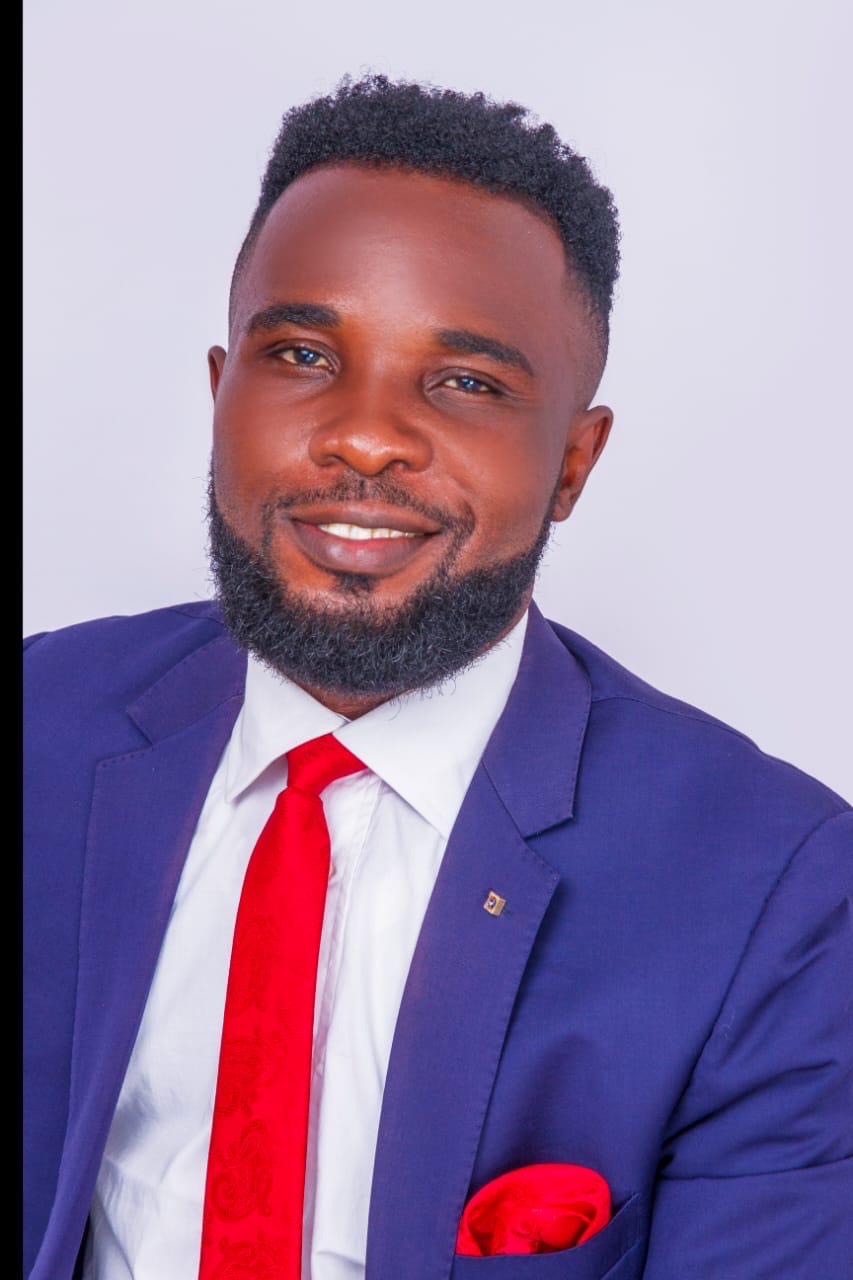
Victor Chukwunonso Okoli, founder of Vnox Technology Inc. (USA) and Vnox Limited (Nigeria), is steadily emerging as one of the most promising new voices in global travel-tech. His mission is clear: bridge the technological gap between Africa and the United States, redefine global travel systems, and empower a new generation of skilled youths through innovation-driven opportunities.
In a statement issued in Onitsha, Anambra State, by Vnox Limited (Nigeria), the company emphasized Okoli’s growing influence as a Nigerian international graduate student contributing meaningfully to U.
S. innovation. His rising travel-technology platform, FlyVnox, currently valued at an estimated $1.7 million, is positioning itself as a competitive player in the global travel ecosystem.Okoli explained that Vnox Technology was founded to “train, empower more youths, create global employment opportunities, and drive business growth through our coming B2B portal inside the FlyVnox app.” The platform’s new B2B system aims to support travel agencies, entrepreneurs, and businesses across Africa and the diaspora—giving them access to modern tools, previously inaccessible technologies, and global opportunities.
Several young men and women are already employed under the expanding Vnox group, with more expected to join as the brand grows internationally.
Born and raised in Eastern Nigeria, Okoli’s early life exposed him to the realities and frustrations faced by international travelers and diaspora communities. After moving to the United States for graduate studies, he transformed those experiences into a bold technological vision—building systems that connect continents and create seamless mobility for users worldwide.
At the center of that vision is the FlyVnox app, a modern airline-ticketing platform built with global users in mind. Combining American engineering precision with African mobility realities, FlyVnox offers international flight search, multi-currency support, secure payments, transparent pricing, and a clean, intuitive interface.
Beyond FlyVnox, Okoli has built a growing tech ecosystem under Vnox Technology Inc., which oversees several innovative ventures, including: Vnox TravelTech Solutions LLC (FlyVnox App), VnoxPay (fintech), VnoxShop / Zyrlia (e-commerce)
VnoxID / Nexora (digital identity and smart business card solutions)
Vnox Limited (Nigeria) anchors African operations, media services, and talent development—ensuring the brand remains rooted in its home continent even as it grows globally.
Okoli’s work has broad significance for both Africa and the United States. He represents the powerful impact of immigrant entrepreneurship on global competitiveness—creating new jobs, driving innovation, strengthening U.S.–Africa commercial ties, and contributing to the development of practical, scalable technologies.
The statement concludes that Vnox Technology is a brand to watch. As FlyVnox gains international traction and the Vnox group expands its footprint, Victor Okoli stands as a symbol of a rising generation: African-born, globally minded, and building technologies that connect and serve the world.

Group Backs Tinubu, Urges Sule to Run for Senate
ShareFrom Abel Zwanke, Lafia The Chief Executive Officer of the Community Initiative for Character Moulding and Entrepreneurship Development (CiCMED) and...
Ooni Installs Oluremi Tinubu as Yeye Asiwaju Ile Oodua
ShareFrom Ayinde Akintade, Osogbo The Permanent Chairman, Southern Nigeria Traditional Rulers Council (SNTRC), Arole Oodua Olofin Adimula and Ooni of...


NYSC Presidential Honor Award Winner Returns to Benue, Shows Appreciations
ShareFrom Attah Ede, Makurdi An ex- corps member and a recipient of Presidential Honour Award, Udokpo Abasi, at the weekend...


NGO Launches Climate Project Steering Committee in Benue
ShareFrom Attah Ede, Makurdi A global Non-Governmental Organisation (NGO), International Alert has inaugurated Climate Project Steering Committee in Benue State,...

A silent Emergency: Soaring Costs of Diabetes Care Spark Alarm
ShareBy Folasade Akpan For Mrs Schola Effiong, a 58-year-old confidential secretary in Calabar, managing diabetes in today’s economy feels like...

World Bank, Partners Record Progress Toward 1.5bn Healthcare Goal
ShareThe World Bank Group, global partners and countries on Saturday announced continued progress toward the goal of delivering affordable and...


UN Commits to Strengthening Nigeria’s Policy Framework, Enhancing Digital Safety
ShareThe UN Women has reaffirmed its commitment to strengthening policy frameworks, enhancing digital safety, and promoting accountability for online harms...

Nightclub Fire in India’s Goa Kills 25 People
ShareA fire at a popular nightclub in India’s coastal region of Goa has killed 25 people, local officials say. Police...

Hong Kong votes in Election as City Mourns Deadly Fire
ShareHongkongers are voting in an election seen as a test of public sentiment following a deadly fire that angered some...


PDP Crisis: Wike Camp Moves to Conduct Fresh Congresses, Convention
ShareBy Laide Akinboade, Abuja The factional Board of Trustees (BoT) of the Nyesom Wike tendency in the Peoples Democratic Party...