
Foreign News
Nigerian Consulate Showcases Rich Cultures, Festivals in New York

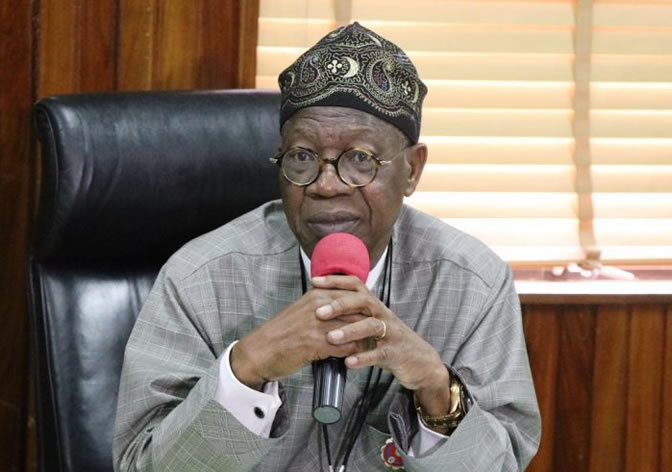
The Consulate-General of Nigeria in New York said it was determined to do everything possible to showcase Nigeria’s diverse cultural heritage, sites and traditional festivals to the outside world.
The Consul-General, Amb. Lot Egopija, stated this at the inaugural Nigeria’s Cultural Show, which held at the Cultural Centre, Nigeria House in New York.
Reports said that the event, with the theme “Nigeria: Our Community, Cultures and Unity’’, also showcased Nigeria’s cultural dance troupes, musical performances and cultural fashion displays.
Egopija, in his remarks, said that the inaugural event showcased two of Nigeria’s foremost festivals – the Osun-Osogbo festival and the Argungu Fishing Festival – which hold annually in Nigeria.
“A culture is a means to wealth which we have not explored fully. So the Consulate has thought it fit to advertise Nigeria cultural heritage and make Nigeria a tourist destination.
“We are focusing on two cultural events that hold in Nigeria yearly – the Osun-Osogbo Festival and the Argungu Fishing Festival.
“We are planning to have this event regularly so that people can be better informed and those who want winter ‘get away’ can also see Nigeria as a tourist destination.
“We are latching on the fact that people go out during winter to warm climates and we also want to corner some of these tourists to our country; that is the sole motive.
“Let me assure you that we are working with Nigeria authorities to ensure that everyone who wishes to explore tourism sites in the country gets the best,” he said.
Dr Sola Atanda of Endless Roar Tourism and Trade, who is a renowned Ifa priest and President of the Healing and Teaching Temple of African Faith (HATTAF), who joined the event virtually, commended the Consulate-General in New York for promoting Nigeria’s rich heritage through exhibition of cultural festivals.
Atanda said Nigeria has diverse good cultures, adding that it has been the culture of Osogbo indigenes to welcome visitors, emphasising that one has the tendency to misbehave when the culture is jettisoned.
“The culture of the people is the life of the people. Culture is our history; every culture is given by God, the way of dancing, the way of eating and the way of relating with one another.
“Culture promotes life and describes who we are, moulds our characters and when culture is lost, moral decadence will come in.
“When culture is lost, children will be wearing wrong dresses, taking narcotics; so culture is so important to mould life and to remind the children who they are.’’
Atanda attributed the security challenge in the country to breakdown in moral and cultural values, saying “kidnapping, banditry and all that are wrong with us are not part of our culture.
“They are foreign to our culture; we are better than that and that is why culture should be preached.
“Nigerians are good people, we love dressing well, we love eating well, we make friends so culture is in us and it has to be kept alive,’’ he said.
Similarly, the Emir of Argungu, Alhaji Samaila Mera, who also spoke virtually, commended the Consulate-General of Nigeria in New York for promoting the Argungu fishing festival, saying the festival has become a global agent of drawing tourists to the state.
Mera said the fishing festival began in 1934 as a mark of the end of the centuries-old hostility between the Sokoto Caliphate and the Kebbi Kingdom.
“The festival features a must-see fishing competition where thousands of fishermen compete to catch fish with their bare hands.
“The festival, which started as a local fishing event in the Argungu river, cuts across several towns of Kebbi State in Northwest Nigeria and has since gone international,’’ he said.
The first class traditional ruler said 36,000 fishermen participated at the 2019 edition of the festival with 34 sideline events holding simultaneously at six venues in four days.
The emir said the festival had become more than fishing as it had become a tool of reconciliation, tourism and education.
“I have seen students writing their dissertation and thesis on the festival. For instance, we had six students focusing on 2019 edition as their research work for masters and doctoral degrees.’’
The inaugural Cultural Show was attended by foreigners and Nigerians in the U.S. as well as diplomats and officers
It was organised by the Nigeria Consulate, New York, in collaboration with the New York African Chorus Ensemble, the African Tourism Board and the Nigerian-American Public Affairs Committee.
The highlight of event was the presentation of plaque to Ms Joyce Adewumi, President and Founder of African Chorus Ensemble by Amb. Gabriel Aduda, the Permanent Secretary, Federal Ministry of Foreign Affairs.
Adewumi, a U.S.-based Nigerian art and culture proprietress, was honoured for her outstanding service and contributions to supporting the consulate in promoting Nigeria’s rich cultural heritage.
Adewumi, also the Culture Ambassador of the Consulate-General, was recognised for promoting Nigerian arts by producing a film, titled “We Are the Endless Roar”, to showcase the rich tourism potential of Nigeria. (NAN)
Bangladesh has launched an emergency vaccination campaign after a fast-spreading measles outbreak is suspected of killing more than 100 people, mostly children, in what may be the country’s most lethal wave of the disease in recent history.
The campaign, which began on Sunday, comes amid more than 7,500 suspected measles cases since 15 March, according to health ministry data.
More than 900 of these cases have been confirmed – a sharp increase from 2025, when just 125 measles cases were recorded over the entire year, local media report.
While Bangladesh has long vaccinated children against the highly contagious disease, the recent outbreak has exposed gaps in its programme, raising concern.
“Vaccines are foundational to child survival,” Rana Flowers, the Unicef representative in Bangladesh, said in a statement on Sunday, adding that the current measles outbreak was “putting thousands of children, especially the youngest and most vulnerable, at serious risk.”
In Bangladesh, a nation of 170 million people, routine measles vaccines are given to children as young as nine months old.
But Shahriar Sajjad, deputy director of the Health Department, said that about one-third of those infected in the recent outbreak were under nine months old.
The infections of these young infants “who are not yet eligible for routine vaccination, are especially alarming”, said Flowers from Unicef.
On top of routine vaccinations, Bangladesh conducts special measles vaccination campaigns every four years.
But these campaigns haven’t gone according to plan.
There have been no special measles vaccination campaigns since 2020, first because of Covid then because of the “political situation”, Sajjad said.
Bangladesh experienced political upheaval in 2024, when massive anti-government protests toppled its long-ruling leader Sheikh Hasina. An interim government took over after Hasina’s ousting, and only in February this year did the country elect a new government.
A measles vaccination campaign was supposed to be held in April this year, “but it did not happen”, Sajjad said.
A health official said procurement issues had led to a shortage of vaccines, including for measles.
Many in Bangladesh have blamed the vaccine shortages on the former interim government, which oversaw a new vaccine procurement system.
But measles resurgences “are typically the result of these accumulated gaps rather than a single factor”, Unicef said in its statement.
“Bangladesh has a strong history of high immunisation coverage, but even small disruptions can lead to the gradual accumulation of immunity gaps over time.”
Along with international partners like Unicef and the World Health Organization (WHO), Bangladesh has launched an emergency vaccination campaign for measles and rubella, a milder disease with similar symptoms to measles.
This campaign, which started on Sunday, will be rolled out across 30 upazilas – sub-districts in Bangladesh – and targets more than 1.2 million children between six months and five years old.
The campaign will prioritise “children who have missed routine immunisation and are most vulnerable to severe illness and complications”, according to Unicef.
There will also be a particular focus on Dhaka, the densely populated capital, and Cox’s Bazar, home to crowded Rohingya refugee camps, Unicef said.
Besides the vaccination drive, health authorities are also publishing infographics that teach people how to identify and prevent measles. Measles is a highly contagious airborne disease, which can lead to severe complications and death.
Common symptoms include: High fever, sore, red and watery eyes, coughing and sneezing
In 2024, an estimated 95,000 people were killed by measles around the world – most of them children under five years old, according to the WHO.
Measles can be prevented through vaccination – but according to the WHO, 95% of the population has to be vaccinated in order to stop the disease from spreading.
Over the past two decades, the number of global measles cases and deaths resulting from the disease have fallen sharply.
There were 11 million cases of measles worldwide in 2024 – a significant decrease from 38 million in 2000, according to the WHO.
But the organisation has warned about a resurgence in parts of the world as vaccination rates fall. In 2024 and 2025, the world saw the highest number of measles outbreaks in more than 20 years, according to medical journal The Lancet.
Cases of measles have risen in some countries in Asia and Africa, as well as in Europe, the US and the UK, where there is growing scepticism against vaccines, especially after the pandemic.
In February, an outbreak of measles in some schools in north London prompted health authorities to remind parents to vaccinate their children.
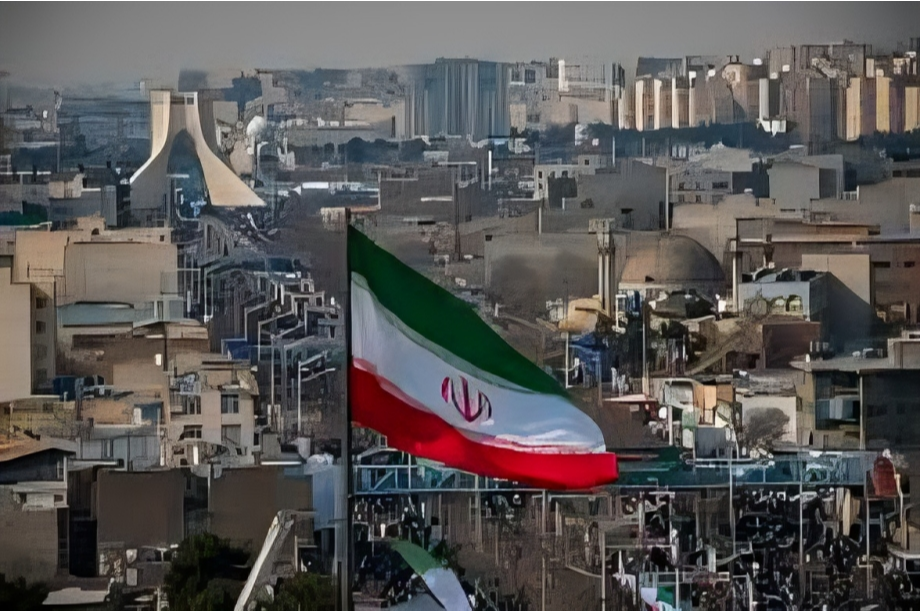
Iran has warned the United States (U.S.) and Israel that it would launch further and more severe attacks, escalating tensions amid ongoing hostilities.
A spokesman for the country’s armed forces headquarters said yesterday that Iran’s adversaries underestimated its military capabilities.
”You know nothing about our very extensive and strategic capabilities,” the spokesman said, adding that recent strikes by the U.
S. and Israel had failed to significantly weaken Iran’s military strength.The spokesman dismissed the importance of previously targeted sites, describing them as insignificant, and insisted that key military production facilities remained intact and beyond the reach of foreign forces.
He also rejected claims that Iran’s strategic weapons programmes, including missile systems, long-range drones, air defence technologies and electronic warfare capabilities had been seriously damaged.
The warning signals a potential intensification of the conflict, with the spokesman stating that military operations would continue until Iran’s opponents “capitulate”.
Syria rejects forced deportations from Germany amid migration debate
Syria has rejected proposals for the large-scale return of its nationals from Germany, warning against any forced deportations amid an ongoing migration debate in Europe.
Syrian Foreign Minister, Asaad al-Shaibani, said Syrians living abroad should be viewed as “strategic resources, not a burden”, dismissing suggestions that they should be compelled to return.
”We categorically reject any attempts at forced deportation. Authorities are working with international partners to rebuild infrastructure and create conditions for a voluntary and dignified return,” he wrote on X.
At a joint press conference, German Chancellor Friedrich Merz had said that up to 80 per cent of the more than 900,000 Syrians living in Germany could return home within three years.
He said that returnees would be needed to support reconstruction efforts, while noting that well-integrated Syrians would be allowed to remain.
The remarks sparked criticism across Germany’s political spectrum.
A day later, Merz said the figure had been cited by al-Sharaa, a claim the Syrian leader rejected during an event in London.
Al-Sharaa insisted that any return of refugees must be voluntary and linked to improvements on the ground in Syria, warning that forced deportations could trigger further displacement.
Germany has hosted more Syrians than any other European Union country since the outbreak of the Syrian civil war, which lasted 14 years.
Following the ousting of longtime ruler Bashar al-Assad in late 2024 by a rebel alliance led by al-Sharaa, calls have intensified among conservative politicians in Germany for refugees to return.
U.S. Military Strikes Over 12,300 Targets in Iran, Says Centcom
The U.S. military on Wednesday said that it had struck more than 12,300 targets in Iran during the conflict, which has been ongoing for just over a month.
The U.S. Central Command (CENTCOM), which oversees U.S. forces in the region, said in an update on Wednesday that its forces “Damaged or Destroyed” more than 155 Iranian vessels among the more than 12,300 targets struck since the start of the war.
“CENTCOM forces are striking targets to dismantle the Iranian regime’s security apparatus, prioritising locations that pose an imminent threat,” the command said.
The Israeli military said on Wednesday that Israel had so far carried out more than 800 strikes in Iran.
Israel and the United States have been attacking Iran since Feb. 28, with Iran responding with attacks on Israel and U.S. allies in the Gulf region.
Israel has intensified its attacks on Lebanon this week, hitting areas outside of Hezbollah’s control on Tuesday.
Strikes without warning hit a vehicle north of Beirut and the Jnah neighbourhood in the heart of the capital.
Attacks also continued in the city’s southern suburbs and the country’s south, both where Hezbollah has a strong presence.
A building was destroyed on the road to Beirut’s airport after an evacuation order, and in the south, a strike hit a health facility, killing a paramedic, according to Lebanon’s health ministry.
Israel’s military said it had hit Hezbollah infrastructure in Beirut and killed a senior commander and another senior figure from the Iran-backed armed group.
Hezbollah joined the ongoing regional war on 2 March, sending missiles towards Israel, after the US and Israel attacked the armed group’s ally Iran on 28 February.
Israeli attacks have kept bombarding Lebanon as its troops have moved into the country’s south.
On Tuesday, a vehicle was targeted in the Mansourieh area, a predominantly Christian residential neighbourhood north of Beirut.
Meanwhile, the Jnah neighbourhood in the heart of the capital was attacked after midnight. The Lebanese health ministry said the Al-Zahraa Hospital had received and treated “a number of those injured in the air strike”.
Hassan Jalwan, who lives near Jnah, said he heard several “big explosions” overnight.
“Nobody knows what’s happening,” he said, adding that “displaced people have been sleeping in the open” in the area.
The Dahieh neighbourhood to the south of Beirut, where Hezbollah has a strong presence, continues to be a target. A building was destroyed on Tuesday in Ghobeiry on the road to the airport following an evacuation order.
Also on Tuesday, Lebanon’s health ministry said at least seven people had been killed by Israeli strikes in the country’s south, including the paramedic.
The number of health workers who have been killed since the start of the war has now reached 53.
Earlier, the Lebanese army cleared its last positions in the south, pulling out from Ain Ibel and Rmeish villages a day after an army checkpoint was hit and a soldier was killed by an Israeli air strike, according to the Lebanese Armed Forces. The Israeli military has not appeared to have commented yet on the reported death.
However, some residents of the villages refuse to leave.
In the predominantly Christian village of Rmeish, Father Najib Al Amil appeared in a video on social media, where he said: “There is grass and soil. We rely on God and will stay in our village. We either all die together and lose our land or live and our villages will live with us.”
Israel has announced its decision to control large swathes of land in southern Lebanon – up to the Litani River, about 30km from the border with Israel to create a buffer security zone.
Israeli Defence Minister Israel Katz said Israel would keep security control over the territory even after the end of the current war against Hezbollah. The plan has drawn criticism from the UN.
Hundreds of thousands of people have been forced to leave the south, but there are still tens of thousands who have refused to go.
Supply lines to the south have been cut by Israel targeting bridges and infrastructure, making villages in the south uninhabitable.
Katz said more than 600,000 displaced Lebanese residents would be “completely prohibited” from returning to that area until the safety of residents of northern Israel was guaranteed.
The Israeli defence minister also said all houses in villages near the border in Lebanon will be destroyed “according to the model of Rafah and Beit Hanoun in Gaza”.
In total, 1,268 people in Lebanon have been killed since the beginning of the attacks, the country’s health ministry said on Tuesday.
More than one million people have been displaced, the UN reported.
This is a critical time for Lebanon and the residents of the south. Many see Israel’s strategy in the south mimicking that of Gaza destruction, depopulation and occupation.
The government said earlier that this constitutes a violation of the country’s sovereignty.
South Lebanon previously lived under Israeli occupation for nearly 18 years, between 1982 and 2000.
Some Lebanese have lived through the displacement and loss of land generation after generation.
Many in Lebanon believe that Israel is more powerful than Hezbollah and capable of destroying the south with its advanced missiles and drones. At the same time, if Israel is to stay in the south, Hezbollah is more powerful on the ground and can engage in a guerrilla war to wear out the Israelis and prevent them from staying put.
In short, for the hundreds of thousands who have been forced out of their homes, this war is not ending anytime soon.



NIMASA Records 60 CVFF Applications, Pledges Transparency
ShareThe Nigerian Maritime Administration and Safety Agency (NIMASA) said it has received over 60 applications since launching the Cabotage Vessel...
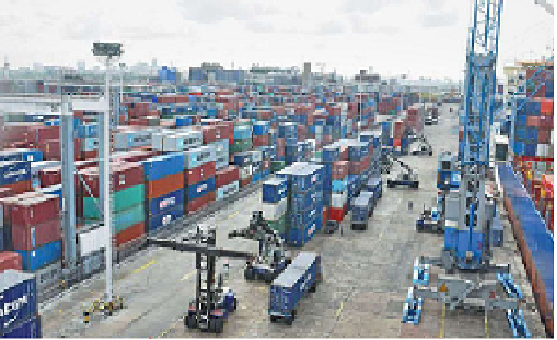
NPA Facilitates 500,000 Tonnes Petroleum Export from Dangote Refinery
ShareThe Nigerian Ports Authority (NPA) said it facilitated export of over 500,000 tonnes of petroleum products from Dangote Refinery to...


NAICOM Issues Guidelines on Policyholders’ Protection Fund
ShareThe National Insurance Commission (NAICOM) has issued new guidelines for the collection, management and administration of the Insurance Policyholders’ Protection...


Navy Seeks Partnerships to Boost Indigenous Shipbuilding, Operations
ShareThe Nigerian Navy has expressed readiness to partner with relevant organisations to strengthen indigenous shipbuilding capacity and enhance naval operations....


Dangote Hikes Petrol Price to N1,275, Diesel N1,950
ShareThe Dangote Petroleum Refinery has again increased the gantry price of petrol and diesel, further tightening pressure on consumers and...
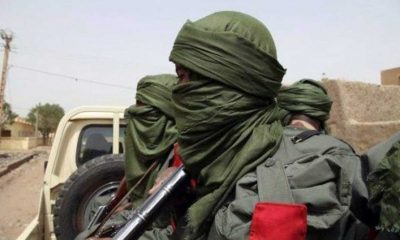

Bandits Abduct Couple on Farm in Kaduna
ShareBandits have abducted a man, Bitrus Jayawa and his wife, Martha Bitrus, from a farm in Katambi community in Kachia...


NBTE Inaugurates Nigeria’s First Chip Design Training Programme
ShareThe National Board for Technical Education (NBTE) has inaugurated Nigeria’s first chip design training programme, aimed at equipping young Nigerians...


Enugu Says Science Transformed Health System’s Delivery, Outcomes
ShareFrom Sylvia Udegbunam, Enugu The Enugu State Government said science has transformed the health system’s delivery and general outcomes in...


NSCDC Arrests 20 Foreign Nationals in Kano over Illegal Entry
ShareThe Kano State Command of the Nigeria Security and Civil Defence Corps (NSCDC) has arrested 20 foreign nationals in the...


FG Unveils Digital Platform to Showcase Nigeria’s Culture, Tourism Destinations
ShareThe Federal Government has unveiled a new digital platform, NITOUREY, aimed at showcasing Nigeria’s rich cultural heritage and tourism destinations...