
NEWS
Nigeria’s Inflation Rate Rose to 24.23 % in March- NBS

The National Bureau of Statistics (NBS), says Nigeria’s headline inflation rate rose to 24.23 per cent in March 2025.The NBS disclosed this in its Consumer Price Index (CPI) and Inflation Report for March 2025, which was released in Abuja.According to the report, the headline inflation showed an increase of 1.
05 per cent compared to the 23. 18 per cent recorded in February 2025. Furthermore, the report said on a month-on-month basis, the headline inflation rate in March 2025 was 3.90 per cent, which was 1.85 per cent higher than the rate recorded in February 2025 at 2.04 per cent.“This means that in March 2025, the rate of increase in the average price level is higher than the rate of increase in the average price level in February 2025.”The report said the increase in the headline index for March 2025 on a year-on-year and month-on-month basis was attributed to the increase in some items in the basket of goods and services at the divisional level.It said these increases were observed in food and non-alcoholic beverages; restaurants and accommodation services; transport; housing, water, electricity, gas, and other fuel; education services; health; and clothing and footwear.Others are information and communication; personal care, social protection and miscellaneous goods and services; furnishings, household equipment and maintenance; insurance and financial services; alcoholic beverages, tobacco and narcotics, recreation sports and culture.The report said the food inflation rate in March 2025 was 21.79 per cent on a year-on-year basis.However, on a month-on-month basis, food inflation rate in March was 2.18 per cent , which increased by 0.50 per cent compared to the 1.67 per cent recorded in February 2025 .The NBS said the increase in the food inflation figure was atributed to the rate of increase in the average prices of Ginger (fresh), Garri (Yellow), Broken Rice (Ofada), and Honey (Natural Production).Others are Crabs, Potatoes, Plantain Flour, Periwinkle (Unshelled), and Pepper (Fresh) among others,The report said “all items less farm produce and energy’’ or core inflation, which excludes the prices of volatile agricultural produce and energy, stood at 24.43 per cent in March 2025 on a year-on-year basis.“While on a month-on-month basis, the Core Inflation rate was 3.73 per cent in March, which increased by 1.21 per cent compared to the 2.52 per cent recorded in February.”The NBS said on a month-on-month basis Farm Produce rate stood at 2.64 per cent compared to the 1.77 per cent recorded in February 2025.The report said Energy rate stood at 9.21 per cent in March on a month-on-month basis, compared to the – 0.99 per cent recorded in February.It said Services stood at 3.344 per cent in March 2025 on a month-on-month basis, compared to 3.38 per cent in February.“While Goods had a rate of 3.89 per cent on a month-on-month basis compared to the 1.29 per cent recorded in February.”The report said on a year-on-year basis in March 2025, the urban inflation rate was 26.12.“On a month-on-month basis, the urban inflation rate was 3.96 in March 2025, which increased by 1.56 per cent compared to February at 2.40 per cent.The report said on a year-on-year basis in March, the rural inflation rate was 20.89 per cent.“On a month-on-month basis, the rural inflation rate was 3.73 per cent in March, which increased by 2.57 per cent compared to February at 1.16 per cent.”On states’ profile analysis, the report showed that in March , all items’ inflation rate on a year-on-year basis was highest in Kaduna at 33.33 per cent, followed by Osun at 32.08 per cent , and Kebbi at 30.74 per cent.It, however, said the slowest rise in headline inflation on a year-on-year basis was recorded in Akwa Ibom at 12.81 per cent, followed by Bayelsa at 14.02 per cent, and Sokoto at 14.83 per cent.The report, however, said in March 2025, all items inflation rate on a month-on-month basis was highest in Kaduna at 18.85 per cent, followed by Osun at 16.49 per cent, and Oyo at 14.44 per cent.“Sokoto at -8.66 per cent, followed by Nasarawa at -4.38 per cent and Kwara at -3.69 per cent recorded the slowest rise in month-on-month inflation.”The report said on a year-on-year basis, food inflation was highest in Oyo at 34.41 per cent, followed by Kaduna at 31.14 per cent, and Kebbi at 30.85 per cent.“Bayelsa at 9.61 per cent, followed by Adamawa at 12.41 per cent and Akwa Ibom at 12.60 per cent recorded the slowest rise in food inflation on a year-on-year basis.’’The report, however, said on a month-on-month basis, food inflation was highest in Oyo at 19.74 per cent, followed by Kaduna at 17.24 per cent, and Kebbi at 14.03 per cent.“Sokoto at -14.10 per cent, followed by Nasarawa at -9.91 per cent and Edo at -5.78 per cent, recorded the slowest rise in inflation on a month-on-month basis.” The NBS recently rebased the CPI and released the rebased CPI results for January 2025 in February.The Statistician-General of the Federation, Adeyemi Adeniran said the rebasing was designed to ensure that Nigeria’s economic indicators accurately reflect the current structure of the economy.This according to him, was also to incorporate new and emerging sectors, updating consumption baskets, and refining data collection methods.Adeniran said part of the process of rebasing the CPI included bringing the base year closer to the current period, from 2009 to 2024. (NAN)
By David Torough, Abuja
A frontline governorship aspirant on the platform of the All Progressives Congress (APC) in Benue State, Dr. Mathias Byuan, has assured President Bola Tinubu of no fewer than two million votes from the state in the 2027 general elections.
Dr. Byuan made the pledge on Saturday in Makurdi during the launch of local chapters of the Ahmed Bola Tinubu (ABT) Support Group, under which he is championing the “Bucket Revolution” for Tinubu 2027.
He said Tinubu must be re-elected, citing what he described as transformative policies and projects that have positively impacted Benue State and the country at large. Among the projects he listed were the ongoing Buruku Bridge, the Wurukum overhead bridge in Makurdi, and the dualisation of the Makurdi–Enugu expressway, as well as the appointment of Benue indigenes into key national positions.
According to Dr Byuan, the President holds Benue close to his heart and deserves overwhelming support from the people in return.
“I am a beneficiary of President Tinubu’s goodwill to Benue people, but I chose to resign my position to answer the call of my people who are in dire need of purposeful leadership,” Byuan said.
The former Executive Director of Housing, Finance and Accounts at the Federal Housing Authority, Abuja, lamented that despite huge allocations from the federation account, Benue State has little to show in terms of completed projects, while insecurity remains a major concern.
He said his decision to join the governorship race was driven by a desire to “rescue” the state from what he termed poor leadership and set it on a path of growth and development.
Outlining his vision, Byuan promised to prioritise security, improve the welfare of citizens through what he described as a “stomach infrastructure” ministry, and transform Benue from a largely civil service-driven economy to a viable commercial hub. He also pledged inclusive governance that would carry all segments of the state along.
The APC State Chairman, Dr. Austin Agada, represented by the Deputy State Chairman, Hon. Benedict Aluga, commended Byuan for promoting unity within the party and mobilising support for its leadership.
In a goodwill message, Ambassador Philip Eche conveyed solidarity from Zone C, expressing confidence in Byuan’s leadership capacity.
Also speaking, the Director-General of the ABT Support Group, Dr. Kaaulu Akerkpev, said the state stands to regain lost ground through Byuan’s candidature.
APC chieftain, Chief Jime Akaaka, described Byuan as a credible solution to the challenges facing Benue State and urged the electorate to support what he called the “Benue Rescue Mission.”
The event drew party stakeholders, supporters, and members of the public, marking a significant step in the mobilisation efforts ahead of the 2027 elections.

By Raphael Atuu, Abuja
Every organization, it seems, needs an Efiko Management Consulting firm because of its rebrand and expanded to global method in tackling execution plans.
That was the bold assertion from Omagbitse Barrow as he unveiled the new identity and strategic direction of his firm, formerly known as Learning Impact Model.
Now rebranded as Efiko Management Consulting, the company is signalling a clear shift from traditional corporate training to a more comprehensive focus on helping organizations turn strategy into measurable results.
Founded in 2010, the firm has worked across a wide range of sectors including government, banking, pensions, energy, insurance, and telecommunications.
According to Barrow, the rebrand reflects not just a change in name, but an evolution in purpose one shaped by years of hands-on experience with organizations struggling to execute their plans.
In a conversation with our correspondent, Barrow, who serves as Managing Consultant and Chief Executive, explained that the transformation was driven by a recurring pattern he observed in client organizations.
“Many organizations invest heavily in developing strategies,” he said, “but the real challenge lies in execution. There is often a disconnect between what is planned and what is ultimately delivered.”
Over time, he noted, the firm’s work naturally expanded beyond training into addressing this gap—focusing on the systems, structures, and behaviours required to deliver results.
“We started with a strong foundation in corporate training, but quickly realized that capability alone is not enough,” Barrow explained. “Execution depends on alignment—across leadership, systems, culture, and communication. Without that alignment, even the best strategies fail to produce results.”
Under its new identity, Efiko Management Consulting will continue offering corporate training while deepening its expertise in strategy and performance consulting, organizational development, strategic resourcing, and business transformation.
The name “Efiko,” drawn from Nigerian slang, refers to someone who is intellectually sharp, efficient, and innovative. Barrow said the choice reflects the firm’s philosophy: building organizations that are not only capable, but consistently effective in execution.
As part of this shift, the firm is also investing in tools and platforms designed to strengthen execution within client organizations. These include strategy tracking systems, 360-degree feedback tools, and e-learning platforms that support continuous capability development.
“Our goal is to ensure that execution is not left to chance,” Barrow said. “It must be supported by structured systems and reinforced over time.”
This philosophy is shaping how the firm engages with clients—moving toward an integrated model that combines advisory services, capability building, and performance tracking.
“For us, the critical question is no longer just ‘What should be done?’” he added. “It is ‘How will it be done, measured, and sustained?’”
While Efiko maintains a strong presence in Nigeria, the firm is also looking beyond its traditional markets.
Barrow pointed out that the challenge of translating strategy into results is not unique to any one geography, creating opportunities for broader expansion.
“Organizations everywhere face similar execution gaps,” he said. “That presents an opportunity for us to take our work into new markets.”
Despite the new name and expanded scope, Barrow emphasized that the firm’s core mission remains unchanged: helping organizations strengthen leadership, build capabilities, and achieve lasting performance improvements.
In his words, “The rebrand is less about reinvention and more about clarity of purpose”.
From Mike Tayese, Yenagoa
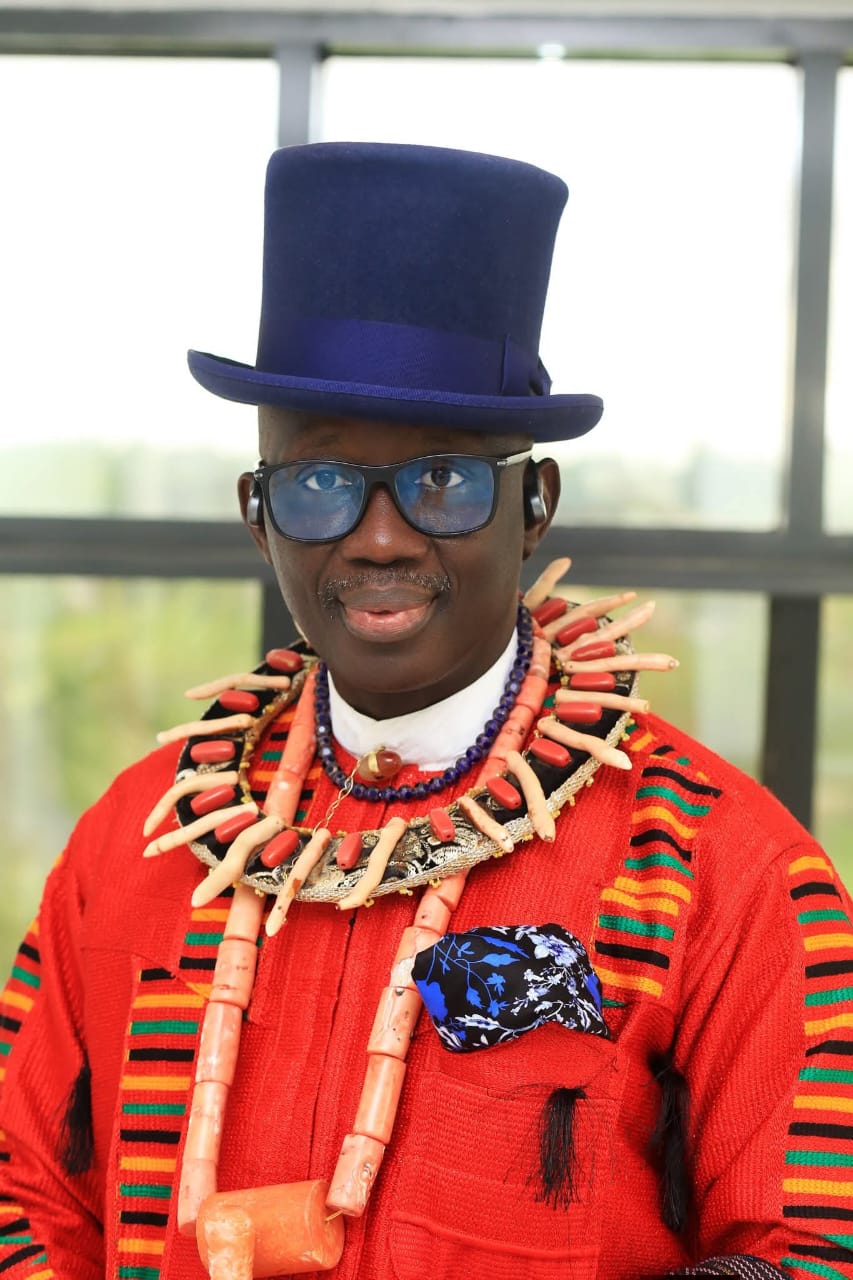
The Council of Ijaw Traditional Rulers and Elders (CITRE) has defended its action suspending the election into the executive positions of the Ijaw National Congress (INC), insisting on the guiding principles of the INC Constitution.
The Chairman of CITRE, HRM, King Bubaraye Dakolo Agada IV, Ibenanaowei of Ekpetiama Kingdom, Chairman of Bayelsa Traditional Rulers Council, in a statement on Saturday entitled ‘’On Constitutional Process and the INC Electoral Timeline’’ while noting the communications by various organs of the Ijaw National Congress (INC) concerning the forthcoming national elections, restated its position on the suspension of the election until all pending petitions arising from the elections are resolved.
CITRE stated that its action was guided by the INC Constitution and its responsibility to uphold order, balance, and continuity within the Congress.
According to King Dakolo, CITRE does not engage in the administrative conduct of elections, but it would ensure that all processes within the Congress must remain consistent with the Constitution from which they derive authority.
CITRE pointed out that where questions arise as to the constitutional integrity of any process, it is necessary that such questions are addressed within the institutional framework provided in order to preserve legitimacy and confidence.
It added that it was the context that informed CITRE’s constitution of a committee to review outstanding constitutional and procedural concerns relating to the electoral process.
CITRE assured that it remains committed to ensuring that the Congress continues to function within a framework that commands confidence, legitimacy, and order, adding that stakeholders must abide by procedures, and the constitution is unambiguous about what to do.
The statement read in part: ‘’Accordingly, CITRE reiterates that the electoral process remains in abeyance pending the Committee’s report. This position is guided solely by the need to preserve the integrity of a process under review. This does not detract from the roles of other organs of Congress. It affirms that constitutional compliance is foundational and that processes under review are best preserved until their validity is clarified.
‘’CITRE therefore urges all organs and stakeholders of Congress to act in a manner that supports institutional coherence, respects established processes, and avoids actions that may pre-empt or compromise ongoing efforts at doing things constitutionally. The Committee is expected to conclude its work within the stipulated timeframe, after which CITRE will consider its recommendations in the overall interest of the Ijaw Nation.



Byuan Rallies Support, Pledges Two Million Votes for Tinubu in Benue
ShareBy David Torough, Abuja A frontline governorship aspirant on the platform of the All Progressives Congress (APC) in Benue State,...


Efiko Rebrands, Expands Globally To Tackle Execution Plan
ShareBy Raphael Atuu, Abuja Every organization, it seems, needs an Efiko Management Consulting firm because of its rebrand and expanded...


INC Elections: CITRE defends suspension of polls, insists on constitutional order
Share From Mike Tayese, Yenagoa The Council of Ijaw Traditional Rulers and Elders (CITRE) has defended its action suspending the election...


UN Secretary General Visits Benue Condemns Incessant Attacks On Communities, Killings.
ShareFrom Attah Ede Makurdi United Nations Deputy Secretary-General Dr. Amina Mohammed, on Friday condemned the incessant conflicts killings in Nigeria,...


President Tinubu commissions 60 megawatts gas turbine, other projects in bayelsa
ShareFrom Mike Tayese, Yenagoa The much awaited 60 megawatts Gas Turbine embarked upon by the administration of Governor Douye Diri...
Ijaw Traditional Rulers, elders suspend INC elections
Share The National Conference of Ijaw Traditional Rulers and Elders (N-CITRE-INC) has suspended the Ijaw National Congress (INC) elections till...

Experts Advocate Digital Economy, Governance Reforms as Pathway to Inclusive Growth
ShareBy David Torough, Abuja Stakeholders at the 2026 Academic Staff Union of Polytechnics (ASUP) International Conference in Bida have called...


Digital Economy, Good Governance Key to Unlocking Inclusive Growth in Developing Nations — Expert
ShareBy David Torough, Abuja At the 2026 Academic Staff Union of Polytechnics (ASUP) National Conference held at the Federal Polytechnic...

UNILAG Alumni awards scholarship to 28 indigent students
ShareBy Laide Akinboade, Abuja The University of Lagos Alumni Association, Federal Capital Territory (FCT), chapter on Thursday, awarded scholarship to...


JAMB Releases 2026 UTME Examination Slips for Candidates
ShareThe Joint Admissions and Matriculation Board (JAMB) has announced that candidates who registered for the 2026 Unified Tertiary Matriculation Examination (UTME) can now print...