
POLITICS
OGHA Passes Resolution Requesting Immediate Solution to Cult Clashes


Kunle Idowu, Abeokuta
Ogun State House of Assembly has passed a resolution calling on the State Government to prevail on the security agencies to clamp down on the activities of cultists across the State and the need to appoint Commissioner for Youth in the State, with a view to driving policies and programmes that would aid youth engagements so as to address the menace of cult clashes.
The passage of the resolution followed a motion moved by the Majority Leader, Yusuf Sherif and seconded by the Minority Leader, Lukman Adeleye, shortly after the lawmakers debated on the escalating violence of cult clashes in the State. Opening debate on the motion leading to the passage of the resolution, the sponsor Hon. Adebisi Oyedele, noted that the House observed with serious concern the disturbing trend of incessant cult killings across the State, especially Abeokuta, which began approximately six weeks ago and that no fewer than 10 individuals had lost their lives to cult-related violence within the last 42 days.He stated further that, the rate at which lives were being lost in the State capital was indeed worrisome, saying incidents included the broad daylight shootings of five individuals at different locations within the State capital. “Worried about the sporadic shooting at Kuto Garage about five days ago creating civil unrest for dwellers which was traceable to a cult gang trying to hit another target.Also worried that, the continuous killings among young people across the State are adversely affecting businesses and tarnishing the reputation of our dear State. Worthy of note is the recent intervention of the State Government, State Police Command of the Nigeria Police Force and the traditional rulers which have resulted in a calm environment in Sagamu axis”, he submitted.Other lawmakers including Lukmon Atobatele, Adeyanju Adegoke and Adeleye Lukman noted that the activities of cult clashes in the State needed to be addressed, especially through advocacy and orientation of the youth.They remarked that there was need for the residents of the State to contribute to the security of the society through intelligence information to security operatives, adding that there was need for unhindered prosecution of criminals in the guise of cultism to serve as deterrent to others.In his response, the Speaker decried the celebration of moral decadence in the society, explaining that such had led to the spread of crimes and criminalities amongst youth. He implored the youth to persevere, imbibe nobility and be productive by engaging in lawful activities that could earn them a decent living.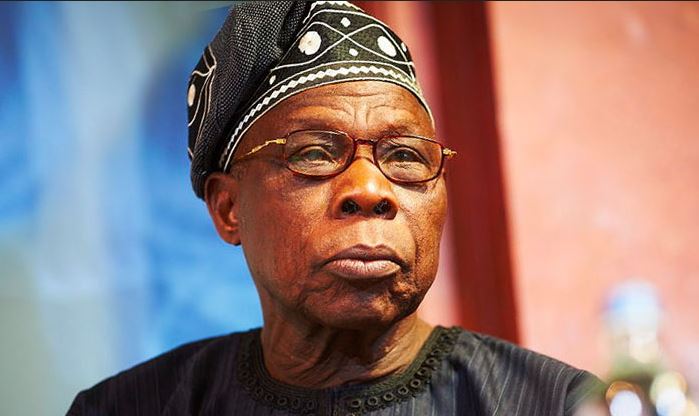
By David Torough, Abuja
Former Presidents Olusegun Obasanjo and Goodluck Jonathan have issued a strong call for national unity, institutional reforms, and economic transformation, warning that Nigeria’s future depends on collective responsibility and a democracy that delivers tangible results.
Both leaders, who spoke at separate high-level engagements on Thursday, converged on a common message: Nigeria stands at a critical crossroads and requires urgent, coordinated action from citizens, leaders, and institutions.
At the 6th Annual Colloquium marking the 65th birthday of Itua Ighodalo, Obasanjo stressed that no external force would fix Nigeria’s problems unless Nigerians themselves unite across divides.
Represented by Prof. Adedeji Daramola, he emphasised that nation-building is a shared duty requiring contributions from all segments of society.“Until we come together to work and fix Nigeria, nobody will fix it for us,” Obasanjo declared, urging citizens—from grassroots traders to political elites—to take ownership of the country’s development.
He highlighted the importance of youth inclusion, describing young people as central to Nigeria’s future, and called for greater investment in technology and innovation to harness the country’s demographic advantage.
Echoing reformist sentiments, economist Eghosa Osagie advocated for increased local production, while Opeyemi Adamolekun of Enough is Enough Nigeria criticised the commercialization of politics. Technology investor Iyinoluwa Aboyeji pointed to infrastructural imbalances, noting that digital connectivity remains heavily concentrated in Lagos.
Meanwhile, at a policy convening in Abuja organised by the Goodluck Jonathan Foundation, Jonathan underscored the need to align democracy with economic growth to ensure its sustainability.
He warned that democracy, both globally and in Nigeria, faces increasing pressure from economic hardship, insecurity, and declining public trust. According to him, elections alone are insufficient without transparent institutions and policies that foster innovation and enterprise.
Jonathan raised concerns about governance effectiveness, comparing Nigeria’s democratic system with alternative models in countries like China and the United Arab Emirates, where structured leadership selection and economic progress have been notable.
Despite this, he maintained that freedom and justice remain democracy’s defining strengths, cautioning that any system that fails to uphold these values loses its legitimacy.
“Our democracy has endured, but endurance alone is not enough,” Jonathan said, stressing that economic performance is key to sustaining public confidence.
Both leaders agreed that Nigeria must not choose between democracy and development but instead ensure that both reinforce each other. They urged policymakers, civil society, and the private sector to act decisively in bridging governance gaps and delivering inclusive growth.
The convergence of views from the two former presidents reflects a growing consensus among stakeholders that Nigeria’s progress hinges on unity, accountable leadership, youth empowerment, and a democratic system capable of improving the lives of its citizens.
By Uzoma Ahamefule
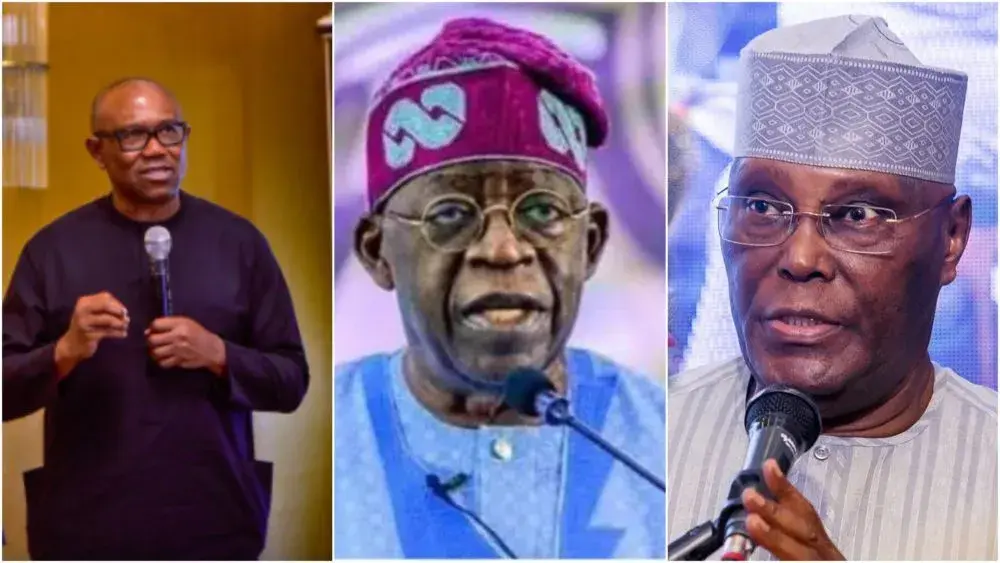
If Obi emerges as the presidential candidate for the ADC, the battle for Aso Rock in 2027 will be fundamentally altered, with up to 50 per cent of the advantage slipping from Tinubu’s grasp.
In light of the weight of existing evidence when subjected to objective analysis, the prospect of Tinubu winning a free, fair and credible presidential election in 2027 is exceedingly unlikely
If Atiku were to become the ADC’s presidential candidate, the passionate, citizen-driven momentum currently building nationwide, fuelled by “Obidient” volunteers willing to invest their own resources without expectation, would significantly wane.
This would mark a departure from the Labour Party phenomenon of 2023. This erosion of enthusiasm would diminish the ADC’s competitive advantage against the ruling APC and effectively strengthen Tinubu’s position.History is a cold sovereign, indifferent to the pleas of the powerful and the pride of the partisan. It has no allies to protect or enemies to spite. It moves only by the relentless engine of facts that remain immune to influence because it lacks the human capacity for favouritism. One must acknowledge this reality of history, and accept the stark choice or be consumed by its weight.
“Terrorists and bandits have continued to issue threats, maim and kill, expand their territories and collect taxes in sovereign land. How long will Nigerians continue to live in this state of fear and hopelessness?”
In retrospect, the strategic misstep of the PDP in 2023 was the foundational tragedy that precipitated today’s systemic collapse and the current national catastrophe. History teaches us that repeating the same mistakes without reform is a recipe for stagnation. Persisting in the same failed patterns year after year yet expecting a different outcome defies political logic and the basic tenets of human progress.
ADC members must understand this clearly, put their feelings aside, and face reality. Peter Obi is the one beacon of hope for those seeking an alternative to the current situation, and overlooking his potential would lead to certain defeat. Nigerians cannot afford another era of political vanity and must unite behind the most acceptable option, or face the harsh consequences of their own irrelevance – a tragedy of choice, not fate.
History will not be kind to the ADC if it repeats the same mistake as the PDP in 2023. That decision has now been etched into history as a profound mistake. It serves as a reminder that when political structures ignore the will of the people, the resulting stagnation is a burden shared by all citizens. History beckons, 2027 offers another chance for Nigerians to change this narrative that has long been defined by lamentation and regret. If Peter Obi were to secure the ADC presidential nomination for 2027, it would instantly shift the political landscape, stripping the APC of half its incumbency advantage before a single vote has been cast.
“Based on verifiable evidence and objective analysis, in a free, fair and credible election President Tinubu would not win the 2027 presidential election.”
However, for the ADC and Obi, the real challenge will be not just winning the votes and hearts of Nigerians, but also standing resolute against thuggery and manipulation to ensure the will of the people is respected. Appeal to the hearts of Nigerians is only half of the competitive process. The rest involves confronting electoral fraud, battling the weaponization of state apparatus, stopping ballot snatching and result swapping, preventing the use of fake security forces, stopping the mutilation of result sheets and ensuring that manufactured data intended to override the public will is not announced. None of these issues can be solved with manifestos and good speeches alone. Without achieving total victory over these forces, the pain of the Nigerian people will only be amplified for another four years.
In 2003, Atiku Abubakar’s influence in Nigerian politics was considered so significant that President Obasanjo was said to have personally appealed to him for support in his bid for a second term. As was widely reported at the time, had Atiku chosen to contest the PDP presidential primary, many believed that he had the necessary political machinery and delegate loyalty to defeat Obasanjo. In spite of that, he decided against it in the belief that Obasanjo would support his presidential bid after his second term. However, the middle of Obasanjo’s second term was marred by political turmoil surrounding the allegedly unsuccessful “Third Term” agenda.
Whatever may have happened, Obasanjo had his reasons for not supporting Atiku’s bid for the Nigerian presidency in 2007. Atiku felt betrayed because Obasanjo did not reciprocate his support when the opportunity arose. To this day, the two men are political enemies.
Atiku, Nigeria’s former Vice President still remains one of the most formidable figures in the country’s political landscape. Despite pursuing the highest office in the land on several occasions, the presidency has frustratingly continued to elude him. It is difficult to ascertain whether this persistent outcome reflects a cruel twist of fate, misaligned political timing, or the complex dynamics of power itself. The reason remains open to interpretations.
In keeping with the timeless maxim, one must give to Caesar what is rightfully his. Atiku is a very strong political opponent. His wealth of experience and loyal supporters have long established him as a formidable force, and a challenger of undeniable weight. However, despite his stature, the current momentum has eclipsed the viability of his candidacy. At this stage, any attempt he makes to emerge as the ADC flag bearer would be a trial-and-error gamble. Instead, party members should see themselves as engaged in a national rescue mission with Obi at the forefront, while encouraging Atiku to play the role of a statesmanlike kingmaker in support of his candidacy. Ultimately, they would all be winners. A holistic assessment suggests that any deviation would risk plunging the country into yet another collective disaster.
If this advice is not followed and Atiku secures the ADC’s presidential nomination, the fervent grassroots support that the “Obidient Movement” has organically mobilised across Nigeria – characterised by personal sacrifice and self-funding, as was evident during the Labour Party’s surge in popularity in 2023 – would likely dissipate. Such a decline would prove disadvantageous against an entrenched ruling party like the APC, and his emergence could ultimately strengthen the position of the APC and Tinubu.
ADC members have accused the APC of orchestrating moves to exclude them from the electoral process in 2027. Despite a wave of gubernatorial defections to the APC, anxiety within the party about the ADC’s involvement in the 2027 presidential race remains persistent.
Some political pundits and opposition figures have criticized the governors who defected to the APC, citing underperformance in office. Available evidence suggests that these defections are less an endorsement of the party’s achievements and more a reflection of self-interest and political expediency. Many of these governors now appear primarily focused on securing second terms or positioning themselves for Senate seats as their tenures draw to a close. Because they performed poorly, they lack the confidence in their ability to win in a credible electoral process, thus they seek refuge in APC. Their calculation is clear, by supporting President Tinubu they erroneously believe that they can leverage access to federal power to secure their ambitions, disregarding the democratic will of Nigerians in the process.
Mounting developments have left Nigerians increasingly frustrated and dissatisfied with the APC administration’s failure to honour its electoral pledges. Based on verifiable evidence and objective analysis, in a free, fair and credible election President Tinubu would not win the 2027 presidential election.
President Tinubu promised Nigerians a steady supply of electricity, and said that if he failed to deliver on this promise during his first term, Nigerians should not vote for him again. He removed the fuel subsidy, which caused great hardship, but Nigerians never saw the impact of its removal or where the money went. He has continued to borrow money, resulting in Nigeria’s foreign debt reaching embarrassing levels, and there have been no visible achievements commensurate with the amount borrowed.
In terms of security, Nigeria is currently experiencing its worst period. Presently, some villages in Kwara State have been forced to flee their ancestral homes due to terrorist and bandit activities. Many states in the northern part have been in similar or worse situation since the time of the late Buhari administration. The news from other parts of the country is not pleasant. Terrorists and bandits have continued to issue threats, maim and kill, expand their territories and collect taxes in a sovereign land. How long will Nigerians continue to live in this state of fear and hopelessness?
In this glaring evidence, how can anyone with integrity and honour start campaigning for a vote for the APC and President Tinubu in the name of connecting to the centre? Most people have indeed sold their conscience for money and recognition.
Conclusion
If you sell your dog and buy a monkey, you still have something that squats in your house.
If Obi is not the flag bearer of the ADC for the 2027 presidential election, then President Tinubu’s inauguration in May 2027 will be guaranteed with little difficulty.
Please note this warning, if Obi, Atiku, Kwakwanso or Amaechi etc. were to leave the ADC at this critical moment for whatever reason, none of them would become Nigeria’s president in 2027, regardless of the party they join. This is because, in effect, they would have inadvertently paved the way for President Tinubu. Consequently, what the opposition requires is not fragmentation, but cohesion. This is non-negotiable in the face of formidable power, since the ultimate battle is not just to secure votes, but also to protect them from manipulation and electoral malpractice. Imperatively, they must remain united, drawing on experience and exercising wisdom to balance disagreement with consensus. Sound judgement is essential at every step – otherwise, the pursuit of 2027 will prove to be yet another illusion.
Uzoma Ahamefule, a concerned patriotic citizen and a refined African traditionalist, writes from Vienna, Austria. uzomaah@yahoo.com. +436607369050 (Please messages only)
By David Torough, Abuja
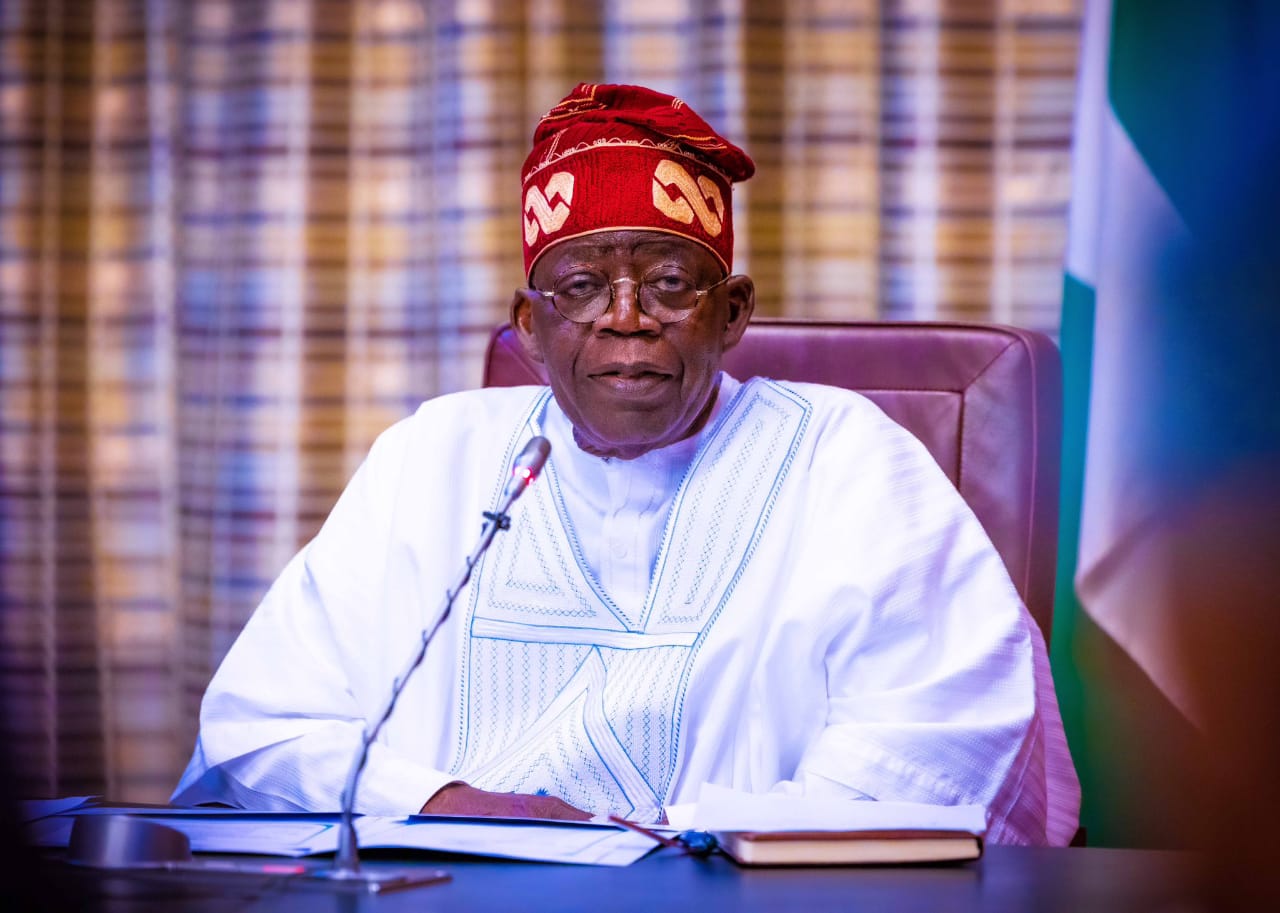
President Bola Ahmed Tinubu was absent from the inauguration of key infrastructure projects in Lagos on Wednesday, opting instead to focus on pressing national security matters, according to his Special Adviser on Public Communications and Orientation, Sunday Dare.
Dare explained during a televised interview that although the President was in Lagos, he had been preoccupied with ongoing security briefings following recent violent incidents in parts of the country, including Jos, Kaduna, and Niger states.
He said the President had been “taking constant briefs,” engaging security agencies, and making time-sensitive decisions to address emerging threats.“The president has to prioritise when it comes to state matters, especially security,” Dare stated, noting that Tinubu remained in close contact with intelligence services and was actively coordinating responses.
In the President’s absence, Senate President Godswill Akpabio stepped in to commission several projects on his behalf. These included the Open-Mende-Ojota Link Bridge and the newly named Bola Ahmed Administrative Complex in Alausa.
Akpabio performed the ceremonies alongside Lagos State Governor Babajide Sanwo-Olu, Imo State Governor Hope Uzodimma, and other dignitaries. While unveiling the projects, he declared, “On behalf of President Bola Ahmed Tinubu, I commission these projects.”
The events form part of a broader rollout of infrastructure projects executed by the Lagos State Government, which had earlier announced that the President would inaugurate multiple “iconic, transformative and legacy projects” during his visit.
To facilitate the ceremonies, the state government implemented partial road closures across key areas, including Ikeja, Ojota, Opebi, and Allen. The Commissioner for Transportation, Oluwaseun Osiyemi, said the measures were necessary to ensure safety and smooth coordination, urging motorists to use alternative routes to avoid congestion.
Additional commissioning events, including the Tolu Schools Complex in Ajegunle, are scheduled as part of the two-day programme, underscoring the state’s ongoing infrastructure push despite the President’s limited physical participation.


UNILAG Alumni awards scholarship to 28 indigent students
ShareBy Laide Akinboade, Abuja The University of Lagos Alumni Association, Federal Capital Territory (FCT), chapter on Thursday, awarded scholarship to...


JAMB Releases 2026 UTME Examination Slips for Candidates
ShareThe Joint Admissions and Matriculation Board (JAMB) has announced that candidates who registered for the 2026 Unified Tertiary Matriculation Examination (UTME) can now print...
Lobi Stars Target Promotion to NPFL in 2026/2027 Season
ShareThe Chairman of Lobi Stars Football Club of Makurdi, Simon Ikya, said the club’s sole target is to gain promotion...

Gambia Appoints British Barrister to Prosecute Gruesome Jammeh-era Crimes
ShareBritish barrister Martin Hackett has been appointed as The Gambia’s first special prosecutor to try those responsible for human rights abuses carried out...

Court Frees Terror Victim, Jails another 10 Years
ShareJustice Peter Lifu of the Federal High Court, Abuja, on Thursday, sentenced a Boko Haram victim, Ali Kolo, to nine years’ imprisonment...
Lassa Fever Deaths Rise in Nigeria —NCDC
ShareThe Nigeria Centre for Disease Control and Prevention (NCDC), said Lassa fever fatalities have risen sharply in 2026, in spite of a decline in...


Recapitalisation: CBN Demands Tougher Risk Discipline, Governance Reforms
Share The Central Bank of Nigeria (CBN) said strong governance and risk discipline are critical to the success of Nigeria’s...

DHQ Confirms Terrorists, Soldiers Deaths in Borno Base Midnight Attack
ShareBy David Torough, Abuja A fierce overnight assault on a military base in Benisheikh, Borno State, has left several soldiers...


Nigeria’s Democracy Must Thrive, Obasanjo, Jonathan Declare
ShareBy David Torough, Abuja Former Presidents Olusegun Obasanjo and Goodluck Jonathan have issued a strong call for national unity, institutional...
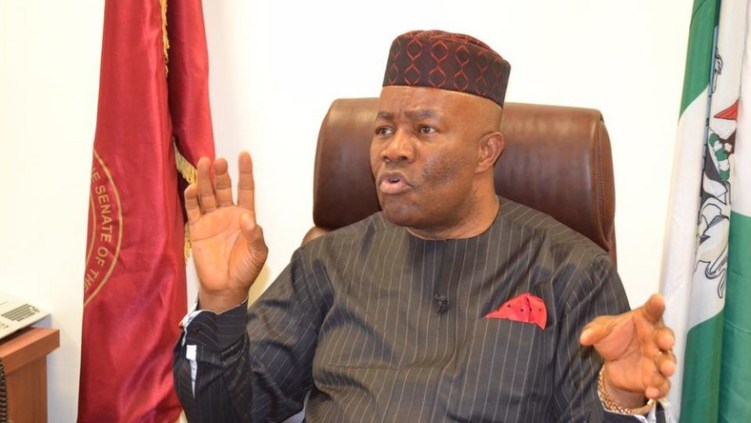
Akpabio Steps in to Unveil Lagos Projects on Tinubu’s Behalf
ShareSenate President Godswill Akpabio has inaugurated the new Open-Mende-Ojota Link Bridge Project and the Multi-agency complex, Alausa, now known as...