
Economy
Ogun Assembly Passes N350.735bn Appropriation Bill

Kunle Idowu, Abeokuta
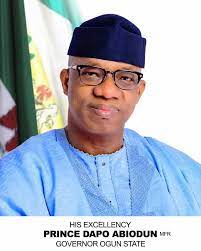
Ogun State House of Assembly yesterday passed the State Appropriation Billl for the 2020, presented to it by the state governor, Prince Dapo Abiodun.
The exact figure of N350,735,149,739.57 contained in the budget was passed with adjustments in some recurrent and or capital estimates of about 182 agencies.
The bill was titled: “H.
B. No. 075/OG/2021-Year 2022 Appropriation Law-A Bill for a Law for the Appropriation of the Sum of One Hundred and Seventy-Two Billion, Nine Hundred and Ninety-Seven Million, Three and Eighty Two Thousand, Two Hundred and Seventy-Five Naira, Twenty-One Kobo Only for Recurrent Expenditure, (Including the Sum of Nineteen Billion, Two Hundred and Twelve Million, Eight Hundred and Two Thousand, Four Hundred and Fifty-Seven Naira, Ninety-Nine Kobo Only For Servicing of Pensions and Gratuities) and One Hundred and Seventy-Seven Billion, Seven Hundred and Thirty-Seven Million, Seven Hundred and Sixty-Seven Thousand, Four Hundred and Sixty-Four Naira, Thirty-Six Kobo Only For Capital Expenditure For Service of Ogun State Government, Nigeria for the Financial Year Ending Thirty-First Day of December, Two Thousand And Twenty-Two”.The passage of the bill was consequent upon the presentation of the report of the House Committee on Finance and Appropriation Chairman, Hon. Olakunle Sobunkanla, who thereafter moved the motion for its adoption, seconded by his Vice, Ganiyu Oyedeji and supported by the whole House through a unanimous voice vote.
The Appropriation Bill was later read and adopted clause-by-clause by the Committee of the House presided by the Speaker, Rt. Hon. Olakunle Oluomo at a the plenary held at the Assembly Complex, Oke-Mosan, Abeokuta.
The assembly in the course of legislative process on the appropriation bill, carried out slight adjustments in the recurrent expenditures of about 144 agencies, just as the capital expenditures of 38 other agencies were equally adjusted.
The adjustments led to reduction in the total recurrent expenditure from the initial N172.997bn to N153.180bn resulting in N19.816bn decrease, while capital expenditure was increased from N177.737bn to N197.554bn giving an increment of N19.816bn
The motion for the third reading of the bill was moved by the Majority Leader, Yusuf Sheriff, seconded by Hon. Oludaisi Elemide and supported by the Whole House, while the Clerk/ Head of Legislative Service, Mr. ‘Deji Adeyemo did the third reading of the bill before the members.
Responding, Speaker Oluomo directed that the clean copy of the bill be transmitted to Governor Abiodun for his assent, while seizing the occasion to commend his colleague-lawmakers, management and staff of the Assembly for their unrelenting efforts towards promoting good governance through the passage of people-oriented legislations.
In another development, a bill titled HB. No. 077/ OG/2021- Ogun State Board of Internal Revenue Law, 2021 has scaled first and second readings on the floor of the State House of Assembly with an assurance from members that when operational, it would aid efficiency, promote accountability and transparency as well as boost revenue generation in the State.
The bill seeks for “a law to provide for the Establishment of the Ogun State Board of Internal Revenue, Service and Administration; and collection of revenue due to the Government of the State and for matters related”, according the lawmakers who spoke during the debate on the second reading of the bill, noting that that it was high time the State Revenue Board became autonomous to further strengthen its operations.
The Assemblymen spoke in unison after the motion for the second reading was moved by Majority Leader, Sheriff Yusuf, seconded by Isaac Adams and supported by the Whole House through a voice vote at a plenary presided over by the Speaker Oluomo.
In their submissions, Olakunle Sobukanla, Isaac Adams, Abdul Bashir Oladunjoye, Ganiyu Oyedeji and Kemi Oduwole said the bill, would promote accountability and transparency, improve fund generation, encourage high productivity on the part of staffers, as well as bring in more development opportunities to the State through increased revenue generation.
The speaker thanked his colleagues for their robust contributions.







The Nigerian Export Promotion Council (NEPC) says exporters in Imo generated a total of 1,244,095 dollars as proceeds from export trade in 2025.
The Imo Coordinator of the council, Mr Anthony Ajuruchi, disclosed this during a follow-up engagement with cocoa farmers in the state on Thursday in Owerri.
50 cocoa farmers and exporters in Imo received 30 cocoa seedlings each in 2025 as part of interventions to boost production for export.
Ajuruchi said the amount was derived from proceeds of both formal and informal export transactions carried out by the farmers within the 2025 fiscal year.
He commended the Executive Director of NEPC, Mrs Nonye Ayeni, and the management team for their support and commitment to the growth of the export market in Imo and across the country.
According to him, the council recorded notable achievements in 2025, including the organisation of capacity-building programmes on non-oil export, product packaging and labelling.
“In addition to our interventions for cashew farmers, we conducted trainings on product development and adaptation, export contracts, market penetration, product certification and export documentation procedures.
“We also trained about 600 exporters and small and medium-scale enterprises,” he said.
Ajuruchi said the engagement with the cocoa farmers was aimed at obtaining feedback and brainstorming on strategies to increase production and export volume in 2026.
One of the beneficiaries, Mrs Sophia Orji, said the cocoa seedlings she received were doing well and had started fruiting after 17 months.
Another farmer, Mrs Mary Okeke, said her cocoa plants were thriving and appealed to NEPC to extend similar support to farmers during the rainy season.
Also speaking, Mr Canice Nze, Director of Produce in the Imo Ministry of Trade, Commerce and Investment, urged the farmers to register with the ministry to enable them benefit from cooperative structures and access possible government grants. (NAN)
By David Torough, Abuja
In line with the consumer-focused objectives of the Nigerian Communications Commission (NCC) and the Central Bank of Nigeria (CBN), the two regulators have drawn up a framework to address consumer complaints arising from unsuccessful airtime and data transactions during network downtimes, system glitches, or human input errors.
The framework is the outcome of several months of engagements involving the NCC, the CBN, Mobile Network Operators (MNOs), Value Added Service (VAS) providers, Deposit Money Banks (DMBs), and other relevant stakeholders.
According to the NCC, these engagements were prompted by a rising incidence of failed airtime and data purchases, where subscribers were debited without receiving value and experienced delays in resolution.
“The Framework represents a unified position by both the telecommunications and financial sectors on addressing such complaints. It identifies and tackles the root causes of failed airtime and data transactions, including instances where bank accounts are debited without successful delivery of services. It also prescribes an enforceable Service Level Agreement (SLA) for MNOs and DMBs, clearly outlining the roles and responsibilities of each stakeholder in the transaction and resolution process,” a statement by Head of Public Affairs of NCC, Nnen Ukoha said.
Under the new framework, where a purchaser is debited but fails to receive value for airtime or data—whether the failure occurs at the bank level or with an NCC licensee—the purchaser is entitled to a refund within 30 seconds, except in circumstances where the transaction remains pending, of which the refund can take up to 24 hours.
The framework further mandates operators to notify consumers via SMS of the success or failure of every transaction. It also addresses erroneous recharges to ported lines, incorrect airtime or data purchases, and instances where transactions are made to the wrong phone number.
Director of Consumer Affairs at the NCC, Mrs. Freda Bruce-Bennett in a comment on the development said the framework also establishes a Central Monitoring Dashboard to be jointly hosted by the NCC and the CBN. According to her, the dashboard will enable both regulators to monitor failures, the responsible party, refunds, and track SLA breaches in real time.
“Failed top-ups rank among the top three consumer complaints, and in line with our commitment to addressing these priority issues, we were determined to resolve it within the shortest possible time,” she said.
“We are grateful to all stakeholders—particularly the Central Bank of Nigeria and its leadership—for their tireless commitment to resolving this issue and arriving at this framework, and for ensuring that consumers of telecommunications services receive full value for their purchases.
“So far, pending the approval of management of both regulators on the framework, MNOs and banks have collectively made refunds of over N10 billion to customers for failed transactions” she explained .
Mrs. Bruce-Bennett further noted that implementation of the framework is expected to commence on March 1, 2026, once the two regulators have made final approvals, and technical integration by all MNOs, VAS providers and DMBs is concluded.

By Tony Obiechina, Abuja
The Budget Office of the Federation has reaffirmed the integrity of Nigeria’s newly enacted Tax Reform Acts, cautioning against what it described as governance by speculation and unverified claims following allegations of post-passage alterations.
In a statement on Wednesday, the Budget Office said it had taken note of concerns raised by the Minority Caucus of the House of Representatives, stressing that the sanctity of the law is central to constitutional democracy and not a mere procedural formality.
According to the Office, any suggestion that a law could be altered after debate, passage, authentication, and presidential assent without due process would strike at the core of the Republic and undermine citizens’ right to be governed by transparent and stable laws.
However, it warned that democratic integrity is also endangered by the careless amplification of unverified claims. “A nation cannot be governed by insinuation or sustained on circulating documents of uncertain origin,” the statement noted, adding that public confidence, once shaken by speculation, is often difficult to restore.
The Budget Office emphasized that both government and citizens share a common interest in truth, clarity, and due process, noting that public finance depends heavily on trust in the legality and clarity of fiscal laws. It welcomed the decision of the National Assembly to investigate the allegations, describing institutional inquiry, not conjecture as the appropriate response to claims of illegality.
On public access to the law, the Office agreed that Nigerians and the business community are entitled to clear and authoritative texts of all laws they are required to obey. It clarified, however, that the authenticity of legislation is determined by certified legislative records and official publication processes, not by informal or viral reproductions.
The statement also underscored the importance of separation of powers, warning that claims suggesting Nigeria is being governed by “fake laws,” if not backed by established facts, risk eroding confidence in democratic institutions.
At the same time, it stressed that legislative scrutiny should not be dismissed by the executive, noting that oversight is a constitutional duty, not an act of hostility.
From a fiscal perspective, the Budget Office said legal certainty is essential for revenue projections, macroeconomic stability, budget credibility, and investor confidence. While it is not the custodian of legislative records, it maintained that uncertainty around operative tax provisions directly affects economic planning.
To restore confidence, the Office proposed a set of measures, including the publication of verified reference texts in a single public repository, orderly access to Certified True Copies for stakeholders, clear public explanations where discrepancies are alleged, and strict alignment of all implementing regulations with authenticated legal texts.
Addressing calls for suspension of the tax reforms, the Budget Office cautioned against allowing prudence to slide into paralysis. It argued that properly implemented tax reform is necessary to reduce dependence on borrowing and inflationary financing, while easing indirect burdens on vulnerable citizens.
“Where clarification is required, it must be provided; where correction is required, it must be effected; where investigation is required, it must proceed,” the statement said, adding that governance and reform should not be stalled by unresolved conjecture.
The Office concluded by describing taxation as a democratic covenant that binds citizens and the state, insisting that compliance depends on transparency and trust. It called on political actors to protect institutions as much as positions, urging citizens and businesses to rely on verified sources and resist the spread of unauthenticated information.
The statement was signed by Tanimu Yakubu, Director-General of the Budget Office of the Federation, who reaffirmed the agency’s commitment to fiscal transparency, institutional integrity, and reforms that advance national prosperity while safeguarding citizens’ rights.



Julius Berger Delivers Landmark CSR Activities in Rivers State
ShareBy Mike Odiakose, Abuja Julius Berger Nigeria PLC, the nation’s premier engineering construction powerhouse, is not only building bridges and...

Adebayo: Age Not the Issue, Nigeria Needs Leaders Who Truly Love the Country — Archbishop Kanu
ShareBy Mike Odiakose, Abuja Former Prelate Emeritus of the Methodist Church of Nigeria, Archbishop Uche Kanu, has said that Nigeria’s...


Cleric, Followers Observe Eid despite Sultan’s Directive
ShareA Sokoto-based Islamic scholar, Sheikh Musa Lukuwa, yesterday led his followers in observing Eid al-Fitr prayers in defiance of a directive issued...

CAF Executive Member Calls for Rejection of Abject Afcon Decision
ShareThe decision to strip Senegal of the 2025 Africa Cup of Nations title is “abject” and “we have to denounce...


Oil Crosses $110 a Barrel after Gas Field Strike
ShareOil prices rose above $110 (£82.78) a barrel after Iranian media reported an airstrike hitting a facility on the world’s largest natural gas field. The...


Army Conducts Shooting Exercise, Kaduna Residents Told Not to Panic
ShareThe Headquarters, 1 Division Nigerian Army, says it will conduct its First Bi-Annual Range Classification Exercise for 2026 from March 23 to 27, at the Nigerian Air...


How God Changed My Story after 16 Years in Music, Says Spyro
ShareAfrobeats singer Spyro has revealed that 16 years of perseverance and struggle in the music industry finally paid off three...


Asake Reaffirms Loyalty to Olamide, Downplays Split Rumours
ShareAfrobeats star Asake has reiterated his unwavering loyalty to his former label boss and mentor, Olamide, amid speculation of a...
Chef Drives Push to Rebrand Nigerian Cuisine Globally
ShareNigerian chef Gbolabo Adebakin, known as Chef Gibbs, has urged deliberate global rebranding of Nigerian cuisine to challenge misconceptions and...


ShareNigeria’s Balance of Payment Falls 38% to $4.23bn in 2025 Nigeria’s external sector faced significant headwinds in 2025, as the...