
NEWS
Ohanaeze Youth Wing Condemns Soludo “Insult” on Traditional Ruler


…Demands Apology for Bianca Ojukwu
By Mike Odiakose, Abuja
The Ohanaeze Ndigbo Youth Wing has vehemently condemned the Anambra State Government’s “reckless and unwarranted media attack” on Ambassador Bianca Odumegwu-Ojukwu, Nigeria’s Minister of State for Foreign Affairs, over a chieftaincy title conferred upon her by the revered traditional ruler of Awka Ancient Kingdom, His Imperial Majesty Obi Dr.
Austin Ndigwe, Ezeuzu the 3rd.According to Mazi Damain Okafor, National Youth Leader, Ohanaeze Ndigbo Youth Wing, ‘This latest outburst publicly branding the title as ‘fake’ and ‘illegal,’ warning her against its use, and questioning her judgment represents a shameful low in governance, a direct assault on the widow of our eternal leader, Dim Chukwuemeka Odumegwu-Ojukwu, and an unforgivable desecration of the sacred Anambra traditional institution.
“Ambassador Bianca Odumegwu-Ojukwu stands as an embodiment of grace, resilience, and Igbo pride. As the wife of the Ikemba Nnewi, whose sacrifices for Ndigbo remain unparalleled, she deserves the highest honour and respect, not petty vilification from a state government that should be upholding our customs.
“By launching this baseless media onslaught, the Soludo administration has reduced our revered traditional institution to a laughing stock and a tool for political vendetta rather than a pillar of cultural authority and communal harmony.
“This is not governance; it is authoritarian pettiness that erodes the sanctity of our kingship, undermines recognized traditional processes, and turns Anambra’s cultural heritage into a spectacle of ridicule before the nation and the world.
“Our royal fathers are custodians of our traditions, not pawns in executive power games. Such actions breed division, disrespect ancestral norms, and mock the very essence of Igbo identity.
“We, the youths of Ohanaeze Ndigbo, demand an immediate and unconditional retraction of these inflammatory statements, a public apology to Ambassador Bianca Odumegwu-Ojukwu, and a cessation of all attacks on our traditional institutions.
“The Anambra State Government must restore dignity to our monarchy and focus on delivering good governance rather than engaging in divisive distractions.
“Failure to heed this call will provoke the unwavering resolve of Igbo youths to defend our heritage, our icons, and our unity. Ndigbo will not tolerate the continued humiliation of our legends and traditions.”

From Ifeanyichukwu Nwannah, Gusau
Zamfara State Ministry of Health has convened a high level stakeholders’ meeting aimed at curbing the illegal hawking and sale of drugs across selected Local Government Areas of the State.
The meeting, presided over by the Commissioner for Health, Dr.
Nafisa Muhammad Maradun, brought together key actors in the health sector and other relevant agencies to strategize on enforcement measures.In her remark, Dr. Maradun expressed appreciation to participants for honoring the invitation, despite their demanding schedules, noting that their presence reflected a shared commitment to protecting the health and safety of Zamfara citizens.
She recalled that about two weeks earlier, stakeholders had met for a roadmap review session, which she described as pivotal in aligning their various mandates toward a common objective.
According to the Commissioner, the roadmap validated during the previous meeting provides a clear course of action, and the current session was convened to move from planning to implementation.
She stated that the primary objective was to jointly identify and validate hotspots for illegal medicine sales and hawking across the targeted Local Government Areas, ensuring that a unified and actionable list is developed.
Dr. Maradun emphasized that the decisions reached at the meeting would directly determine the timeline for enforcement operations, including raids and confiscations.
She disclosed that the next phase of action is imminent and could either commence immediately or be strategically deferred until after the fasting period, depending on consensus and operational assessments.
The Commissioner was represented by the Permanent secretary of the Ministry, Malan Bashir Sirajo Gusau, also NIPSS Ambassador of Integrity and Leadership during the meeting.
In his remarks, the Director of Pharmaceutical Services, Mas’ud Isah, outlined the objectives of the meeting, which include jointly identifying and validating hotspots for illegal medicine sales and strategically determining the timing and modalities for enforcement operations.
He stressed the importance of collaboration and intelligence sharing among stakeholders to ensure a successful outcome.
The meeting reaffirmed the Zamfara State Government’s commitment to eliminating the dangers posed by illegal and unregulated medicines and strengthening public health protection across the state.
The meeting was attended by the Nigeria Police Force, NDLEA, NAFDAC, NSCDC, Pharmaceutical Council of Nigeria (PCN), Pharmaceutical Society of Nigeria (PSN) and Agency for Substance abuse and Human Trafficking.
By David Torough, Abuja
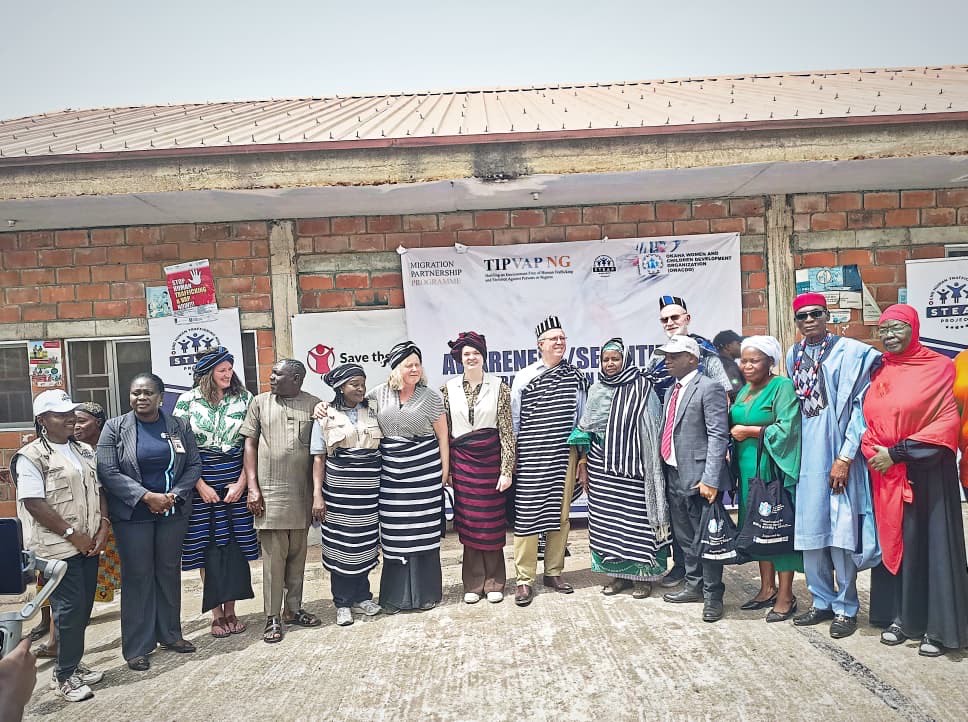
The School-Based Trafficking Education and Prevention (STEAP) Project has recorded significant progress in Benue State, with 50 secondary schools now functioning as active prevention hubs against child trafficking since the initiative began in 2023.
The development was highlighted during the visit of a Netherlands delegation to the state, where stakeholders reviewed the project’s activities, achievements and community impact.
According to the project brief, STEAP in Benue demonstrates how schools can serve as powerful first lines of defence against child trafficking by equipping students, teachers and communities with the knowledge and systems needed to identify and prevent risks.
The initiative, implemented by the International Centre for Migration Policy Development (ICMPD) in partnership with the National Agency for the Prohibition of Trafficking in Persons (NAPTIP) and the Okaha Women and Children Development Organization (OWACDO), adopts a holistic approach that combines prevention education, institutional linkages, community engagement and targeted infrastructure investments.
OWACDO, a civil society organisation founded in 2010 by Dr. Joy Aricha Ijuwo, is leading community-driven interventions under the project in Benue State.
Speaking in Makurdi, the Benue State capital, the Director General, National Agency for the Prohibition of Trafficking in Persons (NAPTIP) Binta Bello described the development as positive milestone under the School Anti Trafficking Education and Advocacy Project (STEAP), a programme funded by the Kingdom of Netherlands and implemented by NAPTIP in partnership with International Centre for Migration Policy Development and Okaha Women and Children Development Organization (OWACDO).
The DG noted that the project would deliver measurable outcomes such as increased awareness, faster referrals, reduced incidents of recruitment and abuse, as well as stronger community ownership prevention.
According to her, NAPTIP will work with the Ministry of Education, School Authorities, PTAs and other critical stakeholders to sustain the tempo, while calling on parents and school authorities to be vigilant and report any suspicious activity or movement to relevant security agencies.
In his brief speech, the leader of the delegation and who is also the Deputy Director General, Ministry of Asylum and Migration, Mr Victor Cramer said human trafficking is a complete violation of human rights and all hands must come together to address the menace.
Under the school-based prevention component, anti-trafficking education has been integrated into regular school activities, with age-appropriate awareness sessions conducted for students.
The programme also established Anti-Trafficking Vanguard Clubs in participating schools, with 30 students inaugurated in each school to promote peer-to-peer awareness and vigilance.
Project coordinators said the approach focuses on empowering young people to recognise trafficking risks, resist manipulation and report suspicious situations promptly.
In the area of capacity building, more than 300 teachers, principals and Vanguard coordinators have been trained to identify early warning signs of trafficking vulnerability, provide first-line support to at-risk students and facilitate referrals to appropriate protection services.
Similarly, 315 School-Based Management Committees and community leaders have been equipped with tools to serve as trusted prevention focal points within schools and host communities.
The project noted that participating schools are increasingly functioning as credible and accessible reporting channels for children and their families.
Stakeholders explained that the strategy recognises that trafficking risks often originate at household and community levels, hence the need for broad-based awareness and ownership.
To strengthen response mechanisms, STEAP has established school-to-community referral pathways linking schools with NAPTIP, the State Anti-Trafficking Task Force, the State Ministry of Education and other protection actors.
The referral system is designed to provide practical, timely and safe support for children requiring help, positioning schools as critical nodes within the broader child protection ecosystem.
The project has also invested in gender-responsive school improvement initiatives aligned with the Violence Against Persons Prohibition principles.
These include provision of solar power supply, perimeter fencing, renovation of hostels and examination halls, as well as improvement of water, sanitation and hygiene facilities to enhance safety, dignity and learning outcomes.
Providing an overview of impact, the project reported that over 13,000 students have so far been empowered with knowledge and life skills, while participating schools have become more secure and responsive to child protection concerns.
Dr Ijuwo while receiving the NAPTIP DG and Netherlands delegation led by Mr Victor Cramer, commended the government of the Netherlands for its sustained support and empowerment in Benue State over time.
With community structures now actively involved and institutional linkages strengthened, stakeholders expressed confidence that the prevention-first model being piloted in Benue is practical, scalable and sustainable in reducing children’s exposure to trafficking risks.
From Ifeanyichukwu Nwannah, Gusau
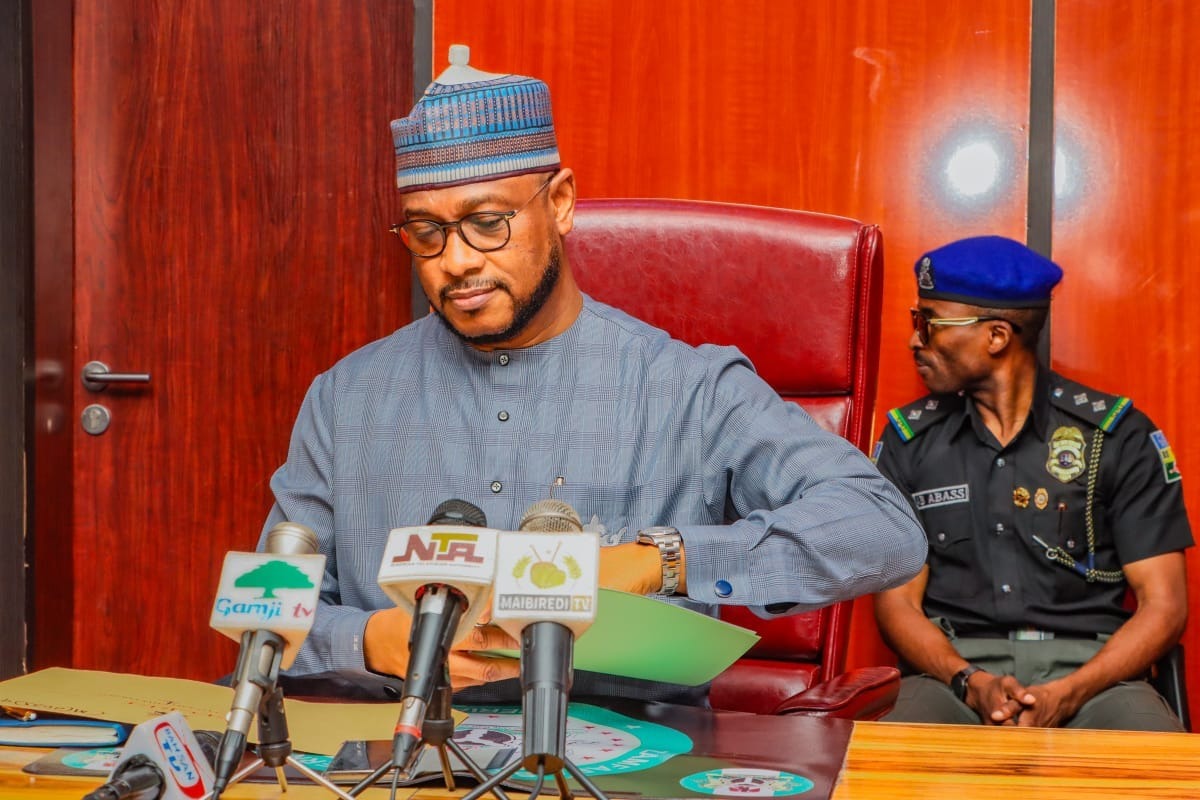
The Zamfara State Government has appealed for collaborative actions from International partners and stakeholders to address the lingering out-of-school children crisis in the State.
The Secretary to the Zamfara State Government, Malam Abubakar Mohammad Nakwada, made the appeal during a meeting with a joint delegation from the National Home-grown School Feeding Program (NHGSFP), World Food Programme (WFP), and International Food Policy Research Institute (CGIAR).
The team comprises Ms. Aisha Ololade (NHGSFP), Dr. Aderemi Adebowale, Darline Raphael (WFP Nigeria Deputy Head of Program), Dr. Oliver Kiptoo Kirui (CGIAR Country Program Leader) among other officials.
Addressing the gathering, the SSG reiterated that education remains one of the key agendas of Governor Dauda Lawal’s administration, adding that the State government has been deliberate in addressing the out-of-school children crisis.
He further said that since the declaration of the state of emergency in the sector by the administration, about 600 schools across the state have been renovated and well-equipped with teaching and learning materials.
“Zamfara State Government is committed to not only increasing pupils’ enrollment in schools but also ensuring their retention and completion,” he stated.
“It has been a big challenge to retain pupils in schools without feeding, and that’s the area we need more partnerships and collaborations.
“However, we’re keen to ensure that every child is not left out of the school system. And by the grace of God, from the measures being put in place, you will soon see a massive reduction in the number of out-of-school children in the state,” the SSG added.
As of 2025, Zamfara State has approximately 455,947 out-of-school children, according to ZSUBEB/UNICEF data, indicating a 48.4 percent reduction from 883,953 in 2022, as reported by UBEC. This improvement is largely attributed to the conscious efforts by Governor Lawal’s administration in revamping education in the State, he said.
Recall that in July 2025, Governor Lawal launched a school feeding program in collaboration with the International Center for Economic Development and FINPACT Development Foundation, targeting about 4,300 pupils in the pilot schools across the state.
The program aims to increase school enrollment, retain pupils, and eventually reduce the number of children on the streets.
In her remarks, WFP Country Deputy Head of Program, Darline Raphael, praised Governor Lawal for prioritizing education, particularly girl-child education.
She expressed confidence that the state’s commitment and political will would soon make Zamfara a model for school feeding programs in Nigeria.




Nigeria Records N5trn Post-harvest Losses in 2025
ShareThe Organization for Technology Advancement of Cold Chain in West Africa (OTACCWA) has disclosed that Nigeria recorded between N3.5 trillion...


Tinubu Applauds Leo Stan Ekeh’s Achievements at 70
SharePresident Bola Tinubu has congratulated Leo Stan Ekeh on his 70th birthday, describing him as a pioneering innovator in Nigeria’s...

Zamfara Tackles Illegal Hawking, Sales of Drugs
ShareFrom Ifeanyichukwu Nwannah, Gusau Zamfara State Ministry of Health has convened a high level stakeholders’ meeting aimed at curbing the...

STEAP Transforms 50 Benue Schools into Anti-Trafficking Prevention Hubs
ShareBy David Torough, Abuja The School-Based Trafficking Education and Prevention (STEAP) Project has recorded significant progress in Benue State, with...

Zamfara Seeks Collaboration with International Partners, Others to Curb Out of School Children
ShareFrom Ifeanyichukwu Nwannah, Gusau The Zamfara State Government has appealed for collaborative actions from International partners and stakeholders to address...

FG Plans to Establish Armed Forces College of Medicine and Health Sciences
ShareBy Tony Obiechina, Abuja The Federal Government has advanced plans for the establishment of the Armed Forces College of Medicine...


Christian Council of Nigeria Backs CAN, Rejects Niger Hisbah Bill
ShareFrom Dan Amasingha, Minna The Christian Council of Nigeria (CCN), Niger State Chapter, has declared its full support for the...
Katsina Bureau of Statistics Deploys Enumerators for 2024/2025 SGDP Survey
ShareFrom Bala ldris, Katsina The Katsina State Bureau of Statistics (KTSBS) has commenced field operations for the 2024/2025 State Gross...
Young Innovators Win Big at Maiden Enugu Campus Hackathon
ShareFrom Sylvia Udegbunam, Enugu Youth innovators at the weekend won big at the maiden edition of the state backed Enugu...


UNEC Nursing Students Celebrate annual Health Day with Medical Outreach in Enugu Community
ShareFrom Sylvia Udegbunam, Enugu The students of department of nursing sciences, University of Nigeria Enugu Campus (UNEC) posted to Ugwu...