
NEWS
Oil Firms Owe Nigeria $6bn in Taxes, Falana Cries out


Human rights lawyer and Senior Advocate of Nigeria, Femi Falana has raised serious concerns over the country’s weak tax enforcement system, revealing that oil and gas companies owe Nigeria a staggering $6 billion in unpaid taxes.
Falana, who spoke yesterday during a paper presentation titled “Tax Law and Administration: Challenges of Compliance” at the ongoing 27th Annual Tax Conference of the Chartered Institute of Taxation of Nigeria (CITN) in Abuja, criticised the federal government for allowing such massive revenue losses while continuing to borrow to fund national budgets.
He described the situation as evidence of poor financial accountability and called for greater transparency and representation in the country’s tax system.
The prominent human rights lawyer criticised the Nigerian tax system describing it as lacking the foundational principle of “taxation with representation.”
During a panel discussion on tax policy and public accountability, Falana said Nigeria’s approach to taxation is riddled with inefficiencies, opacity and mismanagement that undermine public trust and discourage compliance.
Drawing historical parallels, Falana referenced the American and French revolutions, which were sparked in part by taxation without representation.
“In Nigeria, we cannot perform taxation without representation. If you want me to pay taxes, then why? Where is the representation, the justification, or the return to the people?”, he asked.
Falana lamented the proliferation of taxes in Nigeria, pointing out that some fiscal policies list as many as 60 different taxes, far beyond the original 25 outlined.
“No government needs 60 taxes,” he argued, describing the current framework as excessive and burdensome.
He also spotlighted glaring issues in revenue transparency and accountability, using Lagos State as an example, Falana claimed that taxes collected from buses and motorcycles alone amount to over N1.3 billion annually, yet there’s little clarity on how these funds are utilised.
Citing a September 2023 report, Falana revealed that oil and gas companies allegedly withheld $6 billion (about N64 billion) in taxes due to the government within a year.
“Shockingly, two months later, the federal government approached the National Assembly to borrow N2.1 billion to fund the national budget.
“How do you explain that? We’re losing billions to tax evasion, yet borrowing to survive,” he queried.
Falana also condemned the government’s silence over a COVID-19 era N3.4 billion loans allegedly used without due process.
“Nobody has challenged it,” he said, questioning how public funds are managed.
He stressed that taxes are meant to provide public services such as security, schools, hospitals but today, many Nigerians see no benefit from what they pay.
Also speaking on the panel, Rakiya Ahmed, Executive Chairman of the Zamfara State Internal Revenue Service, echoed similar concerns.
She noted that Nigeria’s historic reliance on oil revenue led to underdevelopment in tax systems.
“Because of our weak revenue from oil, we are now forced to focus on taxation,” she said.
Ahmed identified several structural challenges to tax compliance, noting key among them is the perception of corruption and a lack of transparency.
“When citizens do not see any return on their taxes, they’re less likely to comply,” she said, stressing the importance of a strong social contract between the government and taxpayers.
She also criticised the complexity of Nigeria’s tax laws, which she said discourages voluntary compliance.
“There are so many laws, and constant amendments confuse taxpayers,” she said.
Ahmed called for increased use of technology in tracking and enforcement.
She noted that Zamfara is one of the first states, after the FIRS, to deploy a data analytics system that revealed a supposed low-income taxpayer with hundreds of millions in their account.
This, she said, shows how data can help expand the tax net to include high-net-worth individuals who often escape scrutiny.
Ahmed highlighted taxpayer education as a major factor in boosting compliance, especially in rural areas.
“When taxpayers understand their obligations and see the benefits, they are more willing to comply,” she said.
She advocated for grassroots collaboration with traditional rulers, unions, and community leaders to enhance outreach and build trust.
The panelists agreed that while tax reforms are underway, the Nigerian government must address the trust deficit, simplify the tax code, use technology to track evaders, and, above all, demonstrate that tax revenues are used for the public good.
Without visible and accountable returns, they warned, compliance will remain elusive and public resentment will grow.

From Jude Dangwam, Jos
The Vice Chancellor of the University of Jos, Prof. Ishaya Tanko has confirmed the sad death of 8 students of the University to a road crash involving their Toyota bus with a truck in the metropolitan city of Jos.
He disclosed that one of the students was being prepared for surgery in the early hours of Thursday at the Jos University Teaching Hospital while others were receiving medication at the Bingham Teaching Hospital.
The Federal Road Safety Corps (FRSC) Plateau State Command disclosed that the accident occurred opposite Unity Bank Zaria Road, Jos, at around 2:30 am.
The Plateau State Sector Commander of the Corps, Olajide Mogaji explained that seven people lost their lives on the spot, while another victim died in hospital, bringing the total number of fatalities to eight.
According to the Command’s statement, the crash involved a trailer and a bus, which was carrying eleven passengers, all male students of the University of Jos, opposite Unity Bank Zaria Road, Jos, at around 2:30 am.
Mogaji said eyewitness accounts revealed to the corps emergency teams that the bus was speeding and engaged in wrongful overtaking, leading to the loss of control and the crash.
The Sector Commander has appealed to drivers to avoid night trips, excessive speed, and dangerous driving, saying, “The government needs you alive, and wants you to live life to the fullest in this festive season and beyond.”
The FRSC noted that the incident is still under investigation, while urging the public to report crashes or road emergencies to their toll-free emergency number 122 at all times for prompt responses.
The victims were said to have been coming back from a welcome special party for new students when the unfortunate incident occurred with the vehicle carrying the male students while the other vehicle carrying the female students escaped the tragedy.

UNICEF Hails Bayelsa as Champion of Primary Healthcare Devt in Nigeria
From Mike Tayese, Yenagoa
The United Nations Children’s Fund (UNICEF) has commended the Bayelsa State Government for its deliberate efforts at improving primary healthcare delivery, especially in the area of immunization in recent years.
The Country Representative of UNICEF in Nigeria, Wafaa Saeed, gave the commendation, on Wednesday, when she led a delegation on a courtesy visit to Government House, Yenagoa.
Saeed said what she saw during her visit to some health facilities and her random interactions with some mothers in the state, corroborated the positive reports UNICEF has been receiving about Bayelsa in terms of immunization.
The special UN envoy, who described Bayelsa as champion of healthcare delivery and a shining spot in the country, noted that the state has achieved an impressive performance in its immunization indices from 2021 to date.
She attributed the improvement in the health indicators of the state to purposeful leadership, commitment and accountability being provided by the present administration.
While assuring the Bayelsa of UNICEF’s readiness for collaboration to improve nutrition for children as well as unlock resources for healthcare development in the state, the Country Rep, however, urged the Governor Douye Diri-led administration to sustain its efforts in the health sector.
She said, “We are really impressed with what Bayelsa is doing… Bayelsa State has also committed its financing of immunization campaigns from the state budget, and a special one (immunization) in-between.
“Also there is a monthly allowance and support you have continued to give from GAVI. These are some of the things that have really increased the number of immunized children and improved the performance of the state.
“In 2021, the number of children not immunized in Bayelsa was 71 percent; that means seven out of ten kids were not immunized. But between then and now, there is a big difference due to the leadership, commitment and accountability we are seeing in Bayelsa State.
“You have been a champion of primary healthcare and a champion of immunization. And I really look to have Bayelsa not only a champion of states in Nigeria but in our continent and the globe.”
In a response, Governor Douye Diri represented by his deputy, Senator Lawrence Ewhrudjakpo, reaffirmed the determination of his administration to prioritize investments in the health sector.
He said plans were underway to review the state primary healthcare board law with a view to not only sustaining the extant primary healthcare funding model but also expanding it through effective private sector contributions, especially from corporate organizations operating in the state.
Diri thanked the Country Rep, Ms Wafaa Saeed, for her kind words of encouragement and also acknowledged the support of UNICEF, WHO, Bill Gate, Dangote Foundation and other development partners, noting that Bayelsa could not have recorded its present achievements in the health sector without their collaboration.
His words: “We also want to thank you profusely for supporting our programme. We thank UNICEF, the WHO, Bill Gate Foundation, Dangote Foundation and others for your support. We really appreciate what you have done for our state.
“As a government, we know where we are going. A man who knows where he is going cannot be misled. We are focused and will continue to redouble our efforts in the health sector.
“You talked about sustainability. That is very important to us, and so, we are looking at the principal law, which is the Primary Healthcare Development Board Law. We are looking at some areas of that law to bind the hands of whoever that comes after us.
“That is to ensure that even if the administration after us will not have the motivation and passion to provide leadership for primary healthcare like the present governor is doing, the law will compel them to do so.”
The UNICEF Country Representative was accompanied on the visit by the Chief of Field Service, Judith Leville, UNICEF Health Consultant, Dr. Makio Perekeme, the Chief Field Officer, Anselm Audu and a health specialist, Eghe Abe, among others.
Mutfwang Pledges Support for Minister of Defence in Fight against Insecurity
From Jude Dangwam, Jos
Plateau State Governor, Caleb Mutfwang, has paid a courtesy visit to the newly appointed Minister of Defence, Gen. Christopher Gwabin Musa (Rtd), assuring him of his total and unwavering support in the collective effort to defeat insecurity in Plateau State and across Nigeria.
The Director of Press and Public Affairs to the Governor, Gyang Bere on Thursday disclosed that the Governor has expressed delight over Gen.
Musa’s appointment, describing it as a “strategic and timely decision” in confronting the country’s intricate and evolving security challenges.Mutfwang noted that the Minister’s vast experience and proven professionalism would significantly strengthen ongoing national security interventions.
“We must now focus on finding solutions to the challenges confronting us. Whatever has happened in the past should not deter us. The time has come for all of us to join hands and holistically address our security concerns,” Mutfwang emphasized.
The Governor reiterated his support for the establishment of State Police, acknowledging concerns about possible abuses, but stressing that the nation must collectively develop safeguards and ensure operational efficiency.
Gen. Christopher Musa expressed gratitude for the Governor’s visit, assuring him of a robust and productive collaboration in addressing security concerns in Plateau State and the country at large.
He commended Governor Mutfwang for hosting the Plateau Unity Christmas Carols and Praise Festival, describing it as a unifying initiative.

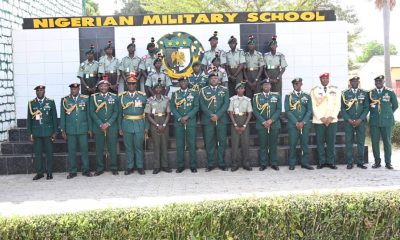

COAS Urges NMS Students to Uphold Discipline, Excellence, Promises Better Learning Environment
ShareBy David Torough, Abuja The Chief of Army Staff (COAS), Lieutenant General Waidi Shaibu, has charged students of the Nigerian...


Gov Adeleke Didn’t Join APC Because Osun People Already Hated the Party – Jackson Ojo
Share…Says Defectors to Ruling Party Will Regret By Mike Odiakose, Abuja A former chieftain of the All Progressives Congress (APC),...


COAS Charges 3,439 New Army Recruits on Loyalty, Discipline
ShareBy David Torough, Abuja The Chief of Army Staff (COAS), Lieutenant General Waidi Shaibu (NAM), has charged 3,439 newly trained...


CBN Revamps Agric Guarantee Scheme, Targets Smallholder Farmers
Share The Central Bank of Nigeria (CBN) has launched a major overhaul of the Agricultural Credit Guarantee Scheme Fund (ACGSF),...

Okonjo-Iweala, Others Urge Youths to Drive Reforms, Strengthen Civic Action
ShareNational leaders have challenged youths to lead Nigeria’s renewal, warning that meaningful change now depends on young citizens organizing, demanding...


Eight Students Die, Three Injure in Jos Road Crash
ShareFrom Jude Dangwam, Jos The Vice Chancellor of the University of Jos, Prof. Ishaya Tanko has confirmed the sad death...


ShareUNICEF Hails Bayelsa as Champion of Primary Healthcare Devt in Nigeria From Mike Tayese, Yenagoa The United Nations Children’s Fund...


EFCC Seeks Stronger Alliance with CSOs, Media in Anti-corruption Fight
ShareThe Economic and Financial Crimes Commission (EFCC) has called for deeper collaboration with Civil Society Organisations (CSOs) and the media...

ShareMutfwang Pledges Support for Minister of Defence in Fight against Insecurity From Jude Dangwam, Jos Plateau State Governor, Caleb Mutfwang,...


FRSC Deploys New Sector Commander to Benue
ShareThe Federal Road Safety Corps (FRSC) on Thursday, announced the deployment of Corps Commander (CC) Kehinde Dahunsi as new commander...