
NEWS
Protest ‘ll Slow Down Economic Reforms-Edun

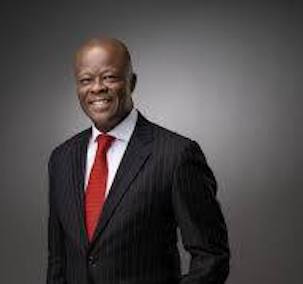
The Coordinating Minister of the Economy, who is also the Minister of Finance, Mr. Wale Edun said protest in whatever form will “slow down” the nation’s economic reforms.
He said President Bola Ahmed Tinubu is a democrat who believes in the freedom of speech and fundamental human rights.
The Minister who featured at a special press briefing hosted by the Secretary to Government of the federation, Senator George Akume in Abuja said the president’s only concern was for the protest not to upturn the gains the country has made in the last 15 months.
“Mr. President is a democrat to the core. He believes in federalism, he believes in freedom of speech and human rights.
“His concern and that of many people in this country, and even beyond, that the protest would remain peaceful such that the gains that have been made over the last 12 to 15 months should not be disillusioned.
“ He is concerned that the momentum that has been achieved in turning around the Nigerian economy should not be dislodged, disturbed.
“I think, amongst many other well-meaning Nigerians, the President truly understands the concerns that are being expressed, particularly the high and the elevated cost of living, which is not particularly good for Nigeria at this stage.
“ With wars breaking out in Gaza and Sudan, there’s disruption around the world, and there has not even been a full recovery from COVID.
“ So inflation is high around the world. Costs are high around the world. And with our import dependency from raw materials and so forth, we, too, are feeling the effects.
“However, inflation is falling around the world, and in Nigeria. Over the last 15 months or so, the economy has been totally, and I will even say, dissimulated from the precipice.
“I will not repeat all the specifics of the initiatives that were written down by the Minister of Information and National Orientation. Mallam Mohammed Idris but I will conclude with them.
“I think that, on one hand, we have come from a situation where the nation was living on debts. That is no longer the case. “The revenue of Nigeria as a result of diligent accumulation of technology and new processes, has doubled compared to the first half of 2023.
“In 2024, the revenue from the Federal Government has doubled and is expected to maintain that trajectory.
“On the cost side, there has been reconfiguration of procedures and processes, such that costs are now under control. Spending is now visible and accountable and the money of Nigerians is being well spent.
“So, that was the basis on which we implemented measures that were necessary, reform measures that were needed to save the economy. Yes, they have led initially to a spike in costs because, just like medicine, you take the medicine and then the effect comes. So, the cost is the medicine and it comes first.
“ However, already we are seeing that the benefits are coming. The economy, in the first half of this year, has grown.
“Why is there lack of foods? It is because Agriculture was contracting. In the first quarter of this year has started growing back again and we expect that and we are doing everything to maintain that.
“Industry is growing. Led by ICT technology, led by solid minerals, it is growing and creating employment and likewise, of course, services, even at relatively high scale, the services are also growing. So, that is the turnaround and the momentum that we do not want to see slowdown in any way. .
“And so, as said earlier by the Minister for Information and National Orientation, , a series of measures in agriculture, for small-scale industry, even for the larger industries, there is financing at 9% that is being made available.
“For transportation costs, CNG, which is 30% of the cost of PMS for fueling vehicles, is being made available and it is important to point out that in implementing reforms, there are times when what is planned and the timetable that is planned sometimes slips.
“But the answer is not to throw out the effort. The answer is not to stop. The answer is to keep going and keep trying. That was the case with the direct benefits, the direct payments to 15 million households, covering 75 million people.
“At first, it was quite hard for me to plan, so there was a pause. And now, under a much better and technologically strong configuration, payments to individuals have started going out again.
“In the last six years, it was restarted, one million households, covering 5 million people, have received benefits. And in the last week alone, 300,000 payments were made.
“So under the new system, we can expect a scaling up, a speeding up of the payments. And Mr. President is committed to giving to the poorest and the most vulnerable to help them.
“So what has happened is that we have implemented a comprehensive plan that covers agriculture, covers young people, it covers transportation costs in the urban sector, it covers grants to smaller enterprises, 50,000 Naira for micro-enterprises, and it covers, as I said earlier, funding at an affordable interest rate. Inflation is slowing, but interest rates are still high.
“We have heard about the other key elements of what is being done to get the economy growing and to get jobs created. It’s when you make investments that you increase productivity, that you grow the economy, you create jobs, and then reduce poverty.
“And the key element there also is that our major resource, what we have to rely on most, is the God-given resource of oil at a time when crude oil prices are high.
“And we have the commitment of those in charge of the oil industry that there will be a substantial 21% increase in oil production to 2 million barrels per day.
“ And the benefit of that is immediate. It allows funding across the board, social services, infrastructure, business support, agriculture. And the commitment of Mr. President is in the immediate time to bring down food prices. And that’s why there are initiatives in addition to supporting farmers to produce.
And then just three days ago, in conjunction with the Ministry of Agriculture and Food Security. I led an initiative to reorder some funding that was available to Nigeria for one of the multilateral developments with the Green Deal.
“So these are elements of a concerted plan by Mr. President to build a better, stronger, more prosperous Nigeria.
“And what he’s saying in the meantime is that we need to give ourselves this golden opportunity to take Nigeria forward. We need to be patient with each other. We need to listen to each other as he is listening to Nigerians and showing example to lead us to a better future,” he said.
The Minister of Information and National Orientation, Mohammed Idris on his part listed some of the things the president has done to put the country back on track, including the approval of N70,000 new minimum wage.
He also said the recent Local Government autonomy will bring governance closer to the people at the grassroots.
Another effort of the government to ameliorate the suffering of the people, he said is the dispatching of trucks of rice to states to be sold at N40,000 per bag against the prevailing market price of N80,000.
He said: “After one year in office, President Bola Tinubu has performed creditably in laying the foundation for a Nigeria that would be economically viable, sufficient, and secure, so much that the dispensing of energy to organize a ‘national protest’ by some Nigerians, would be better put towards looking into the several opportunities available to Nigerians by the Tinubu administration.
“A pushback to current policies of the government in the guise of protests only indicates the inability of the organizers of the ‘protests’ to come to terms with the realistic conditions necessary for growth and development; and in the case of Nigeria, a retooling of our economic system, provision of grand-scale infrastructure, investment in health, agriculture, human capacity through the student loans, amongst several others.
“One key development in the wake of the petroleum subsidy removal – the energy transition from petroleum to Compressed Natural Gas (CNG), for vehicles and other machinery, opens a world of opportunities for Nigerians to massively participate in the vast value chain of the CNG energy transition, which requires infrastructure rollout across Nigeria.
“The Presidential Compressed Natural Gas Initiative will bring down transportation costs for Nigerians by as much as 50 percent, while also unlocking the nation’s huge potential in the gas sector.
“ CNG conversion centres are growing exponentially across the country, creating more job opportunities. Since the launch of the initiative last year, we have seen over USD 50 million in private-sector investments in setting up CNG conversion and fueling facilities nationwide. Nigerians should please key into this wealth-creating sector.
“The Federal Government has also made available 30,000 kits for the conversion of 30,000 petrol-powered commercial vehicles to CNG-powered engines at no cost within the next 90 days. Also, the first batch of CNG Mass Transit Buses procured by the Federal Government for distribution to the 36 states and FCT has arrived.
“To further cushion the effects of the petroleum subsidy removal, the Tinubu administration introduced the Presidential Grants and Loans Scheme, with the disbursement of the N50,000 grants under the 50 Billion Naira Grants component of the Scheme, and it is ongoing. So far, over 600,000 Nigerians have received N50,000 grants across the 774 Local Government Areas.
“Also, disbursement of the N150 billion MSME and Manufacturing loans will commence after the completion of the ongoing final stage of verification, by August. The MSME loans will expectedly stimulate industry and Nigerians need to seize the opportunity.
“President Tinubu’s commitment to the welfare of Nigerian workers is evident in his approval of a New National Minimum Wage of N70,000 which the National Assembly has passed and transmitted to President Tinubu who has assented to the bill (now an Act).
“ This time around, the minimum wage will be reviewed every three years to reflect and reconcile new economic realities and living standards with workers’ remuneration. If we recall, the soon-to-expire national minimum wage was N35,000, now increased by more than 100 percent.
“To swiftly commence the payment of the new minimum wage, the National Assembly has also approved an N6.2 trillion supplementary budget sent to it by the Federal Government, out of which, about N3 trillion will be expended to cover the minimum wage and augment salaries to be paid under the new national minimum wage.
“Unarguably, one of Nigeria’s drawbacks to rural socioeconomic development has been the non-receipts of federal allocations to elected Local Government Administrations in more than 20 years, thus President Tinubu’s landmark move to implement Local Government Autonomy by approaching the Supreme Court for a decisive verdict.
“This is a testament to his administration’s commitment to restructuring the nation, strengthening governance and development at the grassroots, and entrenching effectiveness and accountability in local government administration.
“With this game-changing institutional empowerment, local governments will witness unprecedented socio-economic transformation. The Federal Government will ensure that the Supreme Court judgment is enforced as intended.
“Strategic Interventions: The Tinubu administration is undoubtedly the most youth-friendly government in Nigeria’s history, with a swathe of policies to match the entrepreneurial spirit of young Nigerians.
“Nigeria Education Loan (NEL Fund): One of the most defining approaches to easing the burden of tertiary education tuition payments on parents is the newly introduced Nigeria Education Loan (NEL-Fund), with enough budget to cover two million students. The Fund is active with cheques to some beneficiaries who in addition to tuition, also collect upkeep stipends. So far, over 110,000 applications have been received. All successful applicants starting fresh academic sessions will get credited without delay.”
Bagudu on his part said the president took the tough path because he believes, “that sentiments will not solve this problem. Blame games will not solve this problem.
“Those solutions involve choices that are both pleasant and tough, but needed to be taken. And responsible leadership sometimes necessitates a leader to take tough choices.
“ As most of you can imagine, there’s nothing that a politician loves other than to be clapped for or applauded.
“ But a responsible leader, while desiring that, would say, well, we have to take tough choices for the future.
“ So that’s why, in delivering on those renewed agenda priorities, including the restoration of macroeconomic reforms, we are instructed that we should ensure a plan-based governance and budgeting to be equitably involved within our constitutional federalism.
“ It’s not only important for the federal government, but it’s equally important for the sub-nationals, to generate more revenue on a sustainable basis.
“Not surprisingly, our budget reflects our priorities and innovation. We have increased funding for security, as you have heard from the other speakers, and I’m not going to go into the details.
“ We have increased funding for infrastructure, for human capital development, education, health, social transport to support the vulnerable, as well as innovation and industrialization.
“We have brought initiatives that we believe are transformative, that can help us generate high levels of growth based on choices that we have seen other countries make.”
He also added, “That is why the four budgets that we have now in this administration reflect that prioritization that we are not as rich as we are, we don’t have the revenue, we have to be creative, we have to do what other countries have done, and ensure that we are fully mobilized.”
He also explained that the president believes in dialogue
Bagudu added: “This is a president who believes that governance is not a monologue, but dialogue.
“He has always appreciated that we live in an ever-changing world, where even the well-designed strategy, like ours, the Renewed Hope Agenda, needs to be effectively communicated.
“ This requires engaging and listening to others, most especially our younger ones. Mr. President believes in them, believes in listening to them, and is increasingly giving them a place of pride in the Renewed Hope Agenda administration.”
The Minister also reminded those behind the planned protest of ongoing “Economic warfare” ,
He cited the case of a technology giant, Binance, “participating in economic warfare against our nation.
“So as our young persons express themselves, we expect them to be cognizant and mindful so that tasteless technology-protected persons or agenda are not utilized to undermine our country.”
On his part, the Minister of Solid Minerals Development, Dele Alake urged Nigerians to see the current pains as a sacrifice for a prosperous future.
He said all the developed countries went through the same path in their journey to greatness.
He therefore warned that the more we run from the reality staring us in the face, the more we postpone the doomsday.
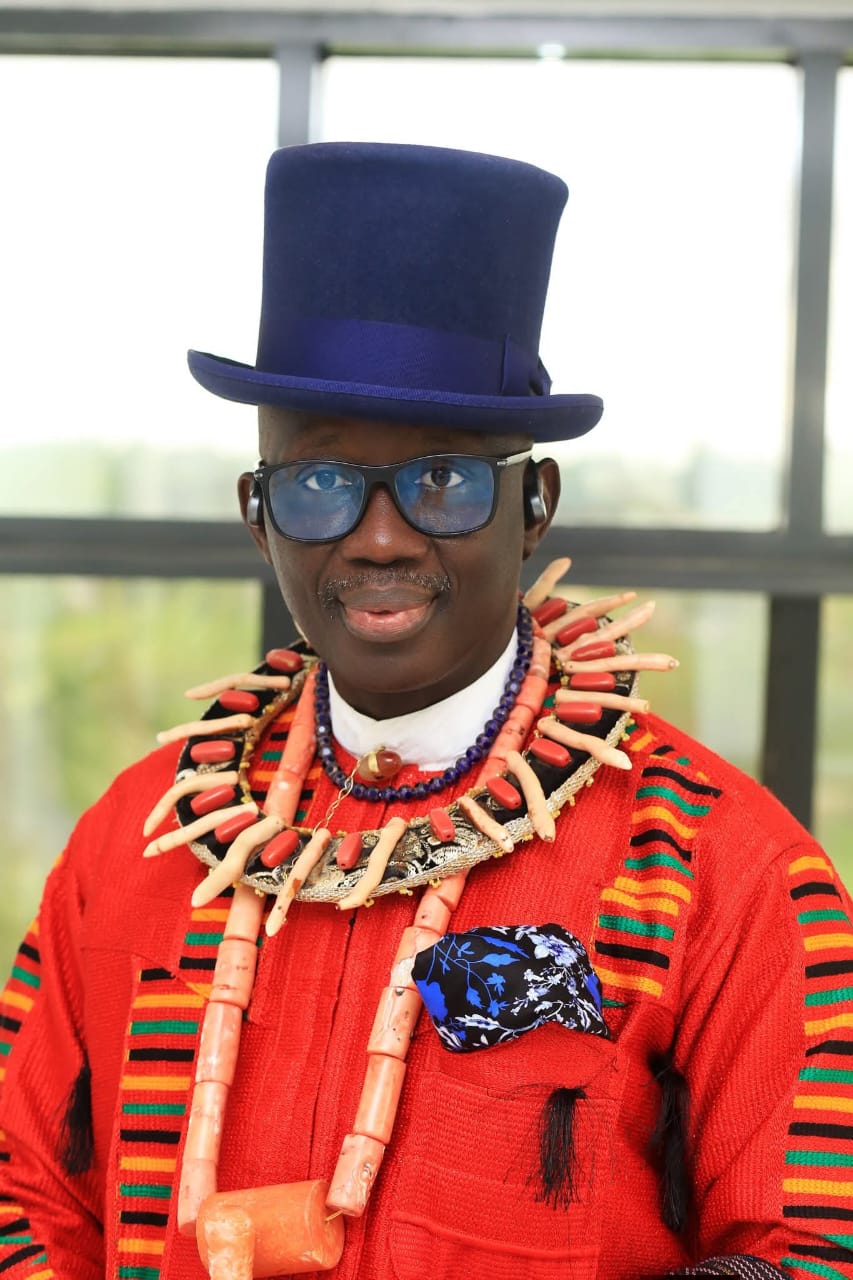
- From Seyi Tayese, Yenagoa
The National Conference of Ijaw Traditional Rulers and Elders (N-CITRE-INC) has suspended the Ijaw National Congress (INC) elections till further notice.
The N-CITRE, after its meeting in Yenagoa deliberated extensively on all issues that led to the impasse in the INC elections, including petitions received.
The group, therefore, unanimously agreed to suspend the conduct of the INC elections and directed the electoral committee to stop all forms of electoral duties.
N-CITRE, which is empowered by the INC constitution to resolve all disputes, has also set up a seven-man Dispute Resolution Committee (DRC) to investigate all petitions.
The resolutions read in part ‘’ That the elections into the National Executive Council of the Ijaw National Congress (NE-INC), which were rescheduled for Monday, 13th April, 2026, by the National Electoral Committee, Ijaw National Congress(N-ELECO-INC), have been temporarily suspended until N-CITRE directs further after all pending disputes have been settled. N-CITRE-INC, as the appointing authority for N-ELECO-INC, also holds the constitutional power to resolve all disputes within the Congress
‘’ Consequently, N-ELECO-INC has been directed to stop performing any electoral functions until otherwise subsequently directed by N-CITRE.’’
The N-CITRE has directed the DRC to resolve the lingering dispute and probe all petitions, including the petitions against the n-ELECO- INC.
The DRC is headed by HRM, King Bubaraye Dakolo Agada IV, Ibenanaowei of Ekpetiama Kingdom, Chairman of Bayelsa Traditional Rulers Council, and Chairman of N-CITRE.
Other members are HRM, King Dr. Brig-Gen Bright Ateke Fiboinumama (Rtd), Chief Dr. Silas Eneyo (representing Eastern Zone), Dr. Loveth Ige (representing Central Zone), HRM, Pere Luke Kalanama III, HRM, Dr. Ekiomi Oweigbe John (Gbisa I) representing Western Zone, and Zonal Chairman of N-CITRE.
N-CITRE, which reminded all stakeholders of the principle of honesty that guides the Ijaws, therefore appealed for cooperation to achieve peace.
By David Torough, Abuja
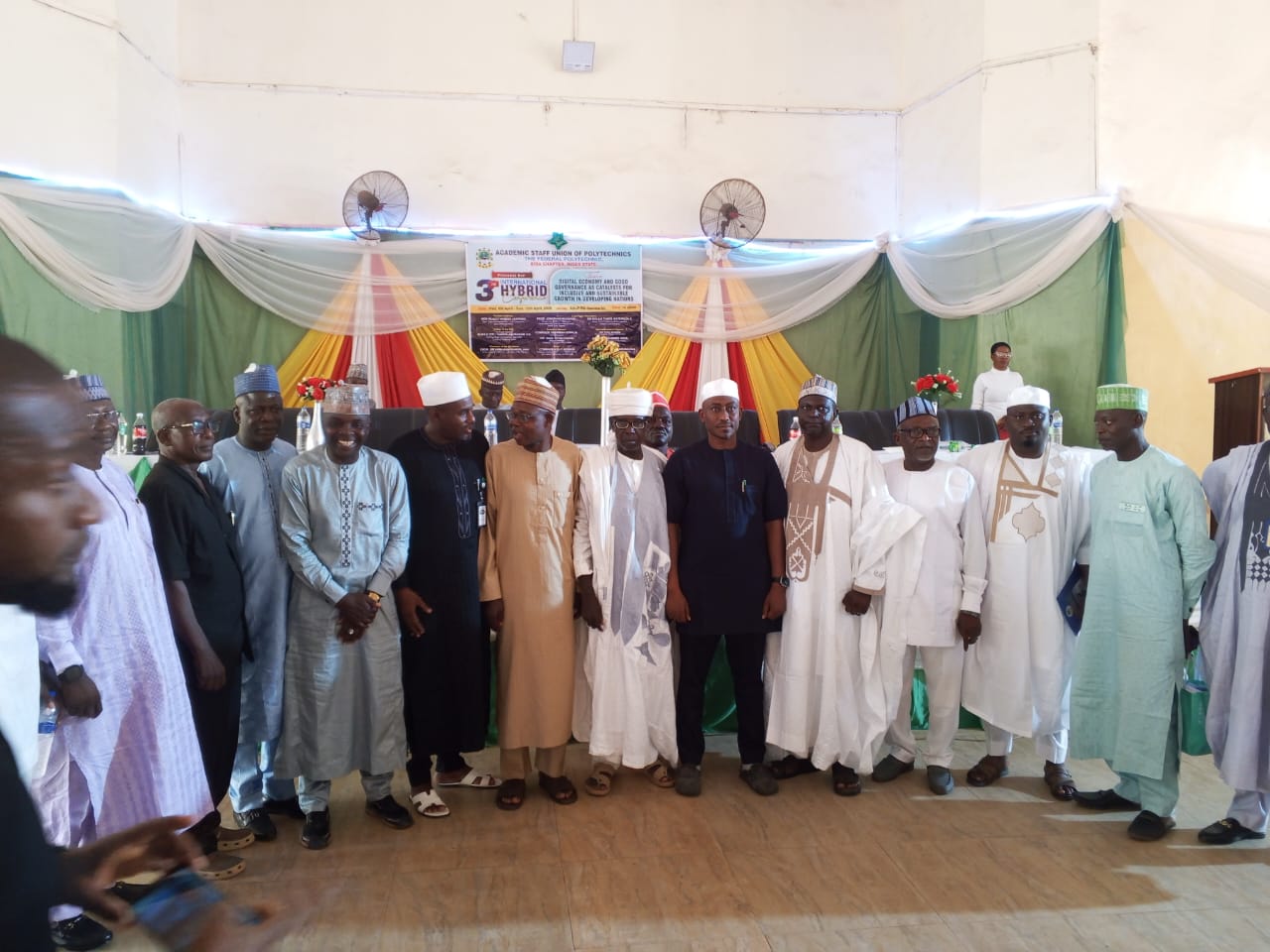
Stakeholders at the 2026 Academic Staff Union of Polytechnics (ASUP) International Conference in Bida have called for urgent adoption of digital economy strategies and strengthened governance systems as critical tools for achieving inclusive and sustainable growth in developing nations.
Delivering the lead paper at the conference held at the Federal Polytechnic Bida, Professor Jonathan Atsua Ikughur emphasized that while technological advancement has transformed global systems, many developing countries, including Nigeria, have yet to fully harness its benefits due to weak institutions and inconsistent policy implementation.
He contrasted the inefficiencies of the past—marked by long banking queues, unreliable communication systems, and risky cash transactions with the current opportunities offered by digital innovation, noting that such advancements can significantly reduce economic and social costs.
Ikughur stressed that development must be viewed beyond mere economic growth, encompassing equitable resource distribution, improved living standards, and social well-being.
He warned that without deliberate planning and strong governance, many nations risk remaining trapped in poverty, inequality, and economic stagnation.
Painting a sobering picture of Nigeria’s development challenges, he cited high poverty and unemployment rates, weak institutional capacity, corruption, and overreliance on borrowing as major constraints to growth despite the country’s abundant natural resources.
The professor identified poor infrastructure, weak judicial systems, lack of transparency, and low investment in human capital as common features of many developing economies.
He urged policymakers to adopt data-driven strategies that integrate digital innovation with governance reforms to drive long-term prosperity.
Complementing this perspective, a research paper presented by Dr. Bolaji Tunde Matemilola highlighted the growing impact of digital financial inclusion on firms in emerging economies.
The study, which examined 475 firms across 15 countries, found that digital financial inclusion significantly boosts firms’ access to credit and drives business growth by reducing borrowing costs and information gaps.
However, the study also raised concerns about rising corporate debt levels, noting that while increased access to finance supports expansion, it may pose sustainability risks if not properly managed.
In his keynote address, Niger State Commissioner for Local Government and Chieftaincy Affairs, Hon. Muazu Hamidu Jantabo, described the digital economy as both a policy imperative and a generational opportunity for Africa.
He noted that digital transformation, when supported by strong governance, can reduce transaction costs, enhance transparency, and expand economic participation.
Jantabo highlighted ongoing reforms in Niger State, including investments in broadband infrastructure, digital literacy programmes, and e-governance systems aimed at improving service delivery and accountability.
He stressed that digitalization must be inclusive, warning that uneven access—particularly in rural areas—could deepen existing inequalities.
He further underscored the role of local governments as critical drivers of grassroots digital transformation, noting ongoing efforts to digitize administrative processes, improve revenue systems, and strengthen community engagement.
Earlier in his welcome address, ASUP Bida Chapter Chairman, Comrade Kolo Joshua, described the conference theme as timely, noting that the combination of digital economy and good governance remains essential for sustainable development in developing nations.
Across presentations, speakers converged on a common message: that digital transformation alone is insufficient without strong institutions, transparency, and accountability.
They called for coordinated efforts among governments, academia, and the private sector to align innovation with inclusive policies.
“The task before us is not just to embrace change,” Ikughur noted, “but to deliberately harness it for the collective good.”
NEWS
Digital Economy, Good Governance Key to Unlocking Inclusive Growth in Developing Nations — Expert
By David Torough, Abuja
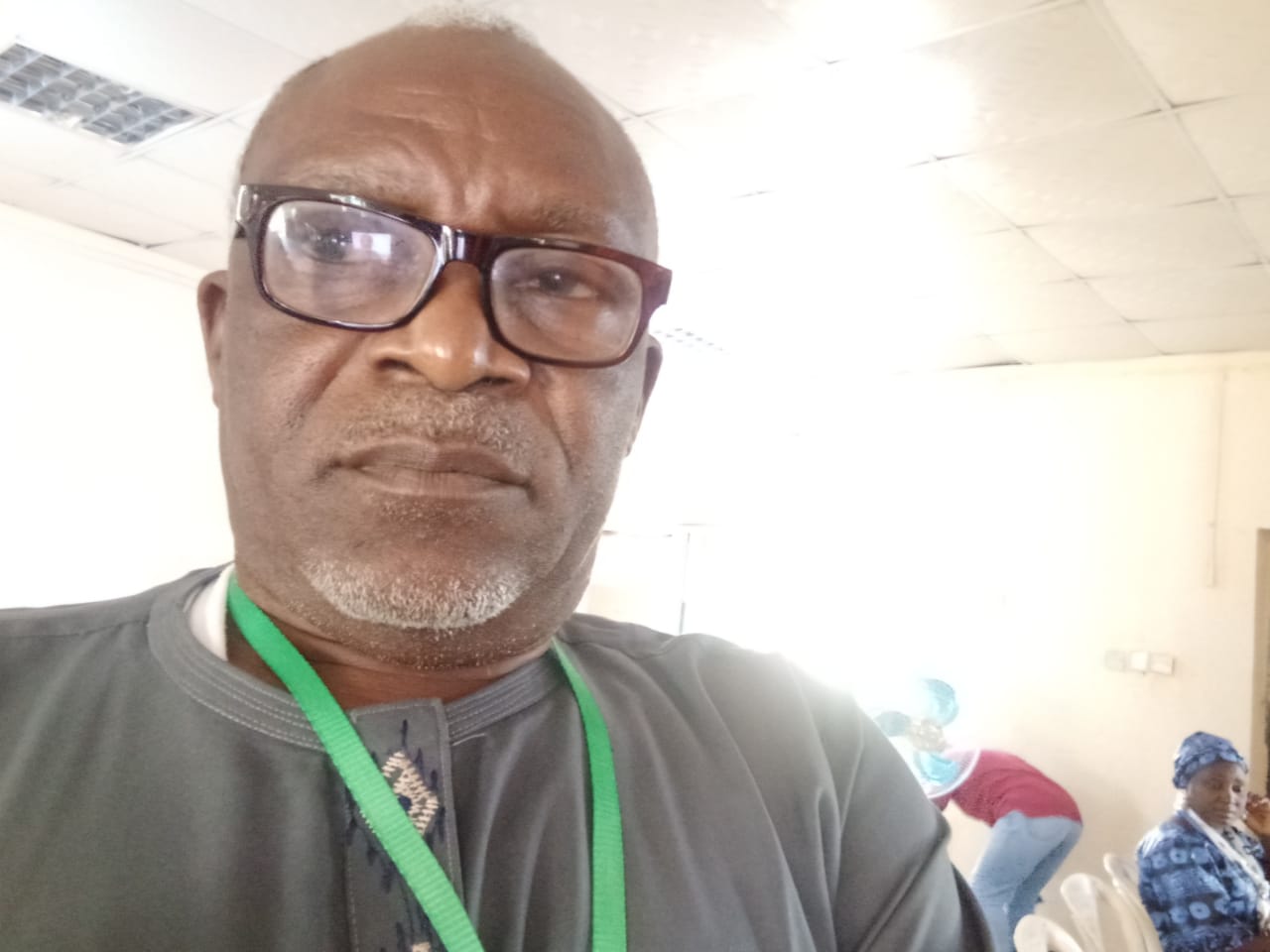
At the 2026 Academic Staff Union of Polytechnics (ASUP) National Conference held at the Federal Polytechnic Bida, Professor Jonathan Atsua Ikughur delivered a compelling call for developing countries to embrace the digital economy and strengthen governance systems as essential drivers of inclusive and sustainable growth.
Presenting his lead paper, the statistician from Joseph Sarwuan Tarka University, Makurdi, reflected on the rapid transformation brought about by technological advancement, contrasting today’s digital ease with a past marked by inefficiencies—long banking queues, unreliable telecommunications, and risky cash-based trade journeys.
According to him, these historical constraints imposed heavy economic and social costs that digital innovation now has the capacity to eliminate.Ikughur argued that while change is inevitable, developing countries like Nigeria have yet to fully harness the transformative power of digitalization due to weak institutional frameworks and inconsistent development planning.
He emphasized that development must go beyond economic growth to include equitable distribution of resources, improved living standards, and social well-being.
Citing global perspectives, the professor described development as a multidimensional process encompassing economic, social, cultural, and political progress.
He warned that without deliberate policies and long-term planning, countries risk remaining trapped in cycles of poverty, inequality and stagnation.
Highlighting Nigeria’s development indicators, Ikughur painted a sobering picture: high poverty rates, unemployment, population pressure, and weak institutional capacity continue to hinder progress.
He noted that despite abundant natural resources, poor governance, corruption, and lack of economic diversification have limited the country’s growth potential.
The paper identified key characteristics of many developing nations, including weak judicial systems, lack of transparency, inadequate infrastructure, and low investment in human capital and innovation.
These challenges, he said, are compounded by poor policy implementation and overreliance on borrowing.
Ikughur stressed that sustainable development requires a balanced approach that integrates economic growth, environmental protection, and social inclusion.
He pointed to the United Nations Sustainable Development Goals (SDGs) as a global framework guiding nations toward poverty reduction, improved health and education, climate action, and inclusive economic participation.
According to him, digital technologies can play a pivotal role in achieving these goals by improving service delivery, enhancing transparency, and fostering innovation.
He however, warned that without good governance, characterized by accountability, strong institutions, and anti-corruption measures, the benefits of digital transformation may not be fully realized.
He urged policymakers, academics and stakeholders to develop clear, data-driven national strategies that align digital innovation with governance reforms.
Such efforts, he said, are crucial for building resilient economies, reducing inequality, and ensuring long-term prosperity in developing countries.
“The task before us,” Ikughur noted, “is to understand the changing world and deliberately harness its opportunities for the collective good.”



President Tinubu commissions 60 megawatts gas turbine, other projects in bayelsa
ShareFrom Mike Tayese, Yenagoa The much awaited 60 megawatts Gas Turbine embarked upon by the administration of Governor Douye Diri...

Ijaw Traditional Rulers, elders suspend INC elections
Share The National Conference of Ijaw Traditional Rulers and Elders (N-CITRE-INC) has suspended the Ijaw National Congress (INC) elections till...

Experts Advocate Digital Economy, Governance Reforms as Pathway to Inclusive Growth
ShareBy David Torough, Abuja Stakeholders at the 2026 Academic Staff Union of Polytechnics (ASUP) International Conference in Bida have called...

Digital Economy, Good Governance Key to Unlocking Inclusive Growth in Developing Nations — Expert
ShareBy David Torough, Abuja At the 2026 Academic Staff Union of Polytechnics (ASUP) National Conference held at the Federal Polytechnic...

UNILAG Alumni awards scholarship to 28 indigent students
ShareBy Laide Akinboade, Abuja The University of Lagos Alumni Association, Federal Capital Territory (FCT), chapter on Thursday, awarded scholarship to...


JAMB Releases 2026 UTME Examination Slips for Candidates
ShareThe Joint Admissions and Matriculation Board (JAMB) has announced that candidates who registered for the 2026 Unified Tertiary Matriculation Examination (UTME) can now print...
Lobi Stars Target Promotion to NPFL in 2026/2027 Season
ShareThe Chairman of Lobi Stars Football Club of Makurdi, Simon Ikya, said the club’s sole target is to gain promotion...


Gambia Appoints British Barrister to Prosecute Gruesome Jammeh-era Crimes
ShareBritish barrister Martin Hackett has been appointed as The Gambia’s first special prosecutor to try those responsible for human rights abuses carried out...


Court Frees Terror Victim, Jails another 10 Years
ShareJustice Peter Lifu of the Federal High Court, Abuja, on Thursday, sentenced a Boko Haram victim, Ali Kolo, to nine years’ imprisonment...
Lassa Fever Deaths Rise in Nigeria —NCDC
ShareThe Nigeria Centre for Disease Control and Prevention (NCDC), said Lassa fever fatalities have risen sharply in 2026, in spite of a decline in...