
POLITICS
Reps to Investigate Alleged Duplication of Duties by Agencies

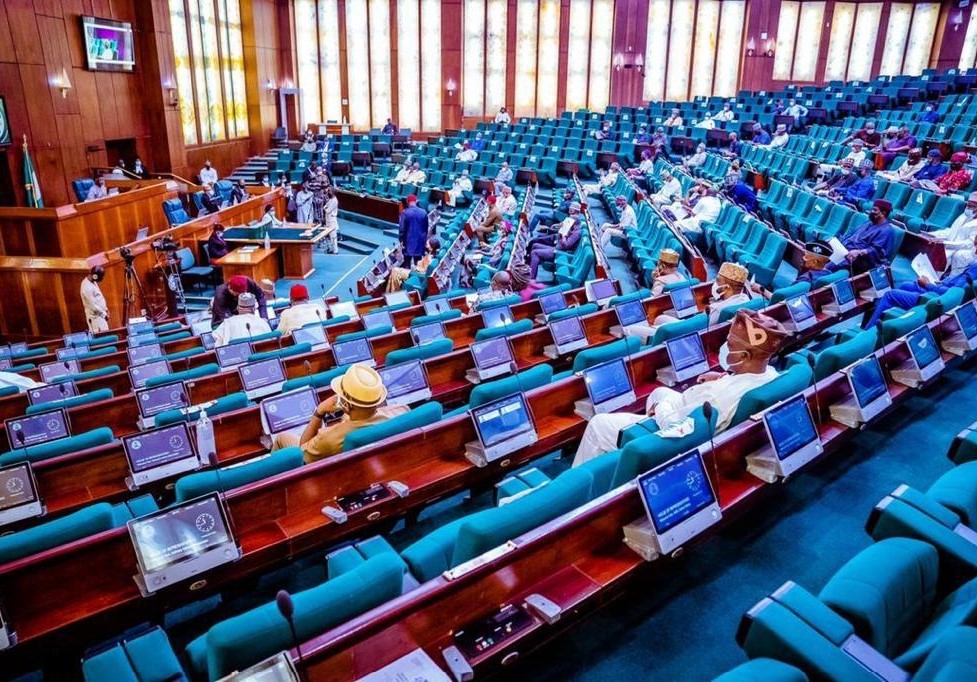
The House of Representatives has resolved to investigate alleged duplication of duties and overlapping of functions by government’s agencies. This followed the adoption of a motion by Rep. Mohammed Monguno (APC- Borno) on the floor of the House on Wednesday in Abuja. In his motion, Monguno noted that though Section 153(1) of the Constitution established certain Federal Executive Bodies, Section 4(2) of the 1999 Constitution however, empowered the National Assembly to repeal obsolete laws in the country.
According to him, the law also empowers it to enact new ones for the good governance of the country. He said that Nigeria has been gaining on the world index of Ease of Doing Business (EDB) moving from the 145th position in 2019 to 131st position in 2020, hence the need to consolidate on this improvement.
He said with the existing 1,484 government agencies in the country and the obvious attendant duplication of functions and clash of interests, there was a likelihood of the latest World Bank annual ratings to slide.He said that he believed in the need for stock-taking and review the functions of all government agencies. The House therefore, resolved to ascertain the root cause of regular bickering among some departments, boards, parastatals and corporations in the country. The House also resolved to establish areas of mergers, synergies and justification of the existence of some established government agencies, that might have outlived their usefulness in the current digital age.(NAN)

By David Torough, Abuja
Ahead of the All Progressives Congress (APC) national convention in Abuja, the Federal Government has ordered civil servants within the Federal Secretariat Complex to work from home, citing extensive security and logistical arrangements around the event.
In a circular issued by the Head of Service through the Permanent Secretary, Service Welfare Office, Abdul Garba, all access roads leading to the Federal Secretariat Phases I, II, and III will be closed from Friday, March 27 to Saturday, March 28, 2026.
The directive also affects the Ministry of Foreign Affairs and other agencies within the axis.The move, according to the government, is to facilitate the use of Eagle Square, the venue of the APC convention, which is expected to attract thousands of party members, dignitaries, and observers from across the country.
Consequently, affected workers have been directed to remain off-site on Friday, while heads of ministries, departments, and agencies have been tasked with ensuring full compliance.
Meanwhile, preparations for the convention have intensified, with the party confirming the arrival of 8,453 accredited delegates in the nation’s capital. The Chairman of the Convention Central Working Committee, Bello Masari, reaffirmed the party’s readiness and defended its zoning arrangement for National Working Committee (NWC) positions.
Masari dismissed complaints from some aspirants who alleged exclusion after purchasing nomination forms, insisting that all positions were allocated based on the federal character principle. He stressed that only candidates from designated zones are eligible to contest specific offices, warning that any deviation could undermine party unity.
He further stated that the party was unaware of any legal action from aggrieved aspirants but would respond appropriately if served.
Also speaking ahead of the exercise, the Minister of Information and Chairman of the Convention Media and Publicity Committee, Mohammed Idris, assured that the process would be transparent and credible. He urged journalists to maintain professionalism and patriotism in their coverage.
As the convention gets underway, major roads leading to Eagle Square remain cordoned off, contributing to restricted movement across key parts of Abuja. The convergence of delegates and heightened security presence signals the scale and significance of the ruling party’s gathering.

By David Torough, Abuja
President Bola Tinubu has approved the expansion of the Presidential Initiative on Compressed Natural Gas (PiCNG) to include electric vehicles (EVs), the Presidency said on Thursday.
The initiative will now be known as the Presidential Initiative on Compressed Natural Gas and Electric Vehicles (PiCNG & EV).
Special Adviser to the President on Information and Strategy, Bayo Onanuga, disclosed the development in a statement titled “President Tinubu approves expansion of PiCNG mandate to include electric vehicles.
”It read “With this approval, PiCNG & EV will lead and coordinate Nigeria’s clean mobility strategy, covering gas-driven vehicles and Electric Vehicles nationwide.
“The Initiative will continue to drive the deployment of CNG infrastructure, including Mother and Daughter Stations, Integrated Refuelling Units, CNG vehicles and equipment, and nationwide conversion programmes.”
Onanuga said it will also anchor the development and rollout of electric vehicles, EV charging infrastructure, and related investments nationwide.
Consequently, Tinubu has directed the Executive Chairman of PiCNG & EV to immediately establish a coordinated process for the rapid deployment of vehicle conversion kits across the country and ensure that such kits are accessible to Nigerians at a cost that is not burdensome.
To achieve this, the initiative will work with CreditCorp Nigeria, financial institutions, and relevant partners to design cost-effective financing structures that make vehicle conversions widely accessible to the public.
The President further directed the accelerated deployment of Mobile Refuelling Units to expand access to CNG while permanent infrastructure continues to scale.
According to the statement, gas remains a competitive and strategic fuel for transportation, leveraging Nigeria’s abundant resources to lower costs, strengthen energy security, and conserve foreign exchange.
The inclusion of electric vehicles further strengthens the government’s agenda for affordable, efficient, and environmentally responsible mobility.
The Presidential CNG Initiative was launched in 2023 as part of the Federal Government’s efforts to cushion the impact of petrol subsidy removal and promote cleaner energy alternatives for transportation.
Nigeria has one of the largest natural gas reserves in the world, estimated at over 200 trillion cubic feet, making CNG a potentially cheaper alternative to petrol for powering vehicles.
The initiative has been deploying CNG conversion centres and refuelling stations across the country, with plans to convert one million vehicles to run on compressed natural gas.
By David Torough, Abuja
The Federal Government has dismissed claims by former Vice-President, Atiku Abubakar, over the resolution of disputes surrounding the OPL 245 oil block, describing the criticisms as misleading and contrary to national interest.
Referring to a pre-action notice issued by Malabu Oil as proof that the dispute remains unresolved, Atiku had accused the Federal Government of misleading Nigerians.
He had warned that excluding a major stakeholder from the process raises serious due process concerns, noting that several related cases are still pending before the Supreme Court and the Federal High Court.
Atiku said it was “troubling” that Malabu, a key stakeholder, “was neither consulted nor involved in any purported negotiation or settlement process,” adding that sidelining critical parties reflects “recklessness” rather than strength.
He also expressed concern over reports that up to 30 percent of Nigeria’s Joint Venture assets under the Nigerian National Petroleum Company Limited could be sold.
But in a statement on Wednesday, the Attorney-General of the Federation and Minister of Justice, Prince Lateef Fagbemi, said Atiku trivalised a “landmark achievement” by the administration of Bola Tinubu in resolving a dispute that had lingered for nearly three decades.
The government recalled that OPL 245 was originally awarded to Malabu Oil & Gas Limited in 1998, revoked in 2001, and later allocated to Shell Nigeria Ultra-Deep Limited in 2002, triggering years of litigation and public controversy.
According to the statement, the disputes were addressed through a 2011 Resolution Agreement involving the Federal Government, Malabu, Shell Nigeria Ultra-Deep Limited—now succeeded by Shell Nigeria Exploration and Production Company Limited (SNEPCo)—and Nigerian Agip Exploration (NAE)/Eni entities. Under the agreement, Malabu relinquished its claims to the oil block for compensation, while the asset was reallocated to SNEPCo and NAE as joint license holders.
The government noted that the transactions arising from the 2011 agreement were subjected to judicial scrutiny in multiple jurisdictions, including the United States, the United Kingdom, and Italy, with no wrongdoing established against the companies involved.
It added that following delays in converting the oil prospecting licence into an oil mining lease, Eni entities and Nigerian Agip Exploration initiated arbitration proceedings against Nigeria at the International Centre for Settlement of Investment Disputes in 2020. The claimants argued that the delay breached Nigeria’s obligations under the Nigeria–Netherlands Bilateral Investment Treaty, exposing the country to potential liabilities exceeding $2 billion.
The Attorney-General clarified that the arbitration proceedings were limited to treaty obligations and licensing issues, stressing that individuals currently laying claim to Malabu did not participate in the process and had no legal basis to intervene.
The statement further highlighted the strategic importance of OPL 245, located about 150 kilometres offshore, describing it as one of Nigeria’s most commercially viable hydrocarbon assets that remained undeveloped for years due to legal disputes.
It said the Tinubu administration’s intervention has now paved the way for the block’s development, with projections indicating it could add about 150,000 barrels per day to Nigeria’s oil production and support gas exports to Nigeria LNG.
Citing a recent judgment in Nigerian Agip Exploration Limited v. Malabu Oil & Gas Ltd (2025), the government noted that the Court of Appeal dismissed Malabu’s challenge to the allocation of the oil block, ruling that the case was statute-barred and an abuse of court process.
The government, however, expressed concern over continued opposition to the resolution, suggesting that such criticisms were driven by undisclosed interests rather than patriotism.
It urged Nigerians to disregard what it described as attempts to undermine a lawful and strategic resolution, insisting that the development of OPL 245 would unlock significant economic benefits, boost investor confidence, and enhance national revenue.



TB screening outreach: Experts screened over 800 people
ShareBy Laide Akinboade, Abuja Experts in health sector on Friday, screened over 800 people for Tuberculosis (TB), in some selected...


PINL Urges Communities to Take ownership of Oil,Gas Assets within their Environment,
ShareFrom Mike Tayese, Yenagoa Pipeline Infrastructure Nigeria Limited (PINL) has called for stronger collaboration with host communities to enhance the...


Amnesty Programme is Now on its Right Path, Ex-agitators
ShareFrom Mike Tayese, Yenagoa Niger Delta Ex-Agitators Forum (Phase 3) on Friday made it clear that the 30,000 ex-agitators in...

Niger Delta Investment Summit Set to Unlock Regional Opportunities
ShareFrom Mike Tayese, Yenagoa Plans are underway to host a major investment forum aimed at unlocking economic opportunities and accelerating...


From Strategy to Results: Why Every Organization Needs an Efiko – Barrow
ShareBy Raphael Atuu, Abuja Every organization, it seems, needs an Efiko.That was the bold assertion from Omagbitse Barrow as he...
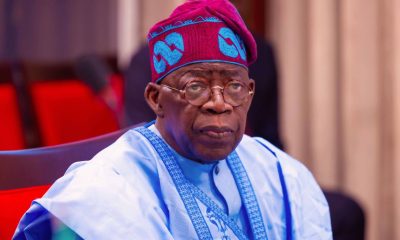

APC Convention: FG Shutsdown Secretariat, Orders Workers Stay at Home
ShareBy David Torough, Abuja Ahead of the All Progressives Congress (APC) national convention in Abuja, the Federal Government has ordered...
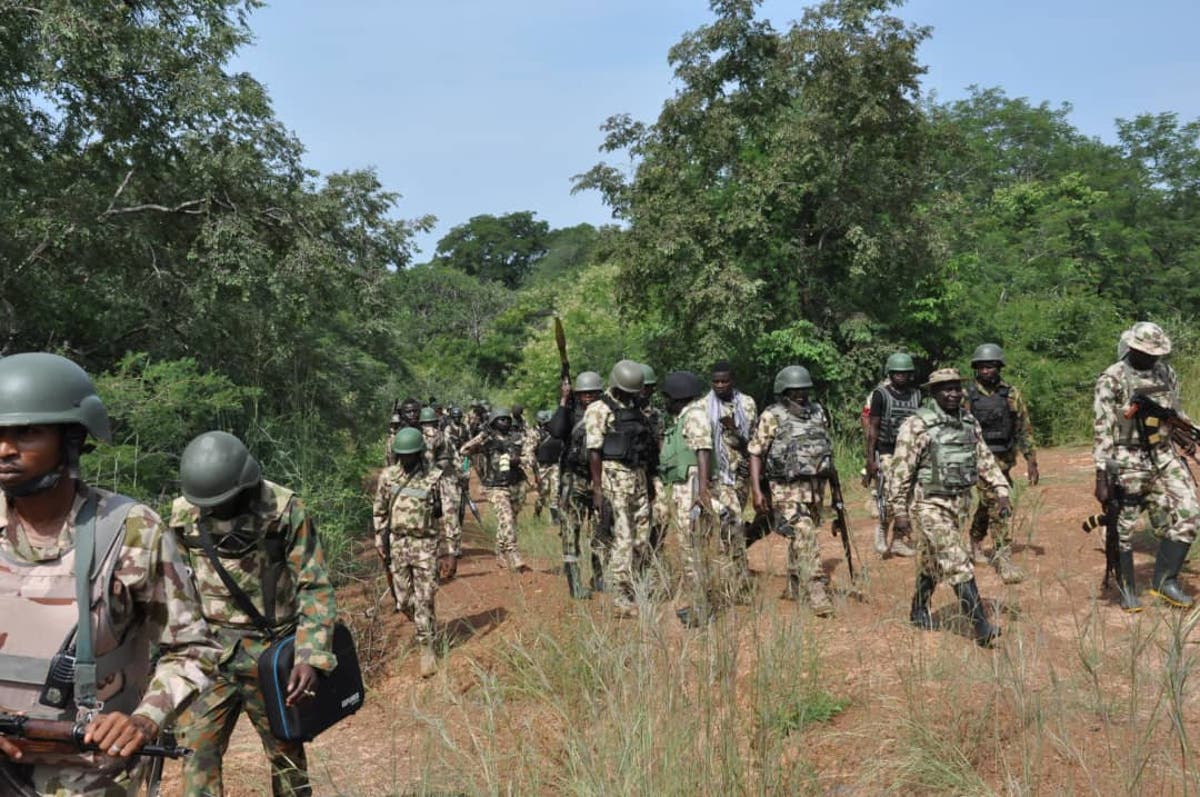
Soldiers Eliminate Six Bandits in Sokoto, Zamfara, Kebbi
ShareTroops of Sector 2, Operation FANSAN YAMMA, have intensified coordinated offensives against terrorist enclaves across Sokoto, Zamfara, and Kebbi states, killing at least six suspected bandits and recovering arms...

IOC Bars Transgender Athletes from Women’s Olympic Events
ShareThe International Olympic Committee has announced a new policy limiting eligibility for the female category at Olympic events to biological...


Out of School Children Climb to 273m Globally – UNESCO
ShareThe number of children and young people out of school worldwide has climbed to 273 million, the UN Educational Scientific and Cultural...

FAAN Outlines Airport upgrades, Private Funding Push
ShareThe Managing Director of the Federal Airports Authority of Nigeria, Olubunmi Kuku, has outlined efforts to bridge long-standing infrastructure deficits at Lagos airports. Kuku spoke...