
NEWS
RMAFC, FIRS Flag off Revenue Exercise to Boost Federation Account


By Tony Obiechina, Abuja
The Revenue Mobilisation Allocation and Fiscal Commission (RMAFC) Chairman, Dr. Mohammed Bello Shehu on Monday hosted the Special Adviser to the President on Revenue Matters and Chairman, Federal Inland Revenue Service (FIRS), Dr. Zacch Adedeji at the Commission’s Headquarters in Abuja for the formal inauguration of the Engaged Consultants for the Revenue Recovery Exercise.
In his remarks, Dr. Shehu reaffirmed the Commission’s determination to strengthen Nigeria’s fiscal governance and ensure that all revenues due to the Federation are fully accounted for and remitted into the Federation AccountAccording to him, “This exercise is not a routine administrative action but a deliberate, result-oriented innovation designed to strengthen fiscal governance and ensure every recoverable naira due to the Federation is transparently remitted.”He explained that the engagement of consultants was a strategic initiative aimed at plugging revenue leakages, enhancing transparency, and boosting the fiscal capacity of the three tiers of government, in alignment with the Renewed Hope Agenda of President Bola Tinubu.Dr. Shehu said, “In line with the constitutional responsibility of the Commission, and with the full support of Mr. President and the Special Advisor to the President on Revenue, as well as the Executive Chairman of the FIRS, this initiative for spatial recovery projects to identify and recover unremitted revenues across sectors of the economy was brought into light.”The FIRS Chairman, represented by the Coordinating Director of FIRS, Shettima Tamadi, who inaugurated the consultants, commended the RMAFC Chairman for his proactive leadership and reaffirmed the FIRS’s commitment to effective collaboration with the Commission in realizing the objectives of the recovery programme. He said, “Nigeria has a huge revenue gap, but with stronger collaboration between agencies and partners, we can bridge that gap and achieve sustainable fiscal growth.”In his remarks, Joseph Nwaeze Okechukwu, Secretary to the Commission, appreciated all stakeholders for their support and urged the consultants to work diligently to complete the assignment within the stipulated six-month timeframe.He emphasized that the consultants must ensure that all identified recoverable revenues are promptly returned to the Federation Account to support national development priorities.Delivering his acceptance speech on behalf of the consultants, the lead consultant, Temitayo Ojeleke described the engagement as a national call to duty and assured the Commission and FIRS of their commitment to professionalism, transparency, and measurable results. He said, “We accept this assignment as partners in Nigeria’s economic renewal, ready to deliver results that will strengthen the nation’s revenue base.”The inauguration marks a significant milestone in RMAFC’s ongoing efforts to enhance inter-agency collaboration, improve accountability, and maximize revenue generation for the collective benefit of the Federation.
An Information and Communication Technology (ICT) expert, Abiona Solomon, has cautioned students against over-reliance on Artificial Intelligence (AI), urging them to embrace practice and independent thinking in their academic work.
Solomon, the Chief Executive Officer of Solo InfoTech, gave the advice on Saturday in Ilorin during an interview.
He said that many students depend heavily on AI tools to handle their research and class assignments, a trend he noted was discouraging critical thinking.
According to him, the growing use of AI has made some students reluctant to engage their intellect, thereby promoting laziness.
“Many students now look for shortcuts to complete their tasks and no longer challenge themselves intellectually because of the availability of AI.
“This trend cuts across all levels of education, as students increasingly rely on AI instead of making efforts to think independently.
“Students should be encouraged to be self-reliant and always attempt solving problems on their own before turning to AI.
“Over-dependence on AI can weaken their ability to think critically,” he said.
Solomon, however, acknowledged that AI remains a valuable tool for learning, noting that it is vast and makes research easier.
He added that AI has simplified academic work and exposed students to global developments.
The expert, therefore, advised students to use AI responsibly and not abuse its benefits.
Education
Expert Urges Stronger Teacher-student Bonding to Curb Cultism, Bullying in Secondary Schools

An Education Evaluation expert at the University of Ibadan, Prof. Adams Onuka, has called for stronger teacher-student and parent-child relationships to curb cultism and bullying in secondary schools.
Onuka made the call in an interview recently in Ibadan, while reacting to the growing concerns over cult-related activities and bullying in schools.
He said that unfriendly attitudes by some teachers and weak parental bonding often pushed students toward cult groups and other harmful associations.
According to him, students who are not emotionally supported by teachers and parents can become vulnerable to manipulation by cult groups.
“Teaching can only be effective when there is a healthy relationship between teachers and students.
“If teachers relate well with students, the students will trust them, open up to them and such teachers can prevent them from joining cult groups,” he said.
However, the don said that when teachers bully, insult or intimidate students, they unknowingly create the kind of emotional gap that cult groups exploit.
He explained that some students joined cult groups in search of protection, especially when being bullied by peers or mistreated by adults in school.
Onuka said investigation had shown that the behaviour of some lecturers and workers contributed to students’ attraction to cult groups.
He said that the same pattern could be found in secondary schools.
Onuka stressed the need for school administrators, teachers and parents to deliberately build trust with students by being approachable, empathetic and genuinely interested in their welfare.
According to him, teachers should see students as important stakeholders in the education process and not as subordinates to be controlled through fear.
“We are not more important than the students; we are just first among equals.
“When teachers change their attitude and become approachable, students will be able to open up about their fears and challenges before they are lured into dangerous groups,” he said.
The education evaluation expert urged schools to create safe environments where cases of bullying could be reported early and addressed promptly before they escalated into violence or legal disputes.
The don also advised teachers to adopt flexible teaching methods, saying that students had different learning needs and should not be treated with a one-size-fits-all approach.
According to him, poor classroom engagement and insensitive teaching methods can alienate students and push them toward negative peer influences.
He further stressed that teachers must lead by example, noting that character formation was a critical part of education.
“Teaching is not only about building knowledge and skills; it is also about building character.
“Character is not taught only by words; it is displayed, and students learn by observing their teachers,” he said.
Onuka also said that children were more likely to confide in parents who were friendly, accessible and trustworthy.
He called for deliberate efforts by all stakeholders to create school cultures built on empathy, trust, discipline and mutual respect.

The Federal Government has secured a partnership with Coventry University under a Transnational Education (TNE) arrangement to establish a campus in Nigeria for the delivery of affordable, globally recognised degrees.
The Minister of Education, Dr Tunji Alausa, disclosed this in a statement issued recently in Abuja by Folasade Boriowo, Director of Press and Public Relations, Federal Ministry of Education.
Alausa, who is currently in the United Kingdom accompanying President Bola Tinubu, said he had engaged with UK university leadership, key investors, and development partners to drive the initiative.
He said the proposed campus would be located in Alaro City, Lagos State, and would offer Bachelor’s and Master’s programmes in Science, Technology, Engineering, Mathematics and Medicine (STEMM), Business, and Technical and Vocational Education and Training.
According to him, the degrees would be equivalent to those awarded in the United Kingdom, with admissions expected to commence between the third and fourth quarters of 2026, subject to regulatory approvals.
The minister said the initiative was designed to expand access to world-class education at reduced cost, while strengthening skills development and improving graduate employability.
He added that the programme would enable Nigerian students to study locally while receiving international-standard education.
Alausa noted that the partnership, supported by the UK’s Department for Business and Trade, underscored the government’s commitment to positioning Nigeria as a hub for knowledge, skills, and innovation.



Troops Uncover Terrorists’ Burial Ground, Nab High-profile Collaborators in North-East
ShareTroops of Operation Hadin Kai have uncovered a suspected terrorist burial ground and apprehended high-profile collaborators in sustained operations across...

Expert Cautions Students against Over-reliance on AI
ShareAn Information and Communication Technology (ICT) expert, Abiona Solomon, has cautioned students against over-reliance on Artificial Intelligence (AI), urging them...

Expert Urges Stronger Teacher-student Bonding to Curb Cultism, Bullying in Secondary Schools
ShareAn Education Evaluation expert at the University of Ibadan, Prof. Adams Onuka, has called for stronger teacher-student and parent-child relationships...

FG Secures Coventry University Deal to Deliver UK Degrees in Nigeria
ShareThe Federal Government has secured a partnership with Coventry University under a Transnational Education (TNE) arrangement to establish a campus...
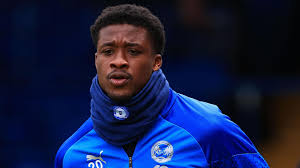

Fernandez: There Was No Way I Would Turn Down Super Eagles Invitation
ShareSuper Eagles invitee Emmanuel Fernandez has disclosed that it was impossible for him to turn down the opportunity to represent...


Ballard to Miss Northern Ireland’s Italy Play-off
ShareDan Ballard will miss Northern Ireland’s crucial World Cup play-off semi-final against Italy on Thursday because of a hamstring injury....

Guinea Denies Contesting Morocco’s 1976 AFCON Title
ShareThe Guinean Football Federation has denied reports claiming it filed an appeal with the Confederation of African Football to challenge...


England to Host Canada in World Cup Final Rematch
ShareEngland will face Canada in a rematch of the 2025 Women’s Rugby World Cup final as part of a trio...


White Gets First England Call-up Since 2022
ShareArsenal defender Ben White has been called up to the England squad for the first time in more than three...
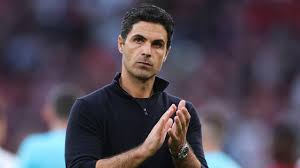

Arteta’s Costly Gamble on Kepa Backfires in Cup Final Loss
ShareArsenal manager Mikel Arteta’s choice to stick with Kepa Arrizabalaga will be one that haunts him as it proved costly...