
Education
Rotary Equips SOS Children’s Village Library for E-learning


The Rotary Club of Ikeja, District 9110 has equipped the e-library of the Save Our Soul (SOS) Children’s Village, Isolo, Lagos State to promote e-learning.
Mr Gbenga Badejo, President, Rotary Club of Ikeja, made this known in a statement made available to the News Agency of Nigeria (NAN) on Wednesday.
This donation was in collaboration with the Christian Brothers Society.
Badejo said the initiative was a continuation of Rotary International’s theme for the month of April, tagged, ‘Maternal and Child Care.
’According to him, the organisation shifted its focus in the past two years to e-learning because of the COVID-19 pandemic and its restrictions.
He said it was a relevant and important aspect of child care that would help bridge the digital divide. (NAN)



The West African Examinations Council has released the official timetable for the 2026 West African Senior School Certificate Examination for school candidates.
According to the final international timetable published on WAEC’s official X handle on Monday, the examination will commence on Tuesday, April 21, 2026, and end on Friday, June 19, 2026.
The council said the examination will begin with Foods and Nutrition 3 (Practical) Planning Session and Home Management 3 (Practical) Planning Session.
WASSCE serves as a critical qualification that secondary school students must pass to gain admission into university and other tertiary institutions.
The exam covers core subjects such as English Language and Mathematics, as well as a wide range of elective papers in sciences, arts, humanities, and vocational/technical areas.
It takes place across WAEC’s member countries, including Nigeria, Ghana, Liberia, Sierra Leone, and The Gambia.

An Information and Communication Technology (ICT) expert, Abiona Solomon, has cautioned students against over-reliance on Artificial Intelligence (AI), urging them to embrace practice and independent thinking in their academic work.
Solomon, the Chief Executive Officer of Solo InfoTech, gave the advice on Saturday in Ilorin during an interview.
He said that many students depend heavily on AI tools to handle their research and class assignments, a trend he noted was discouraging critical thinking.
According to him, the growing use of AI has made some students reluctant to engage their intellect, thereby promoting laziness.
“Many students now look for shortcuts to complete their tasks and no longer challenge themselves intellectually because of the availability of AI.
“This trend cuts across all levels of education, as students increasingly rely on AI instead of making efforts to think independently.
“Students should be encouraged to be self-reliant and always attempt solving problems on their own before turning to AI.
“Over-dependence on AI can weaken their ability to think critically,” he said.
Solomon, however, acknowledged that AI remains a valuable tool for learning, noting that it is vast and makes research easier.
He added that AI has simplified academic work and exposed students to global developments.
The expert, therefore, advised students to use AI responsibly and not abuse its benefits.
Education
Expert Urges Stronger Teacher-student Bonding to Curb Cultism, Bullying in Secondary Schools

An Education Evaluation expert at the University of Ibadan, Prof. Adams Onuka, has called for stronger teacher-student and parent-child relationships to curb cultism and bullying in secondary schools.
Onuka made the call in an interview recently in Ibadan, while reacting to the growing concerns over cult-related activities and bullying in schools.
He said that unfriendly attitudes by some teachers and weak parental bonding often pushed students toward cult groups and other harmful associations.
According to him, students who are not emotionally supported by teachers and parents can become vulnerable to manipulation by cult groups.
“Teaching can only be effective when there is a healthy relationship between teachers and students.
“If teachers relate well with students, the students will trust them, open up to them and such teachers can prevent them from joining cult groups,” he said.
However, the don said that when teachers bully, insult or intimidate students, they unknowingly create the kind of emotional gap that cult groups exploit.
He explained that some students joined cult groups in search of protection, especially when being bullied by peers or mistreated by adults in school.
Onuka said investigation had shown that the behaviour of some lecturers and workers contributed to students’ attraction to cult groups.
He said that the same pattern could be found in secondary schools.
Onuka stressed the need for school administrators, teachers and parents to deliberately build trust with students by being approachable, empathetic and genuinely interested in their welfare.
According to him, teachers should see students as important stakeholders in the education process and not as subordinates to be controlled through fear.
“We are not more important than the students; we are just first among equals.
“When teachers change their attitude and become approachable, students will be able to open up about their fears and challenges before they are lured into dangerous groups,” he said.
The education evaluation expert urged schools to create safe environments where cases of bullying could be reported early and addressed promptly before they escalated into violence or legal disputes.
The don also advised teachers to adopt flexible teaching methods, saying that students had different learning needs and should not be treated with a one-size-fits-all approach.
According to him, poor classroom engagement and insensitive teaching methods can alienate students and push them toward negative peer influences.
He further stressed that teachers must lead by example, noting that character formation was a critical part of education.
“Teaching is not only about building knowledge and skills; it is also about building character.
“Character is not taught only by words; it is displayed, and students learn by observing their teachers,” he said.
Onuka also said that children were more likely to confide in parents who were friendly, accessible and trustworthy.
He called for deliberate efforts by all stakeholders to create school cultures built on empathy, trust, discipline and mutual respect.



Palm Sunday Killings in Jos: Nigeria Cannot Keep Bleeding Like This, CAN, insist
ShareBy Laide Akinboade, Abuja The Christian Association of Nigeria (CAN),condemned, in the strongest possible terms, the horrific attack that took...
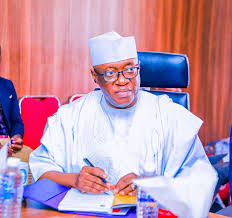

Nasarawa Accountant General Resigns Declares for 2027 Governorship
ShareFrom Abel Zwanke, Lafia The Nasarawa state Accountant General Rt. Hon. Musa Ahmed Mohammed, has resigned his position and declared his intention to contest the 2027 governorship election....

CAF Considers Africa Cup of Nations Expansion to 28 Teams
ShareConfederation of African Football (CAF) President Patrice Motsepe has said that the Africa Cup of Nations could be expanded from 24 to 28 teams. Motsepe made the...


Russian Oil Tanker Reaches Cuba after Trump Appears to Loosen Blockade
ShareA Russian tanker carrying oil to Cuba has entered the waters off the Communist-run Island, Russia’s Interfax. The oil shipment – the first to reach Cuba since January – comes hours after US...


Drivers Protest Fuel Price Hike, Block road in Edo
ShareCommercial drivers operating along Upper Sakponba Road in Benin, Edo State, on Monday blocked sections of the busy road in protest against the recent increase in petrol prices. The protesting drivers also...
WAEC Releases 2026 WASSCE Timetable
ShareThe West African Examinations Council has released the official timetable for the 2026 West African Senior School Certificate Examination for...

NPA Targets N1.489tn Revenue for 2026
Share The Nigerian Ports Authority (NPA) has set N1.489 trillion as its Internally Generated Revenue (IGR) target for the 2026...
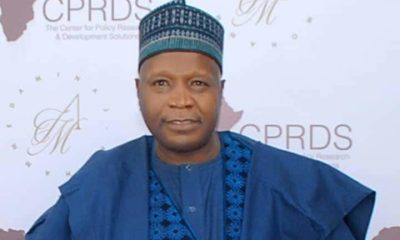

Northern Govs Approve N500m Each for Secretariat Project
ShareBy David Torough, Abuja The Chairman of the Northern States Governors’ Forum (NSGF) and Governor of Hombe State, Muhammadu Inuwa...


Plateau Attack: Mutfwang Orders Crackdown on Suspects, Imposes Curfew in Jos
ShareFrom Jude Dangwam, Jos and Laide Akinboade, Abuja Nigeria’s fragile security landscape came under renewed strain on Sunday and Monday...


OPay Strengthens Commitment to Financial Inclusion, Customer-First Service, Launches New Office in Jos
ShareOPay has officially launched its new office in Jos, Plateau State, marking another milestone in its mission to bring fast,...