
Oil & Gas
Senate to Review Law on Oil Production Sharing Contract

The Senate has mandated its Committee on Petroleum Resources Upstream to come up with a bill on amendment of the Inland Basin Production Sharing Contract (PSC) Act.
This followed the adoption of a motion by Sen. Ifeanyi Ubah, (YPP Anambra) and 30 others at Wednesday’s plenary.
The motion was on the urgent need to review Production Sharing Contract (PSC) in line with section 16 of the deep offshore and inland Basin Production Sharing Contract Act CAP D3 LFN 2004 and amend the extant Act.
Moving the motion, Ubah said the committee on petroleum resources upstream had been inundated with petitions and complaints on the PSC.
He said Federal Government over the years had lost billions of dollars in potentially accruable revenue due to non-review and amendment of the salient provisions of the PSC Act.
He said in spite of huge contributions of the PSC to total oil production, the contributions of revenue per barrel of PSC for federal government’s take had been significantly low.
This, he said was because of the inherent inequitable terms in the PSC and failure to review the salient provisions of the act.
According to him, PSC Act provides that where the price of crude oil exceeds 20 dollars per barrel, the Act will be reviewed to ensure that federal government share in the additional revenue is adjusted.
He also said that the act provided that it may be reviewed after 15 years from the date of its enactment in 1993 and every five years thereafter.
According to him, the non- review of the Act over the years had led to loss of 21 billion dollars to Nigeria.
He said Nigeria stand to gain additional N30 billion monthly if the Act is reviewed and amended.
This, Ubah said would boost the nation’s revenue profile.
Contributing, Sen. George Sekibo, (PDP-Rivers), said the PSC was an additional opportunity for Nigeria to make money, adding that there was an urgent need to review the Act.
He said cabals in the oil sector were frustrating attempts to review the Act over the years.
Other senators, who supported the review, were Stella Oduah, Rochas Okorocha, Adamu Alerio, Gabriel Suswam among others.
The senate in its resolution also mandated its committee on petroleum resources upstream to investigate reasons for failure to review the Act over the years.
In his ruling, President of the Senate, Dr Ahmad Lawan said the bill for the review of the Act would be presented for second reading in the next legislative day.
He urged the senate to give the PSC amendment bill expeditious debate and passage when presented.
He maintained that the bill if passed would help the country to generate fund to support execution of the budget.
The News Agency of Nigeria (NAN), reports that PSC is a contractual arrangement for petroleum exploration and production.
This is whereby the state as owner of the petroleum engages a contractor to provide technical and financial services for exploration and production operations with agreed share in profit after payment of royalty, cost and tax.
The contractual agreements were offered by the federal government in 1991 leasing round and its terms codified into legislation.
Nigeria presently has seven oil fields from the 1993 PSCs.(NAN)
KC/AMM/ABI




he National Bureau of Statistics (NBS) said the average retail price of a litre of petrol witnessed a drop from N1,184.83 in October 2024 to N1,052.31 in October 2025.
The NBS made this known in its Petrol Price Watch for October 2025 released in Abuja yesterday.
It stated that the October 2025 price of N1,052.
31 represented a 11. 18 per cent decrease over the price of N1,184. 83 recorded in October 2024.“Comparing the average price value with the previous month of September, the average retail price increased by 8.42 per cent from N970.59.”
On state profiles analysis, the report said Kogi paid the highest average retail price of N1,110.
00, followed by Sokoto and Borno at N1,105.93 and N1,101.63, respectively.“Conversely, Oyo, Nasarawa and Abia paid the lowest average retail price at N1,001.79, N1,009.38, and N1,012.50, respectively,’’ it stated.
Analysis by zones showed that the North-East recorded the highest average retail price in October 2025 at N1,072.74 while the South-West Zone recorded the lowest price at N1,032.81 per litre.
The NBS also stated in its Diesel Price Watch Report for October 2025 that the average retail price was N1,398.57 per litre.
It said that the October 2025 price of N1,398.57 per litre amounted to a 2.96 per cent decrease on a year-on-year basis over the N1,441.28 per litre paid in October 2024.
“On a month-on-month basis, the price increased by 9.45 per cent from the N1,277.81 per litre recorded in September 2025,’’ it added.
On state profile analysis, the report said the highest average price per litre of diesel in October was recorded in Enugu at N1,468.29, followed by Niger at N1,465.69 and Jigawa at N1,437.40.
On the other hand, the lowest price was recorded in Katsina at N1,301.24 per litre, followed by Edo at N1,307.84 and Kebbi at N1,308.94.In addition, the analysis by zones showed that the South-East Zone had the highest price of N1,415.85 per litre, while the South-South recorded the lowest price at N1,387.18 per litre.(NAN)

Dangote Petroleum Refinery has said that its gantry price reduction actually prompted petrol price downward adjustments by marketers.
The management rejected what it described as series of misleading publications claiming that the recent reduction in pump prices by oil marketers is a consequence of the Federal Government’s reversal of the 15 per cent import tariff.
‘This narrative is entirely false, deliberately misleading, and inconsistent with actual market dynamics.
For the avoidance of doubt, the factor that prompted the price adjustment was our own reduction of PMS gantry and coastal prices on November 6.’ it said in a statement.According to the statement, the subsequent change in pump prices is now being wrongly attributed to a tariff decision in an attempt to distort the facts and misinform the public.
It will be recalled that Dangote Petroleum Refinery, on November 6, reduced its PMS gantry price from N877 to N828 per litre, representing a 5.6 per cent decrease, and its coastal price from N854 to N806 per litre.
These changes were publicly announced across major media platforms, including, but not limited to, The Punch, Vanguard, The Cable, Daily Trust, The Sun, The Street Journal, Petroleumprice.ng, New Telegraph, Business Hallmark, and several others, and were implemented well before marketers adjusted their pump prices.
The claim that the reduction in pump prices was driven by the suspension of the 15 per cent import tariff is therefore incorrect, it said.
‘The import tariff had received the approval of His Excellency, President Bola Ahmed Tinubu, GCFR as far back as October 21 for immediate implementation.
The refinery management noted that contrary to repeated claims by certain interests, imported products which are often below acceptable standards have consistently been sold at higher pump prices than the premium-grade fuel supplied by Dangote Refinery.
The continued importation of substandard fuel constitutes dumping, a harmful practice that undermines economic growth and industrial development.
Nigeria has witnessed the devastating consequences of such unchecked dumping before, including the collapse of the once-thriving textile industry, which was a major employer of labour, it noted.
Dangote Petroleum Refinery further reiterated its commitment to supplying high-quality, internationally benchmarked petroleum products at competitive prices, adding. “Our operations continue to moderate prices in the market, ensuring Nigerian consumers receive genuine value for money.”
The Nigerian National Petroleum Company Limited (NNPC Ltd.) is fast-tracking its transformation through strategic investments in infrastructure, governance reforms, and operational efficiency, positioning the company for a landmark Initial Public Offering (IPO).
Under its “Fit for the Future” strategy, NNPC Ltd.
aims for global competitiveness, public listing, and a pivotal role in connecting Africa to international markets through extensive gas infrastructure development initiatives.Group Chief Executive Officer, Bashir Ojulari, disclosed this during a dialogue at the 2025 Abu Dhabi International Petroleum Exhibition and Conference (ADIPEC), emphasising the company’s commitment to transparency, efficiency, and investor readiness.
Ojulari said NNPC Ltd. was steadily preparing for its IPO under the Petroleum Industry Act (PIA 2021) by improving governance, operational transparency, and accountability to meet international investment standards and expectations.
“Our IPO journey is mandated by law. We are publishing monthly performance reports and embedding global best practices to make NNPC a high-performing, investor-ready company with enhanced transparency.
“The ‘Fit for the Future’ project focuses on market leadership, building the necessary structures for IPO readiness, increasing investor attractiveness, and strengthening the company’s long-term competitiveness and operational capacity,” Ojulari said.
The CEO highlighted the transformation programme’s five core workstreams: production growth, gas monetisation, downstream optimisation, market leadership, and talent development, forming the backbone of NNPC’s strategy to become globally competitive.
Ojulari said the initiative was also reshaping NNPC’s workforce through innovation, digitalisation, and international exposure, enhancing staff capabilities via the “Talent Valley” programme and secondments with global partners.
He stated, “The new board and management were given a clear mission by the President: achieve two million barrels per day by 2027 and three million barrels per day by 2030.”
On gas development, Ojulari noted targets of 10 billion cubic feet per day by 2027 and 12 billion cubic feet by 2030, achievable through partnerships, operational efficiency, and access to broader investment capital.
He added that production recovery had been boosted by collaboration with international and indigenous operators, along with fiscal incentives under the PIA 2021, contributing to growth in oil output and investment confidence.
“Nigeria’s oil output has increased from 1.5 million to about 1.7 million barrels per day. We recently signed our first deepwater Production Sharing Contract in 15 years,” he revealed.
On gas, Ojulari said Nigeria’s reserves, exceeding 600 trillion cubic feet equivalent, positioned the country for full industrialisation and regional economic leadership, underscoring NNPC’s strategic focus on natural gas development.
He said NNPC was leading the Nigeria–Morocco Gas Pipeline Project, connecting West African economies and Europe, allowing countries along the corridor to both consume and supply gas, boosting trade and energy integration.
“The pipeline aligns with our vision to make Africa a major global gas player while promoting economic integration, industrialisation, and sustainable development across participating nations,” Ojulari said.
He added that NNPC was finalising partnerships with global operators to upgrade refineries to international standards, seeking partners with proven expertise and shared investment responsibility to enhance operational efficiency.
Ojulari reaffirmed NNPC’s commitment to advancing energy access and industrial growth across Africa, emphasising that its transformation journey was simultaneously commercial and developmental, with benefits for investors, governments, and communities alike.
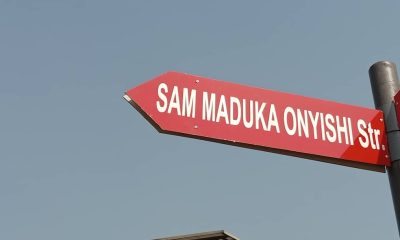

Street Named After Business Mogul, Sam Maduka Onyishi Unveiled in Asokoro
ShareBy David Torough, Abuja Authorities in the Federal Capital Territory on Saturday honoured renowned entrepreneur and philanthropist, Chief Dr. Sam...


Experts Task Government on Increase in Domestic Funding
ShareBy Laide Akinboade, Abuja Experts in the health sector, at the weekend agreed that even though foreign grants and aid...
BBNaija’s Queen Mercy Confirms crash of Her One-year Marriage
ShareBig Brother Naija reality show star, Queen Mercy Atang, has finally confirmed the crash of her one-year marriage. The single...


Obi, TCM Condemn Tinubu’s Distribution of Vehicles to Renewed Hope Ambassadors
ShareBy Mike Odiakose Abuja Presidential Candidate of the Labour Party, Peter Obi and a socio-political organisation, The Collective Movement (TCM),...

Bayelsa Urges NDDC to Complete Abandoned Akenfa Bridge Project
ShareFrom Mike Tayese, Yenagoa The Bayelsa State Government has called on the Niger Delta Development Commission (NDDC) to resume and...


Road Accident Claims Six Lives in Kogi
ShareFrom Joseph Amedu, Lokoja The Kogi State Government has expressed sadness over a tragic accident involving a bus conveying some...


Adebayo at 53 Young Enough to Lead Nigeria – Ighodalo
ShareBy Mike Odiakose, Abuja Pastor in charge of Trinity House, a non-denominational, Christian fellowship centre and founder, African Leadership Group...


Four Dies as Bandits Launches Attack in Kogi Community
ShareFrom Joseph Amedu, Lokoja Four persons were reportedly dead on Wednesday when suspected bandits launched an attack on Irunda Ile...
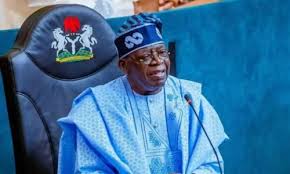

Musa Takes Oath, Vows United Front against Insecurity
ShareBy David Torough, Abuja President Bola Tinubu yesterday swore in former Chief of Defense Staff, General Christopher Musa (rtd), as...


OPay Secures Double Honors at Tech Innovation Awards
ShareIn a major recognition of its innovation and security leadership, OPay, Nigeria’s premier financial technology company, has been named Fintech...