
Foreign News
South Africans Fear Spike in HIV Infections as US Aid Cuts Bite


Gugu used to collect her antiretrovirals from a USAID-funded clinic in central Johannesburg.
But when President Trump’s cuts to aid funding were announced earlier this year, she and thousands of other HIV-positive patients across South Africa suddenly faced an uncertain future.
Gugu was lucky, the clinic where she got the medication that helps suppress her symptoms contacted her before it closed down.
“I was one of the people who was able to get their medication in bulk. I usually collect a three-month prescription. But before my clinic closed, they gave me nine months’ worth of medication.”
She will run out of antiretrovirals (ARVs) in September, and then plans on going to her local public hospital for more.
A former sex worker, the 54-year-old found out she was HIV-positive after she’d quit the industry.
Ten years ago she got a chesty cough, and initially thought it was tuberculosis. She went to a doctor who told her she had a chest infection and treated her for it.
But when the treatment failed, she went to a clinic to get an HIV test.
She was right, and she has been on ARVs ever since. We’re not using her real name at her request.
She currently works as a project coordinator for an NGO.
Many HIV-positive sex workers in South Africa relied on private clinics funded by the US government’s now-defunct aid agency, USAID, to get their prescriptions and treatments.
But most of the facilities closed after US President Donald Trump cut most foreign aid earlier this year.
Gugu believes that many sex workers could be discouraged from going to public hospitals for their ARVs if they can no longer get them from clinics.
She adds that she recently went to her local hospital with some friends to register her details and build a relationship with staff.
She thinks this could lead to many sex workers defaulting on their medication, “especially because their hospital files contain a lot of personal information, and the concern is that sometimes the nurses at these local clinics aren’t always the most sensitive in dealing with this kind of information”.
In a report released on Thursday, the UN body in charge of fighting HIV/Aids does not single out the US, but says that drastic cuts from a number of donors have sent shockwaves around the world, that the “phenomenal progress” in tackling the illness risks being reversed.
UNAids said that, before the funding cuts, the annual numbers of new HIV infections and Aids-related deaths had sunk to their lowest levels in more than 30 years.
All of the data published in the report is from before the US and other donors slashed funding earlier this year. But it does highlight how much progress could be lost as a result of these cuts.
Sub-Saharan Africa has seen a 56% decline in the number of new infections. The region is still the epicentre of the epidemic – half of all new infections last year were from the continent. But four African countries – Lesotho, Malawi, Rwanda and Zimbabwe – were on track to achieve a 90% decline in new infections by 2030 compared with 2010.
Another success story for Africa has been the performance of antiretrovirals, which help suppress HIV symptoms. Along with other medical advances in the field, they helped increase life in sub-Saharan Africa from 56 years in 2010 to 62 years in 2024.
The turnaround began when then-US President George W Bush launched an ambitious programme to combat HIV/Aids in 2003, saying it would serve the “strategic and moral interests” of the US.
Known as the President’s Emergency Plan for Aids Relief (Pepfar), it led to the investment of more than $100bn (£74bn) in the global HIV/Aids response – the largest commitment by any nation to address a single disease in the world.
South Africa has about 7.7 million people living with HIV, the highest number in the world, according to UNAids.
About 5.9 million of them receive antiretroviral treatment, resulting in a 66% decrease in Aids-related deaths since 2010, the UN agency adds.
South Africa’s government says Pepfar funding contributed about 17% to its HIV/Aids programme. The money was used for various projects, including running mobile clinics to make it easier for patients to get treatment.
The Trump administration’s cuts have raised concern that infection rates could spike again.
Gugu points out that treatment is a matter of life and death, especially for vulnerable populations like sex workers.
The cuts have also affected research aimed at finding an HIV vaccine and a cure for Aids.
South Africa has been one of the global leaders in HIV research. Many of the medications that help prevent the virus, and which have benefitted people around the world, were trialled in South Africa.
This includes Prep (pre-exposure prophylaxis), a medication which stops HIV-negative people from catching the virus.
Another breakthrough preventive drug released this year, Lenacapavir, an injection taken twice a year and that offers total protection from HIV, was also tried in South Africa.
In a lab at Wits University’s Health Sciences campus, a small group of scientists are still working on a vaccine for HIV.
They are part of the Brilliant Consortium, a group of labs working across eight African countries to develop a vaccine for the virus.
But the US funding cuts threw their work into doubt.
The lab lacks funding to carry out clinical trials scheduled for later this year.
In June, universities asked the government for a bailout of 4.6bn South African rand ($260m; £190m) over the next three years to cover some of the funding lost from the US.
South Africa’s Health Minister Aaron Motsoaledi announced on Wednesday that some alternative funding for research had been secured.
The Bill and Melinda Gates Foundation and the Wellcome Trust have agreed to donate 100m rand each with immediate effect, while the government would make available 400m rand over the next three years, he said.
This would bring the total to 600m rand, way below the 4.6bn rand requested by researchers.
As for Gugu, she had hoped that by the time she was elderly, a cure for HIV/Aids would have been found, but she is less optimistic now.
By Ubong Ukpong, Abuja
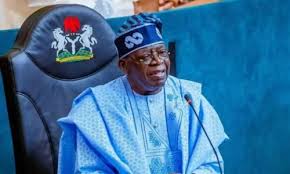
President Bola Tinubu has expressed commitment to the development of children in the country.
He said this at the launching and public presentation of a new book titled The Power of a Teenager: 50 Ways to Inspire Change, written by Chairman of the Public Accounts Committee, House of Representatives, and Founder of the Children of Africa Leadership and Values Development Initiative (CALDEV), Rep.
Bamidele Salam on Thursday.Tinubu, who was represented by the Senior Special Assistant to the National Assembly, House of Representatives Liaison, Dr. Ibrahim Olarewaju, commended Salam for his dedication to youth development.
“You may not fully understand the impact of what you are receiving now, but tomorrow you will see what.
Hon. Bamidele Salam has done in your lives,” he said.He urged all attendees to make a personal commitment to shaping the minds of young Nigerians, stressing that while Salam funded the initiative personally, the greater task lies in mentoring and guiding the nation’s youth.
The Vice President, Kashim Shettima, described the launch as a clear demonstration of the potential of Nigerian children.
Represented by Senior Special Assistant, Dr. Kingsley Uzoma, praised Salam for aligning his work with the administration’s vision for youth empowerment.
“This initiative speaks directly to the leaders of tomorrow,” he added, commending both the organisation and the children participating in the programme.
Chief of Staff to the President, Femi Gbajabiamila also lauded Salam’s efforts.
“Nigerian children are the future of this nation. Even though they are young, we are looking to them to take this country to where it should be,” he said.
Gbajabiamila commended Salam for consistently producing the book annually, calling it a testament to leadership and commitment.
“Leadership may be inborn or thrust upon you, but there must be someone to guide you. That is what this book is doing—it provides the guidance our young people need,” he said, urging children to read and internalise its lessons.
Speaking at the event, Rep. Bamidele Salam shared the story of how CALDEV was founded in 2015 to fill a gap in Nigeria’s educational system.
Unlike in other countries, he said, leadership training is rarely embedded in the curriculum. Through CALDEV and its flagship National Children’s Leadership Conference, children gain practical exposure to leadership, public speaking, and community service.
Many past participants have gone on to start NGOs, run radio programmes, and lead campaigns addressing early marriage, child labour, and other social issues.
“This year, about 400 children are participating, and the impact has been phenomenal,” Salam said. He urged state governments to replicate the initiative at the state level to provide young people across Nigeria with intensive leadership training. Highlighting the large participation from Borno State, Salam said that properly trained and nurtured children could become agents of change, promoting peace, tolerance, education, and societal development.
Minority Leader of the House of Representatives, Kingsley Chinda, lauded Rep. Bamidele Salam for his dedication to youth development through the newly launched book.
Chinda expressed pride that a member of the House is actively shaping the future of Nigerian children.
“As members of the House of Representatives, we hold our heads high today that one of us is doing this. We are very, very proud, and we pray that this inspiration should flow through every other member of the House,” he said.
Chinda noted that the legacy of leaders and thinkers is remembered not for wealth but for wisdom and the knowledge they left behind.
“When we see initiatives like this, these are the things worthy of celebration,” he said.
Member of the House from Borno State, Zainab Gimba, said,”We have come because we are celebrating not just a book today when they had an imagination behind it. I actually commend for shining the compassionate and bright lights of our teenagers.
“He has given our young people a voice that others will also step on the same foot, so that our teenagers will be empowered, not in this generation, but in future generations to come.”

Former South Korean president Yoon Suk Yeol, currently in jail after being impeached and removed from office, has been charged with additional offences, including supporting an enemy state.
The prosecutors said this on Monday.
Yoon, 64, is accused of attempting to provoke a military conflict between South and North Korea by covertly sending drones into the North, in an effort to legitimise a state of martial law he declared late last year.
Prosecutors argued that the drone deployment in October 2024 led to the leak of military secrets to the North as the vehicles crashed near Pyongyang.
The conservative politician has been in pre-trial detention for months and already faces charges over the declaration that include high treason, a crime punishable by life imprisonment.
Yoon’s dramatic action on December 3 plunged the country into a deep political crisis.
He justified the move by claiming that the left-wing opposition had been infiltrated by communist and anti-state forces, though he presented no evidence to support the allegations, and it was soon overturned.
Left-leaning Lee Jae Myung is now president; he won an early presidential election in June following Yoon’s removal from office in April.
The African Union (AU) has called for an urgent international response, including intelligence-sharing, to address worsening security conditions in Mali, where insurgents are imposing a fuel blockade and kidnapping foreigners.
An Al Qaeda-linked jihadist group active in West Africa’s Sahel region has blocked fuel imports since September, attacking convoys of tankers and creating a shortage that forced schools and businesses to shut.
The latest show of force by the group, Jama’at Nusrat al-Islam wal-Muslimin, has raised concern that it might eventually try to impose its rule over the landlocked country.
Western countries including the U.S., France, Britain, and Italy are urging their citizens to leave.
In a statement, Mahmoud Ali Youssouf, chairperson of the African Union Commission, expressed “deep concern over the rapidly deteriorating security situation in Mali, where terrorist groups have imposed blockades, disrupted access to essential supplies, and severely worsened humanitarian conditions for civilian populations”.
He said there should be “enhanced cooperation, intelligence-sharing and sustained support” for countries in the Sahel affected by violent extremism.
He also called for the immediate release of three Egyptian nationals he said were recently kidnapped.
JNIM has targeted foreign nationals for kidnapping to finance its operations in West Africa.
Reuters reported in October that a deal was reached to free two citizens of the United Arab Emirates in exchange for a ransom payment of roughly 50 million dollars.



Appeal Court Upholds Judgment Stopping VIOs from Impounding Vehicles, Imposing Fines
ShareThe Court of Appeal in Abuja, on Thursday, affirmed a judgment barring the Directorate of Road Traffic Services and Vehicle...


Club De Pals Abuja celebrates 30th Anniversary with recognitions and Awards for excellence
ShareTOM CHIAHEMEN All is now set for the grand celebration of the 30th Anniversary of Club De Pals Abuja, the...
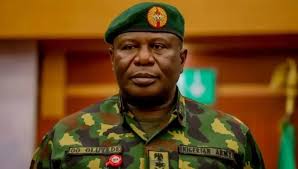

Military Neutralises Scores, Rescues 318 Victims as Armed Forces Intensify Nationwide Operations
ShareBy David Torough, Abuja The Armed Forces of Nigeria (AFN) says its troops recorded major breakthroughs across all theatres of...


Security Expert, Jackson Ojo, Calls for Resignation of Matawalle
Share…Says He Can’t Work as Team Member with Chris Musa By Mike Odiakose, Abuja Following the resignation of Minister of...


SON, MSN Partner to Ensure Mycotoxin-free Agriculture
ShareThe Mycotoxicology Society of Nigeria (MSN) in collaboration with the Standards Organization of Nigeria (SON) has moved for the detection...


ShareABUMET Brings Joy to JKS Orphanage Through Annual CSR Outreach By Mike Odiakose, Abuja In line with its long-standing commitment...


Senate Seeks Death Penalty for Terrorism Convicts, Informants, Financiers
ShareBy Eze Okechukwu, Abuja In a major legislative push to curb the worsening state of insecurity, the Senate unanimously approved...

FG Empowers 9,870 Farmers with Inputs, Modern Rice Technologies in Kano
ShareThe Federal Government, through the Kano State Special Agro-Processing Zone (SAPZ) Programme in partnership with IFAD, has empowered 9,870 rice...
FG Unveils National Agricultural Sample Survey, 2023 Report for Food Security
ShareThe Federal Government has launched the National Agricultural Sample Survey (NASS) 2023 report, towards developing data-driven policies to achieve food...
Senate Proposes 2-Year Pupillage for Lawyers Newly Called to Bar
ShareBy Eze Okechukwu, Abuja The Senate has passed a bill to amend the Legal Practitioner Act, 2004 into second reading,...