
Oil & Gas
Sri Lanka Issues Fuel, Energy Conservation Guidelines amid Mideast Tensions


Sri Lanka has issued guidelines to government institutions on the prudent use of fuel and energy amid possible disruptions to fuel imports caused by escalating tensions in the Middle East.
The Office of the Commissioner General of Essential Services issued the guidelines to ministry secretaries, provincial and district secretaries, and heads of government and statutory institutions and called for measures to reduce fuel and electricity consumption across the public sector.
Officials have been advised to avoid using individual vehicles to commute to work and instead use public transport or group transport whenever possible, according to the office.
Government institutions have also been instructed to prepare daily transport plans to reduce the number of vehicles used for field duties.
The guidelines set out steps to conserve electricity and energy, including maximising natural lighting, reducing the use of air conditioning by relying more on electric fans, and limiting elevator use by encouraging people to take the stairs.
Local government authorities have been directed to switch off street lights during unnecessary hours and temporarily turn off street lighting in non-high-security areas as a precautionary measure, the office said.
The guidelines further encourage heads of institutions to allow staff to work remotely where technological facilities are available instead of requiring physical attendance.
The office urged all public officials to act responsibly, set an example for the public, and extend maximum support to national energy conservation and security efforts.
International oil companies operating in Nigeria add other African countries are making significant progress in providing economic growth support to host communities which is now reducing restiveness in oil bearing regions.
According to Africa Energy Week, global energy companies’ now expanding local engagement reporting frameworks, depends on whether local engagement principles translate into local economic participation, infrastructure development and technology transfer.
Chevron, one of the continent’s longest-standing operators, that balance is particularly visible across its operations in Nigeria, Angola and the wider region.
Chevron’s sustainability reporting highlights community investment, environmental protection and workforce development.
In Nigeria, Chevron has made local supply chains a central pillar of its local engagement commitments. Over the past decade, Chevron has spent an estimated $1 billion annually on Nigerian suppliers and service providers, directing more than $10 billion to domestic contractors and businesses. The spending supports Nigeria’s local content framework while helping build indigenous capacity across engineering, logistics and oilfield services.
Across Africa, however, local engagement reporting by IOCs is often criticized for emphasizing corporate social responsibility projects rather than deeper economic integration. While community investment and environmental initiatives remain important, African policymakers increasingly prioritize local participation in project development, procurement and energy infrastructure.
Chevron’s project portfolio illustrates both the opportunities and the challenges of bridging this gap.
In Angola – where the company has operated for nearly 70 years through its subsidiary Cabinda Gulf Oil Company more than 90 per cent of the workforce is Angolan, reflecting long-term efforts to localize employment and technical expertise. Over the years, Chevron and its partners have invested more than $250 million in social and community development programs across the country, supporting healthcare, education and economic initiatives.
In Angola, the Sanha Lean Gas Connection Project linking offshore gas fields in Blocks 0 and 14 to the Angola LNG facility demonstrates how major energy infrastructure can contribute to domestic value creation. The project allows associated gas to be monetized rather than flared while strengthening Angola’s gas value chain and supporting long-term energy security.
Beyond Angola, Chevron continues to expand its footprint across the continent. The company maintains active exploration programs in Nigeria, holds stakes in producing assets in Equatorial Guinea and is evaluating offshore opportunities in markets such as Namibia and Algeria. As African countries look to expand oil and gas development while building stronger domestic industries, pressure is growing on international operators to ensure local engagement commitments translate into tangible economic impact.
This growing focus on implementation is one reason industry platforms are playing a larger role in shaping the conversation.
“Africa doesn’t need more sustainability reports sitting on shelves,” says NJ Ayuk, Executive Chairman of the African Energy Chamber. “What we need are partnerships that build industries, train African workers and keep more of the value from our resources on the continent. African Energy Week provides a platform for stakeholders not only to promote projects, but to ensure sustainability commitments translate into measurable outcomes.” Adding that Chevron is leading the way through its actions on the continent.
“We need partnerships that build industries, and that is exactly what Chevron is doing.”
As local engagement expectations continue to evolve, international operators like Chevron face increasing scrutiny over whether sustainability commitments translate into real economic participation. In Africa’s energy sector, the most meaningful local engagement metric may ultimately be local content and the extent to which global companies help build lasting industries alongside their projects.
“Chevron’s training and development initiatives across Africa have significantly empowered local communities. Many individuals trained by Chevron have gone on to assume roles in public service, bringing enhanced capabilities and best practices to their work,” Ayuk states.
Furthermore, a substantial number of alumni have entered the private sector, successfully leading world-class companies, a testament to the valuable skills acquired during their time with Chevron.
“By fostering entrepreneurship, Chevron is inspiring many Africans to establish and manage their own businesses,” he concludes.
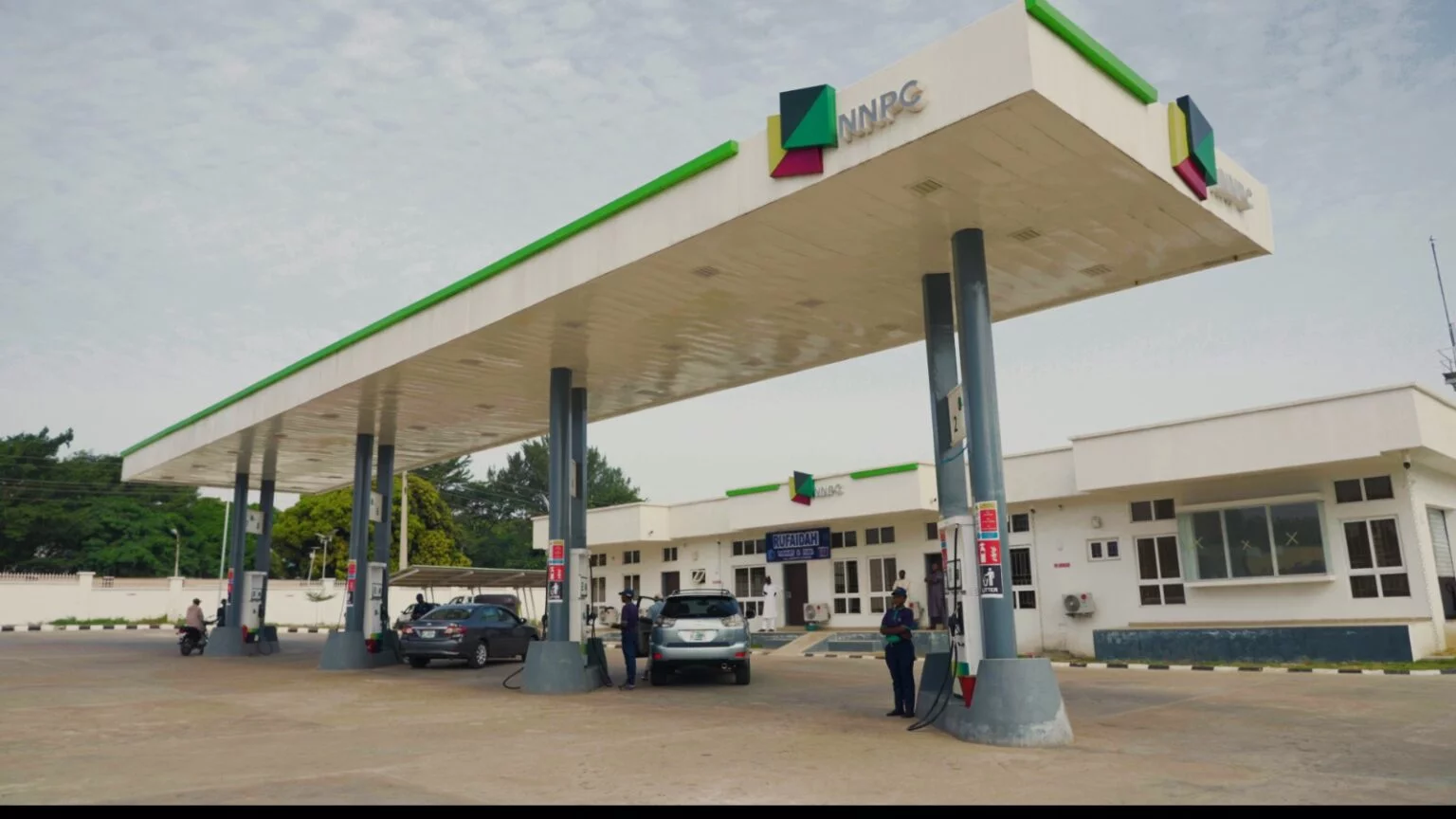
The Nigerian National Petroleum Company Limited has reduced the pump price of petrol at its retail outlets to N1,130 per litre in Lagos and N1,165 per litre in Abuja.
The new pricing reflects a N100 reduction from the previous N1,230 per litre in Lagos and a N95 decrease from N1,260 per litre in Abuja.
Checks showed that the revised price was being dispensed at several NNPC retail stations in Lagos, including outlets along Isheri Oshun Road, Apple Junction and Ago Palace Way.
Similarly, some stations operated by the national oil company in the Federal Capital Territory were selling petrol at N1,165 per litre, including outlets in Jabi, Lifecamp, Wuse Zone 5 and Wuse Zone 4.
The price adjustment follows a recent reduction in the ex-gantry price of petrol by the Dangote Refinery, which lowered its rate to N1,075 per litre amid easing global oil prices.
According to OilPrice.com, Brent crude prices recorded a sharp reversal on Tuesday, falling by nearly 27 per cent from the previous day’s high of $119 per barrel to about $87 per barrel.
Similarly, diesel is now priced at N1,430 per litre at the gantry, representing a N190 reduction from the earlier price of N1,620 per litre.

The Dangote Refinery on Tuesday reduced its petrol gantry price by N100, from N1,175 to N1,075 per litre.
The move followed a slump in global oil prices, with Brent crude dropping to $89 per barrel from over $100 on Monday.
Officials of the refinery confirmed the development to our correspondent, adding that diesel prices have also been reduced.
They stated that petrol supplied via coastal distribution channels will now sell for N1,050 per litre, reflecting a slight differential for marine logistics.
Similarly, diesel is now N1,430 per litre at the gantry, representing a N190 reduction from the earlier price of N1,620 per litre.
According to oilprice.com, Brent crude prices witnessed a dramatic reversal on Tuesday, plunging nearly 27 per cent from the previous day’s high of $119 per barrel to as low as $87 per barrel.
The Dangote Refinery reportedly blamed global crude volatility for the repeated price hikes, citing tensions arising from the US-Iran conflict.


Ododo Inaugurates Ultra-Modern Hospital in Kabba, Bunu
ShareFrom Joseph Amedu, Lokoja Kogi State Governor, Usman Ododo on Tuesday inaugurated privately built Southward Hospital and Diagnostic Centre in Edumo, Kabba/Bunu Local Government...

Sri Lanka Issues Fuel, Energy Conservation Guidelines amid Mideast Tensions
ShareSri Lanka has issued guidelines to government institutions on the prudent use of fuel and energy amid possible disruptions to fuel imports caused by escalating...


FG Seeks Partnership to Relocate Urban Custodial Centres
ShareThe Minister of Interior, Dr. Olubunmi Tunji-Ojo, has urged all levels of government to collaborate in relocating custodial centres overtaken by urbanisation....


2027: INEC Unveils Draft Guidelines for Political Parties
ShareThe Independent National Electoral Commission (INEC) on Tuesday unveiled the draft 2026 Regulations and Guidelines for Political Parties, ahead of the...
Prosperity Cup 2026: Correctional Centre Team Secures Ticket to Next Round
ShareFrom Mike Tayese, Yenagoa The Okaka Correctional Centre team, Liberty FC have qualified for the next round of Nigeria’s biggest...

Zenith Bank Appoints Okwudili Executive Director
ShareZenith Bank Plc has announced the appointment of Kennedy Okwudili as an Executive Director of the bank, effective May 1....


EFCC, ICPC Bare Fangs on Political Heavyweights Ahead 2027 Polls
ShareBy David Torough, Abuja Nigeria’s anti-corruption landscape intensified yesterday as coordinated actions by key enforcement agencies placed two prominent political...


FG Tenders Apology over Nationwide Power Outages, Pledges Stable Supply
ShareBy David Torough, Abuja The Minister of Power, Adebayo Adelabu, has said that the current power outages across Nigeria are...


Troops Uncover Terrorists’ Burial Ground, Nab High-profile Collaborators in North-East
ShareTroops of Operation Hadin Kai have uncovered a suspected terrorist burial ground and apprehended high-profile collaborators in sustained operations across...


Expert Cautions Students against Over-reliance on AI
ShareAn Information and Communication Technology (ICT) expert, Abiona Solomon, has cautioned students against over-reliance on Artificial Intelligence (AI), urging them...