
BUSINESS
Stock Market Rebounds by N12bn


Bullish sentiment returned to the Nigerian stock market on Wednesday following investors’ interest in First Bank, PZ, AIICO, Unity Bank and NGX Group, which ensured the first gain of the week. Specifically, the market capitalisation garnered N12 billion or 0.05 per cent to close at N25.
526 trillion from N25.514 trillion on Tuesday.Also, the All-Share Index advanced by 23.
6 points or 0.05 per cent to close at 47,364.46 points against 47,340.86 points achieved on Tuesday. Accordingly, the month-to-date and year-to-date returns increased to 0.05 per cent and 10.88 per cent, respectively. Analysts at Cowry Asset said, “We expect a gradual bullish run in the equities market going forward as the deadline for earnings period draws closer. “Despite the renewed bullish sentiment, most of the sub-sector indices moved in different directions.”Also, experts at GTI Securities said, ” Market transactions for today closed positive with a slight recovery from the previous negative sentiment. “Inflationary pressures also persist as investors remain indecisive and with most people patronising the fixed income market. “We expect to witness mixed sentiments as the global oil crisis continue to hit hard. “Overall, the market breadth was positive as 18 stocks advanced, against 17 stocks that declined.
Nigeria Police Force Microfinance Bank drove the gainers’ chart in percentage terms by 10 per cent to close at N2.31 per share. PZ followed with a gain 9.79 per cent to close at N7.85, while AIICO rose by 6.15 per cent to close at 69k per share. Unity Bank went up by 4.17 per cent to close at 50k, while NGX Group appreciated by 4.02 per cent to close at N23.30 per share.
On the other hand, Royal Exchange Assurances led the losers’ chart in percentage terms by 9.73 per cent to close at N1.02 per share. Livestock followed with 9.71 per cent to close at N1.58 per share. IMG shed 9.47 per cent to close at N8.60, while Chams lost 8.7 per cent to close at 21k per share.
Red Star Express lost 4.69 per cent to close at N3.05.Also, the total volume traded dropped by 20.42 per cent to 145.83 million units valued at N2.54 billion and exchanged in 4,113 deals. Transactions in the shares of United Bank for Africa(UBA) topped the activity chart with 14.76 million shares valued N125.88 million. Access Bank followed with 10.28 million shares worth N107.056 million, while Zenith Bank traded 10.03 million shares valued N266.09 million. Guaranty Trust Bank Holding Company (GTco) traded 9.12 million shares valued N239.22 million, while EcoBank Transnational Incorporated (ETI) transacted 9.08 million shares worth N108.73 million. (NAN)



From Ayinde Akintade, Osogbo
The National President of Association of Mobile Phone and Allied Products Traders of Nigeria (AMPAT), Hon. Musa Mamsa, has attributed the mobile phone and allied products sector as one of the strongest pillars of modern commerce, driving communication, digital trade, financial inclusion, and security.
Mamsa, who described the group as a crucial link to the sustainability of the digital economy, disclosed this in Osogbo during the inauguration of the Osun State Chapter executives of the association.
According to him, the group is not just contributing to the gross domestic product of the country but also a major employer of youths across the country.
He described the traders, technicians, distributors, and innovators in the sector as the major contributors to society.
“The mobile phone and allied products sector has become one of the strongest pillars of commerce in modern society. From communication to digital trade, from financial inclusion to security, mobile technology drives the engine of today’s world,” he said.
Mamsa commended the Osun Chapter for its resilience and unity despite past challenges, including the global pandemic.
He urged the newly inaugurated executives to uphold the association’s constitution, protect members’ welfare, work in harmony with government agencies, security institutions, and community leaders, and promote peace among traders.
Mamsa also appreciated the Osun State Government for supporting business communities and expressed readiness to partner with authorities to promote peace, economic development, and technological empowerment.
In his address, the newly inaugurated chairman, Oseni Taofeek, promised to place members’ welfare at the centre of his administration while strengthening unity and promoting growth within the association.
While thanking members of AMPAT for the opportunity to serve, Taofeek said, “We will tackle challenges, seize opportunities, and work tirelessly to promote trade and commerce.”
 | ReplyReply allForwardAdd reaction |

By Tony Obiechina, Abuja
Nigeria’s total merchandise trade increased to N38.9 trillion in the third quarter of 2025, reflecting positive momentum in the nation’s import-export performance even in the face of global economic uncertainties.
The latest ‘Foreign Trade in Goods Statistics Q3 2025’ report by the National Bureau of Statistics (NBS) released on Thursday indicated that the Q3 merchandize trade value grew by 8.
71% year-on-year from the N35. 8 trillion recorded in the corresponding quarter of 2024 but 2.36% rise compared to the N38.04 trillion value recorded in Q2, 2025.In the quarter under review, the trade data showed that exports accounted for 58.
59% of total trade with a value of N22.8 trillion, showing an increase of 11.08% over the N20.54 trillion value recorded in the corresponding quarter of 2024, and by 0.28% compared to the N22.75 trillion value recorded in Q2, this yearAccording to the NBS, crude oil remained Nigeria’s dominant export commodity in Q3 2025, with a value of N12.81 trillion, representing 56.14% of total exports for Q3 2025.
The import-export trade reflected that non-crude oil exports totalled N10.01 trillion, accounting for 43.86% of total exports, and in this category, non-oil products contributed N2.9 trillion, or 13.14% of total exports.
A further analysis of the merchandize trade data in the quarter under review revealed that agricultural produce exports amounted to N786.62 billion, reflecting an 11.69% decline from N890.72 billion in Q3 2024 and a 37.39% drop compared to N1.26 trillion in Q2 2025, while Raw material exports were valued at N1.04 trillion, representing a 136.38% increase from N439.82 billion in Q3 2024 and a 26.83% rise compared to N819.72 billion recorded in the preceding quarter.
Also, Solid mineral exports amounted to N100.81 billion, showing a 29.75% increase from N77.70 billion in Q3 2024 and an additional 30.41% growth from N77.31 billion reported in the preceding quarter.
The data further showed that the value of manufactured goods exports stood at N978.53 billion, reflecting a 6.03% decline from N1.04 trillion in Q3 2024. However, compared to Q2 2025, the Q3 2025 value represented a 21.74% increase over the N803.81 billion recorded in the previous quarter.
The statistics agency reported that Exports of other oil products in Q3 2025 totalled N7.01 trillion, showing 51.72% rise from N4.62 trillion in Q3 2024, but dipping by 9.42% from the N7.74 trillion recorded in Q2 2025.
Overall, the exports data for Q3 2025 reflected a mixed performance across sectors, with strong gains in raw materials and solid minerals contrasting declines in agricultural exports and some oil-related categories.
On the import side, the data showed that Imports accounted for 41.41% of Nigeria’s total trade in the quarter under review, peaking at N16.12 trillion and representing 5.51% increase from the N15.28 trillion recorded in Q3 2024, and 5.47% rise compared to N15.29 trillion in the preceding quarter.
Despite the growth in imports, Nigeria maintained a positive merchandise trade balance in Q3 2025.
Specifically, the NBS reported that the nation’s trade surplus stood at N6.69 trillion, but represented 10.36% decline from the N7.46 trillion recorded in Q2 2025, due to the faster pace of import growth relative to exports.
On the merchandise trade based on the countries traded with, the NBS data showed that on the import side, China remained Nigeria’s leading trading partner in Q3 2025, followed by the United States, India, the United Arab Emirates, and Belgium.
According to the data, the most imported commodities during the quarter included petroleum oils and oils obtained from bituminous minerals (crude), gas oil, premium motor spirit (petrol), durum wheat, and cane sugar intended for sugar refining.
On the export side, Nigeria’s top five trading partners were India, Spain, France, the Netherlands, and Italy. The major commodities exported to the countries during the quarter under review comprised crude oil, natural gas, other petroleum gases in a gaseous state, kerosene-type jet fuel, and urea, whether or not in aqueous solution.
Analysts believe that the trade surplus recorded by Nigeria during the quarter was reflective of the improving performance of the economy as the government continued to consolidate on the modest achievements of the nation’s monetary and fiscal policy reforms.
For instance, they maintained that the higher trade volumes pointed to improved production levels, stronger demand for Nigerian commodities, and greater activity at the ports while the increase in total exports demonstrated the resilience in the country’s main revenue-generating sectors.
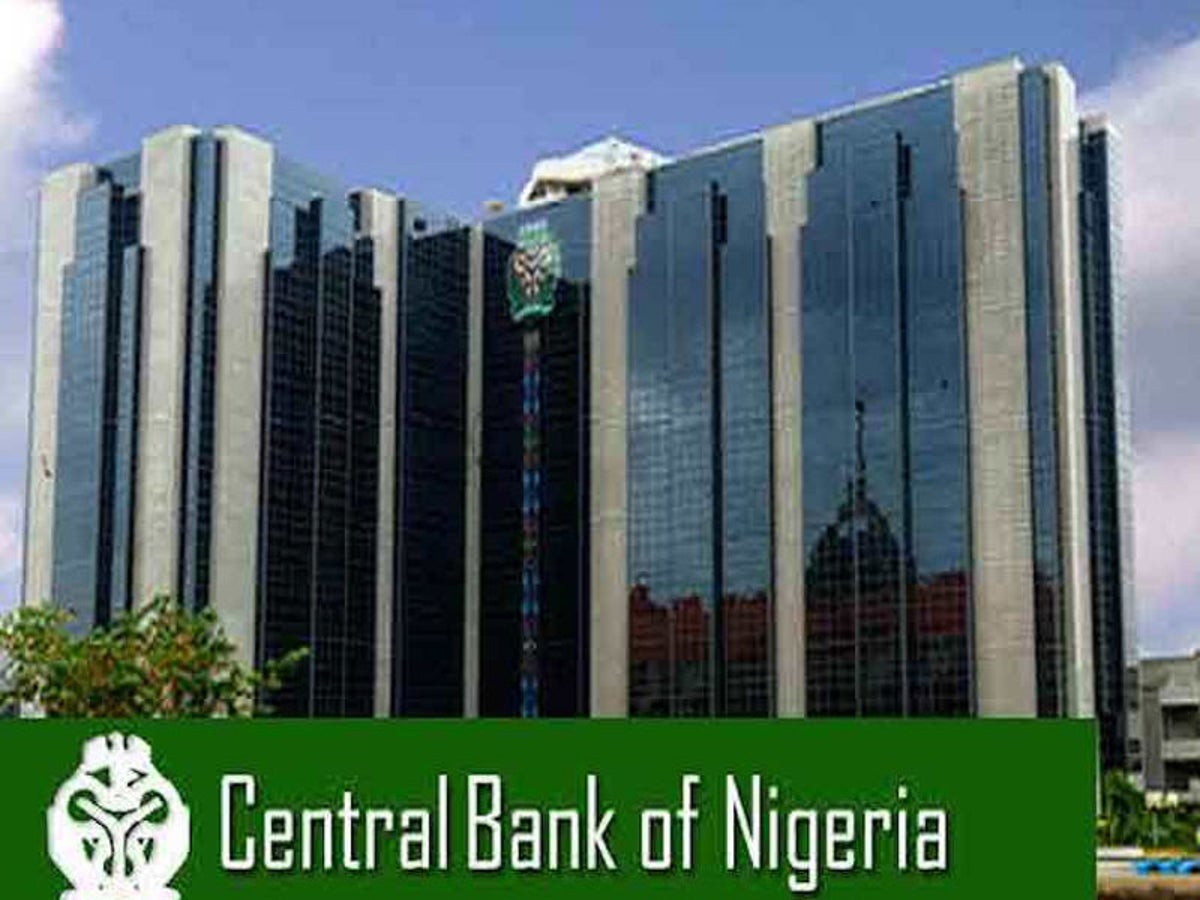
The Central Bank of Nigeria (CBN) has launched a major overhaul of the Agricultural Credit Guarantee Scheme Fund (ACGSF), unveiling a new strategic direction aimed at expanding credit access to smallholder farmers and accelerating national food security efforts.
Speaking in Abuja at the inauguration of the reconstituted ACGSF Board, CBN Governor, Olayemi Cardoso, described the revamp as “a new dawn” for agricultural financing.
He said the initiative reflects the Federal Government’s renewed commitment to reposition agriculture as a driver of inclusive growth, rural development, and economic diversification.Cardoso noted that the ACGSF-established in 1977-remains one of the country’s most impactful development finance tools.
Yet, despite employing nearly two-thirds of Nigeria’s labour force and contributing over 20 per cent to GDP, the agric sector continues to receive less than five per cent of total bank credit. This structural mismatch, he said, has stunted the potential of millions of farmers for decades.The CBN governor stressed that the agricultural landscape has evolved far beyond subsistence farming, now governed by integrated value chains, technology, climate risks and a growing agritech ecosystem. In line with these realities, he said the Scheme must transform into a dynamic, data-driven institution capable of supporting modern agriculture.
He highlighted the 2019 amendment that expanded the Scheme’s share capital from N3 billion to N50 billion and broadened its operational scope. One of the notable enhancements, he added, is the inclusion of farmers’ representatives on the new Board-an “inclusive and strategic” move to ensure policies are grounded in real sector needs.
Cardoso emphasised that the central objective of the revamp is to unlock affordable credit for smallholders who account for 90 per cent of the nation’s agricultural output but remain underserved due to limited collateral, poor credit history and weak access to financial services.
He urged the Board, chaired by Dr. Olusegun Oshin, to design products tailored to women, youth and other underserved groups while leveraging fintechs, microfinance banks and cooperatives to deliver innovative lending models. He also called for the deployment of technology-from satellite imagery to digital dashboards-to track loan utilisation and ensure measurable impact.
Dr. Oshin welcomed the reforms and advocated further expansion of the Fund to meet the scale of investment required for meaningful sectoral transformation.
| ReplyReply allForwardAdd reaction |



Tinubu Congratulates UNIJOS Graduands, Pledges Support for Education
ShareFrom Jude Dangwam, Jos President Bola Tinubu has congratulated graduands of the University of Jos (UNIJOS) at the institution’s 35th...


2027 Election: Igbo’s Community Promises Votes for Eno
ShareFrom Christopher Tom, Uyo Non-indigence in Akwa Ibom State especially the Igbo’s community has promised to give the highest number...


Zamfara Reaffirms Commitment to Address Gender-based Violence
ShareBy Ifeanyichukwu Nwannah, Gusau The Zamfara State Government has reaffirmed its commitment to addressing gender-based violence (GBV) and other forms...


Nentawe, Alia, Suswam, Others Bag Chieftaincy Titles from Tiv Kingdom
ShareFrom Attah Ede, Makurdi The Tiv Kingdom has conferred honorific chieftaincy titles on prominent sons, daughters and friends of the...


World Human Rights Day: NGO Takes Medical Outreach to Okaka Correctional Center
ShareFrom Mike Tayese, Yenagoa The 8th edition of Prof. Seiyefa Brisibe Outreach has celebrated the 2025 World Human Rights Day...

Coup in Guinea-Bissau and the Dilemma of ECOWAS
ShareBy Hakeem Jamiu In his seminal work, Political Order in Changing Societies (1968), Professor Samuel P Huntington argues that political...


Chelsea End Winless Run with Comfortable Brighton Victory
ShareChelsea ended their four-game winless streak in the Women’s Super League with a comfortable 3-0 away victory against Brighton. A...

Liverpool ‘United as One’ after Salah Return – Van Dijk
ShareCaptain Virgil van Dijk said Liverpool “are absolutely united and go forward as one” after Mohamed Salah returned to the...
Mikaelian Beats Jack to Regain WBC Title
ShareNoel Mikaelian beat Badou Jack by a unanimous points decision in Los Angeles to regain the WBC cruiserweight title. Mikaelian...
Mobile Phone Association Pillar of Modern Commerce, Driving communication, Says Mamas
ShareFrom Ayinde Akintade, Osogbo The National President of Association of Mobile Phone and Allied Products Traders of Nigeria (AMPAT), Hon....