
Featured
Taming Malnutrition: The Silent Child Killer

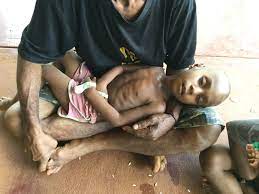
Christian Njoku examines the relentless scourge of child malnutrition in the country against the efforts of the society, federal and state governments to contain it.
Every country in the world is affected by one or more forms of malnutrition, making it one of the greatest global health challenge.
In Cross River, the scourge of malnutrition is no news, especially in Edim Otop, in Calabar South and many other areas in the state, where children are seen with tiny legs, protruded stomachs and pale looking hairs and eyes.
These children may not be considered severely malnourished, but merely looking at them, it is clear that something needs to be done to help them regain the appropriate weight, height and nutrients they require.
On a visit to one of the Primary Healthcare Centres (PHC) in Calabar, many of the women and children that came to access healthcare were simply malnourished. Malnutrition is an unhealthy condition caused by not eating enough food or healthy food and which results to stunting, underweight, overweight/obesity and the exposure to many diseases such as kwashiorkor, marasmus and so on.
An attendant who preferred to be anonymous, said they attend to different kinds of people every day, mostly women and children and most of their challenges are connected to poor or inadequate feeding.
“We attend to women and children every day and when you look at them, you just know that they are not feeding well and are deficient of some important nutrients and vitamins.” “It is more painful when I see malnourished pregnant women because they are easily exposed to other conditions not good for them.
“The least we do is educate them on the right foods to eat and distribute available supplements, such as folic acid, ferrous sulphate and vitamin B complex,” she said. In 2021, the Government of Cross River introduced the Active Search Strategy which was the use of a large network of community tracers and health workers in rescuing and treating malnourished children in the state.
The search helped in the discovery of over 234 severely malnourished children living in remote parts of the state as well as the capital. The then Commissioner for Health, Dr Betta Edu said Gov. Ben Ayade had directed that victims of malnutrition in the state be given urgent medical attention free and their families supported to sustain care.
She added that severe malnutrition among children in the state was a serious issue aggravated by ignorance, cultural beliefs, poor government policies and the poor economy of the state and nation.
While this initiative could be considered laudable, the big questions are: how sustainable was it? What is the state government doing about the root causes of malnutrition rather than being reactive?
Mrs Vickie Emah-Emah, Founder, Neighborhood Care Well Foundation, one of the NGOs fighting malnutrition among children said many families in the state are not able to feed well.
Emah-Emah said that there was high level of food insecurity due to the poor economy of the state. According to her, there is also the problem of many hard to reach areas in the state, especially the creeks where the people survived mostly on what they have locally but are deficient in other nutrients.
“Looking at the access and availability of food, good nutrition is difficult; I have seen sickly and wasted children die during our field works as a result of malnutrition and exposure to disease and mosquito infested environments. “The result is that they get infected by malaria parasite and other health conditions and because they already have weak immune systems, they die even before healthcare services get to them.
“What my foundation does is to ensure that no matter the project we embark upon to support children, there is always a nutrition component. “We have also assisted over 3,000 women who are among the most vulnerable groups, with income generating activities and grants for start-ups to enable them help their households.
“However, one of the major challenges is poor data. For instance, if Cross River had done a nutrition needs assessment, we will have credible data to work with, but without data, you can’t do much,” she asserted.
According to the National Nutrition and Health Survey (NNHS) 2018, each year, about one million Nigerian children die before their fifth birthday and malnutrition contributes to nearly half of these deaths.
The survey also shows that although acute malnutrition levels are below the critical levels in Nigeria with Global Acute Malnutrition (GAM) rate of 7.2 per cent, the case loads are high given the population of the country and challenges of insecurity in some parts, including food deficit.
Although, these nutritional surveys provide relevant information about states like Cross River, it is mainly periodic and does not give information on the levels and causes of under five year old malnutrition, especially in the rural areas.
It should, however, be noted that the Federal Government in 2016 introduced a strategy called the Agriculture Sector Food and Nutrition Strategy 2016 to 2025, with the aim of reducing malnutrition in the nation. The strategy has eight thematic concerns which include improving food security at the national, community and household levels: To significantly reduce under-nutrition, including micro nutrients deficiency disorders among infants, children, adolescents and women of reproductive age.
It also aims to increase the knowledge of nutrition among the populace and integrate nutrition education into agricultural formal and informal trainings, among others. Mr Julius Adanlawo, an officer in the Nutrition Unit of the Federal Ministry of Agriculture and Rural Development (FMARD), said one of the offshoots of the strategy was the ongoing World Bank assisted Accelerated Nutrition Result in Nigeria, (ANRIN) currently operating in Gombe.
He said with the programme, the Federal Government was looking at using a food based approach to fight malnutrition by providing inputs like bundles of orange, fleshed sweet potato rich in vitamin, among others.
“However, funding has been quite a challenge because the budgets are meagre and the release of the funds is another issue, so we cannot be in all the states at the same time,” he said.
Although this 10-year strategy is nearing its expiry period, having gone an 8-year distance so far, Nigerians are really yet to feel its impact as it is practically unknown to many in the country.
Dr Chijioke Osuji, an agro-industry and value chain expert maintained that from the agriculture production point of view, “bio- fortification is possible and being done in some agricultural commodities.”
Osuji, however, said that it was in processing that a lot of fortifications and value addition could be done, explaining that the ” yellow cassava rich in vitamin A can be blended with the white one that is rich in starch.”
According to Osuji, there could also be the addition of different premixes to enhance the micro nutrients of commodities. “In Nigeria, there is a mandatory inclusion of vitamin A in maize and wheat flour, sugar and in vegetable oil. There is also the mandatory inclusion of iodine to salt for fighting goitre.
“We have many companies in Nigeria carrying out voluntary fortification to enhance consumer’s wellbeing and wholesomeness of the food. This is something our government needs to continue to pursue.
“We also need to educate our women who have children especially those who are to be weaned, on complementary foods with protein rich components such as soya beans. “For many years in Nigeria, soya beans flour has been popular especially among women because it is known to have some good level of health benefits, apart from its high protein content.
“Some people add crayfish and other types of fortifications to their food, but we need to pay more attention to feeding of children,” he noted. Osuji said serving children “eba” and soup in the name of school feeding programme is not an optimised advantage because the child eats “eba” and soup at home.
He advised that in schools, the government should go the extra mile of ensuring that enriched foods that are fortified and made easy to consume and not cumbersome like “eba” and soup or “jollof” rice should be served.
He maintained that the food could be turned to convenient snacks that is very rich, so that it will deliver good nutrient and help reduce malnutrition among children. “The truth is this, when you have many children malnourished and stunted, it means they will never reach optimum performance in their chosen career because their brain development had been hindered due to poor nutrition.
“It is not a coincident that the most well fed nations are the ones that produce the most Nobel Prize Winners, Olympic gold medalists and inventions, this is because they have higher brain capacity collectively than others. “We have been discussing nutrition for a long time now, it is time for the Nigerian Nutrition Policy to be reviewed more regularly and its essential components looked into.
“Components like agricultural production, post harvest losses and value addition to allow the researches we have been carrying out for the development of food to come to fruition” he contended.
There are research works that have made efforts to identify and proffer solutions to this silent child killer, government at all levels should pool resources in order to halt the advance of this condition. We need good nutrition as the first line of defence against the impact of diseases. (NANFeatures)




TOP10 MAGAZINE NAMES DANU AS 2025 MAN OF THE YEAR
Nasiru Danu, OFR, Chairman of Casiva Limited and founder of NHD Foundation, has been named as
The Top10 Magazine’s Man of the Year 2025. He emerged from among many other distinguished personalities in a multi-stage rigorous selection and screening process.
In a letter conveying Alhaji Danu’s selection as the Man of the Year 2025, the Board of Editors of the Magazine said it was in recognition of his milestone accomplishments in the business world as well as his philanthropic gestures of touching lives in different ways. These, the givers of the award said, clearly stand him out not only as a father of compassion, but Nigeria’s philanthropic leader of the year 2025.
“We consider your successful journey in the business world and your record of service to humanity as a clear demonstration of your ranking as a great leader of excellence worthy of commendation, hence the decision of our management to accord you this special recognition as the Top10 Magazine’s Man of the Year 2025,” the letter said.
In his latest demonstration of philanthropy, Danu, the Sardaunan Dutse, in May 2025, extended his good deeds to the Jama’atu Izalatil Bid’ah Wa’iqamatis Sunnah (JIBWIS) Islamic Centre as he commissioned a N150 million project at the Centre in Abuja. The project is a furnished 11-room building that will serve as the Imam’s residence at the Islamic Centre in the Guzape area of Abuja. It was named in memory of his late father, Haladu Danu.
The Top10 Magazine is a monthly publication established in 2016 as a platform to celebrate excellence and people of excellence from all human endeavours.
The Top10 Man of the Year Award was also instituted the same year as an annual award by the magazine to recognize and honour one outstanding personality in a given year that has recorded landmark accomplishments in the Nigerian society.
This year’s recipient, Alhaji Danu, a man of untainted character and impeccable reputation, is renowned for his unwavering commitment to success. The Chairman and CEO of Casiva Limited consistently strikes gold in every venture he undertakes and has since solidified his status as a true titan of the oil and gas industry who navigates its complexities with the expertise derived from years of experience. Apart from his involvement in philanthropy and Casiva Limited, Alh. Danu is also involved in other organizations. This includes NHD Interbiz Projects Limited, a construction and civil engineering company, Chairman, Yenagoa Polo Club, Chairman, Nigerian Army Polo Resort, reflecting his diverse interests, member Board of Trustee Nigerian Army Polo, Chairman, NHD Farms Ltd, Chairman, Lubrik Construction Company.
Mr. Tony Iji, Publisher/Editor-In-Chief of The Top10 Magazine, said the award will be presented to Alhaji Danu at The Top10 Magazine’s Annual Excellence Awards night slated for December 7, 2025 which will be graced by crème de la crème of the society.
To mark this high-profile event, the magazine is putting together a special award edition to celebrate him and other awardees. The edition will chronicle in detail all his milestone accomplishments as an industry leader, philanthropist as well as his career and personal antecedents.
By Prosper Okoye, Abuja
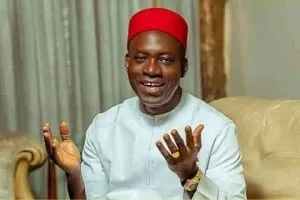
The Anambra State Governor, Prof. Chukwuma Soludo, has said that the governors in the South Eastern states are collaborating to put an end to the proscribed Indigenous People of Biafra’s Sit-at-home order.
“Once we put in place the vigilante in the community, we are going to focus on opening up Anambra and ending the sit-at-home once and for all.
Because what had happened is that there are seven people pursuing a cow, but there are eight people chasing after those pursuing the cow, but now I think the reverse is becoming the case,” Soludo added in an Igbo proverb during a recent town hall meeting in Abuja.The Sit-at-home order is enforced throughout the southeastern states on Mondays, the 30th of May every year, and every other day that the leader of the IPOB, Nnamdi Kanu, is taken to court.
“Even though there are no killings in my area in Anambra, the news of the killings in other parts of the east makes people comply with the Monday sit-at-home order. People don’t open their shops in the big markets, and on the express, people don’t move freely. But in the inside areas, shops open, and people move about watching their backs,” a resident in Anambra, Ada, told DAILY ASSET.
Although the leader of the outlawed group, Emma Powerful, has denied IPOB’s role in enforcing the Monday’s sit-at-home order, and other violence in a recent media statement, the unknown gunmen still enforcing the order are tied to the group’s fighting arm, the Eastern Security Network.
However, DAILY ASSET learned that the “Unknown gunmen” are allegedly led by Asari Dokubo.
“Under former President Muhammadu Buhari, Nigeria’s Southeast region, once the most peaceful, suddenly exploded in a wave of inexplicable violence. Prisons, police stations, court houses, electoral commission offices, and random public establishments were attacked and razed by armed gangs. Individuals were kidnapped, hacked to death, or gunned down in broad daylight by hooded men who escaped without a trace. Dr. Chike Akunyili, husband of Late Prof Dora Akunyili, one-time Minister of Information and DG of NAFDAC, was gruesomely murdered by these men in an attack with no obvious aim other than to instill public fear. Many went missing and were never found, and gloom descended on the peoples of five states best known for their industry and enterprise.
“For years, not a single one of those crimes was solved, and not a single culprit was successfully apprehended and prosecuted by law enforcement operatives. Officially, fingers were promptly pointed at IPOB, the Biafra separatist organization, for every incident – sometimes even before investigations formally opened. IPOB vehemently denied these accusations, but government propaganda was too strong. Many soon believed the government and joined in demonizing IPOB for mindlessly turning the region into a war front. Gradually, though, everyone began to realize that there was something fishy in the official position.
“Federal and state authorities had all the means to nab the gangsters but preferred to issue increasingly sterile press statements instead. It soon became clear that the armed forces, police, and other official security agencies were either in cahoots with the criminals or consciously turning a blind eye to their activities. In villages across the Southeast and North Central regions, locals began to notice that whenever the Army and Police showed up for patrols, Unknown Gunmen or armed “herdsmen” followed shortly afterwards. It was as if the patrols were surveillance missions for the bad guys. So, villagers took the hint and scampered for safety whenever those who were supposed to protect them reported for duty. It was even law enforcement officials who coined the moniker, “Unknown Gunmen” (UGM) to describe criminal elements they were paid to hunt down.
“People with experience in security matters soon concluded that Nigeria was dealing with “false flag operations” – crimes deliberately committed (in this instance by secret agents of the state) to incriminate an innocent party to achieve some dark political objectives. The problem was: There was no concrete evidence or proof to show the world. Those who were supposed to gather evidence were busy covering the tracks of the criminals.
“Well, that mystery lasted until Asari Dokubo, the voluptuous and loquacious Niger Delta warlord, visited the Presidential Villa in Abuja as a guest of the new Nigerian leader, Bola Tinubu, only two weeks after the latter’s inauguration. At the end of his visit, Dokubo addressed a press conference from one of the chambers of the villa, a rare privilege accorded only to close allies of an administration.
“Unable to control his impulses whenever in front of cameras and microphones, Asari said several things that have since become subjects of controversy. One of the few which almost evaded public scrutiny holds the key to the mystery of the Unknown Gunmen. He said he was “in charge of security in six states of the federation,” and his boys were responsible for some of the successes in the security situation of the country for which the Armed forces often get credit.
“To add color to this sketchy claim, he recounted an actual operational experience in these words: “… my men and I discovered a camp in Imo with hundreds of vehicles. Where are the owners? If you want me to show you pictures, I will show you. We discovered their camp, kicked their asses, and sent them to where they belong.”
“For the avoidance of doubt, Dokubo boasted: “I am a participant in this war. I fight on the side of the government of the Nigerian state; in Plateau, in Niger, in Anambra, in Imo, in Abia, and in Rivers state and in Abuja. Today you’re traveling to Kaduna on this road, it’s not the army that makes it possible for you to travel to Abuja, or travel to Kaduna, vice versa. It is my men, employed by the government of the Nigerian state, stationed in Niger.”
“In those words, Asari Dokubo blew his own cover. He owned up to working in an undercover capacity or as a non-state actor in a sector which belongs exclusively to the Federal Government. He owned up to extra-judicial killings. He mentioned specific theaters of operation – Imo State and the Abuja-Kaduna highway. He named those who hired and paid him – “the government of the Nigerian state.” It was like a painter framing his masterpiece.
“Three of those states named by Asari Dokubo (Anambra, Imo & Abia) are in the Southeast. Two others and the Federal Capital Territory (Niger, Plateau, and Abuja) are in the Middle Belt. Another state (Rivers) is in the South-South. All named territories have one thing in common in the last few years – random, unsolved killings and attacks on members of the opposition, rural farming communities, and government facilities. Anambra, Imo, and Abia were the epicenter of unknown gunmen activities in the period leading up to the last elections. Niger and Plateau were the main theaters of operation for the so-called “Fulani herdsmen.” Kuje Prison within the FCT was attacked, and inmates set free.
“So, what exactly was Asari Dokubo’s “security brief” in a region (the Southeast) where Army and Police checkpoints adorn nearly every hundred meters of the highway? What was he doing in a state (Imo) where a special military task force was assigned to “crush” separatist agitations? What was he paid to do for a country that boasts about a dozen security agencies with hefty yearly federal appropriations? More still, what “contract” is Asari desperately lobbying to retain with the new administration of President Bola Tinubu, for which reason he broke all protocols of civility to support the Tinubu candidacy and gain his attention before and during the last elections? Why has he been so vociferous with his anti-Igbo rhetoric in courting the Tinubu camp – knowing that Igbophobia is one of the favorite weapons of the APC in its struggle to retain power after the failed Buhari years?
“If you read between the lines and fill in the blank spaces, all the fingers point in one direction – Asari Dokubo is the man behind the mask of Unknown Gunmen. He was recruited and paid by the Buhari Administration, working closely with the Imo State Governor (Hope Uzodimma), to help deal with the threat of Biafra in Southeast Nigeria by unconventional means. Asari Dokubo, in turn, recruited, coordinated, and paid the men who carried out all those killings and criminal activities to blackmail IPOB and ESN. Plus, at least some of the mysterious attacks on villagers and facilities in the Middle Belt region.
“That’s what he meant when he boldly said, “I am a participant in this war.”
The trouble with people who talk too much is that they ultimately talk themselves into trouble. Asari Dokubo has now talked himself into deep trouble – beyond being broke. Not only has he antagonized the armed forces, which he was recruited to “help,” he has also given away the identity of the evil masquerade terrorizing the neighborhood.
“In trying so hard to corner the next “security contract” after squandering what he was earlier paid for hatchet jobs under President Buhari, Melford Asari Dokubo Goodhead has given away his own secret position. He is like a drunken and unprofessional sniper who uses his weapon indiscriminately. His enemies can see clearly where the deadly shots are coming from. His position in the bushes is no longer a mystery. The sniper himself is now a sitting duck. It’s only a matter of time before he too is sniped. That’s the way the cookie crumbles,” the source noted.
Meanwhile, the Enugu State governor, Peter Mbah, has been making efforts to stop the sit-at-home order enforced in the state. This includes the threat to sanction business owners that comply with the order by closing down their businesses and calls to arrest Emma powerful.
Military Victories:
Furthermore, the military has recently announced that some IPOB fighters were killed in Delta state, while others were arrested, and arms were recovered. This announcement sparked numerous comments on social media, with most questioning the truthfulness of the report, including a tweet by Emma Powerful dismissing the report as mere propaganda against the IPOB.

The growing global demand for Information Communication and Technology (ICT) services has emboldened tech-savvy entrepreneurs to grab the opportunities inherent in the multi billion dollar sector to propel the world to new heights in various areas of human endeavours.
The global demand for ICT was heightened during the COVID-19 pandemic as people relied on technology to stay connected, work remotely and access essential goods and services.
When Nigeria set up the Ministry of Communication and Digital Economy in 2019, the aim is to fully exploit the opportunities in the sector, create new businesses and jobs, enhance security and transparency and diversify the country’s economy.
The country also launched the Digital Nigeria Programme on March 19, 2020, a key initiative to empower innovators and entrepreneurs with skills required to thrive in the emerging digital economy.
This was followed by digital training for Nigerians at a time the world stayed home to combat the spread of COVID-19.
The Federal Ministry of Communications and Digital Economy partnered a number of institutions to enable Nigerians acquire cutting edge digital skills within the comfort of their homes.
Within the period, the Ministry provided Nigerians with over 280+ hours of free learning and 85+ courses on key emerging technologies like Blockchain, Artificial Intelligence, Big Data, Cloud Computing.
This is in line with the Ministry’s commitment to developing the capacity of Nigerians to use technology to solve problems. Thus, the Digital Nigeria programme helped to empower Nigerians to develop skills and build innovative solutions to tackle challenges affecting communities.
This aim is being largely achieved, because as at the second quarter of 2022, ICT had contributed 18.44 per cent to Nigeria’s GDP, making it the fastest revenue generator in the Nigerian economy
Digital and high tech savvy Nigerians had grabbed the opportunity and delved into the multi billion dollar industry, setting up businesses to drive the sector. Today, out of the seven Unicorns from Africa valued at 11.45 billion dollars , four of the unicorns, valued over 1 billion dollars each, originated from Nigeria.
According to the Minister of Communication and Digital Economy, Prof. Isa Pantami, the revolution in Nigeria’s digital economy, which began under President Muhammadu Buhari, has been remarkable.
‘‘All these unicorns in Nigeria attained this position during this administration. The first was in 2019, while the second, third and fourth attained this position in 2021.
‘‘57.14 per cent of the entire African unicorns originated from Nigeria while the market value of seven of them combined as at February 2023 is $11.45 billion, with the four from Nigeria contributing $7.5 billion,’’ Pantami said.
For clarity, Unicorn companies are those that reach a valuation of $1 billion without being listed on the stock market. It is the dream of any tech startup.
To push the boundaries of inclusiveness in the tech ecosystem, the Nigeria Startup Act was signed into law by President Buhari in October 2022. It is a bold step to institutionalise funding support for tech-savvy Nigerians.
“Today in the Act, there is a provision of supporting them financially. The government will set aside a minimum of N10 billion yearly in addition to other sources of funding that have been captured in the law,” Pantami said.
The law has also made clear provisions for tax breaks for Startups, ease of doing business, intellectual property protection and participation in public procurement, among others.
Nigeria has also raised broadband penetration now to 100 per cent following the deployment of SpaceX’s Starlink satellite Internet service. This will invariably spur more investment in ICT and its generative residue in the tech ecosystem.
However, in spite of these interventions towards making Nigeria a global talent factory in the digital space, the country’s startup ecosystem still faces significant challenges, such as access to funding, appropriate support infrastructure and skilled manpower.
‘‘These remain major barriers to the growth of the ecosystem, particularly for early-stage startups,” President Buhari acknowledged when he inaugurated a council to drive the implementation of the Startup Act.
He however said ‘‘the provisions of the Nigeria Startup Act 2022 represent an important step towards addressing these challenges and promoting the growth of a more vibrant and inclusive startup ecosystem in Nigeria.
‘‘Furthermore, implementation of the Act will lead to consolidation and further development of the gains recorded by Nigeria’s digital economy in the last four years, in the areas of contribution to GDP and increased revenue generation, among others.’’
To ensure the implementation of the Act, Buhari on April 5, 2023, inaugurated a 14-member National Council for Digital Innovation and Entrepreneurship to be chaired by the President, while the Vice President will serve as the council’s vice chairman.
The Minister of Communications and Digital Economy, will however preside over the Council in the absence of the President and Vice President.
Other members of the council are Ministers of Finance, Budget and National Planning; Industry, Trade and Investment; Science, Technology and Innovation, and the Governor, Central Bank of Nigeria.
Also on the council are four representatives of the Startup Consultative Forum, one representative each of Nigeria Computer Society and the Computer Professionals, as well as Director-General, NITDA, as Secretary.
The inauguration of the council is significant to Nigeria’s determination to remain in the forefront of the remarkable growth of startups in Africa, having already raised up to over 4 billion dollars in Startups between 2019 and 2022.
Buhari said at the inauguration that Nigeria was enticed to join the race for a slice in the sector by the remarkable growth of startups worldwide, where over 400 billion dollars of venture funding was accessed in 2022.
‘‘This growth was fuelled by a surge in demand for digital services as people worldwide turned to technology to stay connected, work remotely, and access essential goods and services largely due to the COVID-19 pandemic.
‘‘In Africa, the startup ecosystem has also been growing at a remarkable pace. In 2022, African startups raised a record of 5.4 billion dollars in funding,’’ he noted.
In this respect, Nigeria’s target has been to fully harness its youth talents, lift the country’s economy to new heights, and propel its vision and commitment towards ramping the potential of its young and innovative population in the tech ecosystem.
According to the President, the Council will also serve as a critical governance structure in the implementation of the Startup Act.
It will ensure that government agencies, entrepreneurs, investors and support organisations collaborate with the startup ecosystem to achieve the goals of promoting the growth of a vibrant and sustainable startup ecosystem in the country.
‘‘I had earlier directed the Secretariat, the National Information Technology Development Agency (NITDA) to commence the execution of the implementation plan it developed.
‘‘One of the important aspects of the implementation plan is the development of the Startup Portal, which will serve as a platform that will drive the implementation of the NSA 2022 and collaboration between all stakeholders,’’ Buhari said.
No doubt, digital innovation and entrepreneurship are prerequisites to building an indigenous digital economy, as such the Council should consolidate the gains and achievements recorded in the Nigerian digital economy sector.
According to Pantami, the Buhari administration has set three unprecedented records of ICT contributions to GDP which should be surpassed.
“For example in the first quarter of 2020, ICT alone contributed 14.07 per cent to the country’s GDP. In the second quarter of 2021, ICT alone, without digital services, contributed 17.92 per cent to GDP while in the second quarter of 2022, ICT contributed 18.44 per cent.
‘‘Annually, this administration has been setting new records when it comes to ICT contributions to GDP,’’ the minister said.
Mr Gbenga Adebayo, Chairman of the Association of Licensed Telecommunication Companies in Nigeria, said the digital economy sector has done very well.
“Today we are one of the largest contributors to the GDP, we are also one of the largest in terms of employment generation. The industry has become a driver of many other sectors of the economy.
“From the number of policies formulated by the Buhari administration, we have quantum leap in the development of the sector. We have seen rapid development of the industry,” Adebayo said.
He advised that the incoming administration should maintain and sustain the achievements in the sector, while also addressing local problems such as high energy cost, to further propel the gains in the ICT and digital economy. (NAN)



Tinubu’s Second Term: The Hope of Democracy in Nigeria
ShareBy Simon Tuleh In the annals of Nigerian history, few milestones carry the weight of democratic endurance. As President Bola...
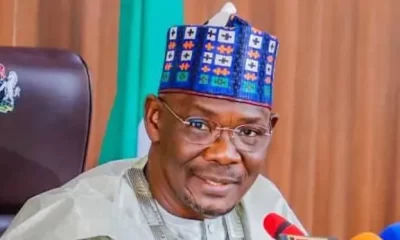

Sule to Launch Nasarawa Branded Rice Dec 17
ShareNasarawa State Governor, Abdullahi Sule said the state, in collaboration with Silvex International, a leading rice processing company, will launch...

Plateau Ranks 7th in Ease of Doing Business – Official
ShareThe Presidential Enabling Business Environment Council (PEBEC) has ranked Plateau 7th in the country in Ease of Doing Business. The...


CBN Reduces Number of Licensed BDCs to 82 Under Revised Guidelines
ShareThe Central Bank of Nigeria (CBN) has granted final licenses to 82 Bureau De Change (BDCs) to operate with effect...

Alesa: Move Begins in Rivers to Kick out Fand Frabbing, Fraud
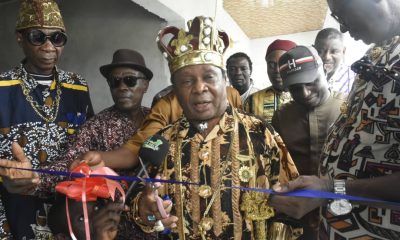
ShareBy David, Torough Abuja Land grabbing and fraudulent sale of lands may suffer a setback in Rivers State as government-approved...


ShareNNPCL’s New Culture of Transparency, Discipline Strengthens Financial Performance By Enam Obiosio The Nigerian National Petroleum Company Limited (NNPCL) is...


Nigeria: Leadership as Red-Carpet Exchange Programme
ShareBy Ebuka Ukoh Nigeria surprises people who believe leadership involves duty. You watch a government hold an economic summit in...

FG, ICPC Launch Sweeping Audit of N36trn Road Contracts
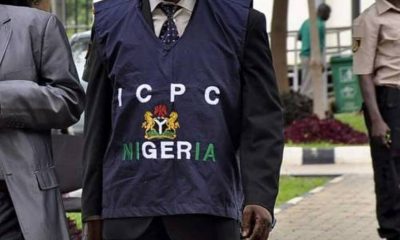
ShareBy Tony Obiechina, Abuja The Independent Corrupt Practices and Other Related Offences Commission (ICPC) and the Federal Ministry of Works...

Jaiz Bank, IILM Sign Agreement as Africa’s First Primary Dealer
ShareBy Tony Obiechina, Abuja Jaiz Bank, Nigeria’s pioneer non-interest bank, has signed an agreement with the International Islamic Liquidity Management...

NLC threatens Nationwide Protest over Insecurity
ShareThe Nigeria Labour Congress (NLC) has announced plans to hold a nationwide protest on Dec. 17 over insecurity in the...